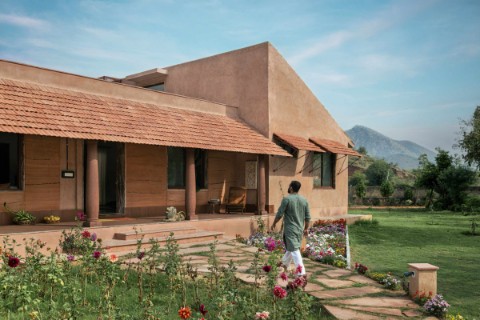
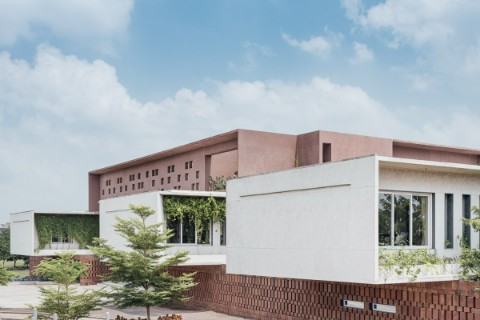
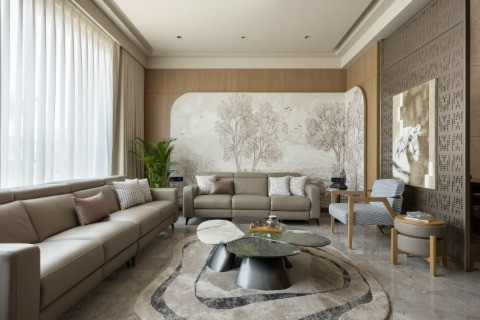
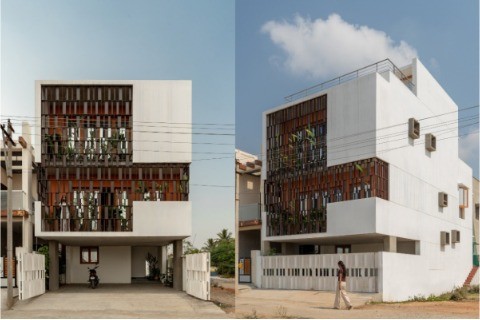
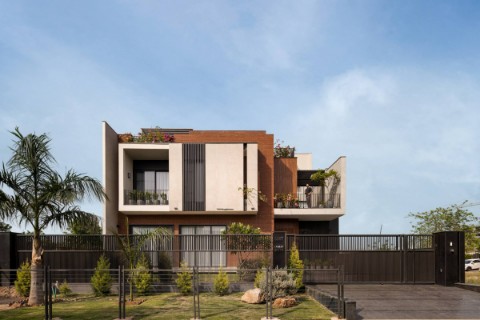
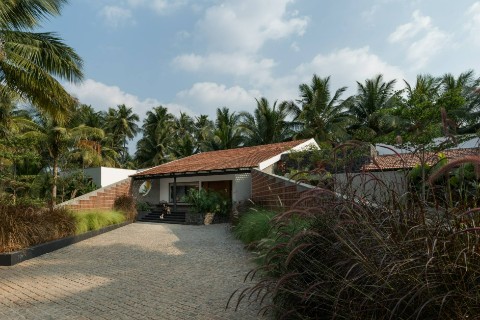
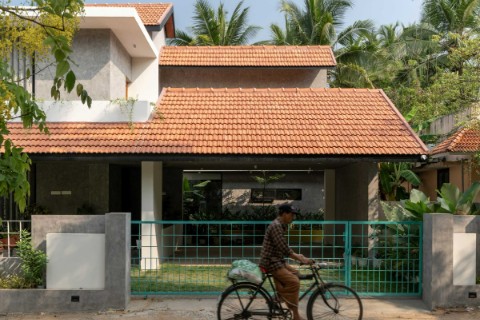
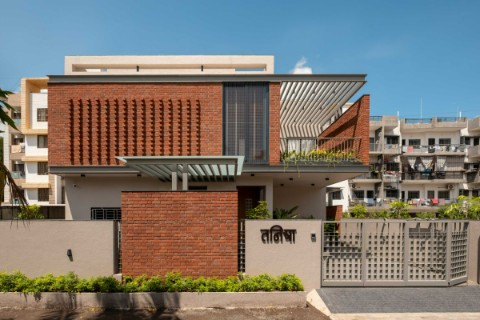
Exterior view of Red Brick House by Aura Architecture Studio
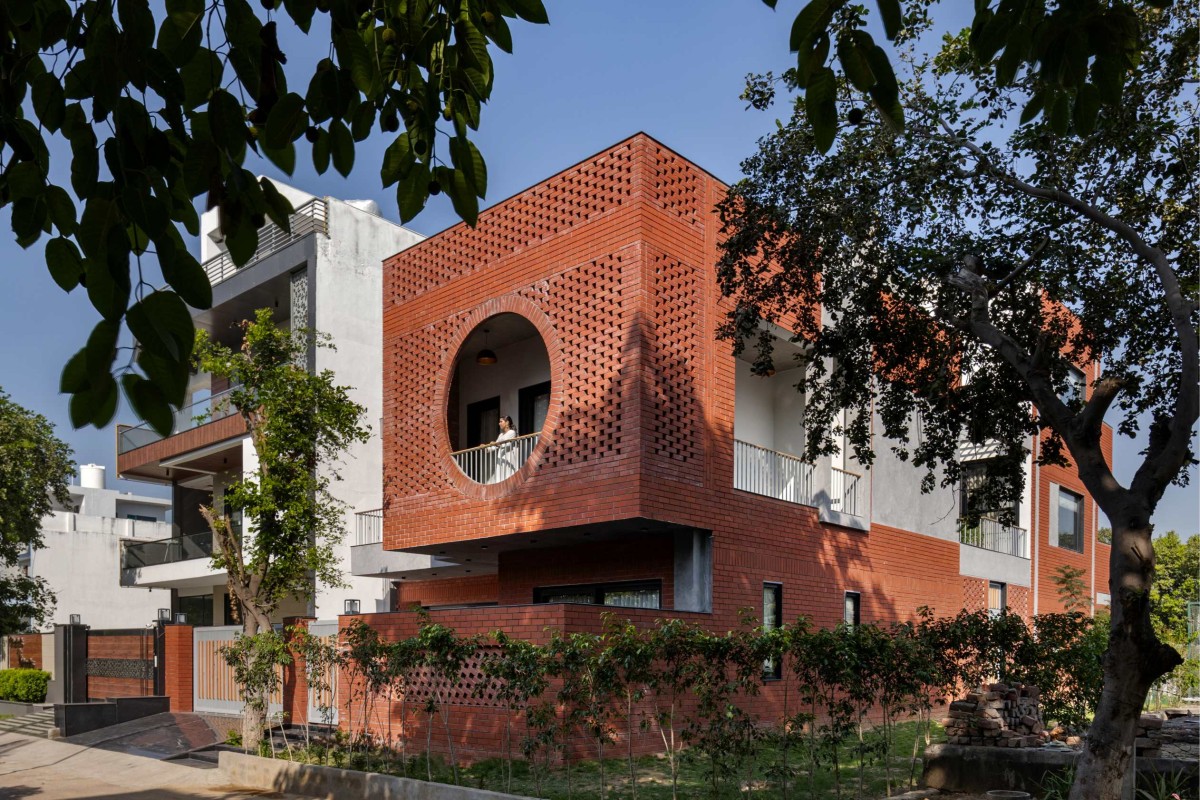
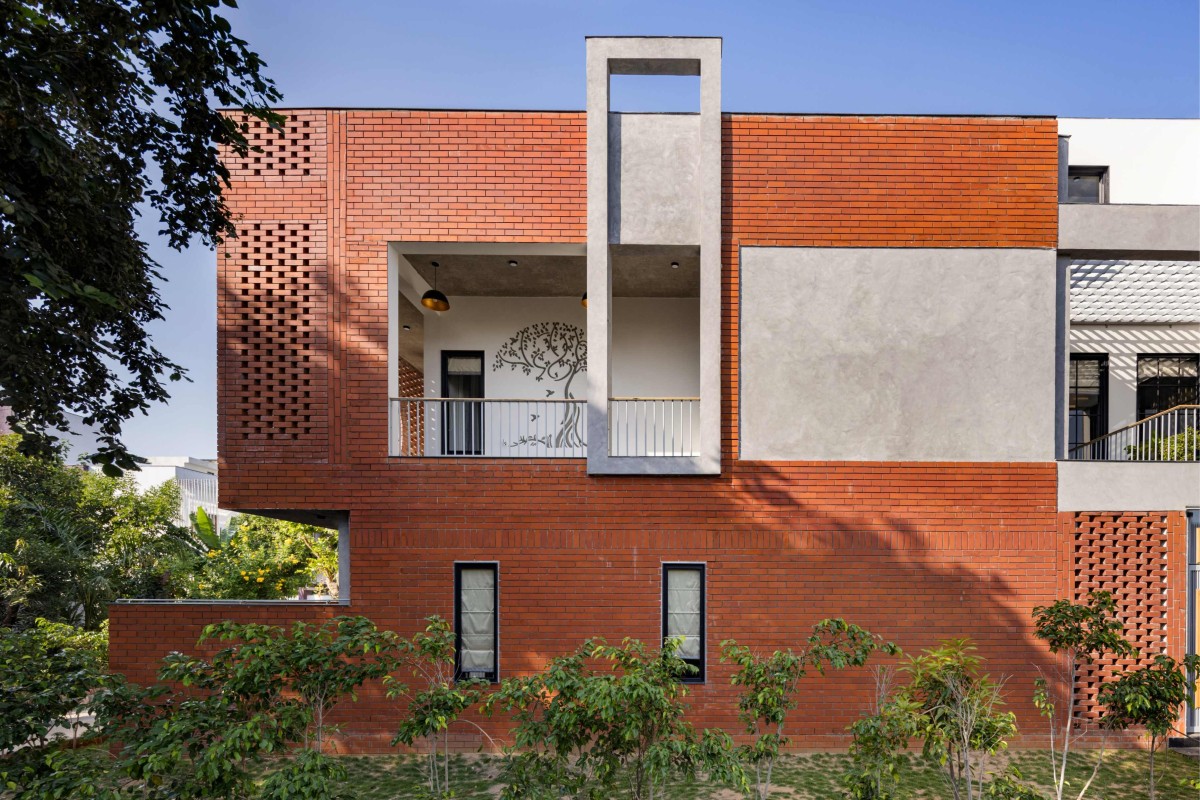
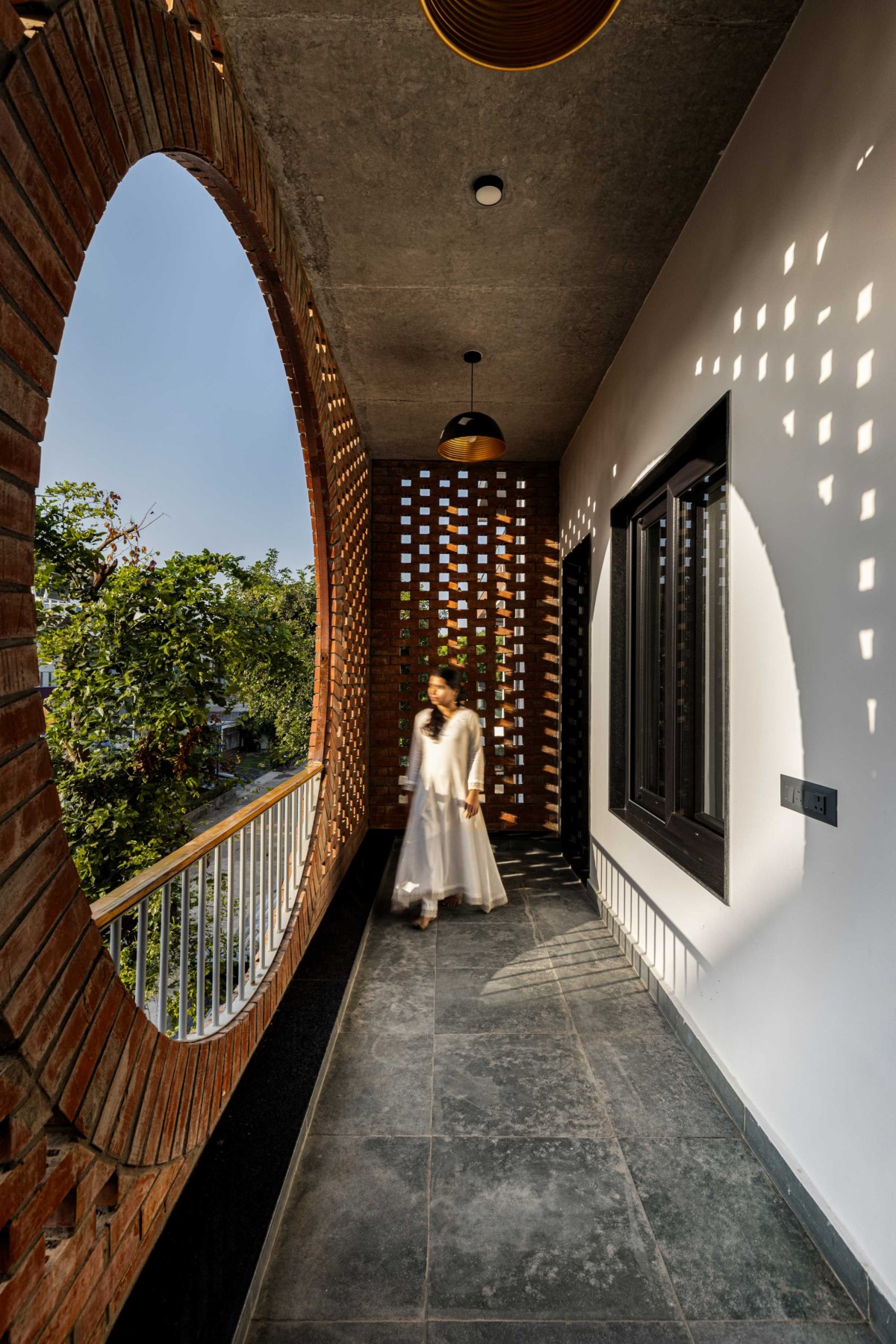
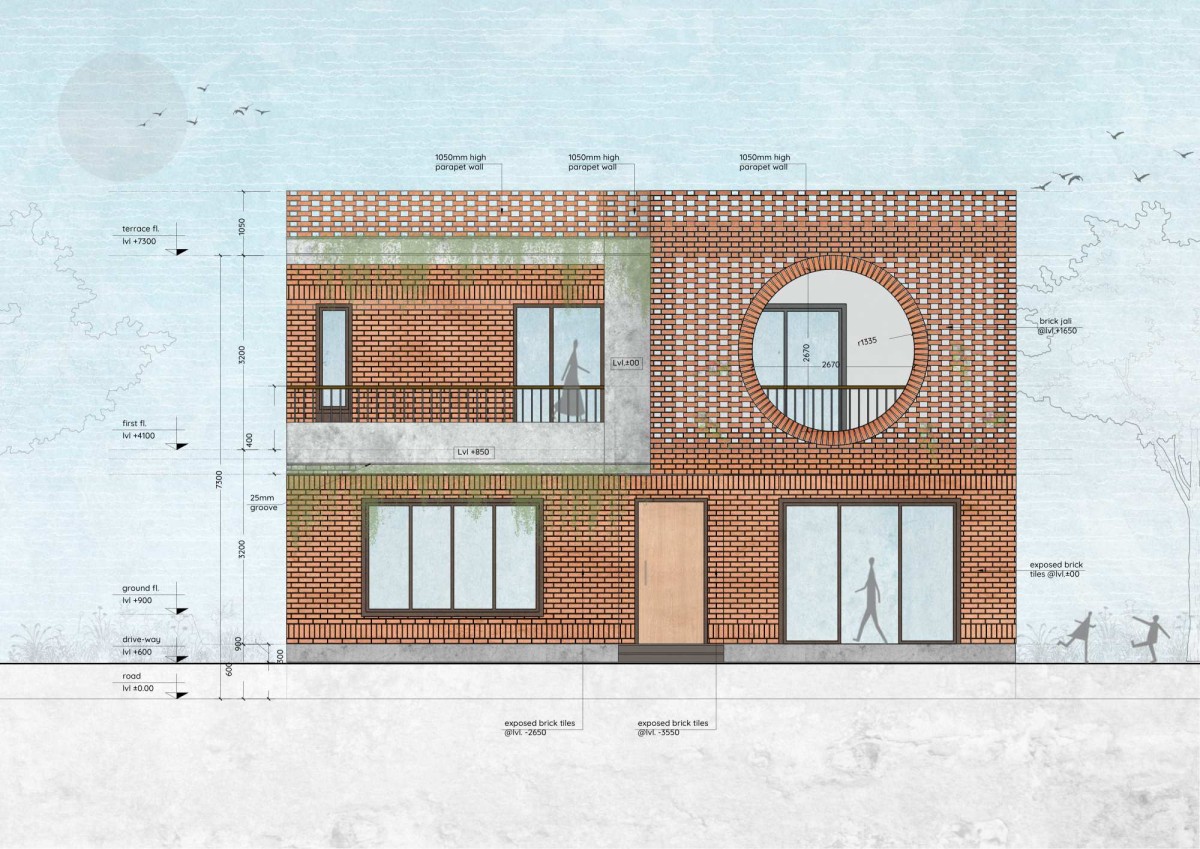
The western facade makes the architecture's most considered argument. The upper volume presents as a bold projecting brick mass whose entire surface is woven with a diagonal jaali screen, a grid of small square perforations that dissolves solidity into a breathing skin of light and shadow. Set within this porous field, a large circular void frames the projecting balcony, its concentric rings of brick radiating outward to produce a taut, confident aperture. The circle performs as both a shade structure and a framing device, but it also carries an urban intention. The circular opening embodies the ‘eyes on the street’ concept, establishing a deliberate visual connection between the private and the public realm below.
Exterior view of Red Brick House by Aura Architecture Studio
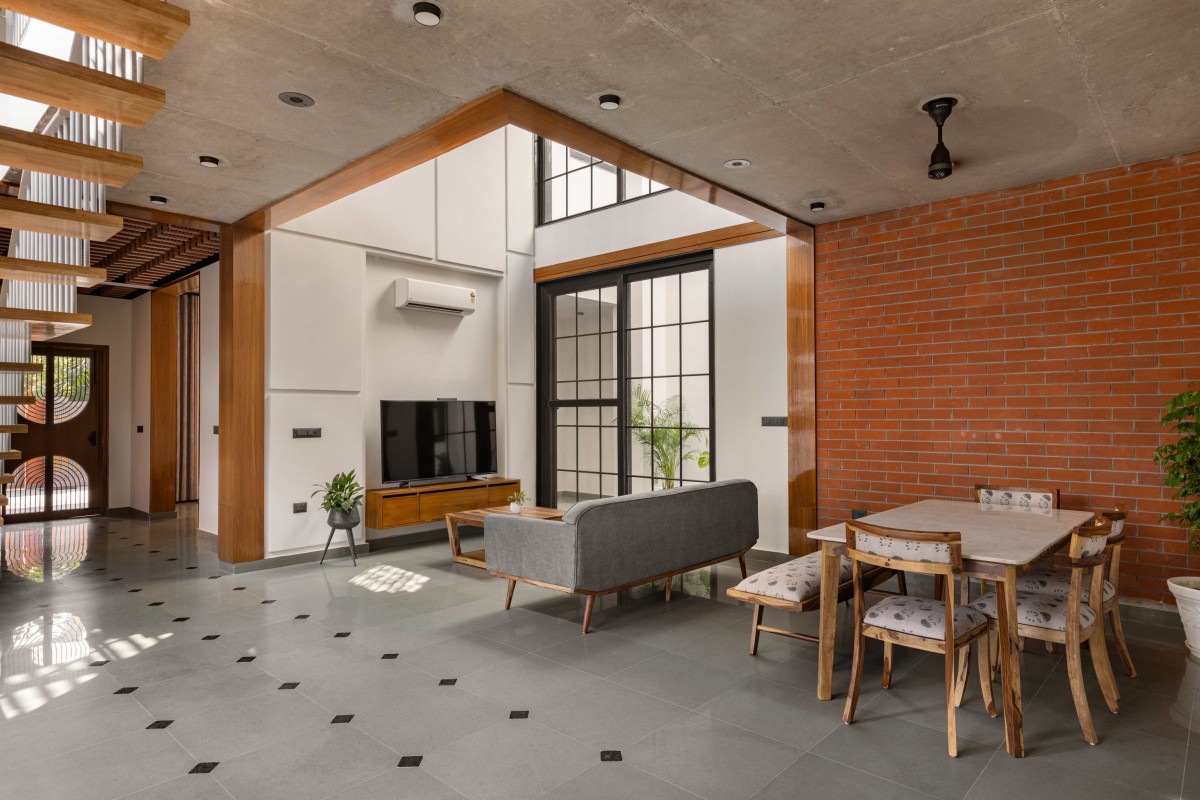
Dining & Double Height Living of Red Brick House by Aura Architecture Studio
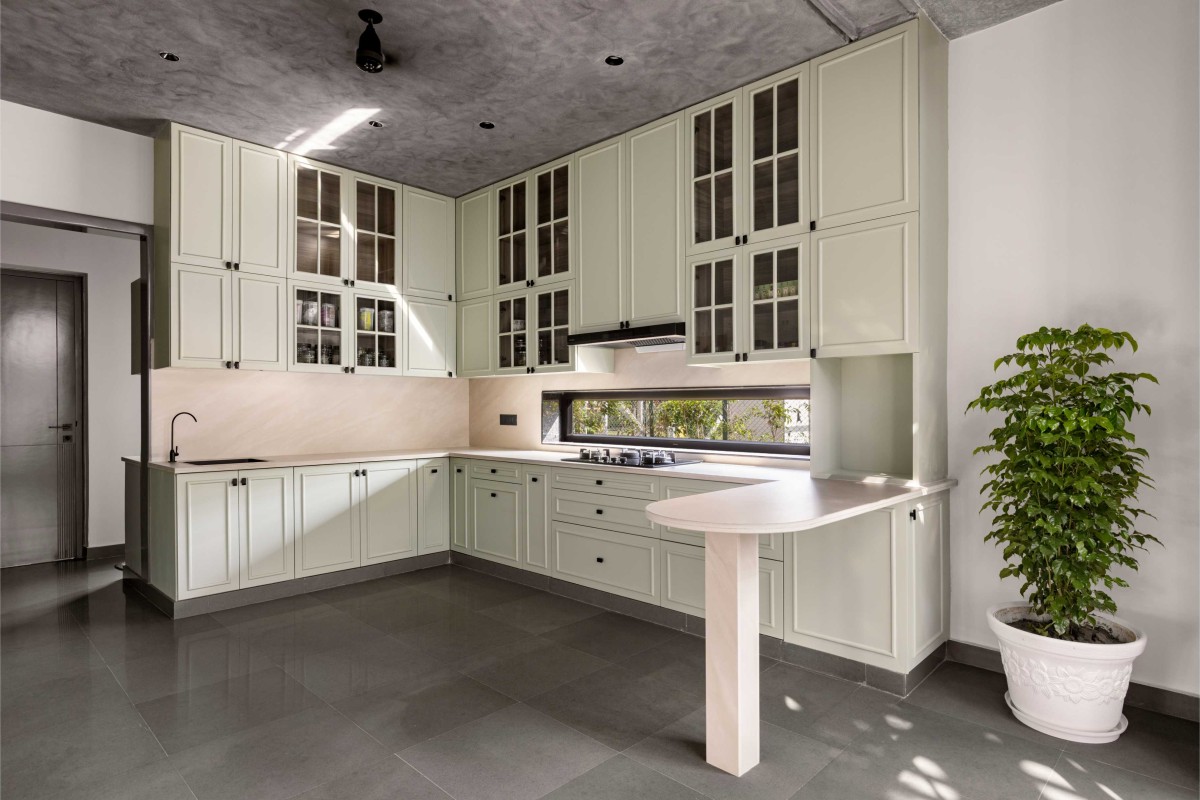
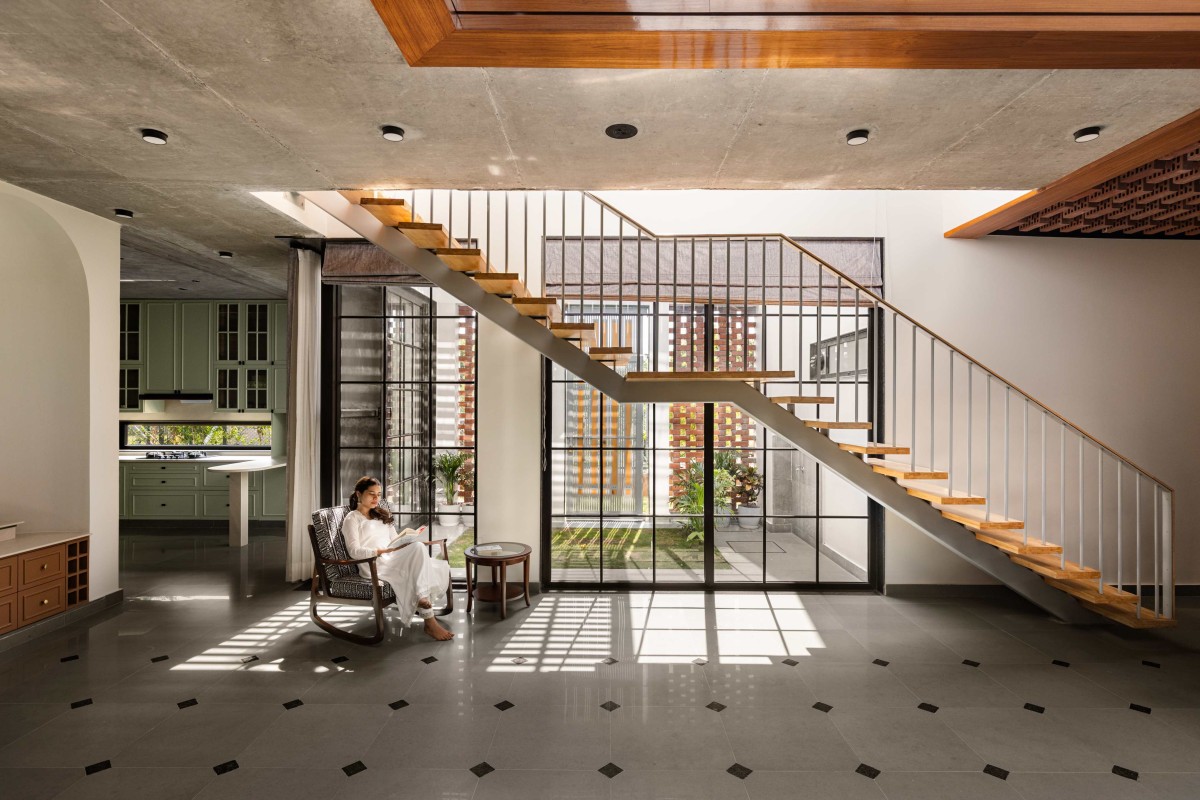
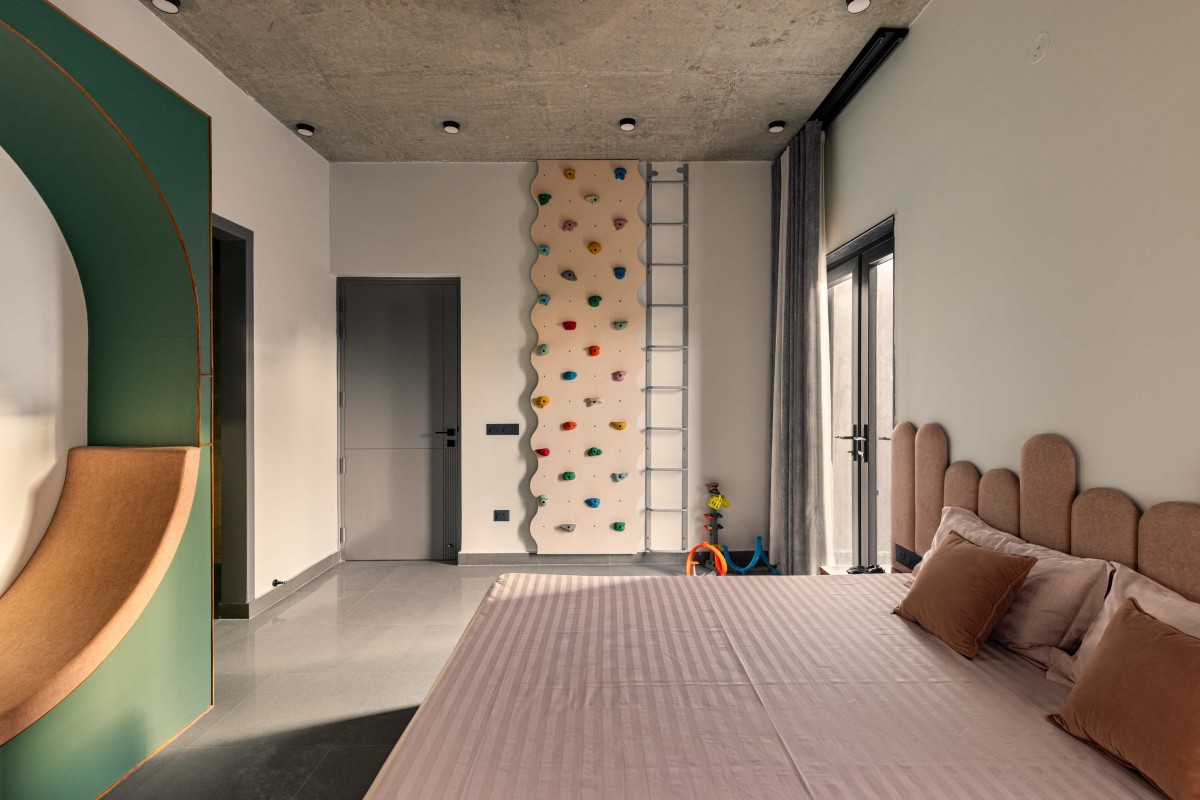
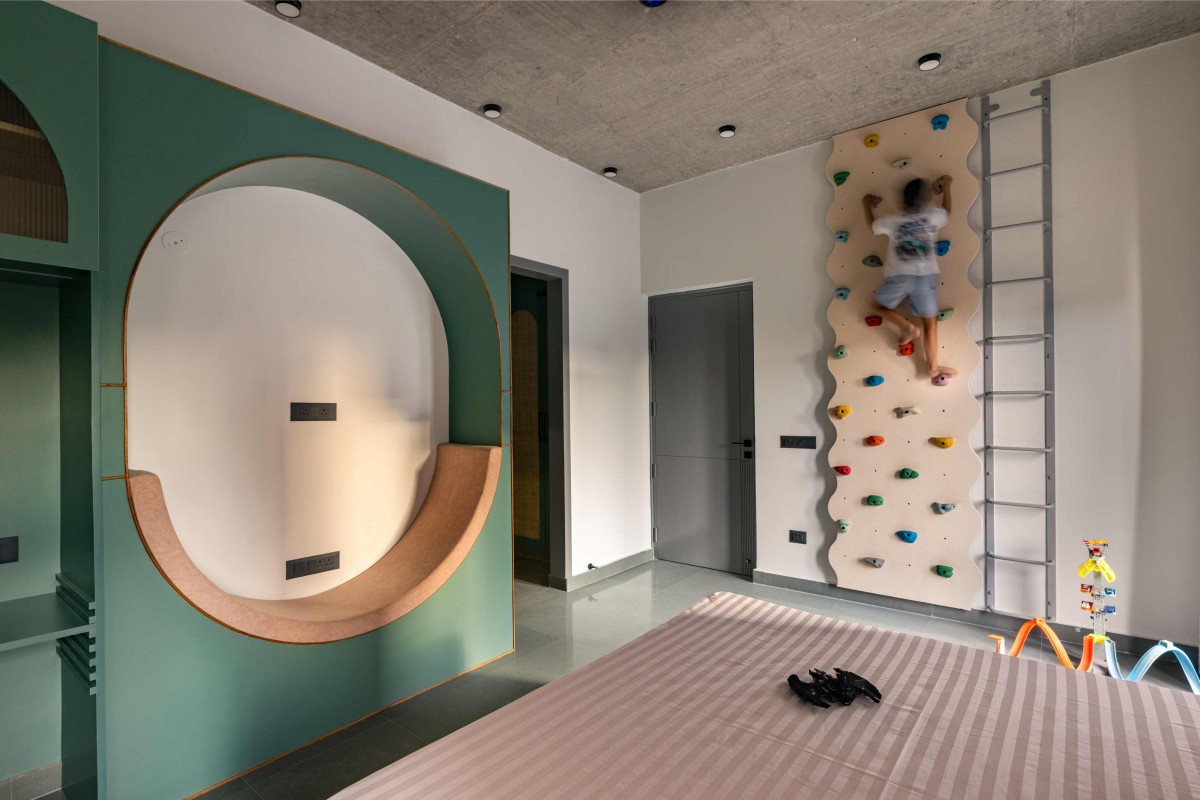
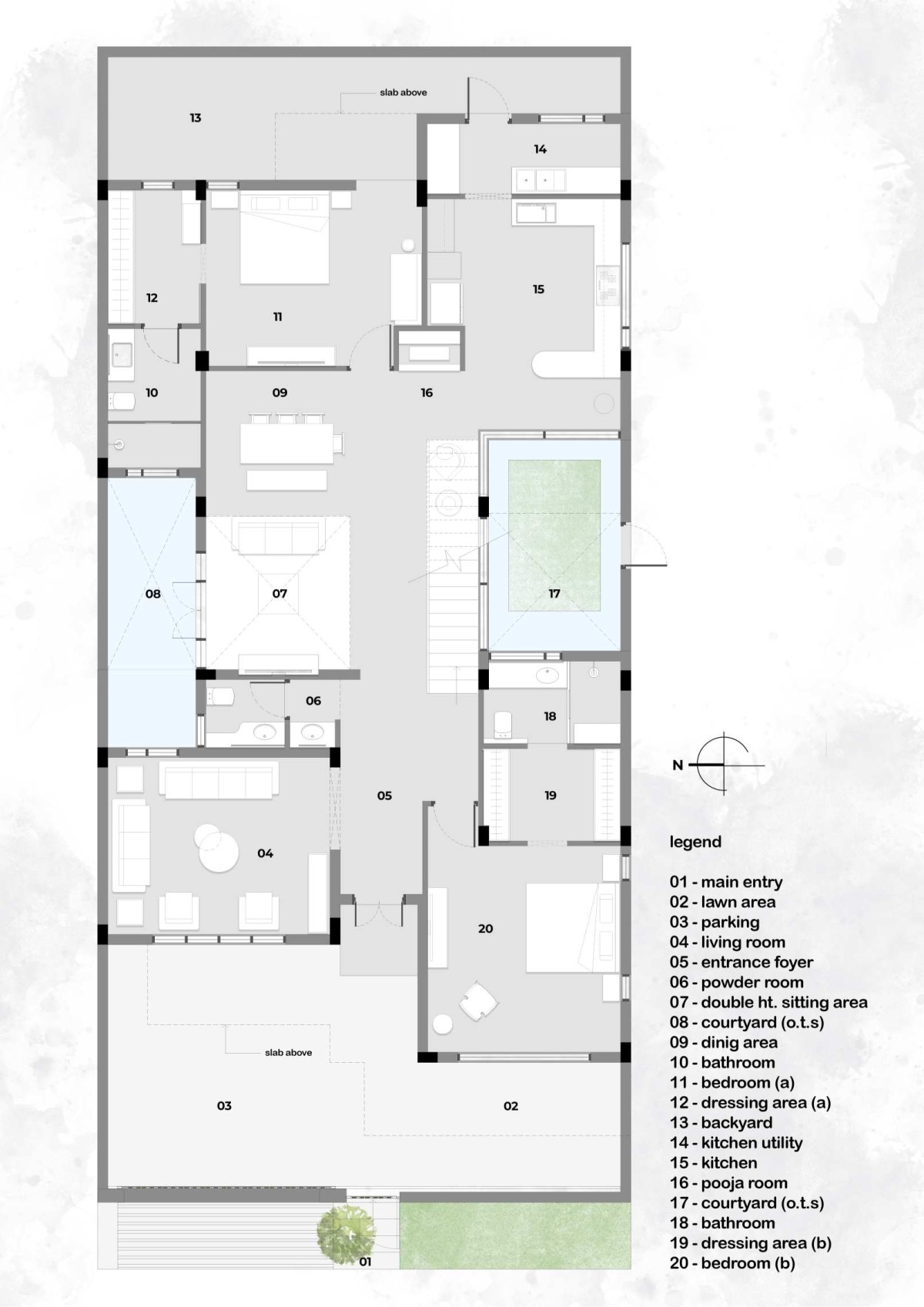
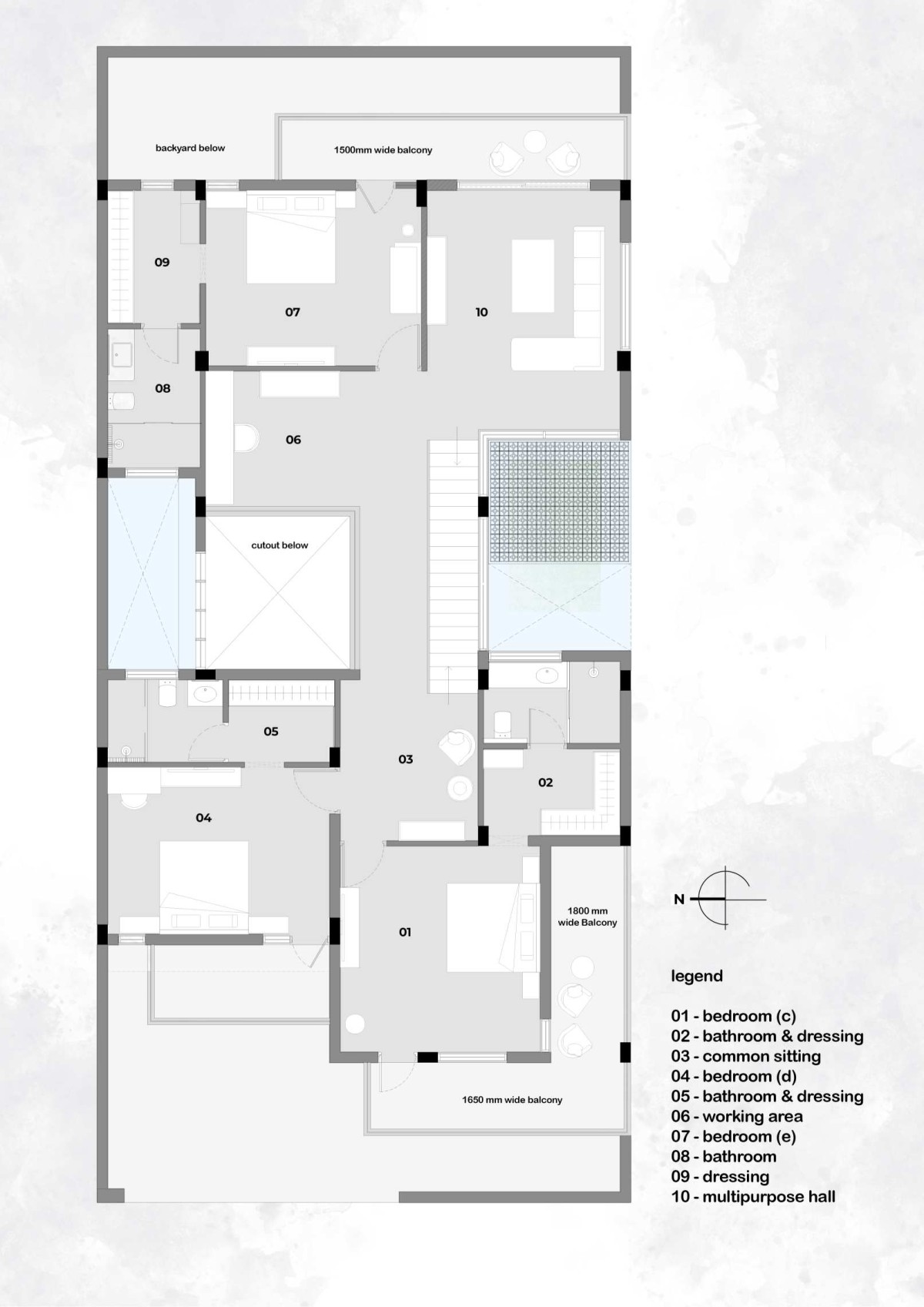
Spread across 5,200 square feet, the plan transitions from entry to interior with measured deliberateness. A living room opens into a double-height recessed sitting area, drawing the eye toward the central courtyard beyond. That courtyard is the spatial heart of the residence, functioning simultaneously as an environmental buffer, a social hinge, and a light well, connecting the living, dining, and kitchen on the ground floor while opening visually to the level above. The kitchen is designed with functional clarity, positioned to serve both the dining area and the courtyard edge without compromising the spatial openness of the shared zone. Ground-floor bedrooms remain woven into shared life through their proximity to the courtyard. Upstairs, three bedrooms, a children's room with a workstation and a multipurpose hall reaffirm the house's commitment to connected, layered living.
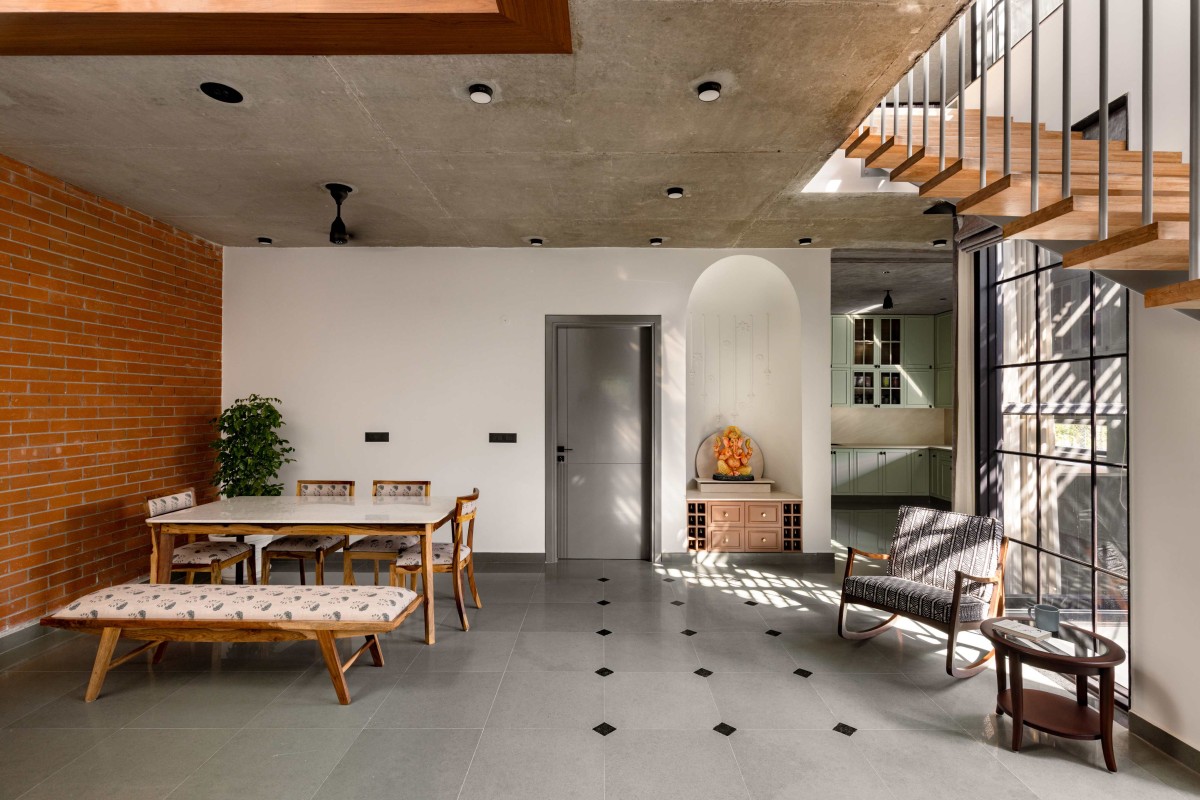
Dining & Pooja Area of Red Brick House by Aura Architecture Studio
Kitchen of Red Brick House by Aura Architecture Studio
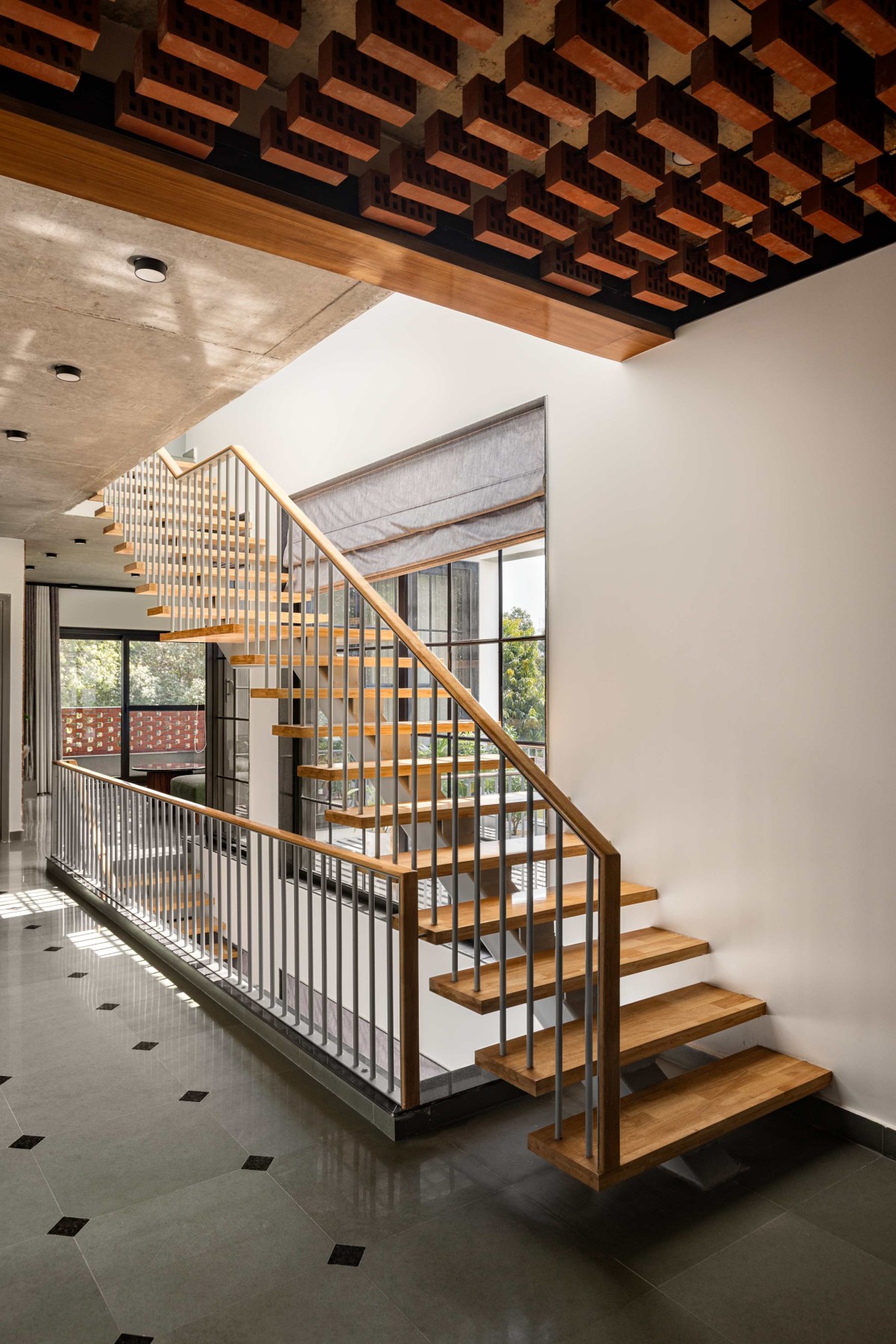
Staircase of Red Brick House by Aura Architecture Studio
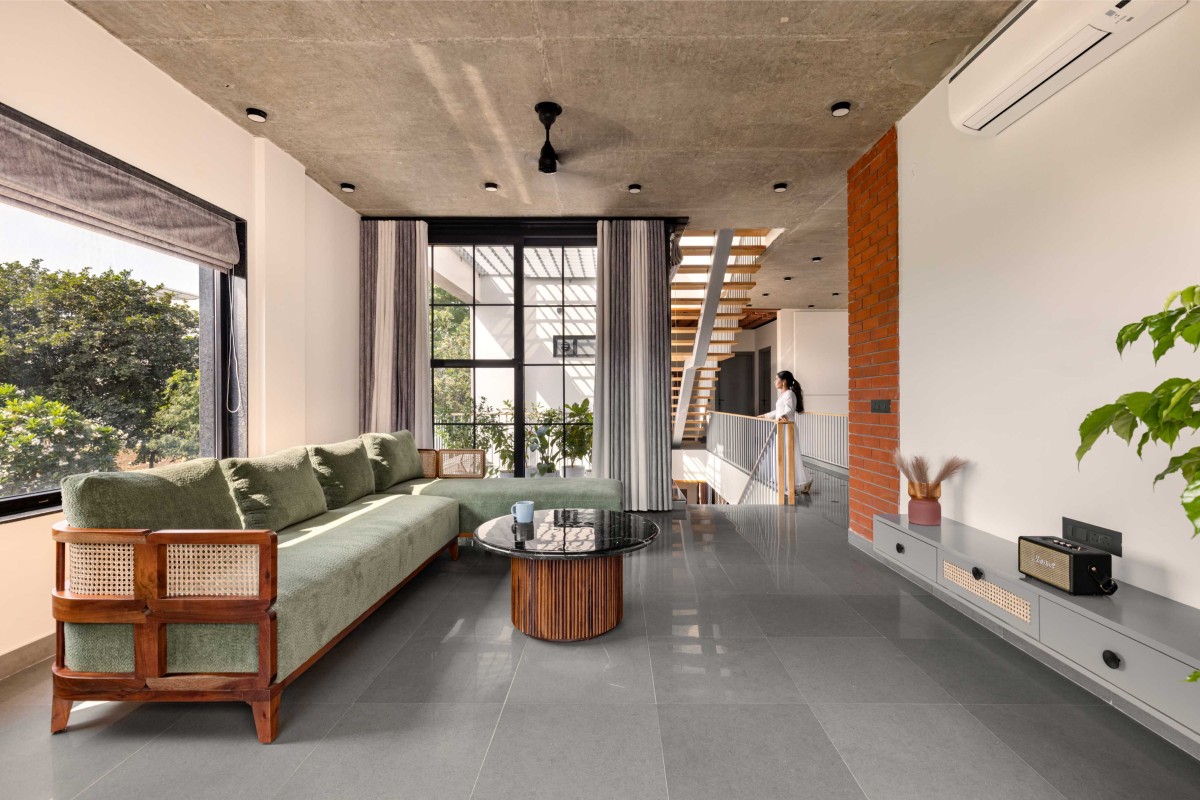
The interiors carry the influence of brutalism, one that finds beauty in the honesty of structure rather than its concealment. Exposed concrete slabs preserve the imprint of formwork, quietly narrating the process of their making. Raw surfaces are left to speak without finish or apology. An internal brick pergola diffuses incoming light into shifting patterns across the floor, while Kota stone underfoot unifies the palette with matte calm. Geometric inlays define circulation and demarcate zones without resorting to walls. Structure and finish are the same here, a design philosophy in which the construction process itself becomes the aesthetic language.
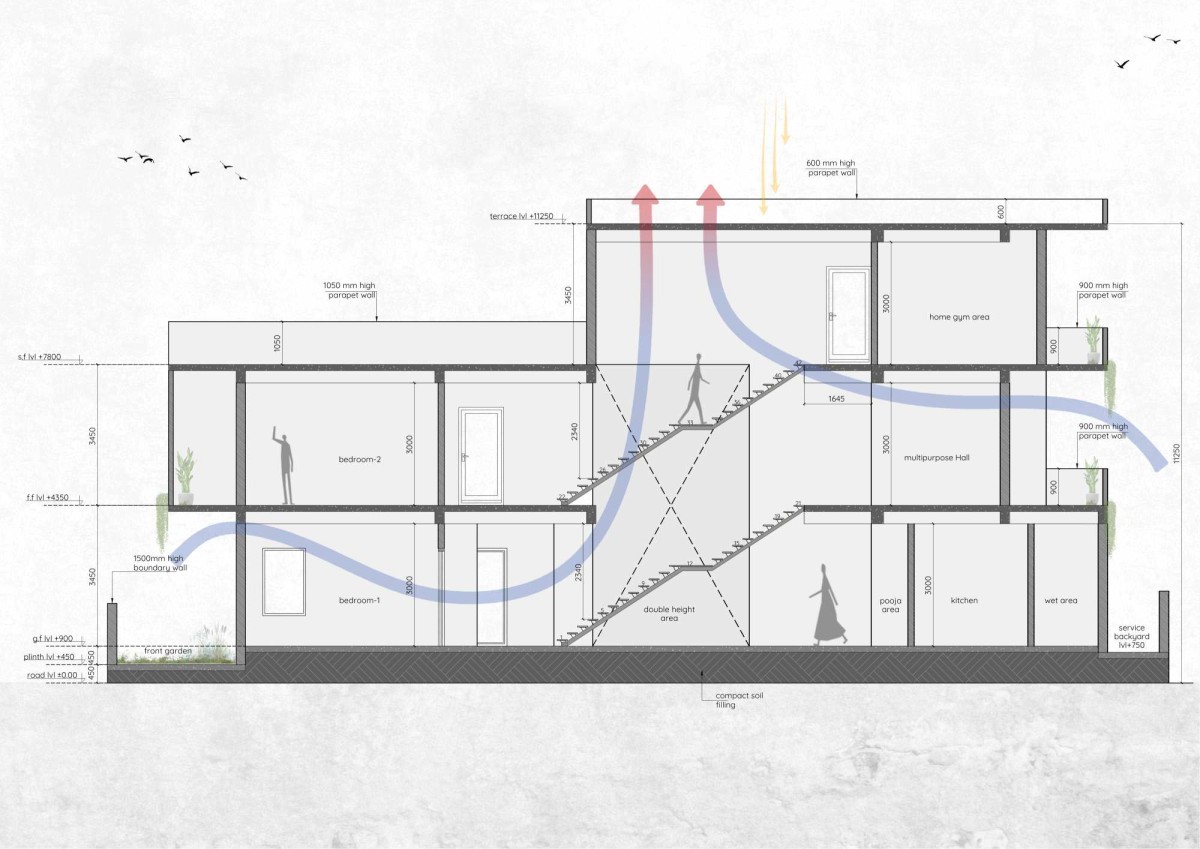
Morning light filters softly through the courtyard. By afternoon, jaali screens and double-height voids temper the western heat into something liveable. Open-to-sky volumes enable a passive cycle of ventilation, reducing reliance on mechanical cooling. The house expresses its response to climate not through formal novelty but through material intelligence and spatial clarity. The Red Brick House is not a resistance to climate but a reconciliation with it. Rooted in regional material and shaped by the rhythms of daily life, it offers shade, light and calm with quiet clarity, forming an architecture of permanence rather than spectacle.
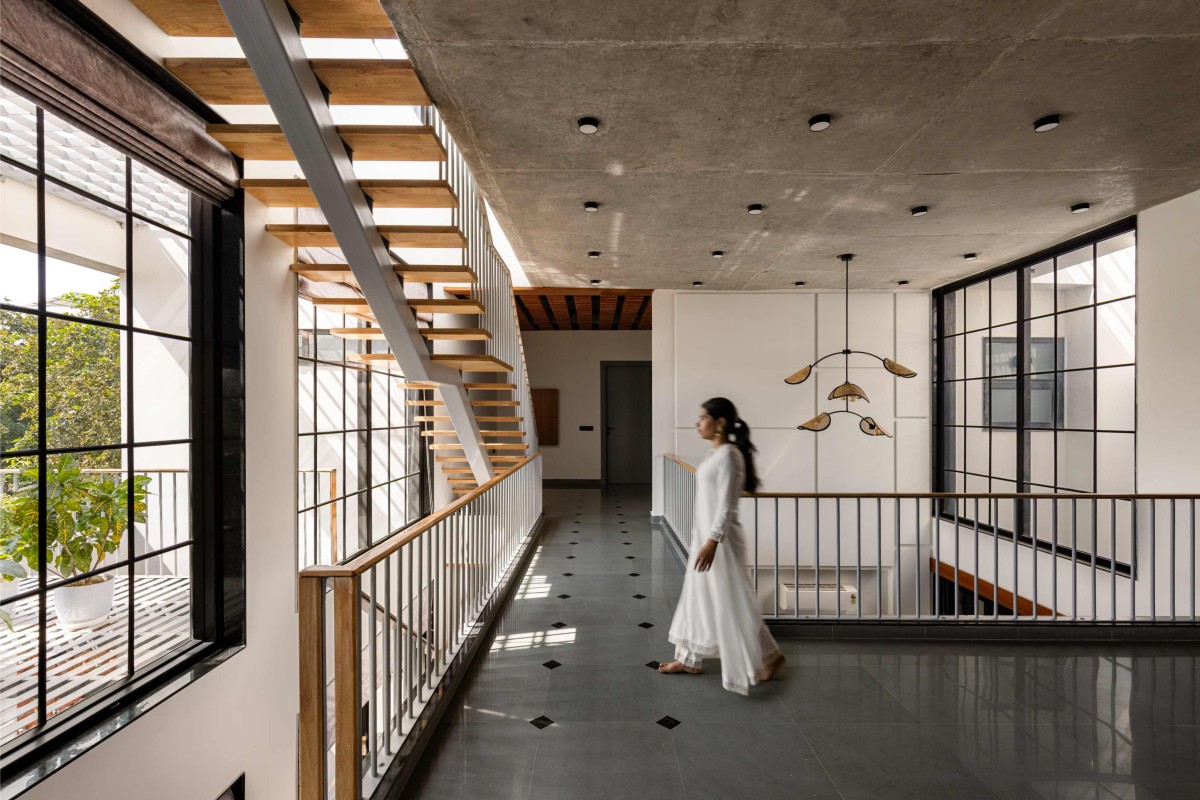
Staircase of Red Brick House by Aura Architecture Studio
First floor view of Red Brick House by Aura Architecture Studio
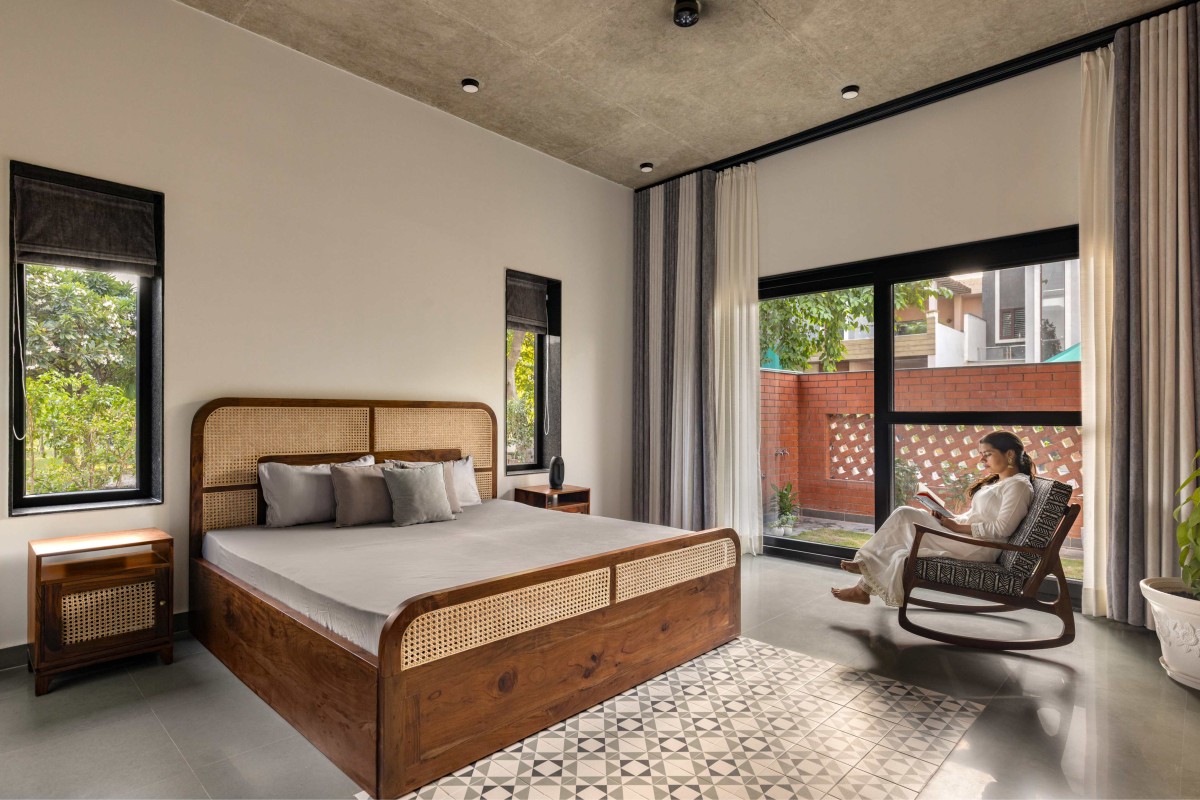
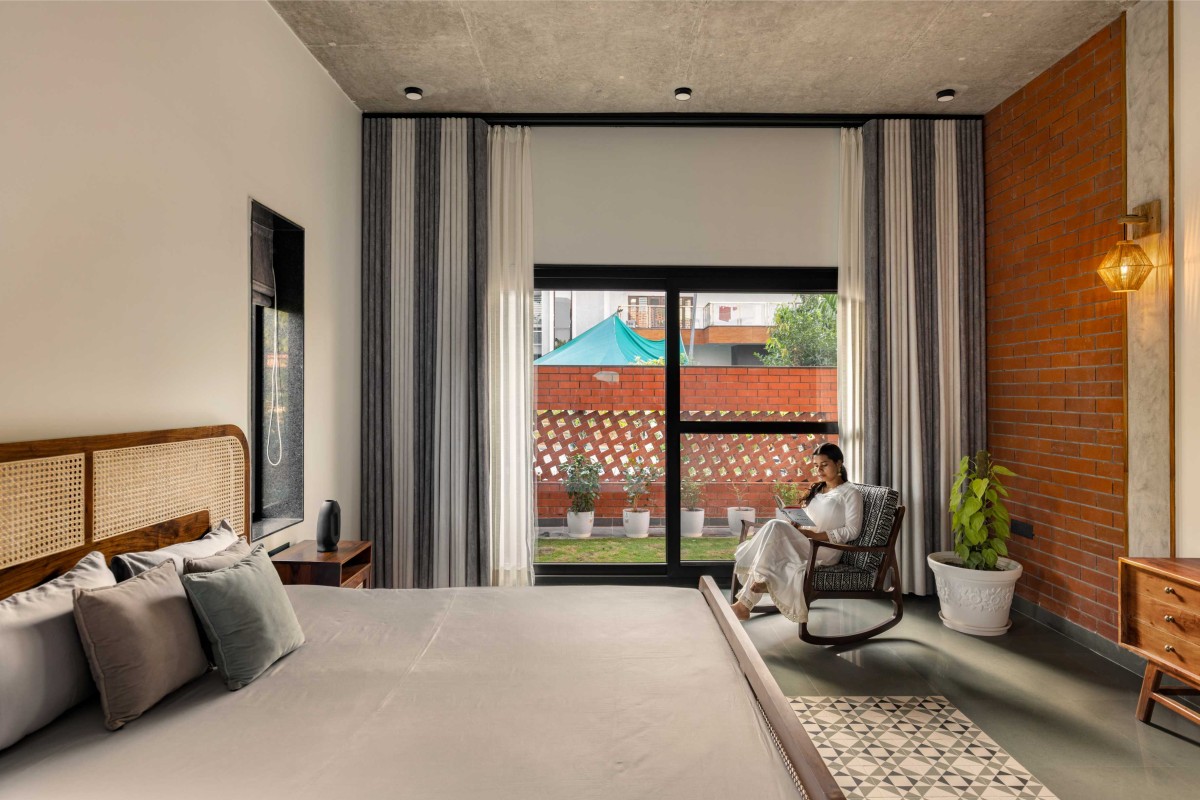
Bedroom 1 of Red Brick House by Aura Architecture Studio
Bedroom 1 of Red Brick House by Aura Architecture Studio
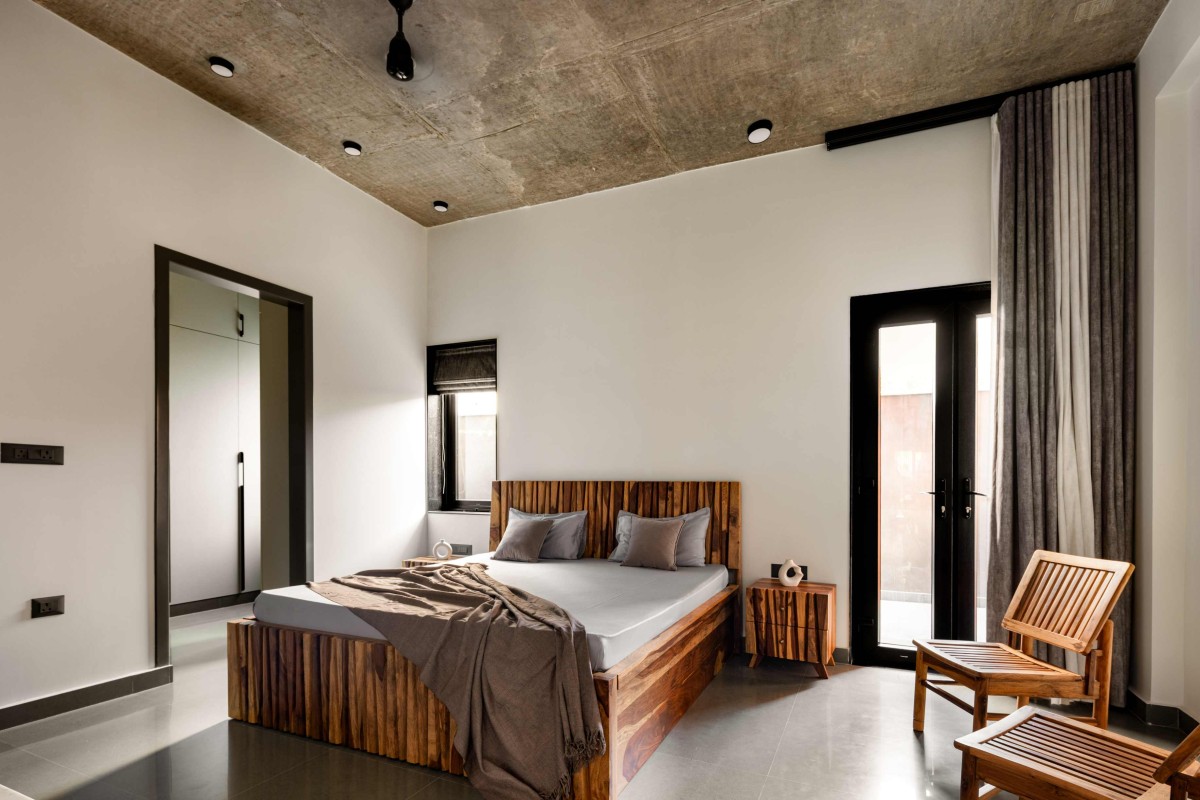
Bedroom 2 of Red Brick House by Aura Architecture Studio
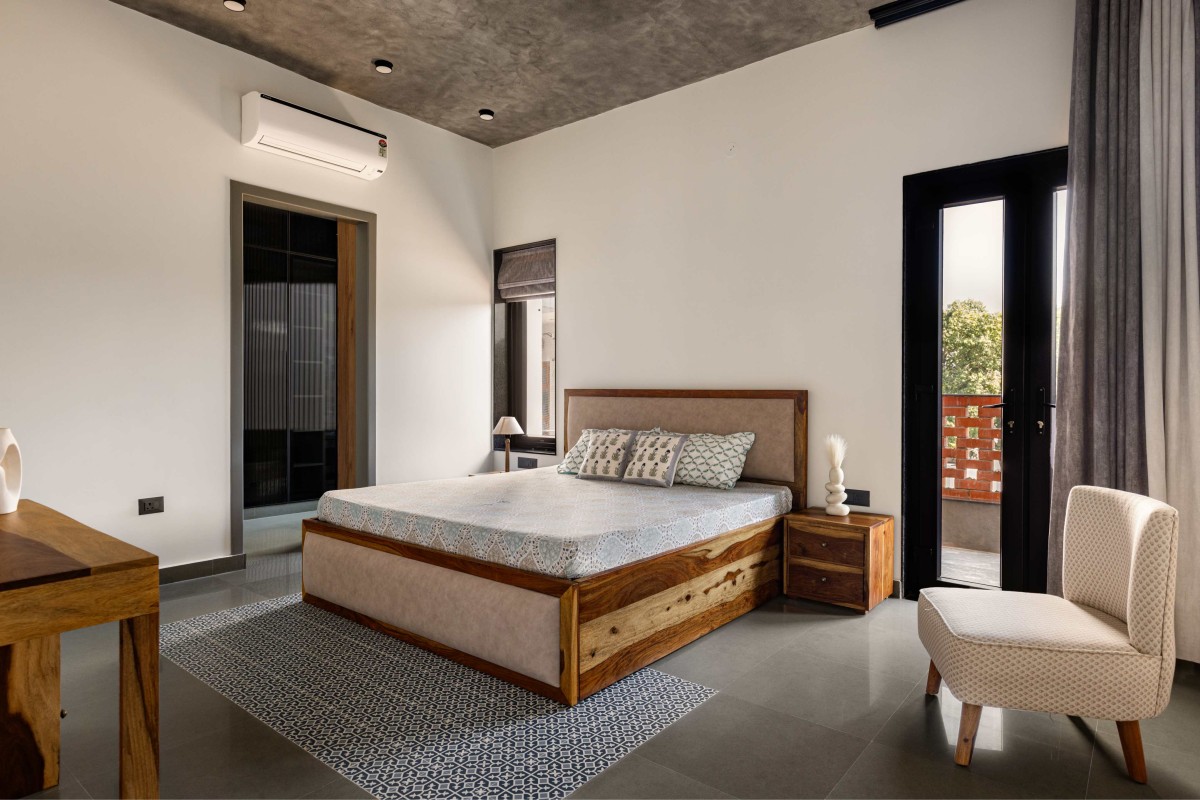
Bedroom 3 of Red Brick House by Aura Architecture Studio
Bedroom 4 of Red Brick House by Aura Architecture Studio
Bedroom 4 of Red Brick House by Aura Architecture Studio
Balcony of Red Brick House by Aura Architecture Studio
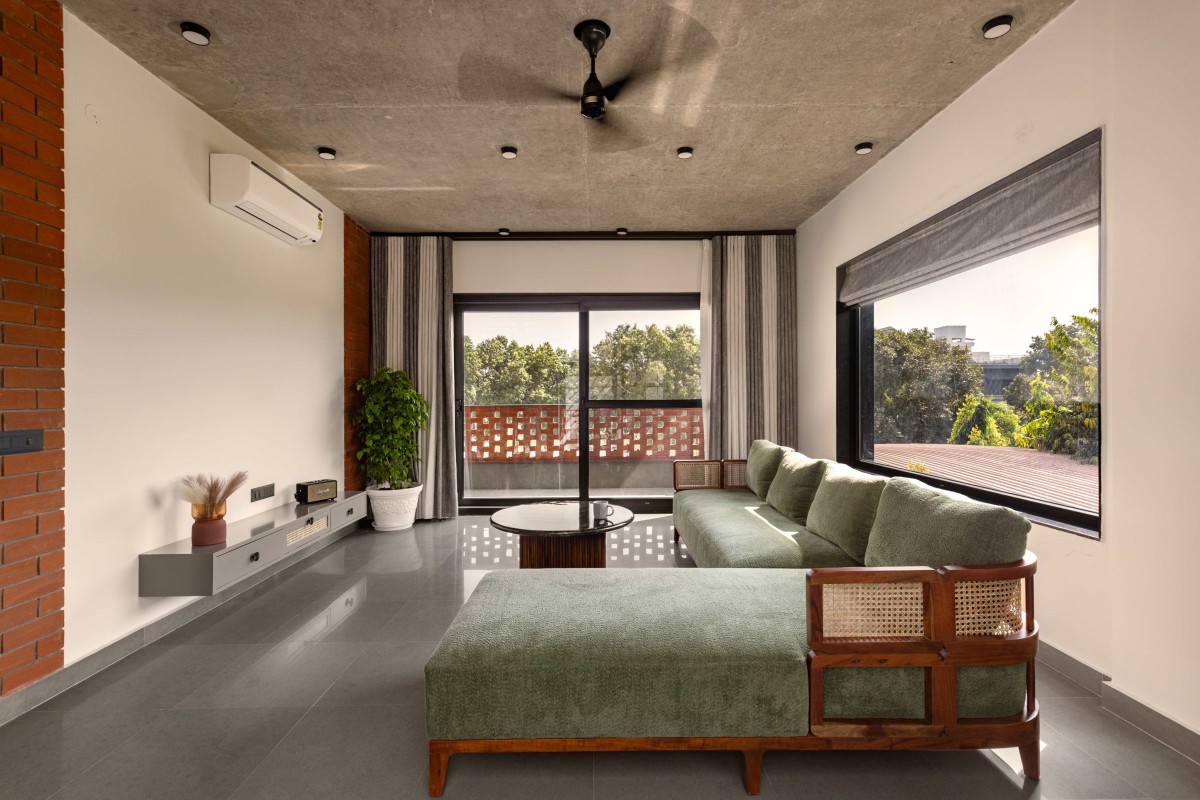
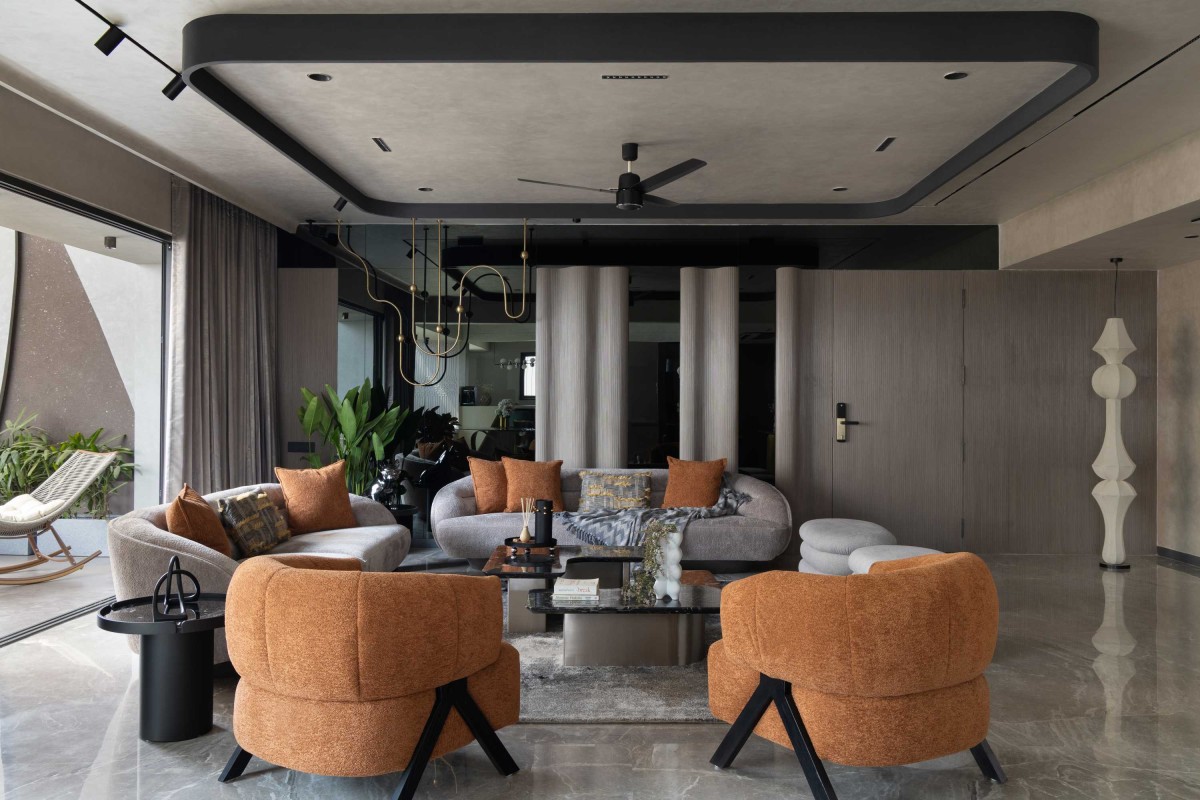
Multipurpose Hall of Red Brick House by Aura Architecture Studio
Multipurpose Hall of Red Brick House by Aura Architecture Studio
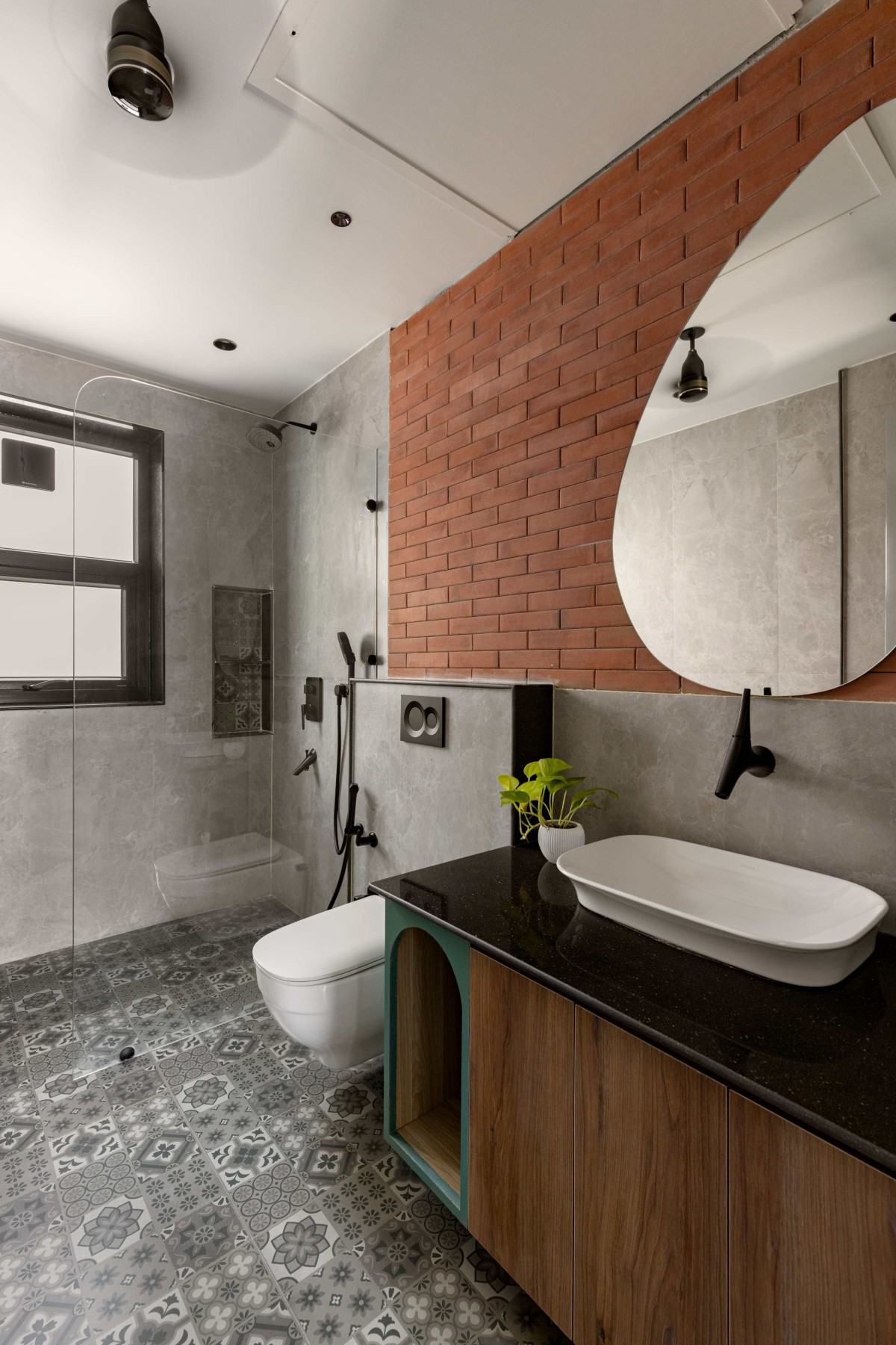
Toilet of Red Brick House by Aura Architecture Studio
Elevation of Red Brick House by Aura Architecture Studio
Ground Floor Plan of Red Brick House by Aura Architecture Studio
First Floor Plan of Red Brick House by Aura Architecture Studio
Section of Red Brick House by Aura Architecture Studio