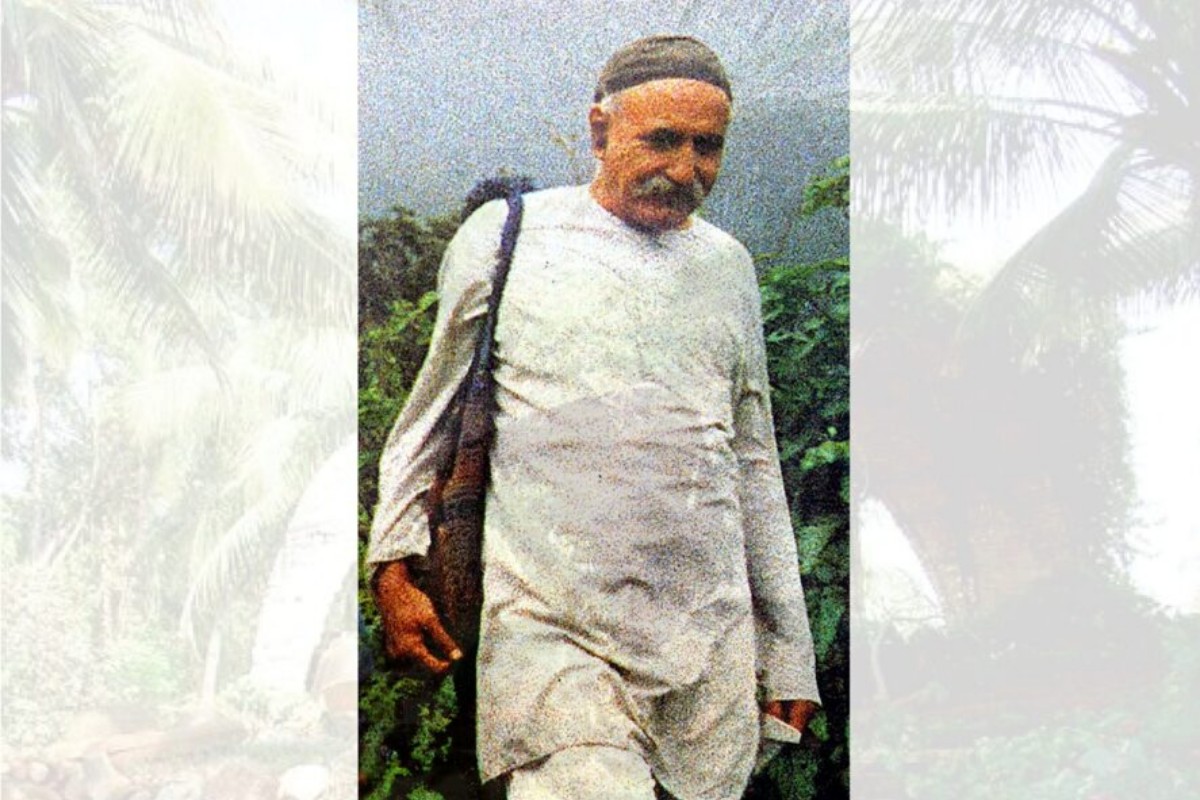
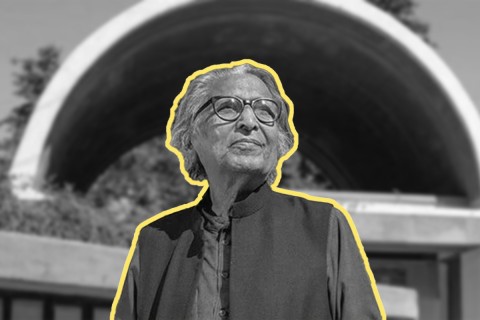
Indian architect Nariman Dossabhai Gandhi was well-known for his approach to organic design. He had an amazing way of thinking despite leading a very modest existence. He looked at nature for inspiration in his architecture. The local culture and climate had an impact on the form. He was titled the "Howard Roark of India" by the masses.

"Land is the purest form of nature; buildings grow like plants towards the light." This kind of thinking is what motivated Nari Gandhi to create magnificent structures that are both organic and strongly geometric, while also paying homage to the natural world.


Early Life -


Source


He was born in Surat on January 1st, 1934. He continued his architectural studies at Mumbai's Sir J. J. School of Architecture. He moved to the United States to serve as Frank Lloyd Wright's five-year apprentice at the Taliesin. After that, he studied pottery for two years at Kent State University. After that, he went back to India to resume his teaching career at M. S. University, Baroda, as well as the Academy of Architecture.

Frank Lloyd Wright's ideas greatly influenced the writings of Nari Gandhi. Because of his simple and revolutionary views, way of life, and belief system, he is sometimes likened to Howard Roark, the main character in the well-known book "The Fountainhead."


Design Philosophy -


Source


Nari Gandhi was very modest and would give his employees excellent treatment. He enjoyed working with stone and wood himself, drawing on the ground to help his employees comprehend the plan, and other unusual architectural techniques. 

He was renowned for his extremely inventive organic architectural designs that combined Frank Lloyd Wright inspiration with distinctive Indian features. Working with the local masons and craftsmen, he created an integrated architectural style that took into account the tropical lifestyle, local climate, and artisanship.

Extended roof slopes that touch the ground, arching structural design, preserving and erecting around on-site trees, and blurring the line between interior and outside space are recurring elements in his work. His work also reflected the idea of ongoing growth and change, which was demonstrated by the rebuilding, rearrangement, and extension of elements.


A sneak into his Projects -


Source

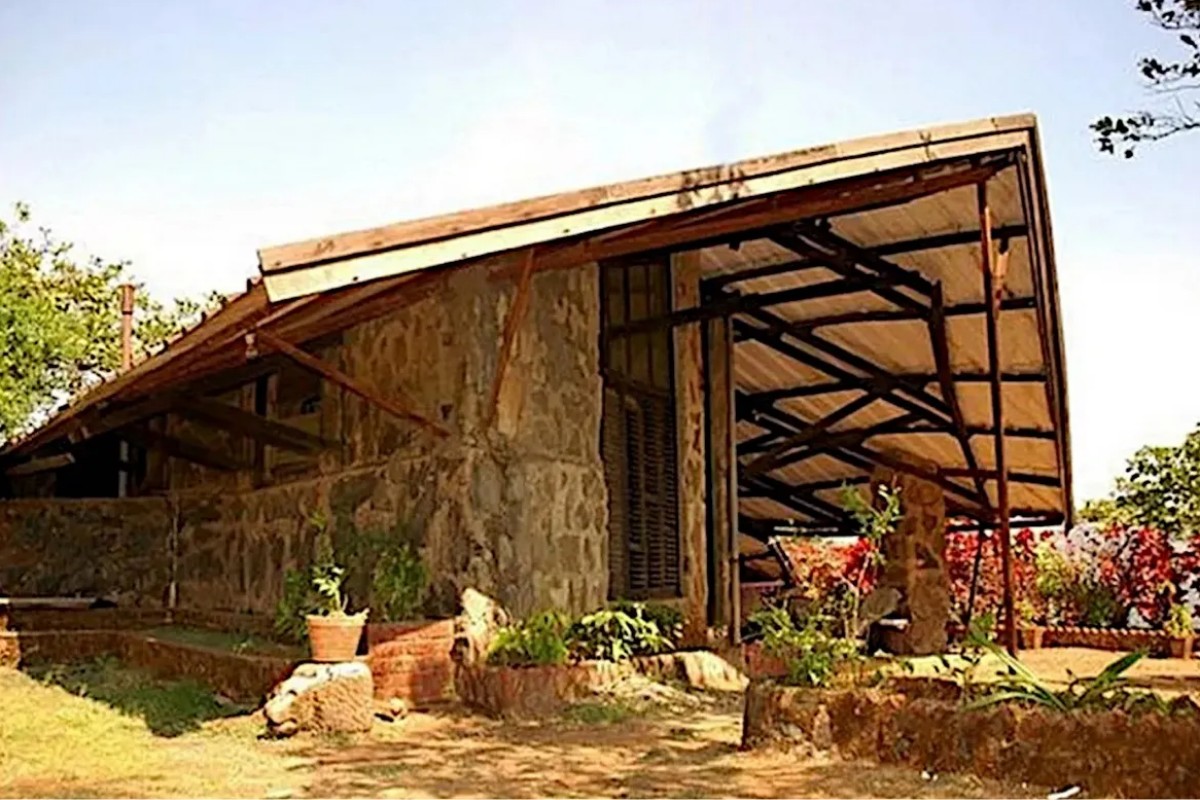
1. Gobhai Mountain Lodge, Lonavala:

Perhaps Nari's first project, Gobhai Mountain Lodge is the best illustration of his climate-sensitive design. Additionally, this was the first instance of "desert masonry" being utilised in India; it was modelled after the rubble masonry technique developed by F.L. Wright. This gives the entire building a very basic yet elegant colour scheme. The lodge's living quarters are oriented to maximise natural light, and its deep overhanging roof shields the house from the heavy rains that fall in the surrounding area. To maximise daylighting, theplan is also put out in a triangular and east-west orientation. 


Source

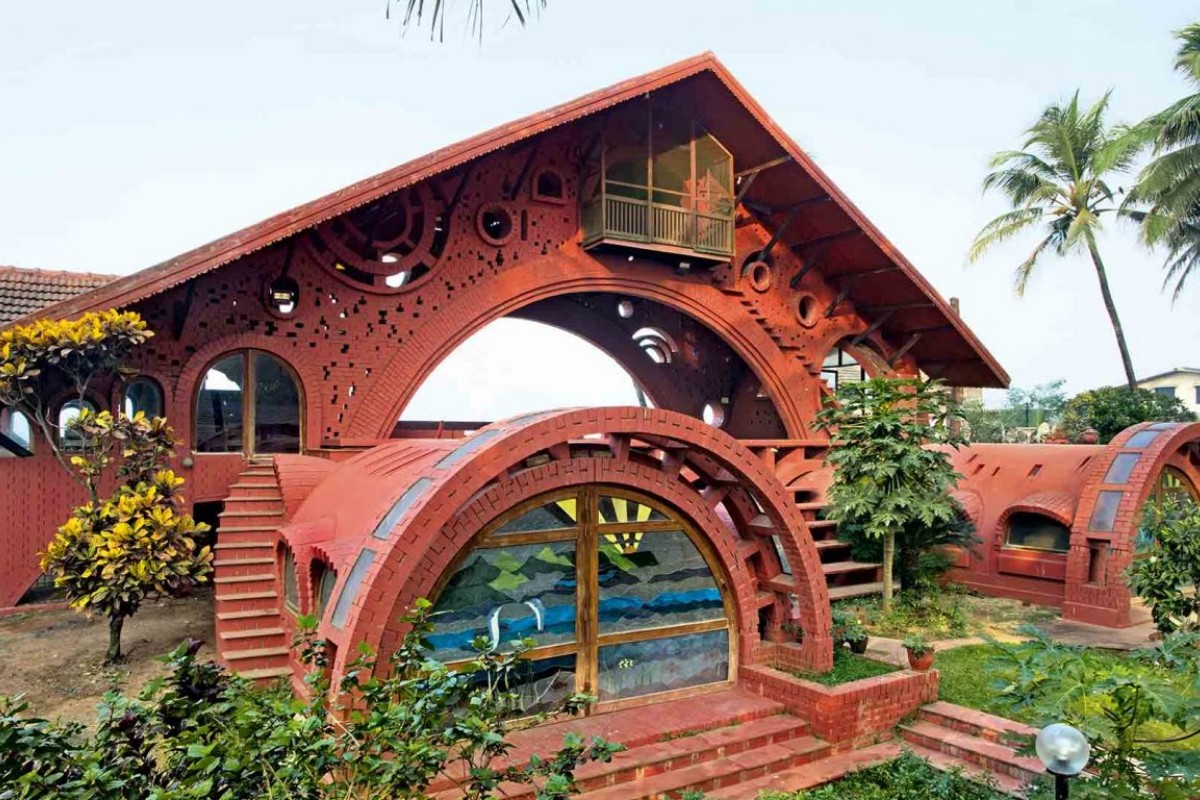
2. Korlai Bunglow, Alibaug:

Probably one of Nari Gandhi's most well-known creations, this house is located in the coastal village of Korlai, south of Revdanda. It features a huge pitched roof, arched openings, and a preponderance of red bricks. Numerous holes in the brick wall allow for ventilation while also giving the elevation a fun touch. The living and relaxation sections of the pavilion are to be found in the top floors, with service facilities, bedrooms, kitchens, and other ancillary spaces located in the lower levels. The area is big and serves as the primary focal point of the design thanks to the notion of making the spaces semi-open with two enormous arches supporting the pitched roof.


Source

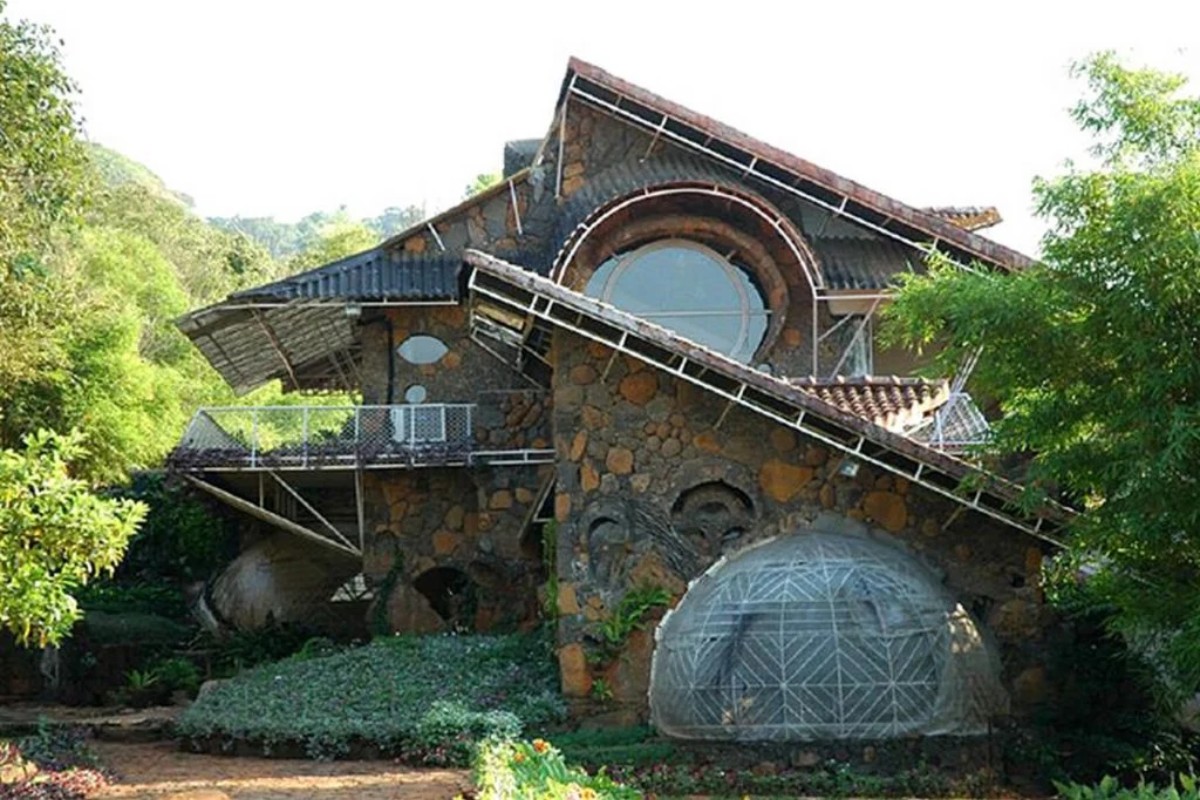
3. Jain Bunglow, Lonavala:


It is reported that neither site engineers nor a single set of working drawings were used in the construction of this Nari Gandhi masterpiece. Gandhi personally oversaw every step of the design for this project, which required an extremely labor-intensive approach. Stone masonry walls in a range of sizes and colours make up the construction. The sloping roof was supported by steel trusses and struts inserted into the stone walls. The inside courtyard walls are adorned with tiny fragments of stone. The majority of the stones utilised in this project were volcanic rocks that came from Maharashtra's western ghats, suggesting that Nari Gandhi was meticulous about making the most of what was locally available. 


The gentleness and simplicity of Nari Gandhi's character were reflected in his work. He disregarded conventional methods and established architecture for both the global community and himself. His belief in nature taking over instead than the architect is perhaps what made him one of the finest architects of all time.

Gandhi gained notoriety and is regarded as a founding father of organic architecture. He was able to leave a distinctive and lasting impression on the world by fusing local Indian ideas. With his well-considered designs that idealise harmony with nature, Nari Gandhi permanently altered the face of architecture. His way of thinking will be helpful to us as we figure out how to construct sustainability in a time when the climate is changing dangerously. Nari Gandhi's architecture has changed the globe by demonstrating that we can have sustainability, shape, and flair.

For more such insights and tips about the architectural world, subscribe to Volume Zero newsletter and get the latest articles delivered to your inbox.

Text provided by Kimaya Tendulkar-
Kimaya Tendulkar is an architect who graduated from the L.S. Raheja School of Architecture in Mumbai and is interested in working as a researcher in the subject of urban development and planning. Her interests lie in contributing to social justice and making cities more habitable. Her research interests include public and urban policy, urban inequities, and mobility. She believes that tackling a problem from an empathetic lens will lead to an authentic solution. She enjoys observing and writing about cities and their complexities. Her graphic and visual interests, which include illustrating and photography, assist her in better articulating her observations. 



Subscribe

Get our latest article and updates delivered straight to your inbox.