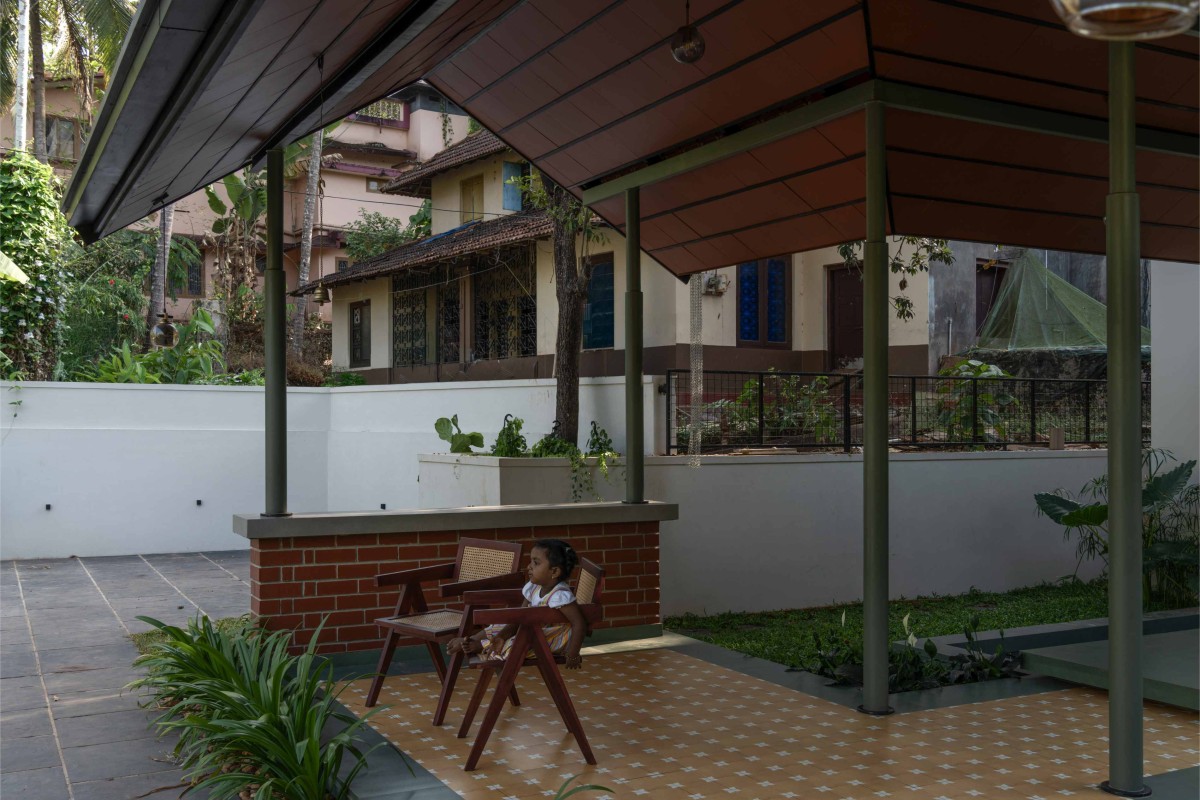
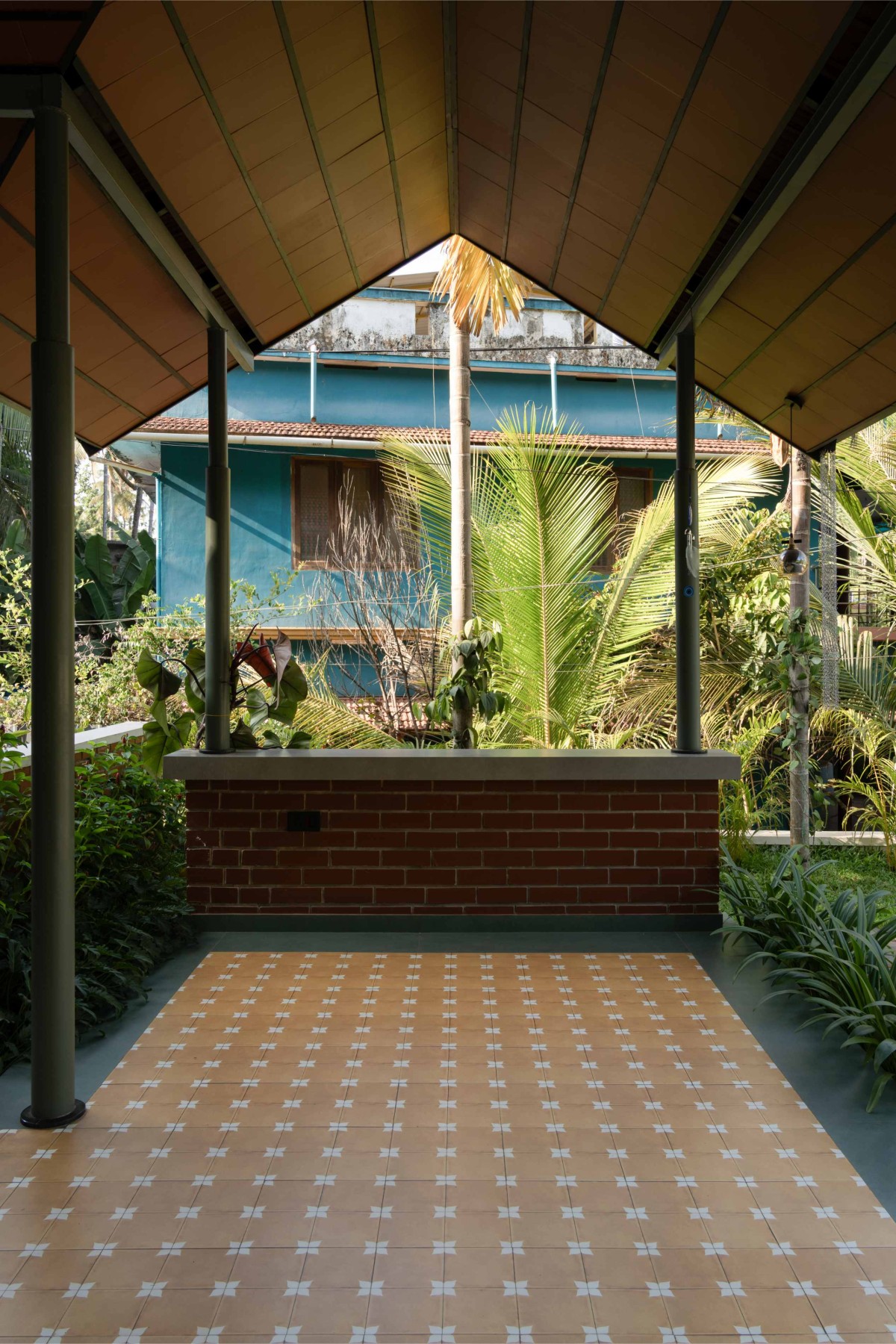
Sitout of Drupadam by Akhil Albin Architects
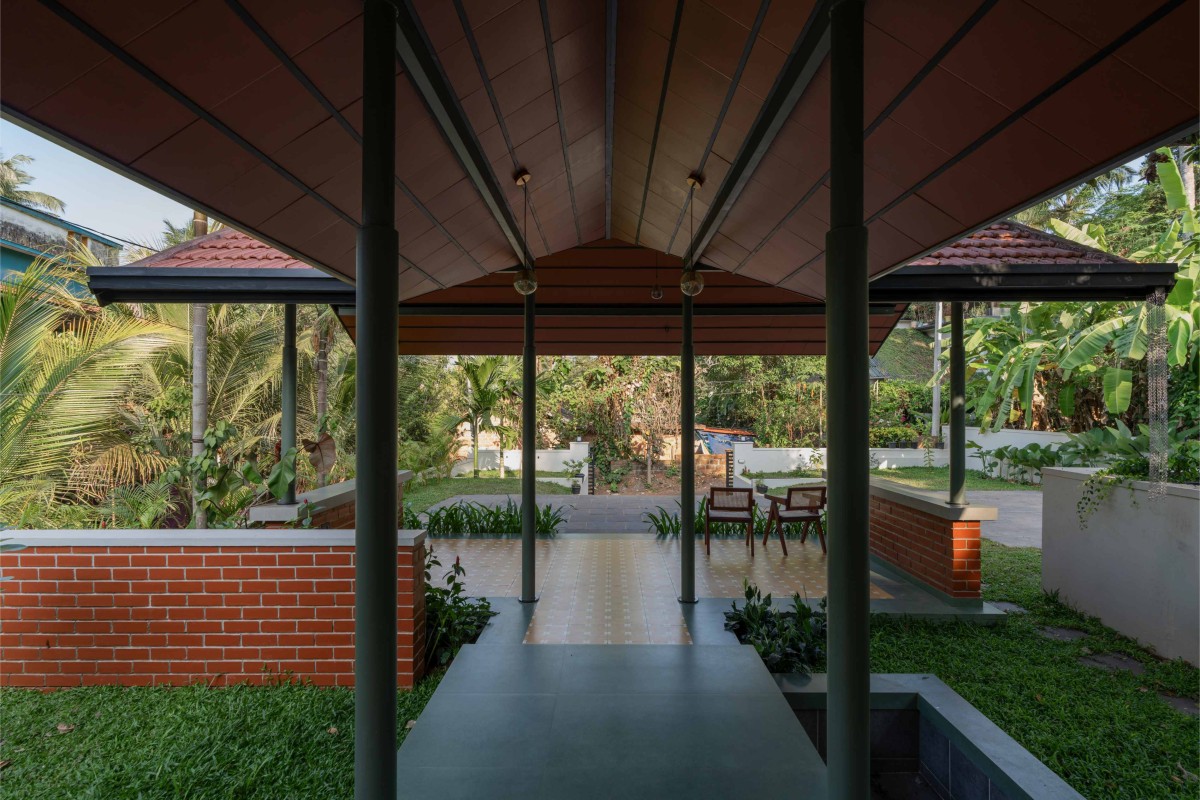
Verandah of Drupadam by Akhil Albin Architects
Verandah of Drupadam by Akhil Albin Architects
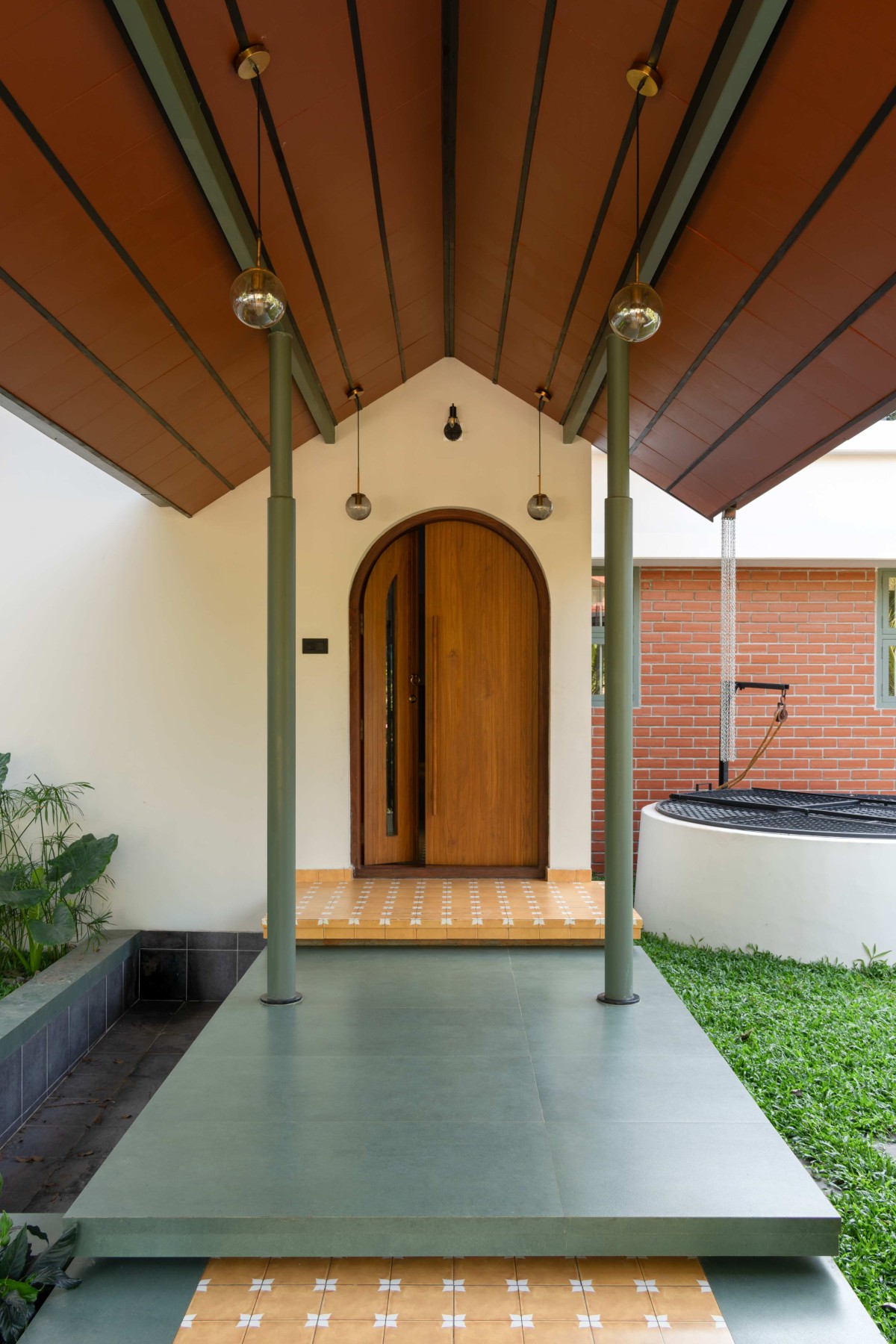
View from entrance of Drupadam by Akhil Albin Architects
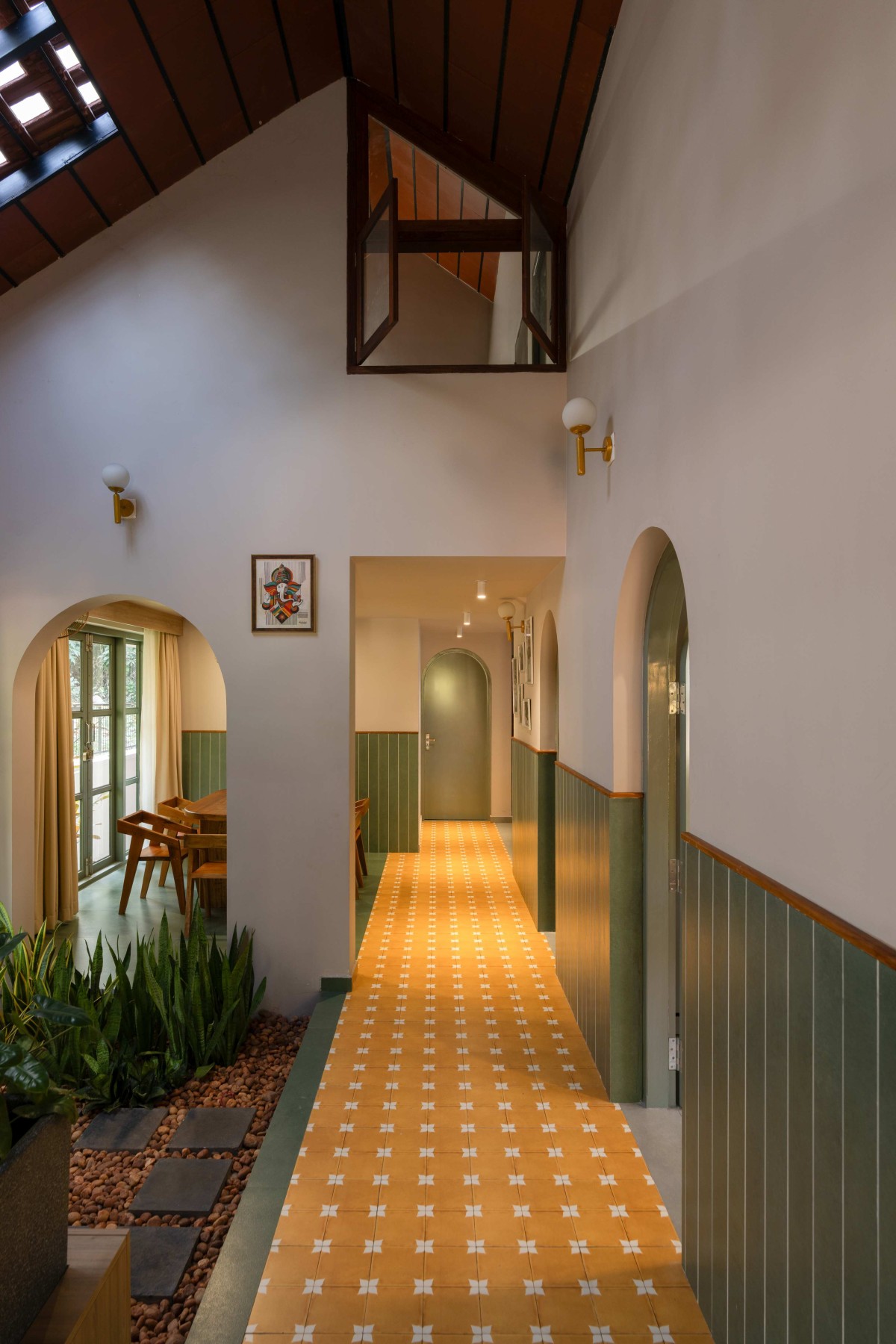
Corridor of Drupadam by Akhil Albin Architects
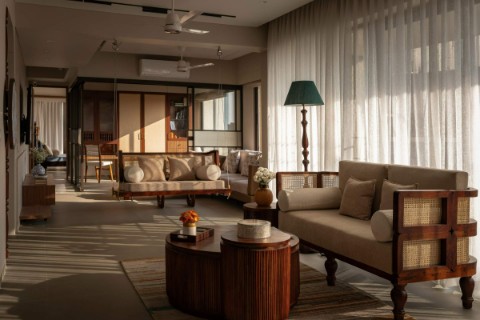
At the centre of the residence lies a courtyard positioned between the living and dining spaces — a contemporary interpretation of the traditional Kerala nadumuttam. Anchored by a skylight above, the courtyard becomes both climatic mediator and emotional anchor, drawing daylight deep into the interiors while encouraging natural ventilation across the house. Throughout the day, filtered sunlight washes across textured walls, muted surfaces, and earthy flooring, creating moments of chiaroscuro that lend the interiors a contemplative softness. During the monsoon, the courtyard transforms into an atmospheric pause within the home, where the sound of rain and shifting shadows heighten the sensory experience of inhabitation.
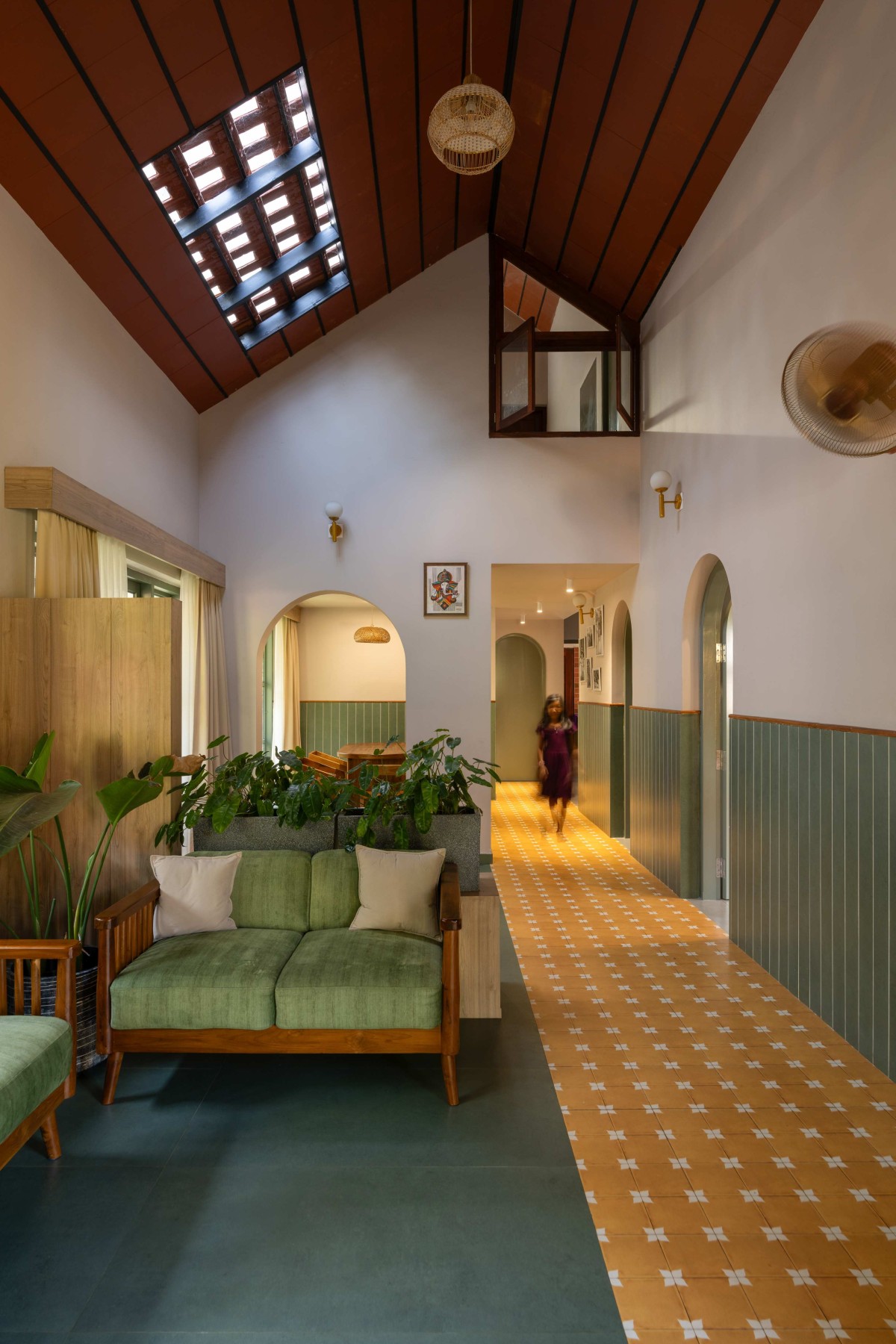
Living room of Drupadam by Akhil Albin Architects
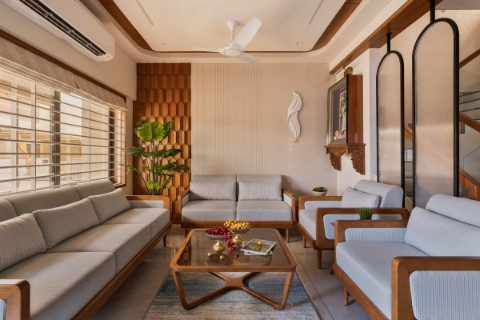
The verticality of the living space is balanced by an underlying intimacy that defines the home’s character. A mezzanine level overlooking the living room introduces visual connectivity across spaces, particularly through the children’s bedroom, whose internal window frames views into the shared family spaces below. This connection allows sound, movement, and interaction to travel gently between levels, transforming the mezzanine into more than an isolated upper floor. Instead, it becomes an extension of the collective domestic experience — playful, interactive, and emotionally connected.
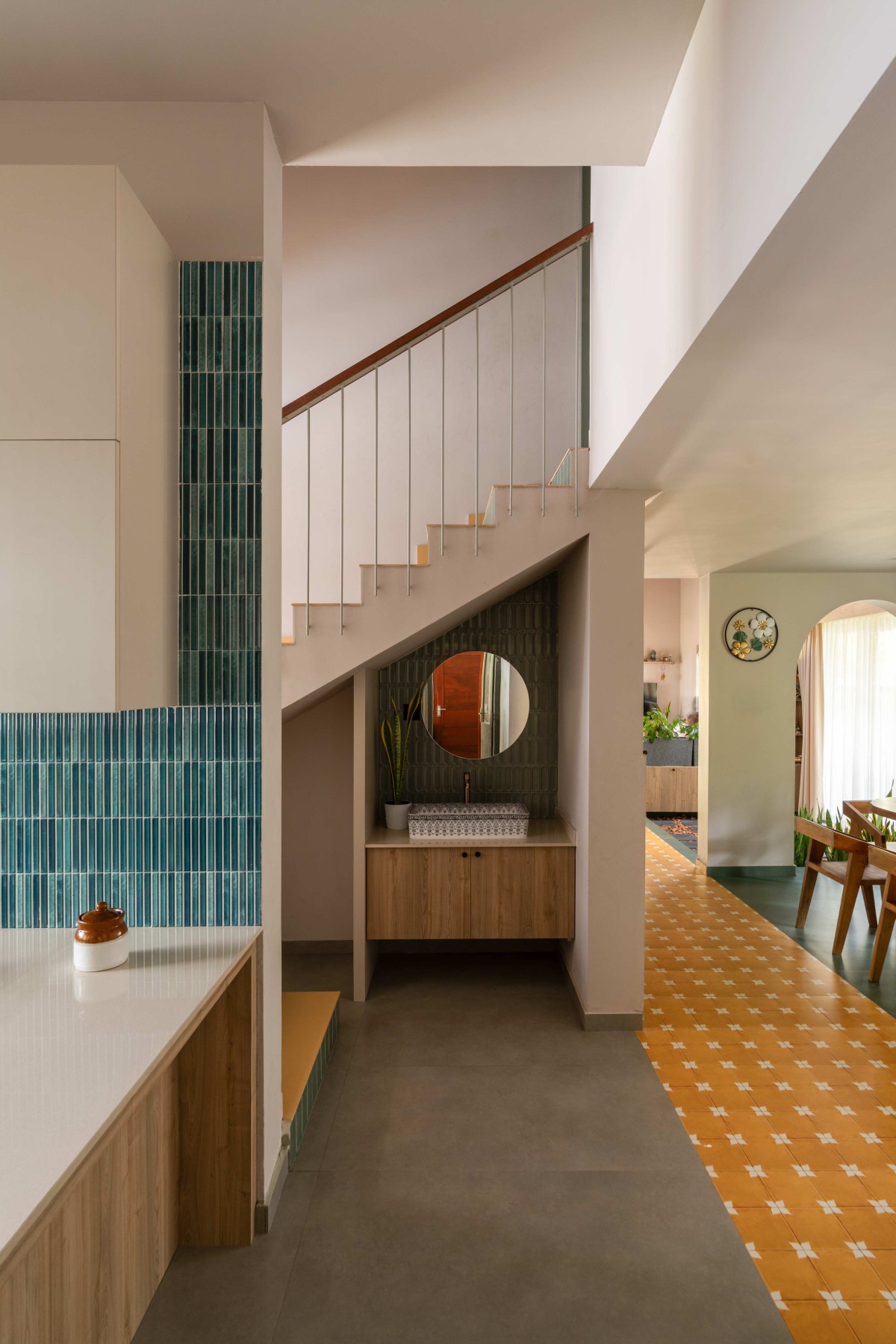
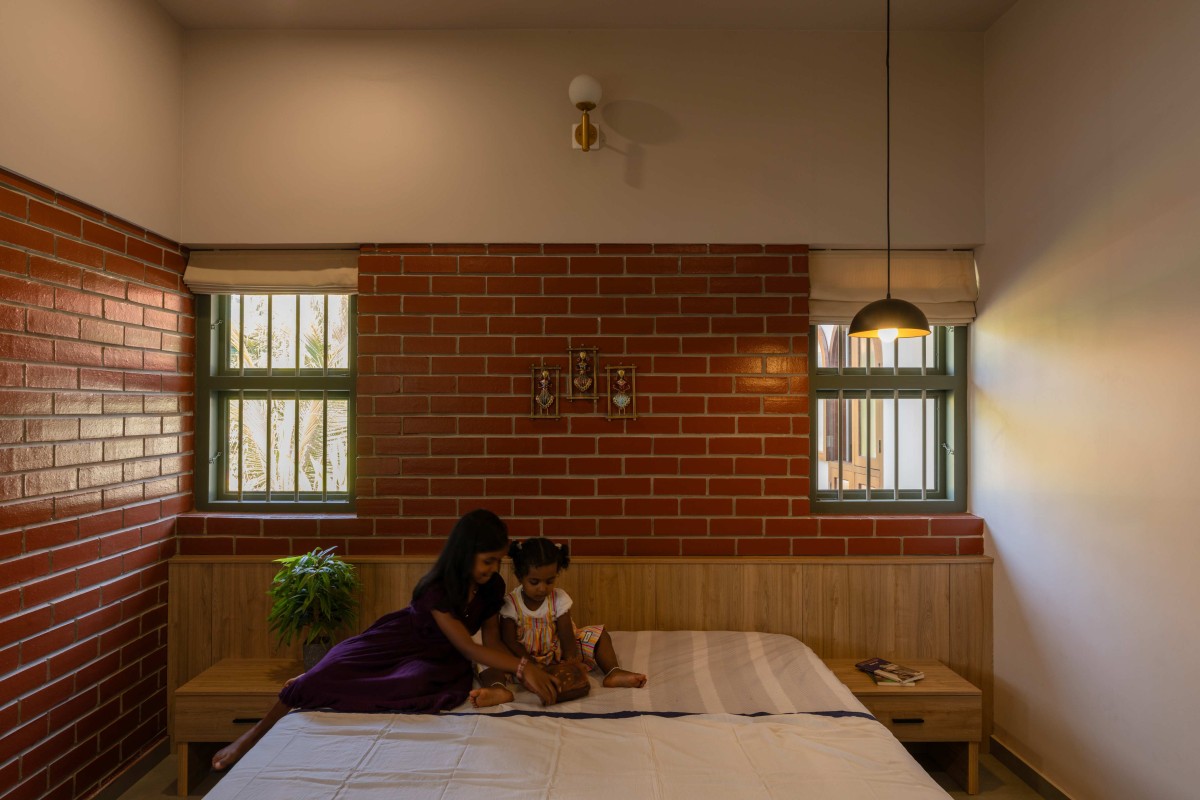
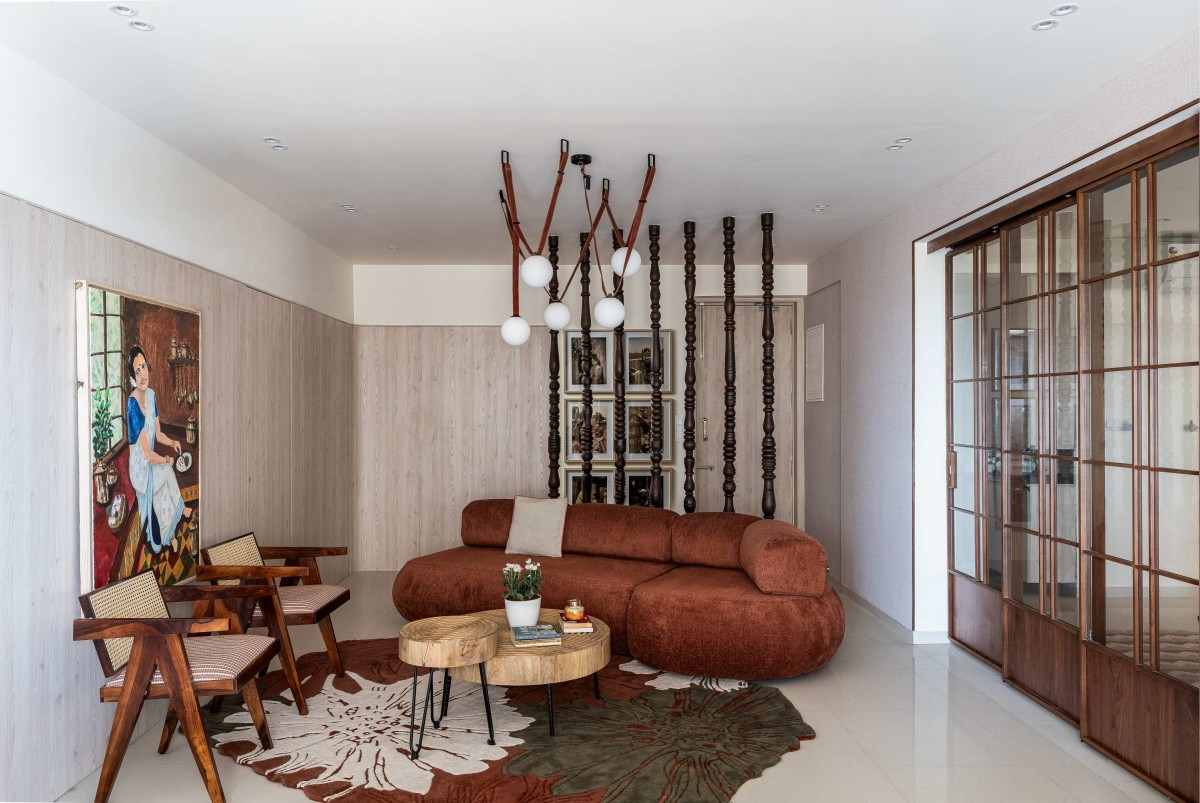
Materiality throughout the residence follows a philosophy of restraint and honesty. Exposed brick surfaces, textured plastered walls, handcrafted wooden furniture, and muted earthy finishes establish a tactile palette that feels grounded and enduring. Pigmented yellow Athangudi-inspired tiles punctuate key thresholds, particularly within the sit-out spaces, introducing moments of warmth and vibrancy against the otherwise subdued material language. Sage-green wall panelling, natural timber tones, and matte finishes further soften the interiors, while the juxtaposition of rough textures against smoother tiled surfaces creates a subtle tectonic contrast that celebrates craftsmanship over ornamentation.
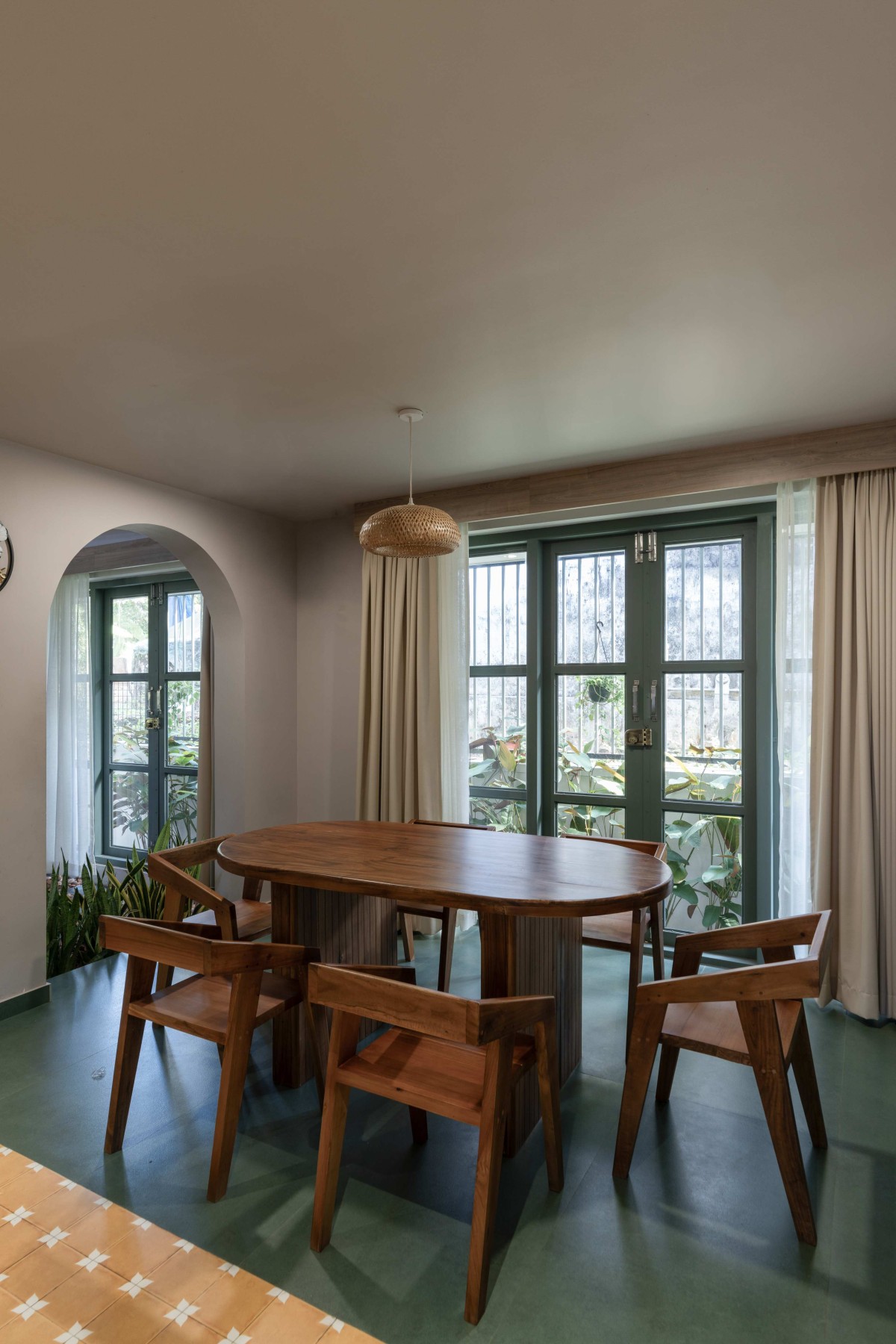
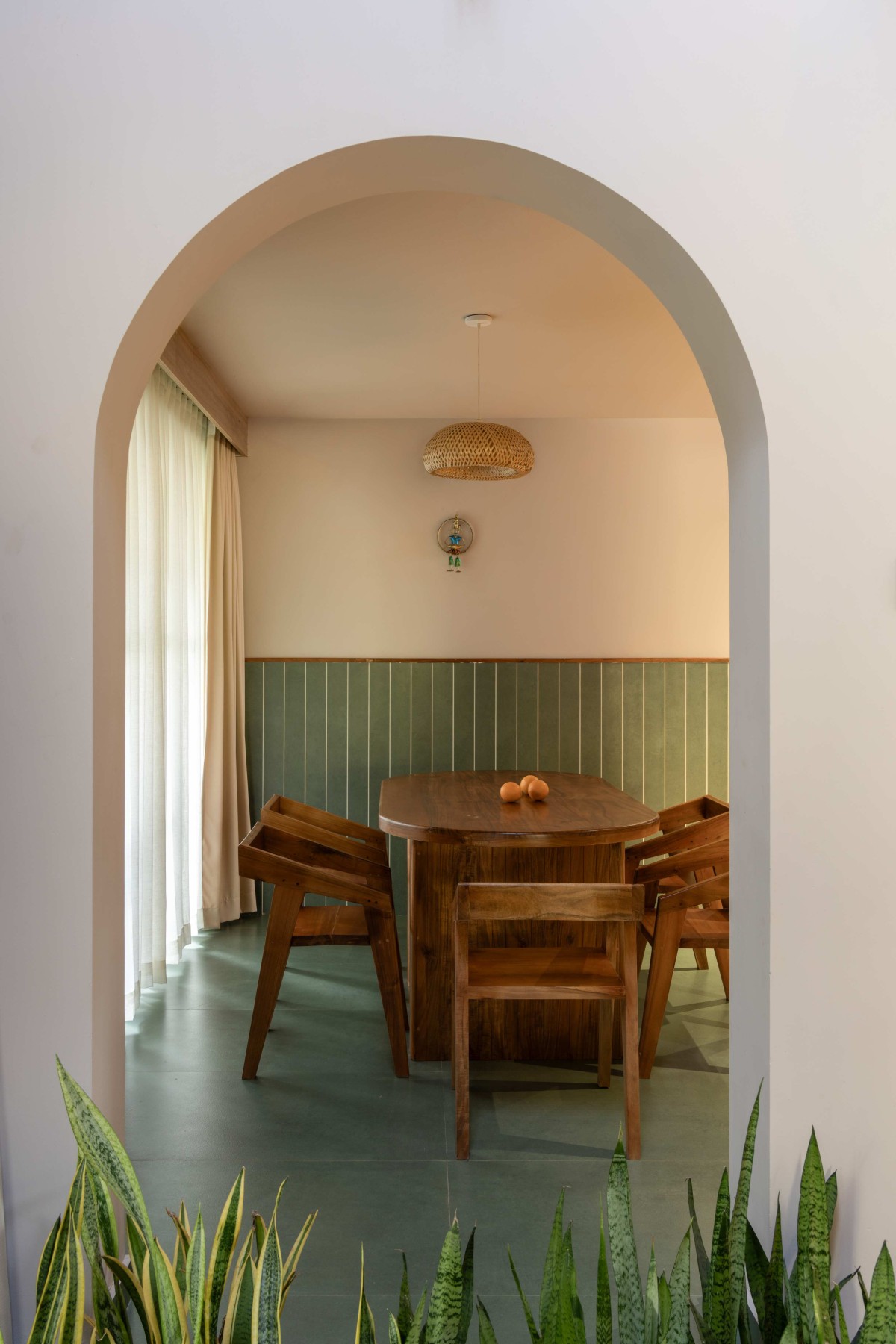
Dining of Drupadam by Akhil Albin Architects
Dining of Drupadam by Akhil Albin Architects
Passage to hand wash nook of Drupadam by Akhil Albin Architects
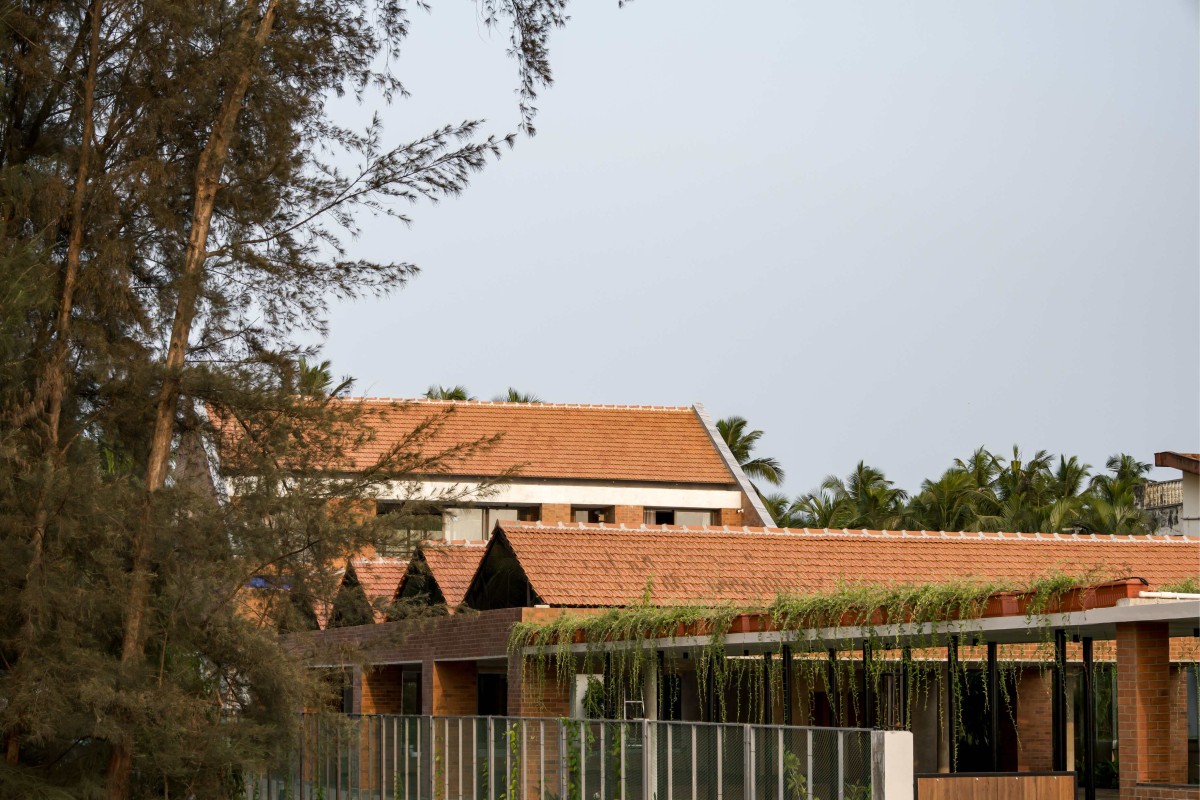
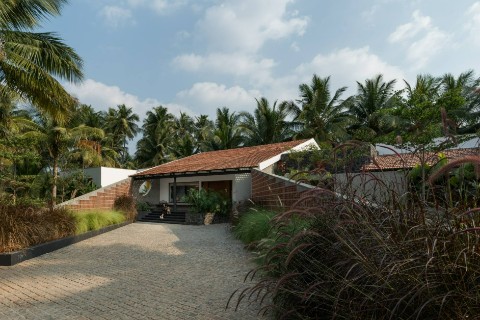
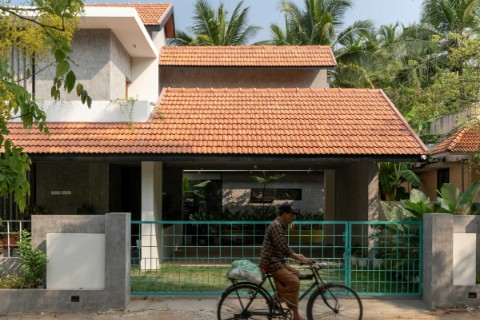
The sloping roofscape, deep overhangs, operable openings, and open planning collectively respond to Kerala’s tropical climate with quiet efficiency. Wide roof projections protect the interiors from harsh sun and heavy rainfall, while shaded verandah-like spaces blur the threshold between indoors and outdoors. Natural ventilation is prioritised throughout, reducing dependence on mechanical cooling while ensuring the house remains breathable even during humid months. This sensitivity extends into the landscape design as well. Hardscape has been intentionally minimised, limited only to essential pathways, allowing the site to remain largely porous and green. Existing vegetation and dense planting soften the built edges, ensuring the architecture settles gently into its environment rather than dominating it.
Rather than relying on spectacle, DRUPADAM finds richness in atmosphere, proportion, and climatic sensitivity. The house embraces a quieter architectural language — one rooted in softened thresholds, filtered light, tactile materiality, and the rhythms of tropical living. In doing so, it reimagines the Kerala home not as a nostalgic recreation, but as an evolving domestic landscape where vernacular memory and contemporary life coexist with restraint, warmth, and enduring relevance.
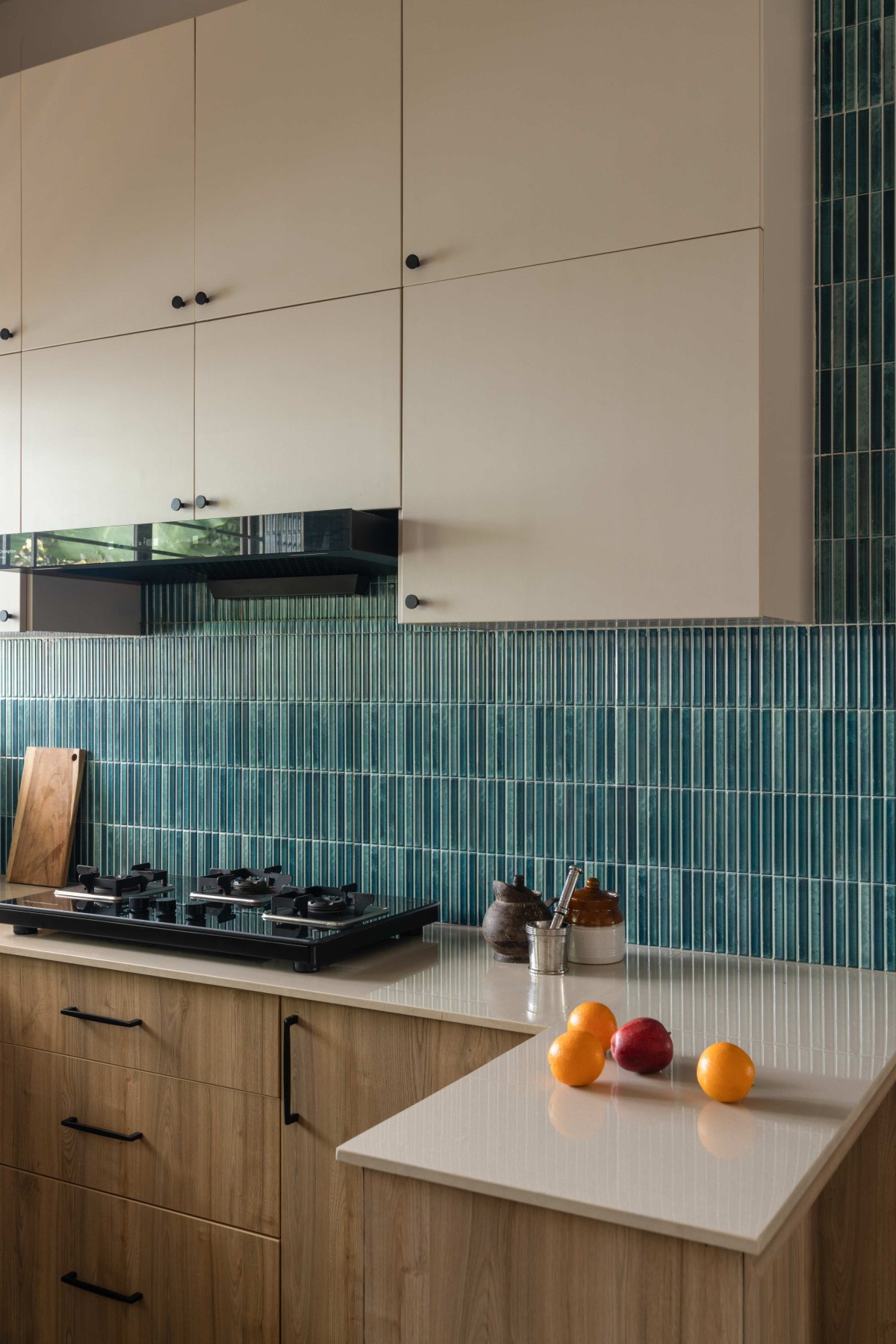
Kitchen of Drupadam by Akhil Albin Architects
Bedroom of Drupadam by Akhil Albin Architects