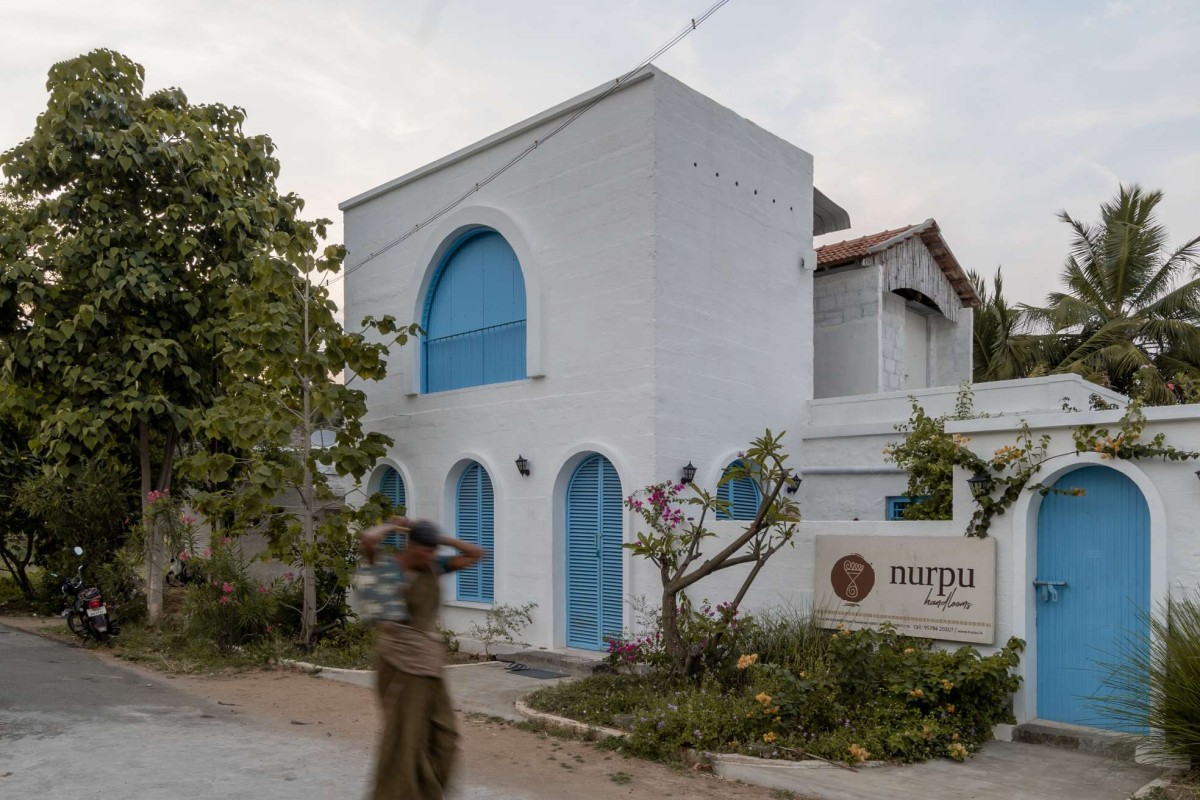
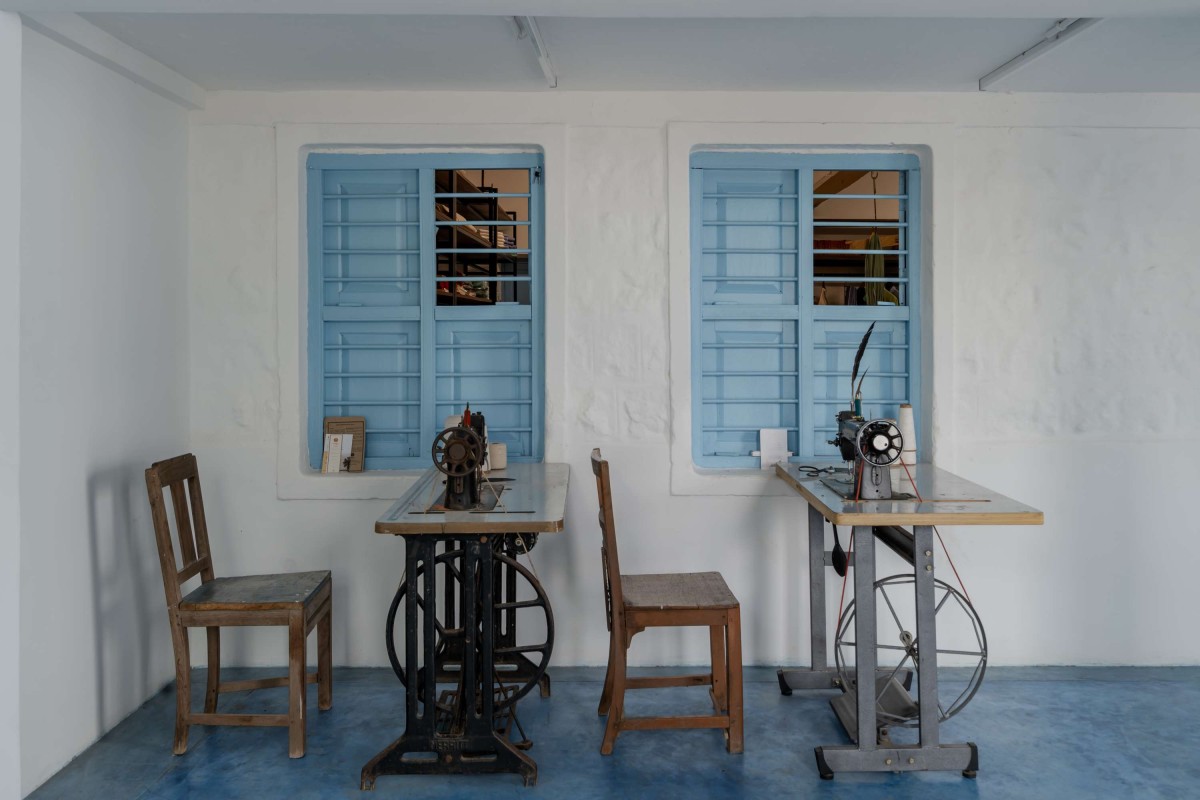
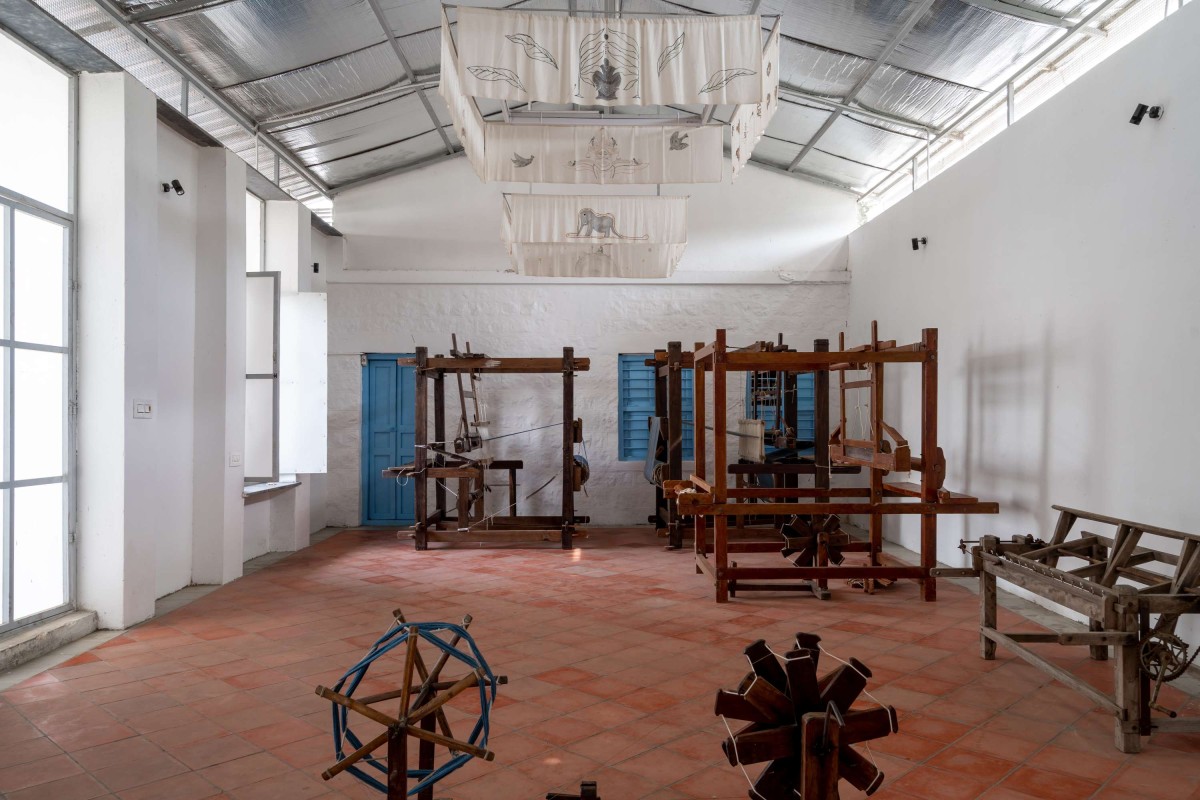
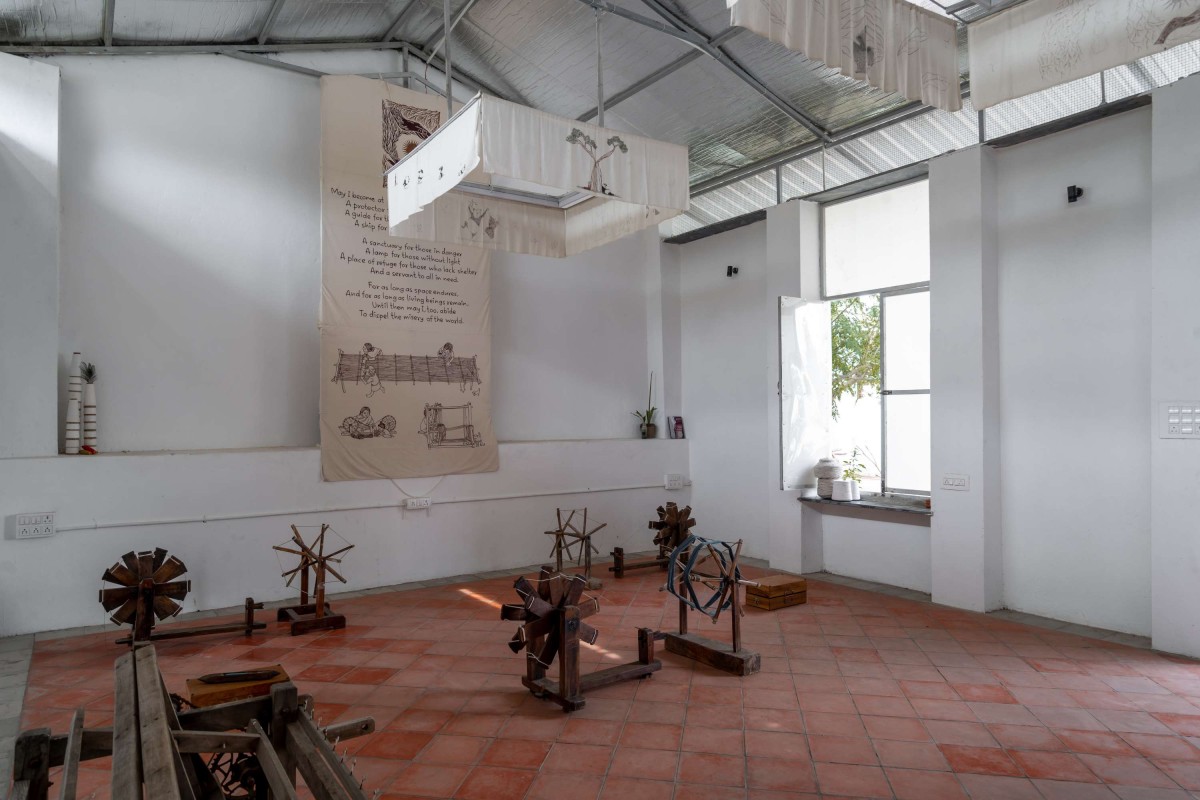
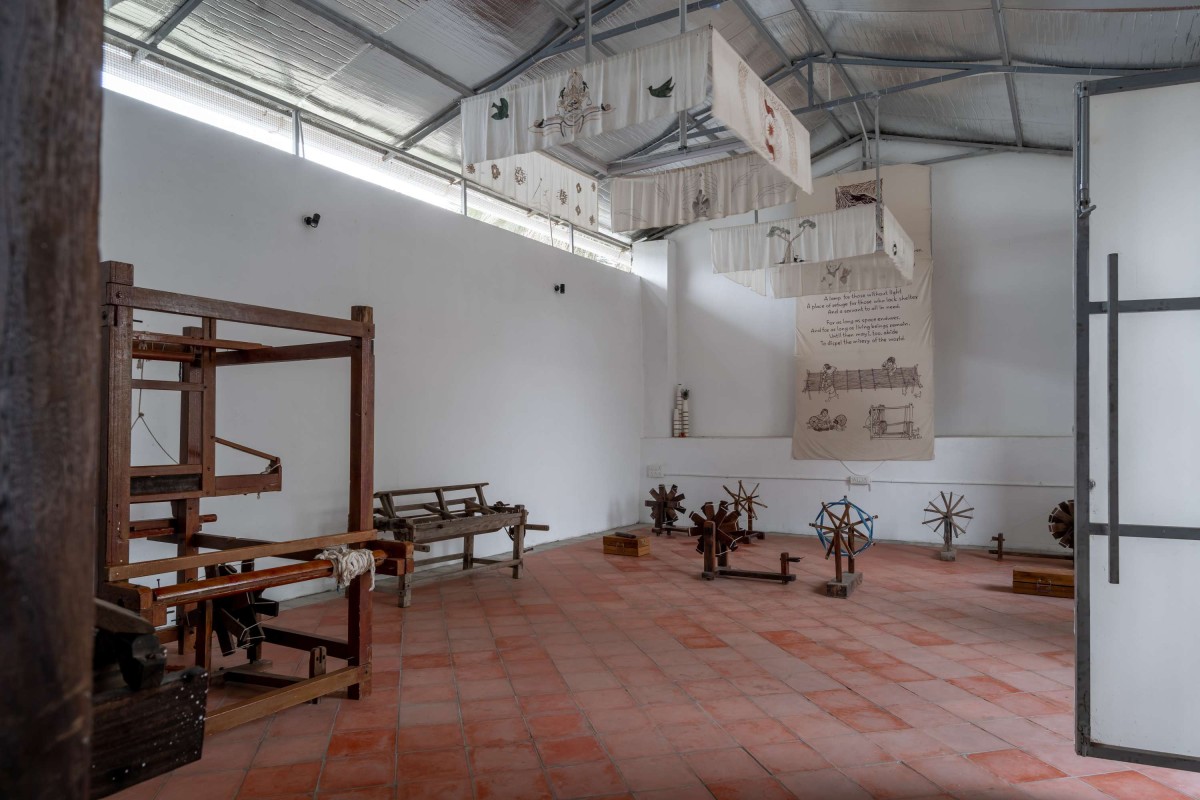
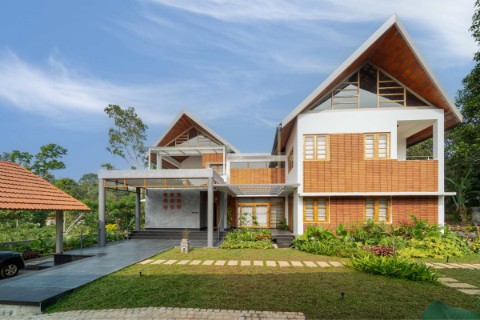
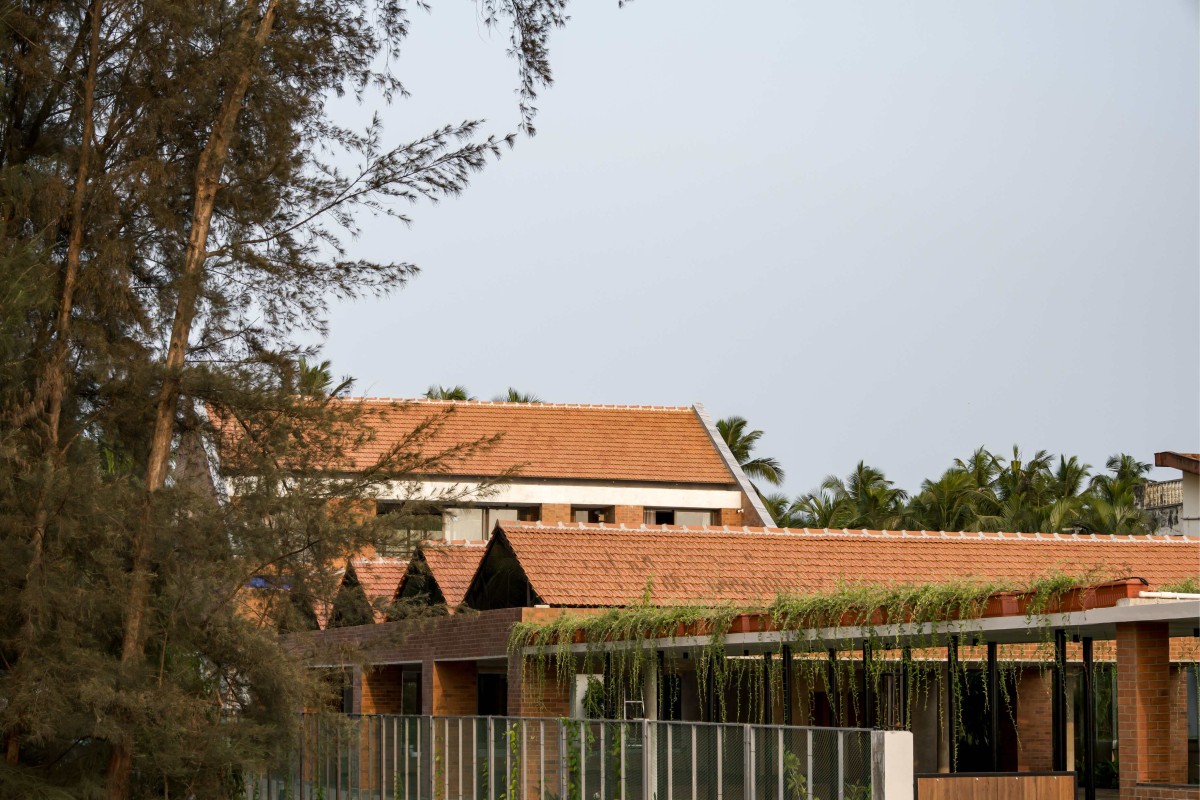
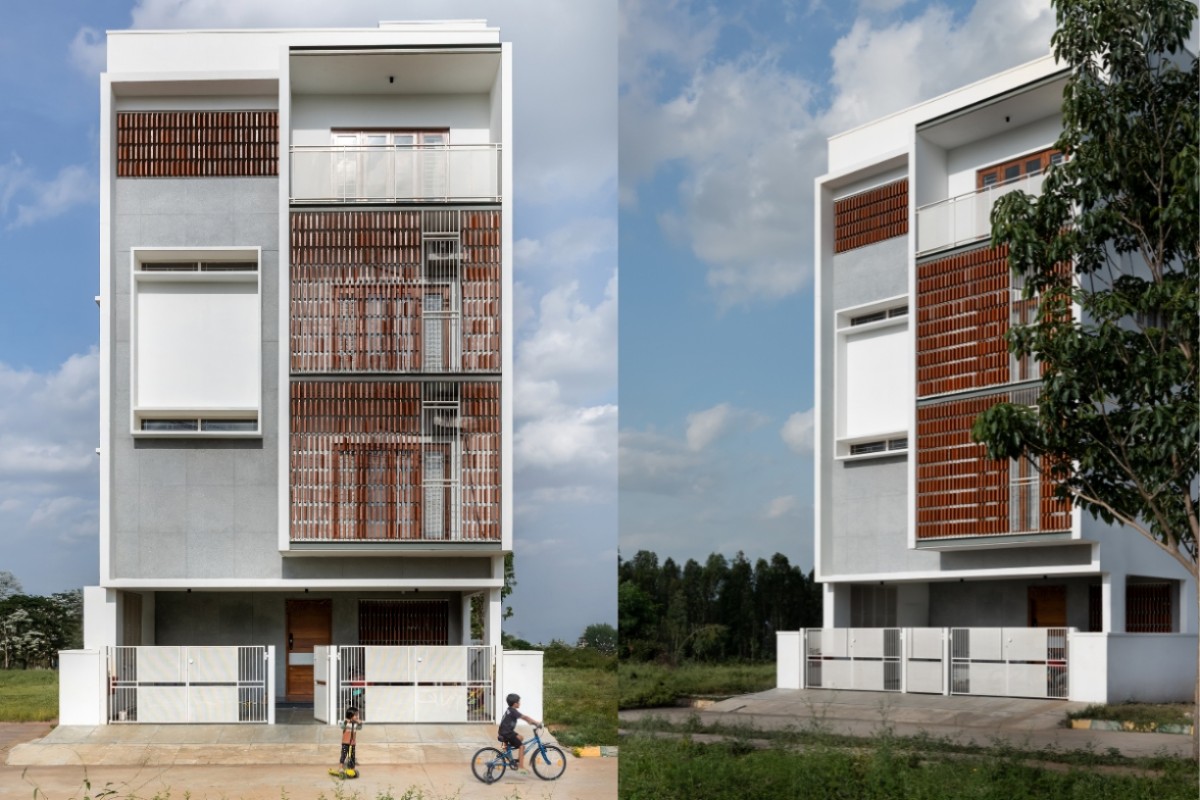
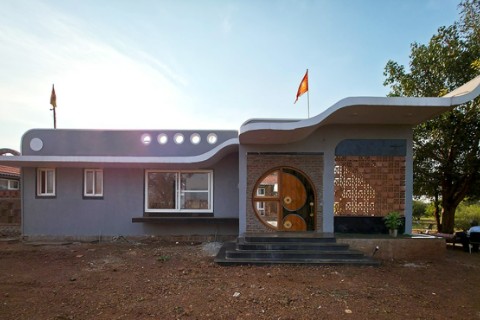
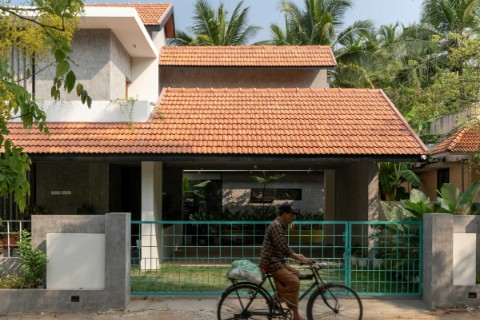
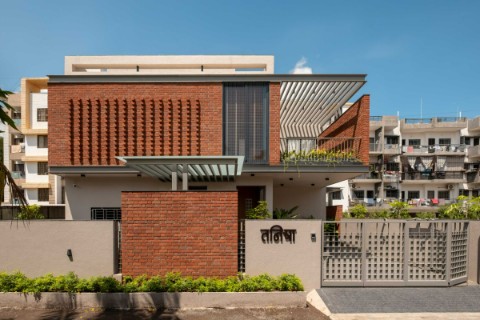
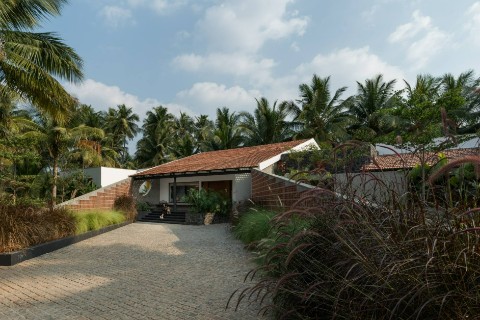
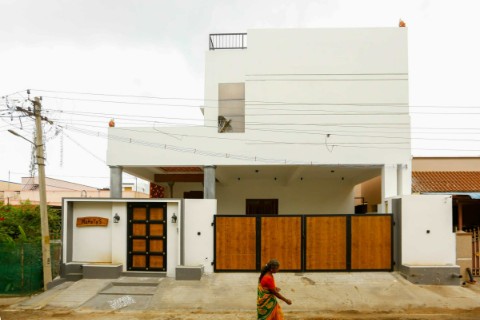
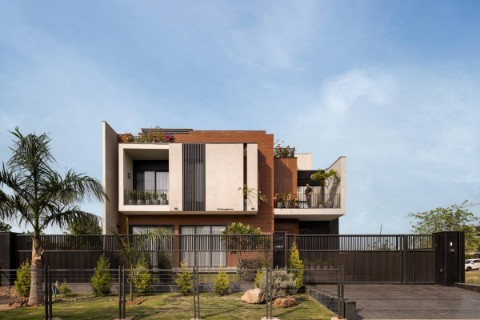
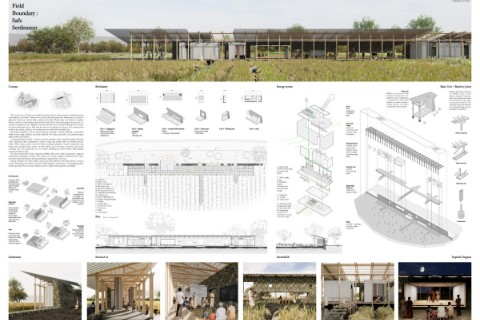
Exterior view of Nurpu Handloom School by Aagaram Architects
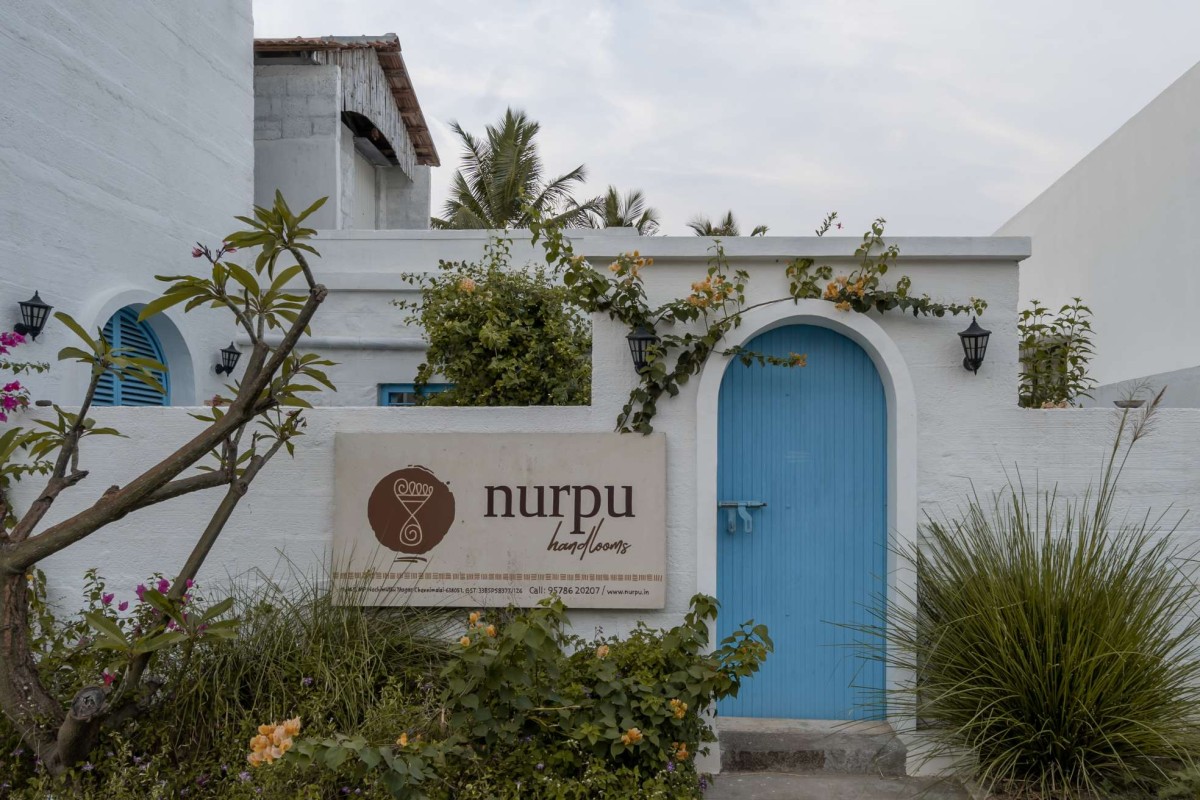
Entrance of Nurpu Handloom School by Aagaram Architects
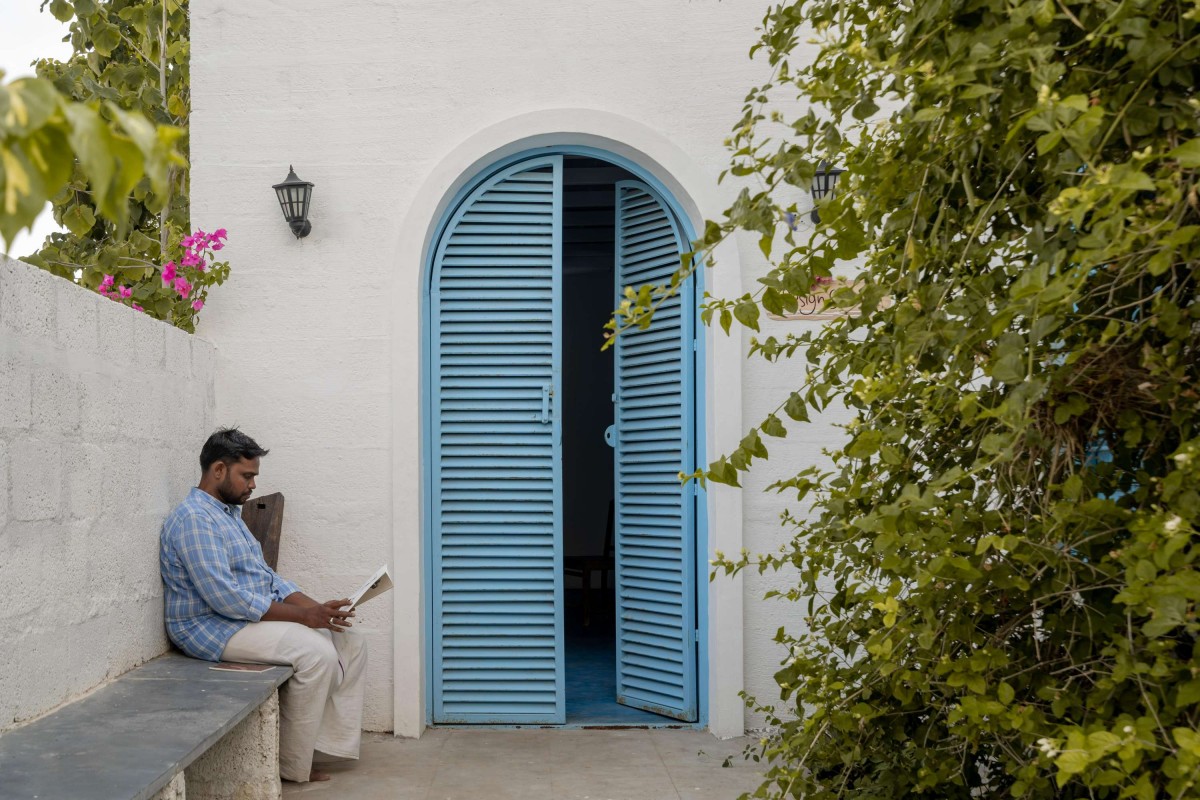
Sitout of Nurpu Handloom School by Aagaram Architects
Based on the fundamental ideas of:
● Low-cost building, the project demonstrates a multi-layered and sustainable construction approach.
● Maximum space efficiency
● Fast construction time
● Comfort in terms of temperature
● Material and visual interaction with the environment
One of the main strategies is to retrofit load-bearing brick walls from the old structures, which lowers waste and structural costs.
● New first-floor slabs were constructed with Kadappa stone slabs and mild steel trusses, which ensured quick assembly and lightweight structural loads.
● Filler slab construction with coconut shells and stone pieces added texture, decreased cement use, and improved thermal insulation.
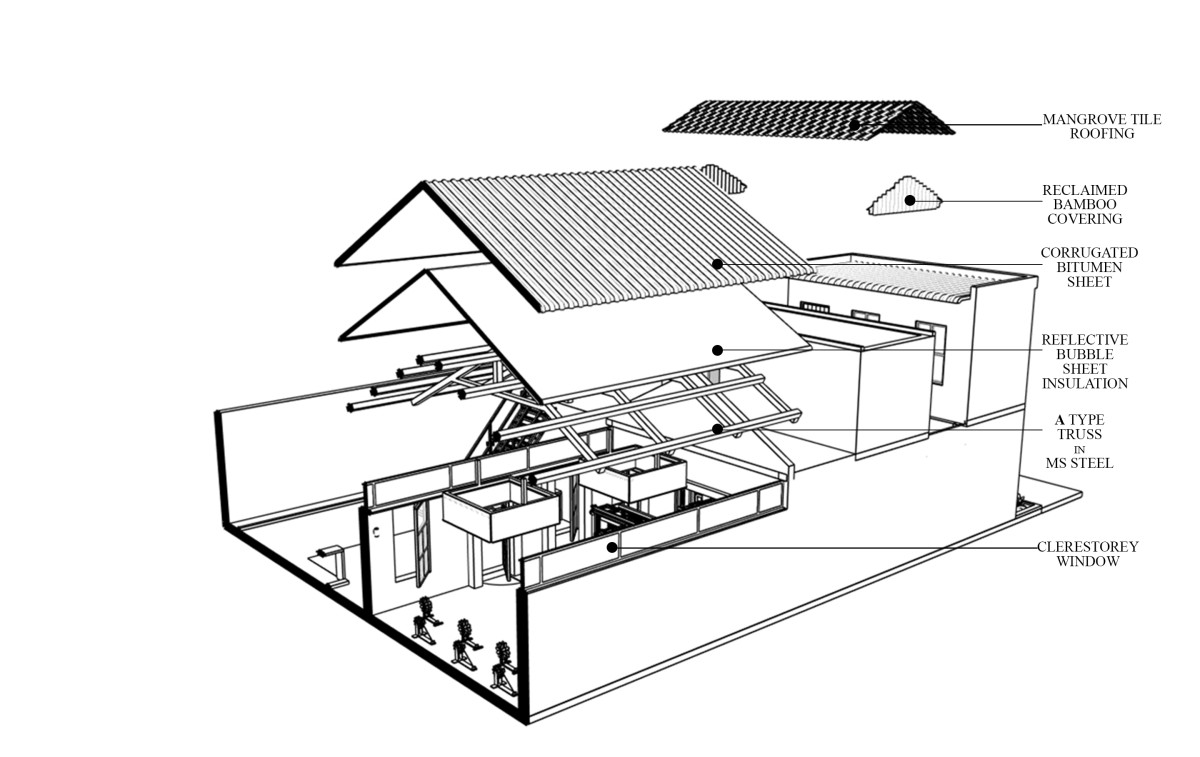
● Corrugated GI sheets were used for roofing, which were insulated with aluminium foil underneath to create thermal buffer zones and deflect heat.
In order to limit direct solar gain on walls, deep overhangs and shading devices were installed, together with louvered high-level apertures and north-facing skylights to attract indirect light and hot air escape routes.
All methods guaranteed maximum comfort without relying on artificial cooling and a small environmental impact.
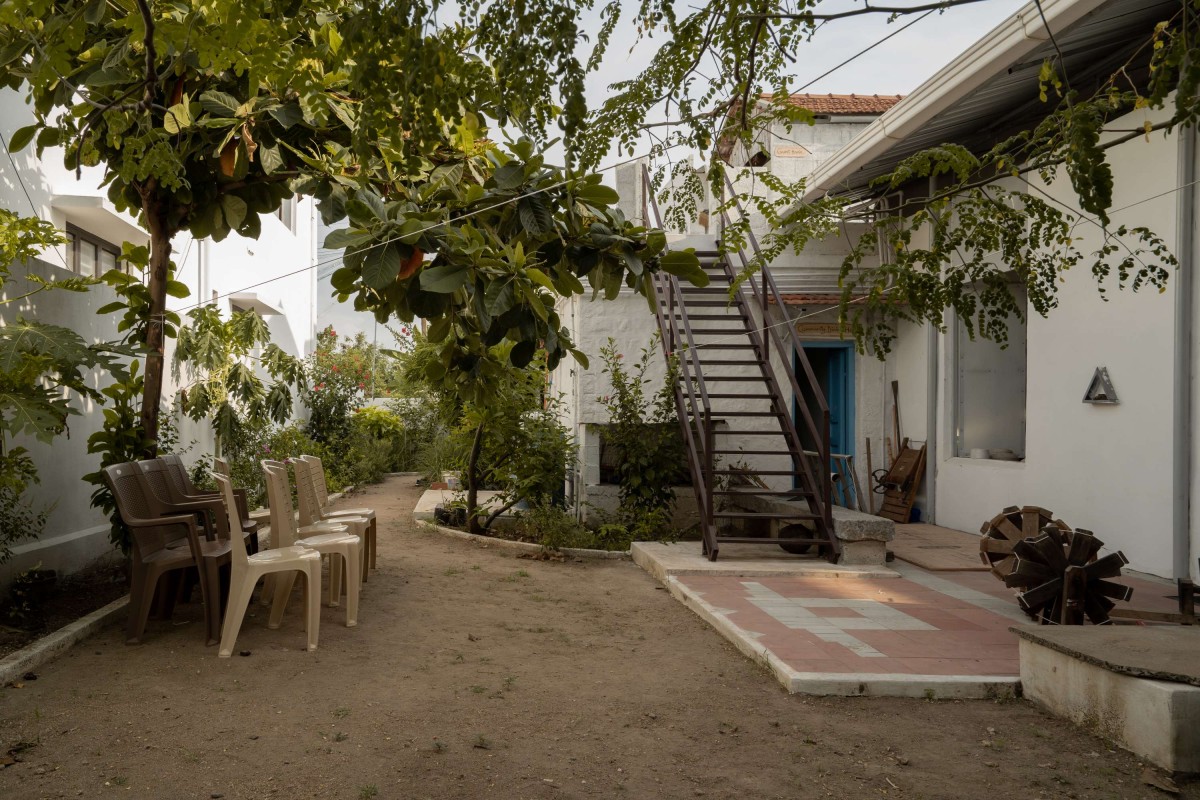
Outdoor court of Nurpu Handloom School by Aagaram Architects
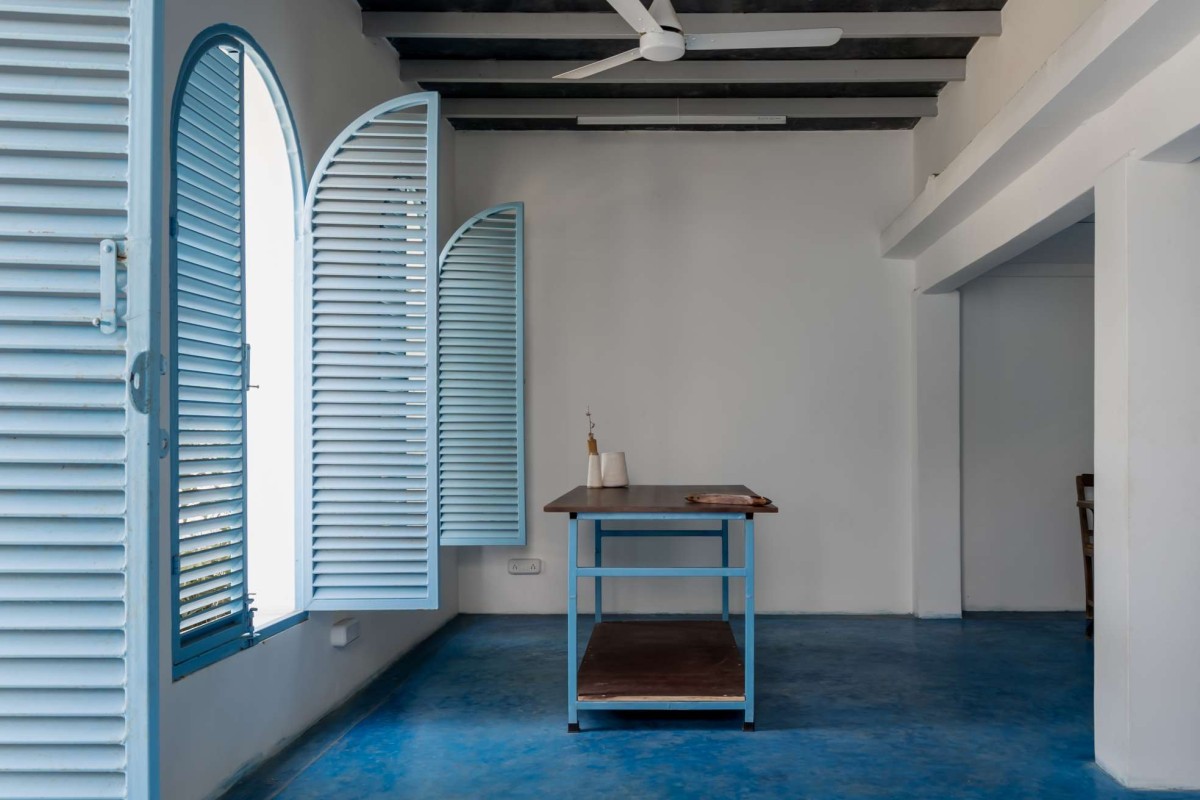
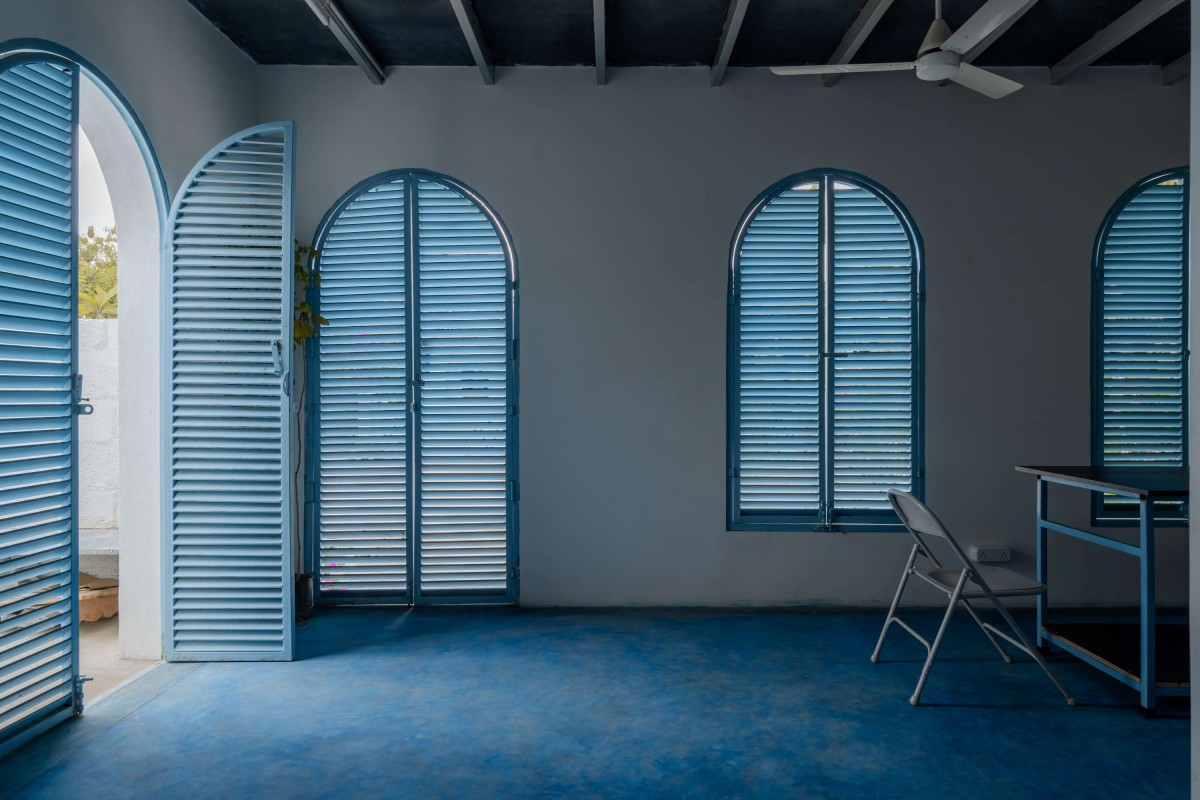
Studio of Nurpu Handloom School by Aagaram Architects
Durability, reusability, and local availability all played a role in the material selection process:
● Gypsum-plastered interior walls and unplastered concrete block outside walls, balancing cost and performance.
● Widespread use of salvaged materials, such as steel rods from disassembled sections, stone slabs for thresholds, and wood for doors and windows; flooring completed in terracotta tiles, natural stone, and red oxide—all locally sourced and laid using traditional methods.
As an architectural language, roughness and texture are celebrated in the resulting aesthetic, which is both unadulterated and grounded.
By carefully disassembling, cataloguing, and reincorporating doors, windows, rafters, old bricks, and even floor slabs, the project was able to reduce its material budget while also preserving the memory of the original structures, allowing the school to "grow out" of its location. This was a key component of the project's success.
Additionally, by lowering new procurement delays and promoting circular construction logic, the procedure aided in the quick turnaround of building.
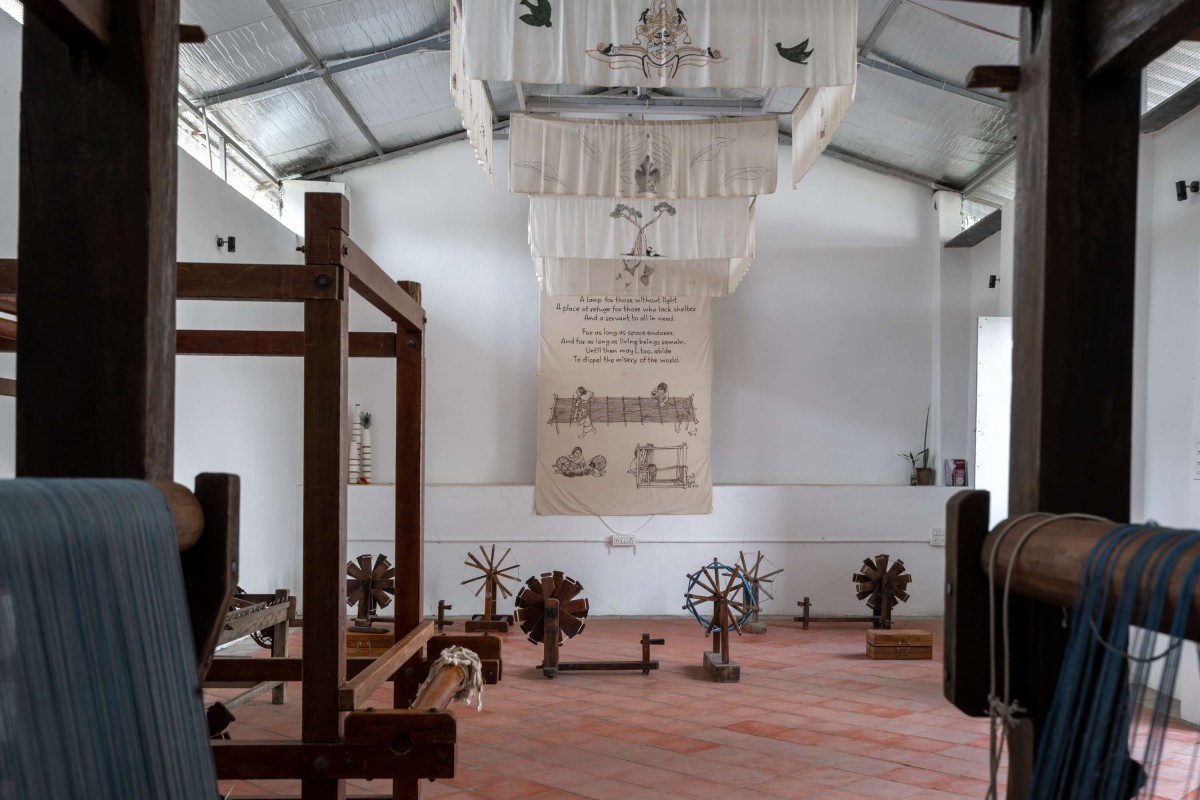
Weaving school of Nurpu Handloom School by Aagaram Architects
Weaving school of Nurpu Handloom School by Aagaram Architects
The school has a variety of spaces, including:
● Classrooms that double as weaving studios
● Common areas for warping and dying
● Shared housing units for volunteers and students
● Outdoor work courtyards
● Storage and service sections that are effectively planned within leftover site pockets These are all connected by spill-out areas and shaded passageways, which facilitate seamless transitions between activities.
Climate Responsiveness and Comfort
Thermal comfort was a non-negotiable design priority, addressed through:
● Passive ventilation strategies: stack effect, cross-breezes, shaded courtyards.
● Material massing: stone slabs and thick walls act as thermal buffers.
● Insulated roofing and ventilated roof cavities to cut down heat transfer.
● Minimal mechanical intervention, thereby keeping energy consumption near zero. These measures ensure that the school remains comfortable and functional year-round, even in Tamil Nadu’s hot summer months.
Boundary and Landscape
Similar to the structure, the boundary wall is a patchwork of repurposed materials, consisting of bricks, slabs, and stone debris that was found on the property. It reinforces the idea that learning is not limited but rather connected to its surroundings since it is porous and non-threatening. Native plants, soil retention patches, and unpaved courtyards for percolation and usability are among the simple yet ecologically sensitive landscape elements.
Weaving school of Nurpu Handloom School by Aagaram Architects
Weaving school of Nurpu Handloom School by Aagaram Architects
Display area of Nurpu Handloom School by Aagaram Architects
Community Engagement & Process
The process of construction was not top-down. It was locally resourced, participative, and incremental:
● Constructed in stages in accordance with labor schedules and financial constraints. Local artisans and masons, many of whom belonged to the same weaving family, were involved at every stage.
● Collective choices were taken on-site, allowing for flexibility and contextual problem- solving. As a result, the school has a homey, lived-in vibe that its users adore.
More than just a structure, the Nurpu Handloom School serves as an example of how design can foster continuity, community, climate, and craft. The project offers a modest, high- impact space that combines tradition with transition through careful reuse, cost-effective methods, and close engagement with place.
Display area of Nurpu Handloom School by Aagaram Architects
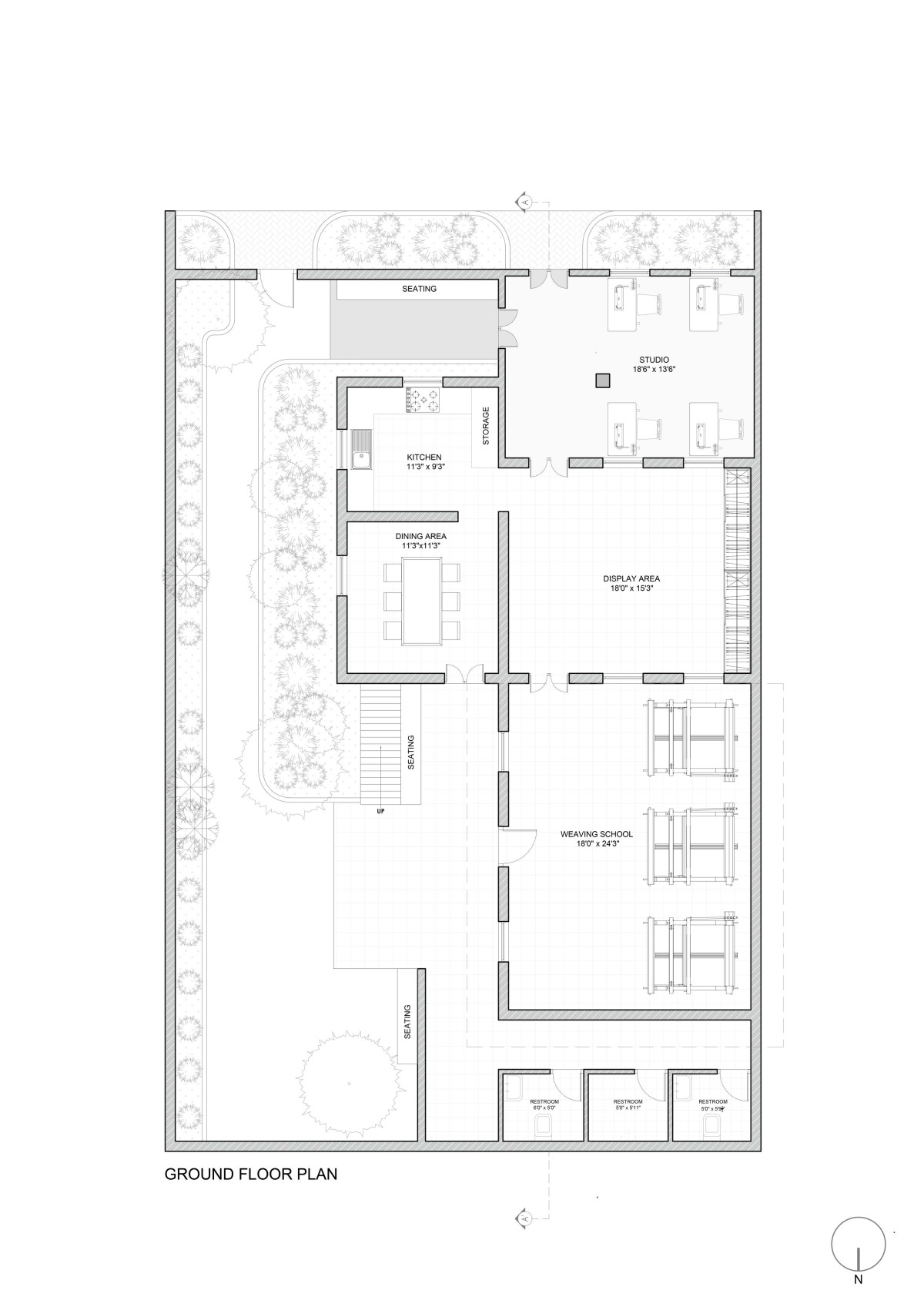
Ground Floor Plan of Nurpu Handloom School by Aagaram Architects
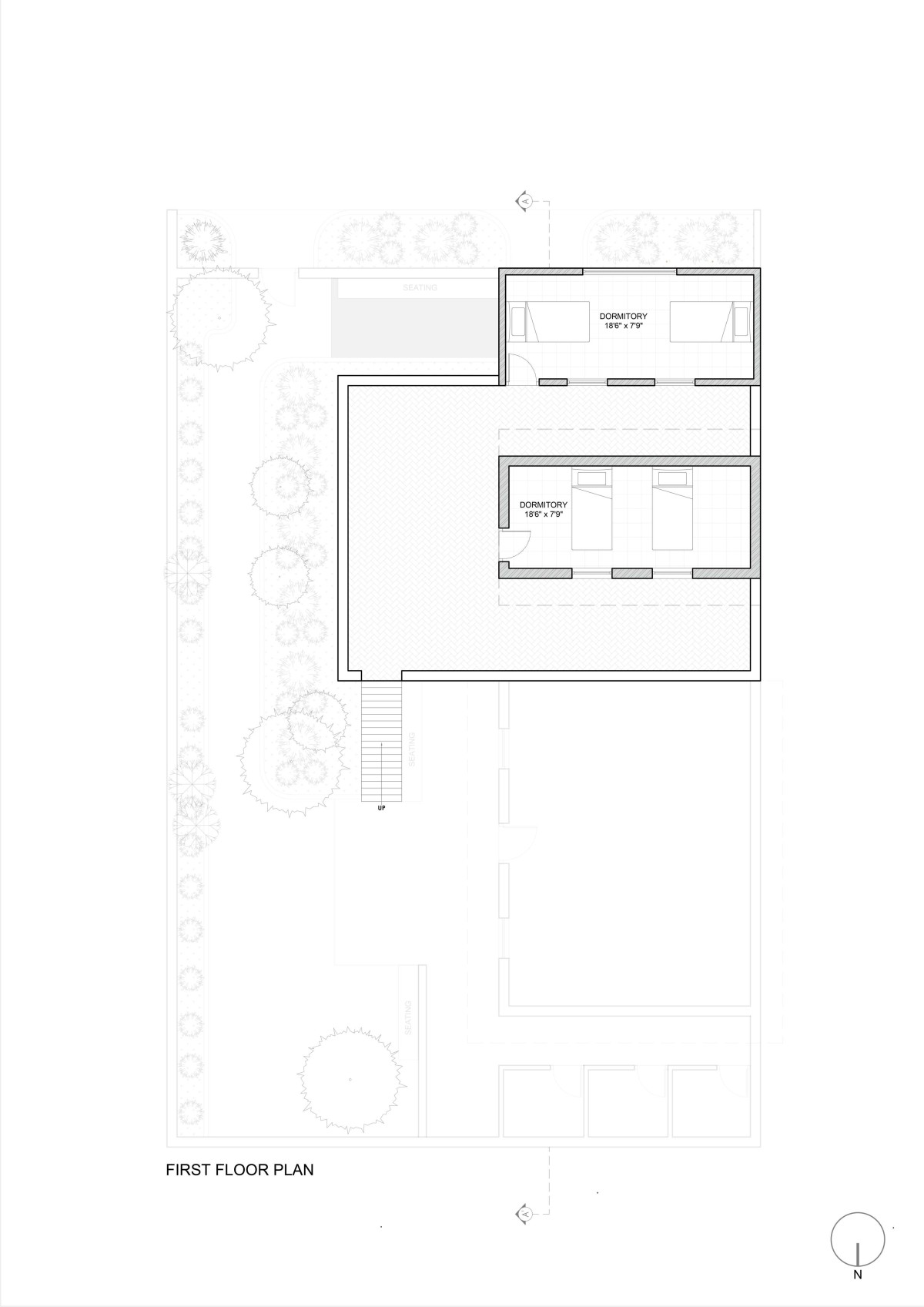
First Floor Plan of Nurpu Handloom School by Aagaram Architects
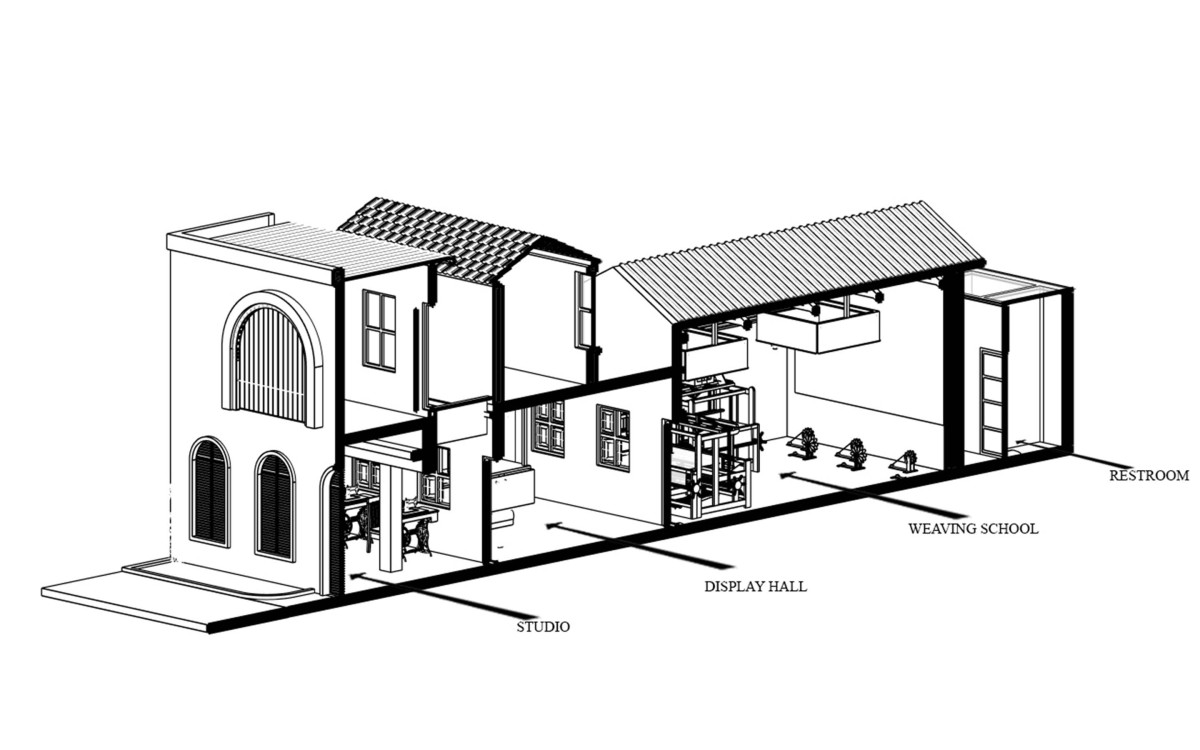
Isometric Section of Nurpu Handloom School by Aagaram Architects
Exploded view of Nurpu Handloom School by Aagaram Architects