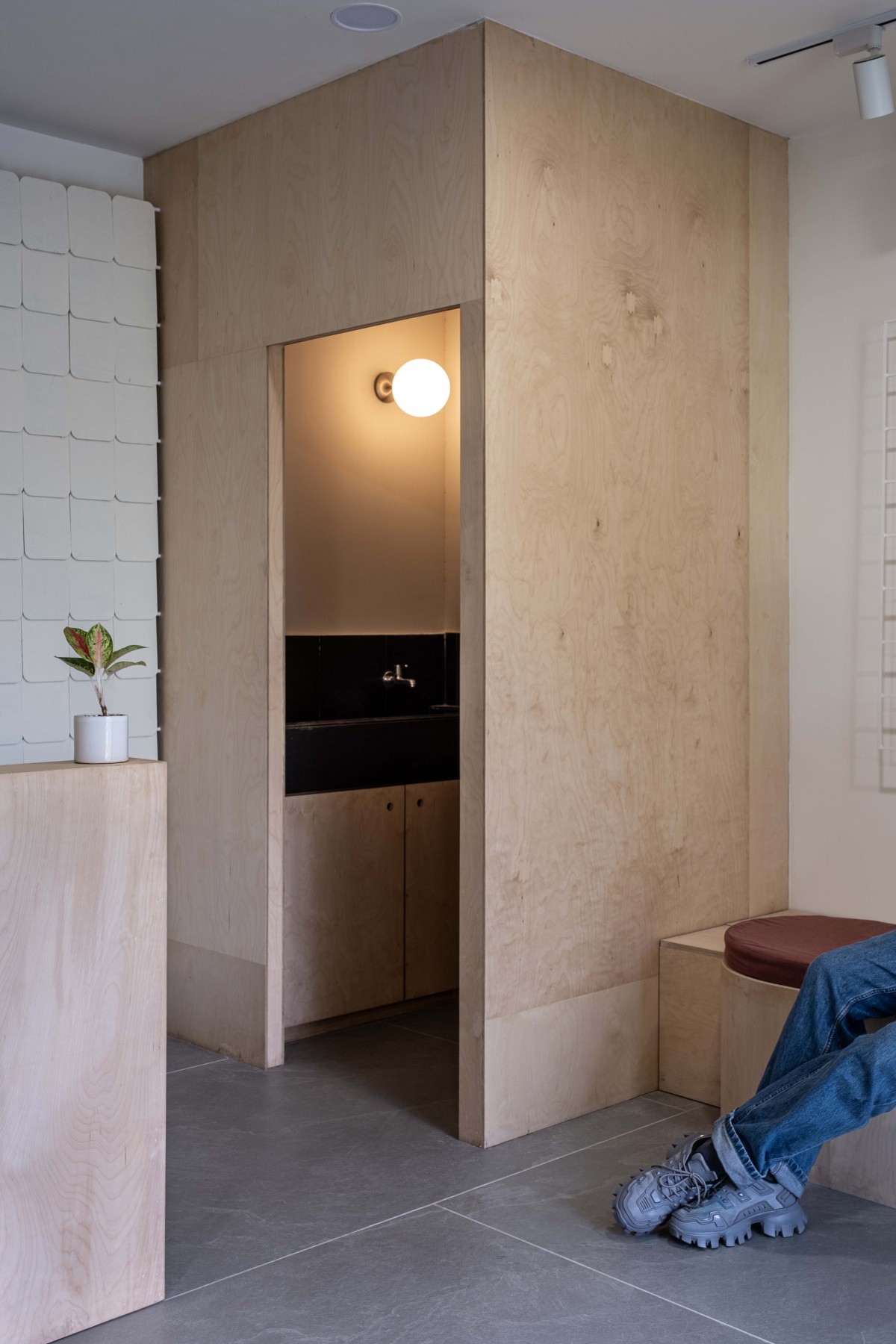
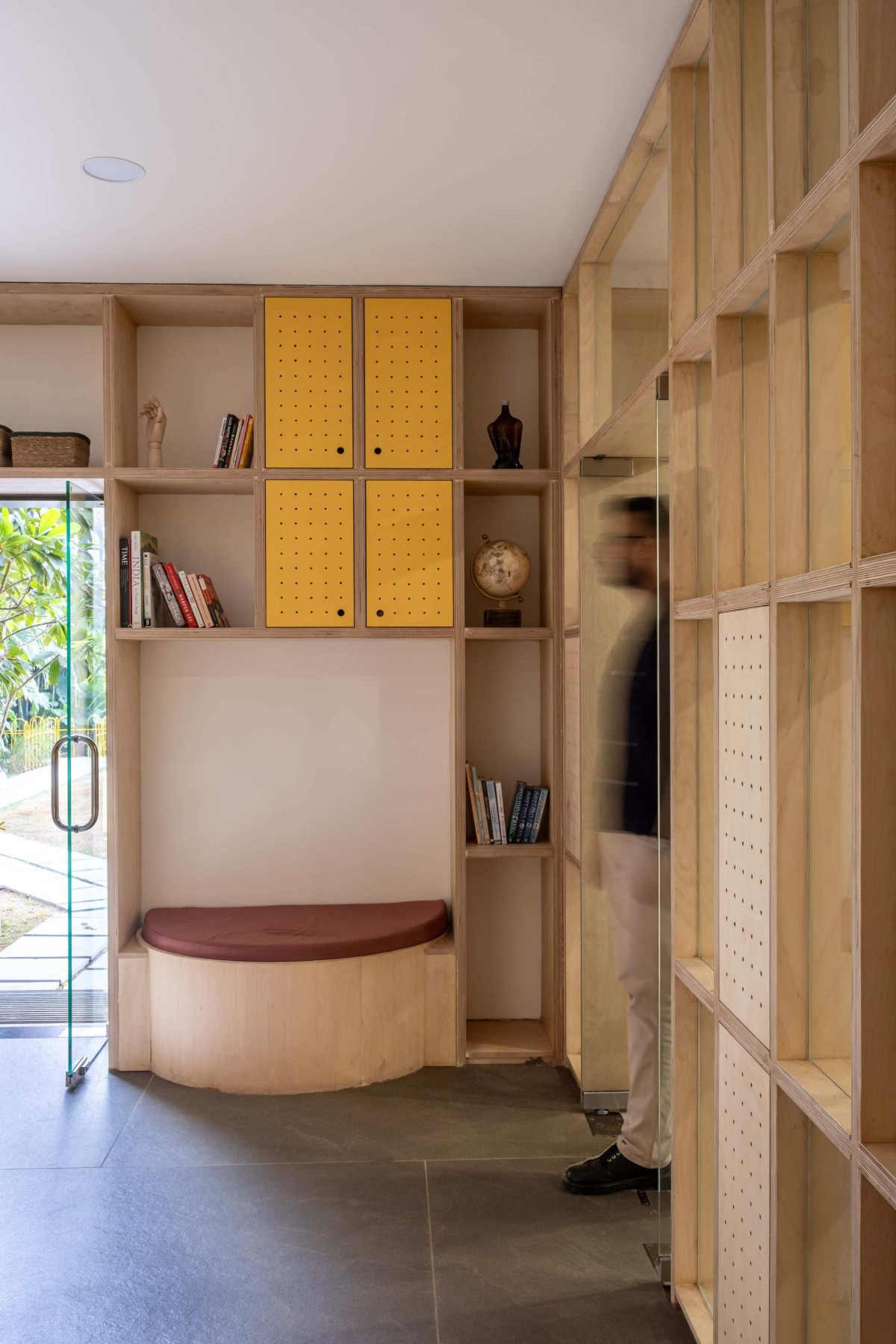
Reception & Waiting Area of Art Academy at Ahmedabad by Spatial Inquiry
Waiting Area of Art Academy at Ahmedabad by Spatial Inquiry
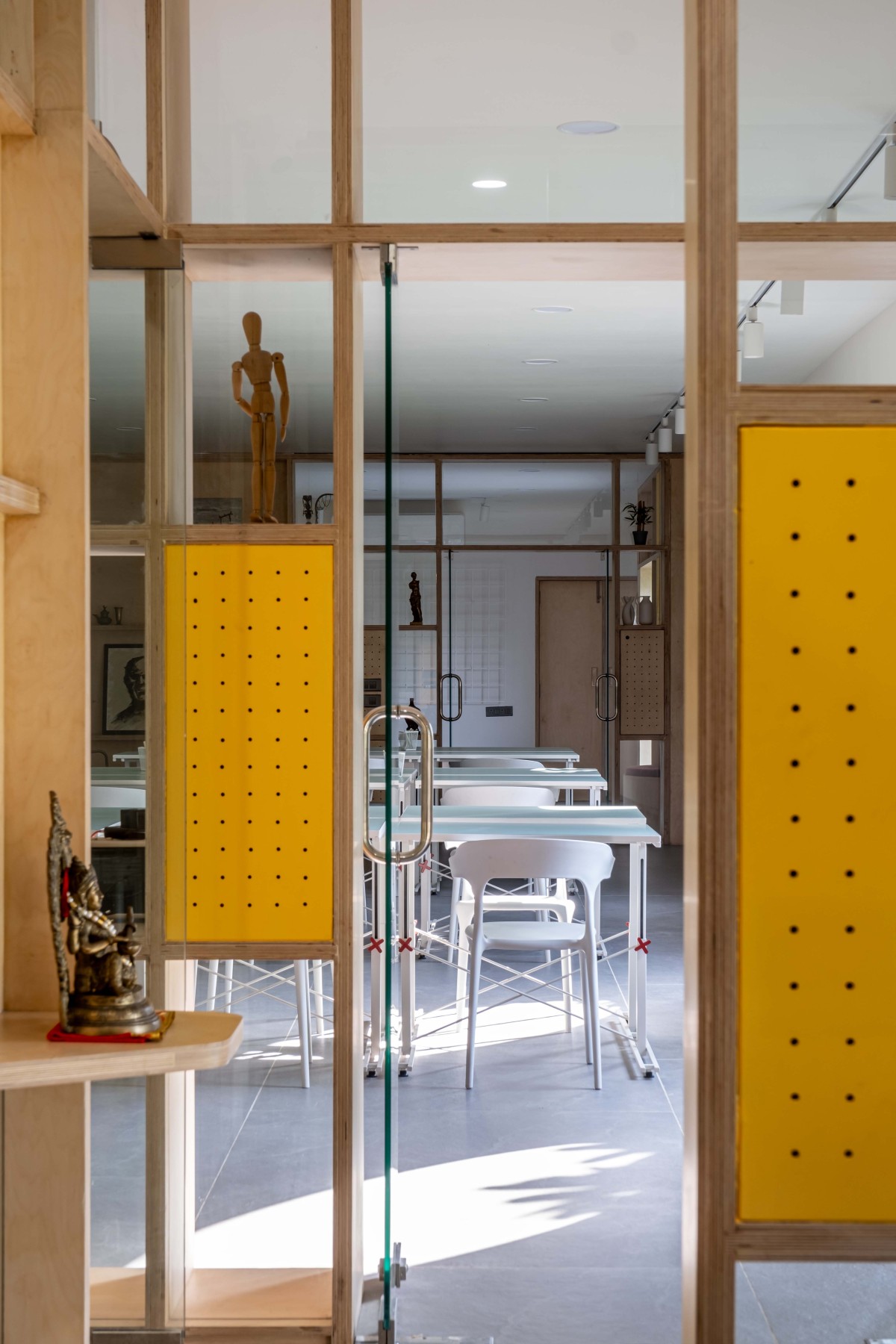
Partition walls are conceived as working surfaces rather than neutral dividers. They function simultaneously as spatial organizers and display infrastructure, allowing student work to occupy and transform the interior over time. At the entry sequence, a wall of detachable A5 panels behind the reception desk operates as an evolving archive. Each graduating student contributes a single panel,
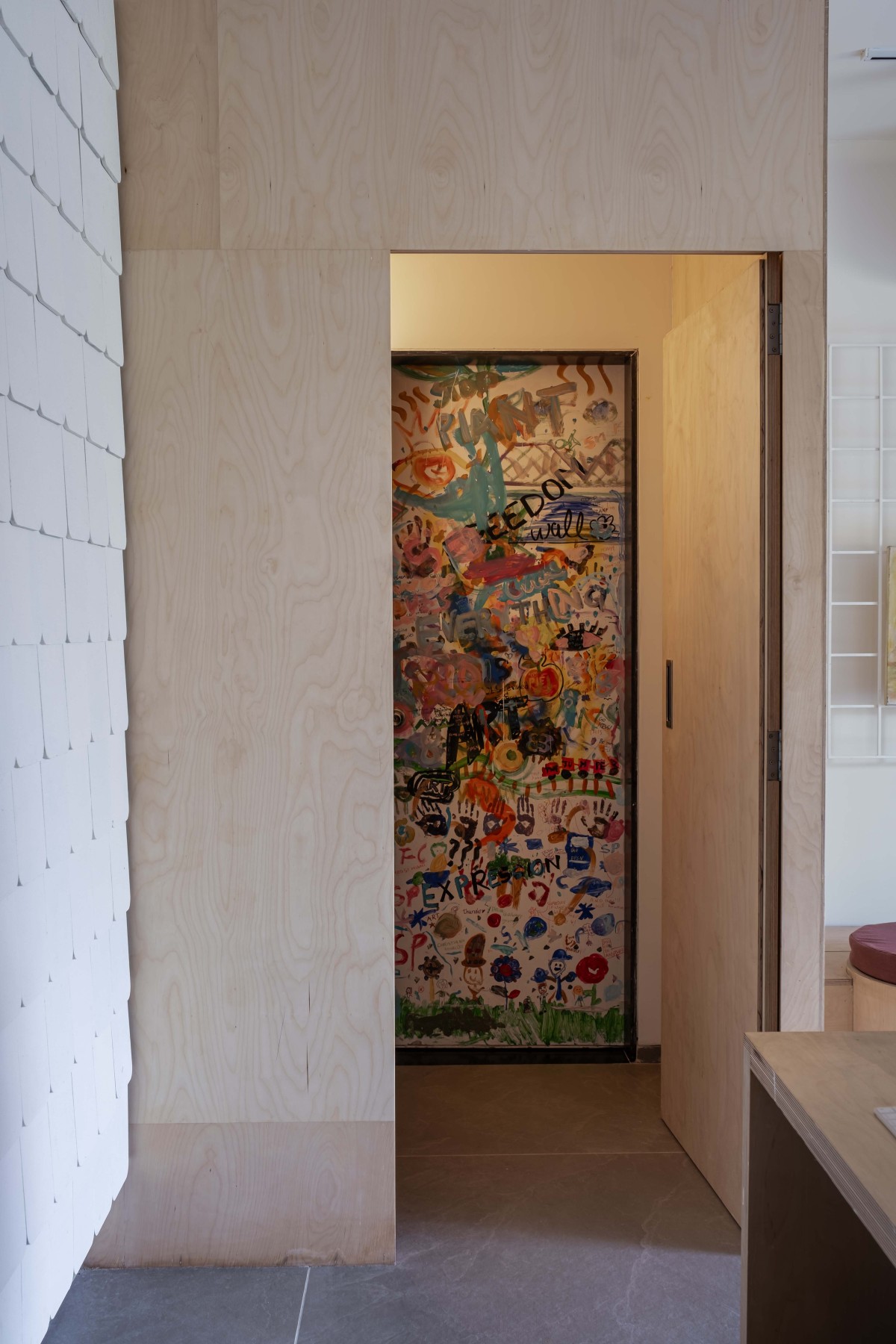
gradually building a collective record of the academy’s lineage. Select elements from the institution’s earlier premises are retained and reintroduced. A washroom door, finished with residual paint from students’ hands and brushes, carries traces of past use forward, reinforcing the academy’s approach to material continuity.
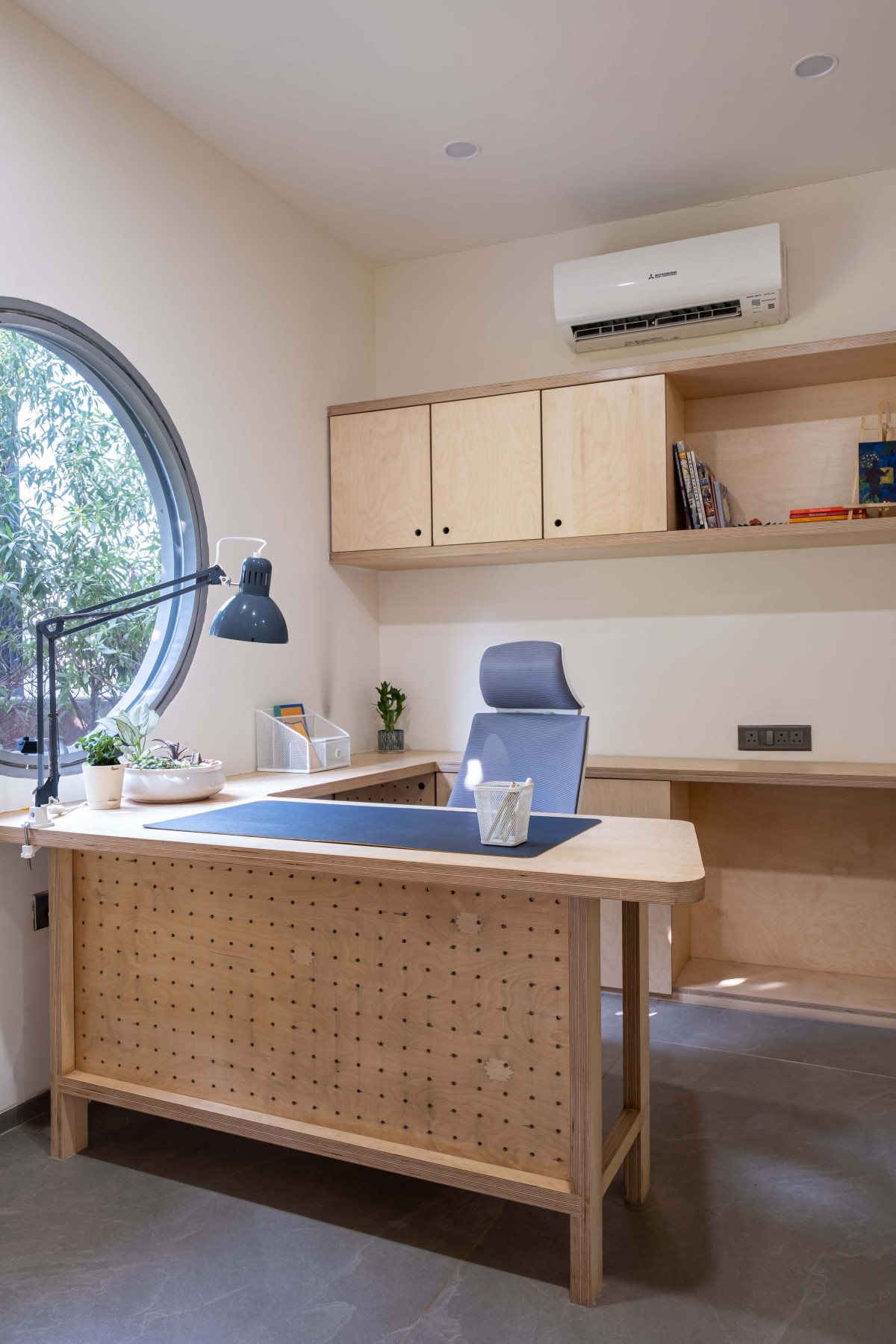
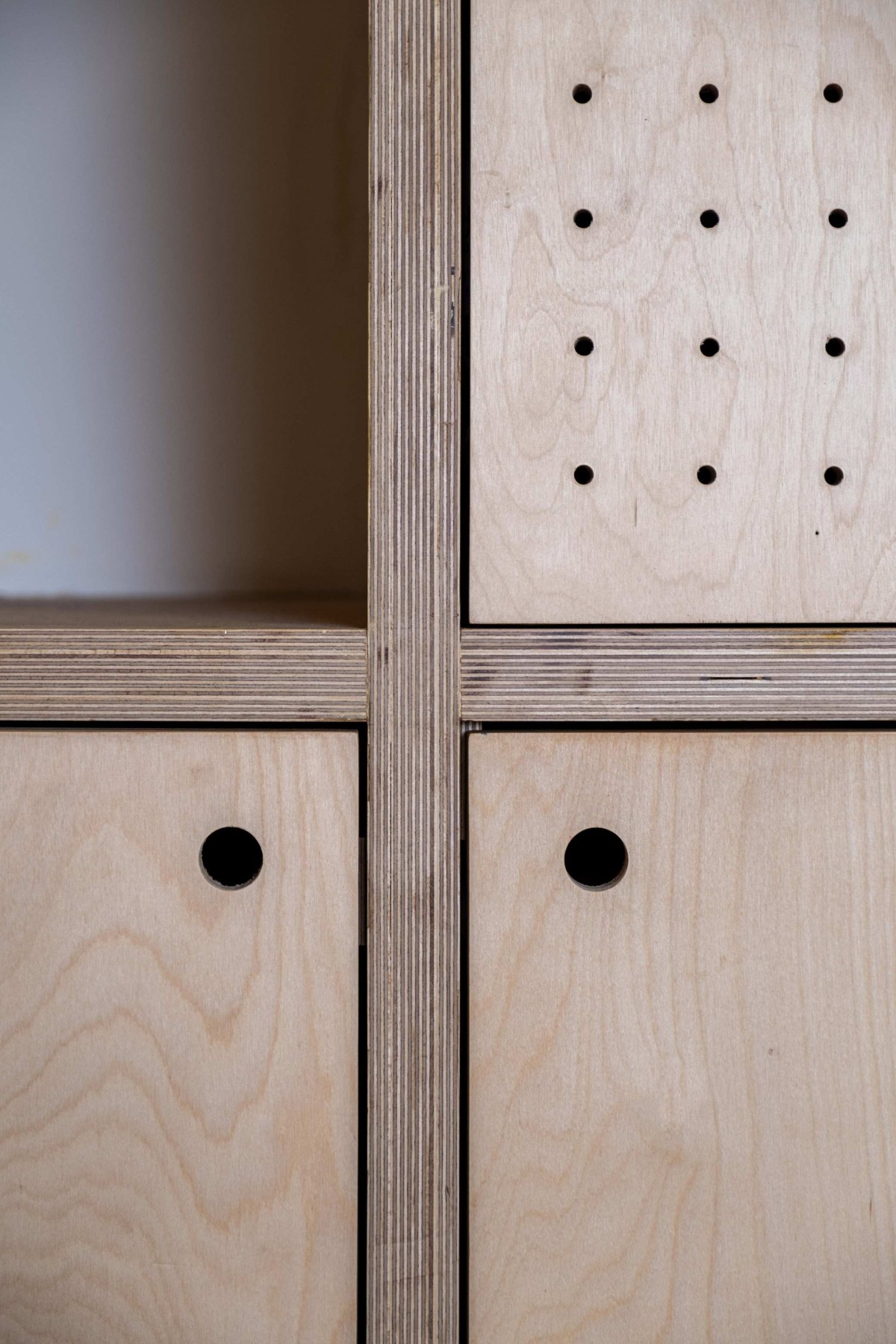
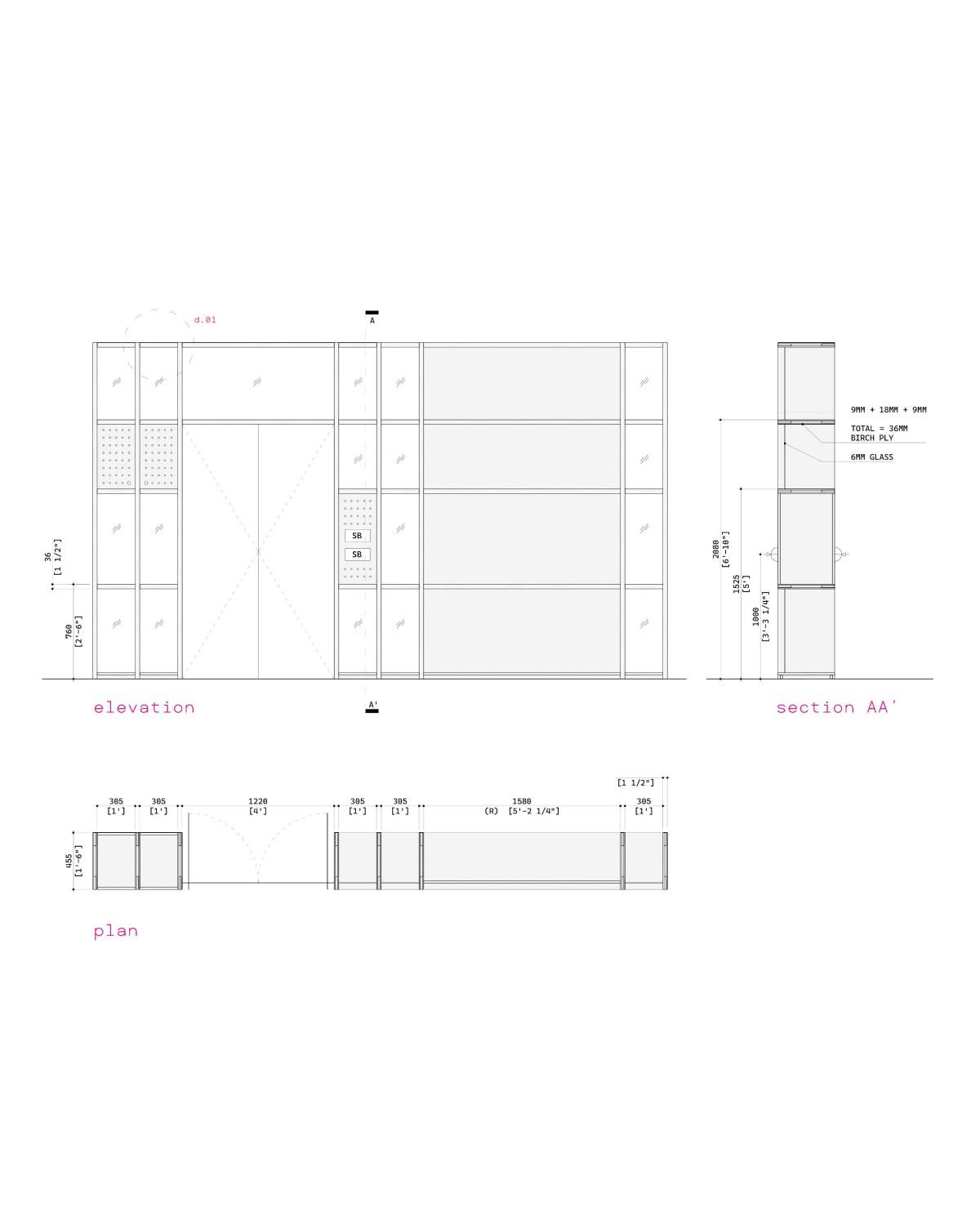
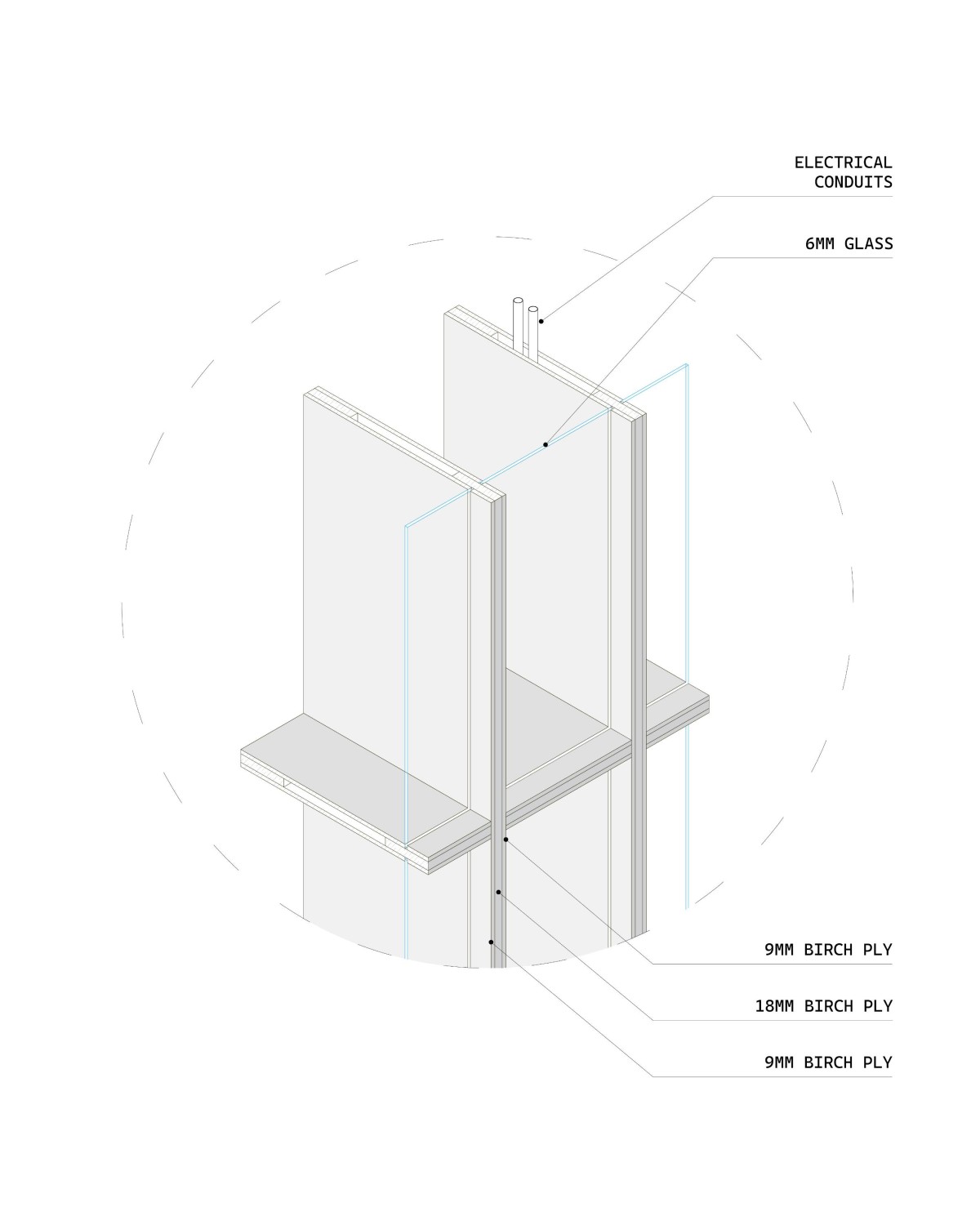
Birch plywood partitions define the interior while integrating shelving and concealed services. A consistent wall thickness of 36 mm—achieved through a 9 mm + 18 mm + 9 mm lamination—exposes the edge grain, eliminates the need for additional cladding, and creates internal voids for electrical conduits. The assembly performs multiple roles simultaneously: spatial definition, storage, and service integration, while maintaining material economy.
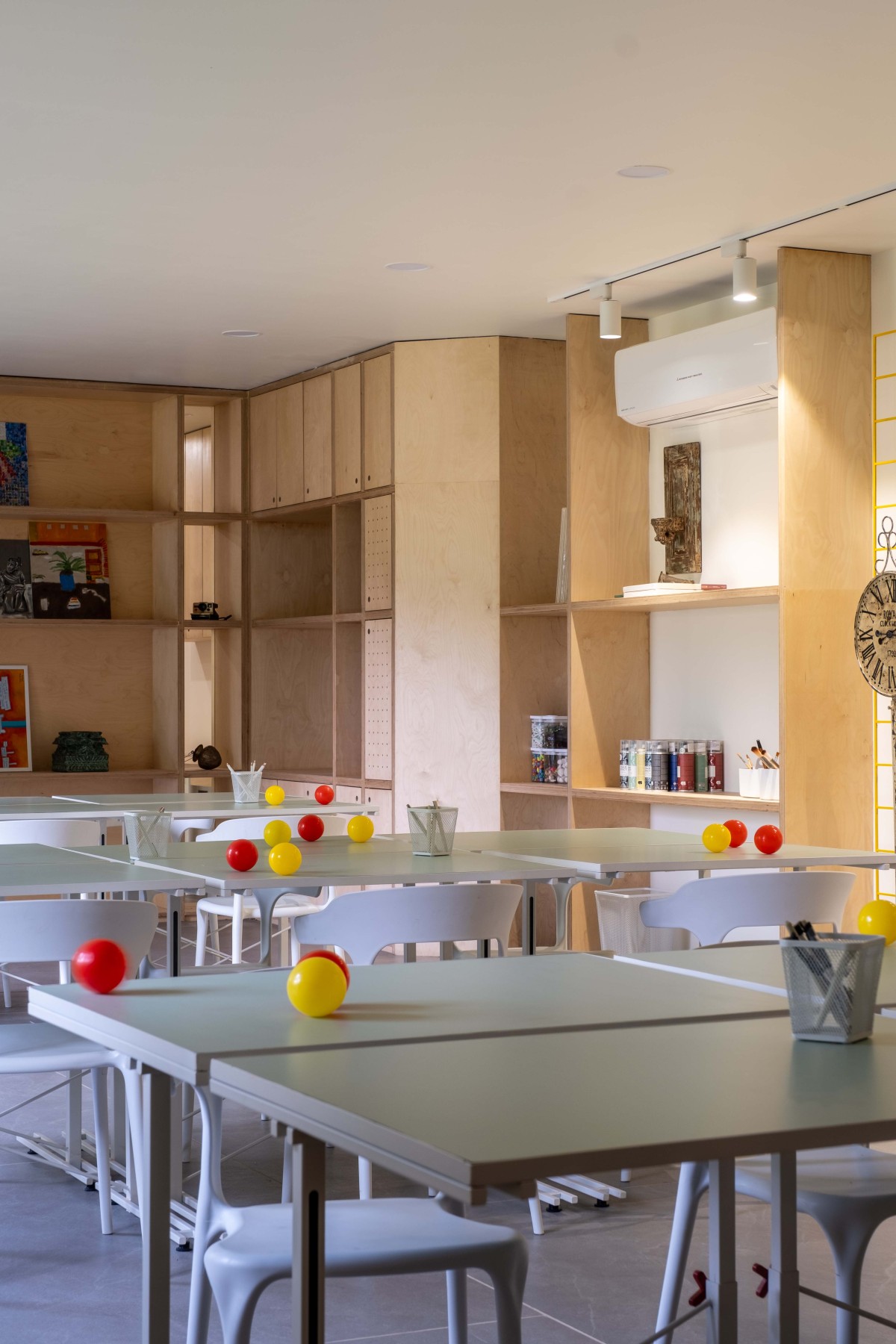
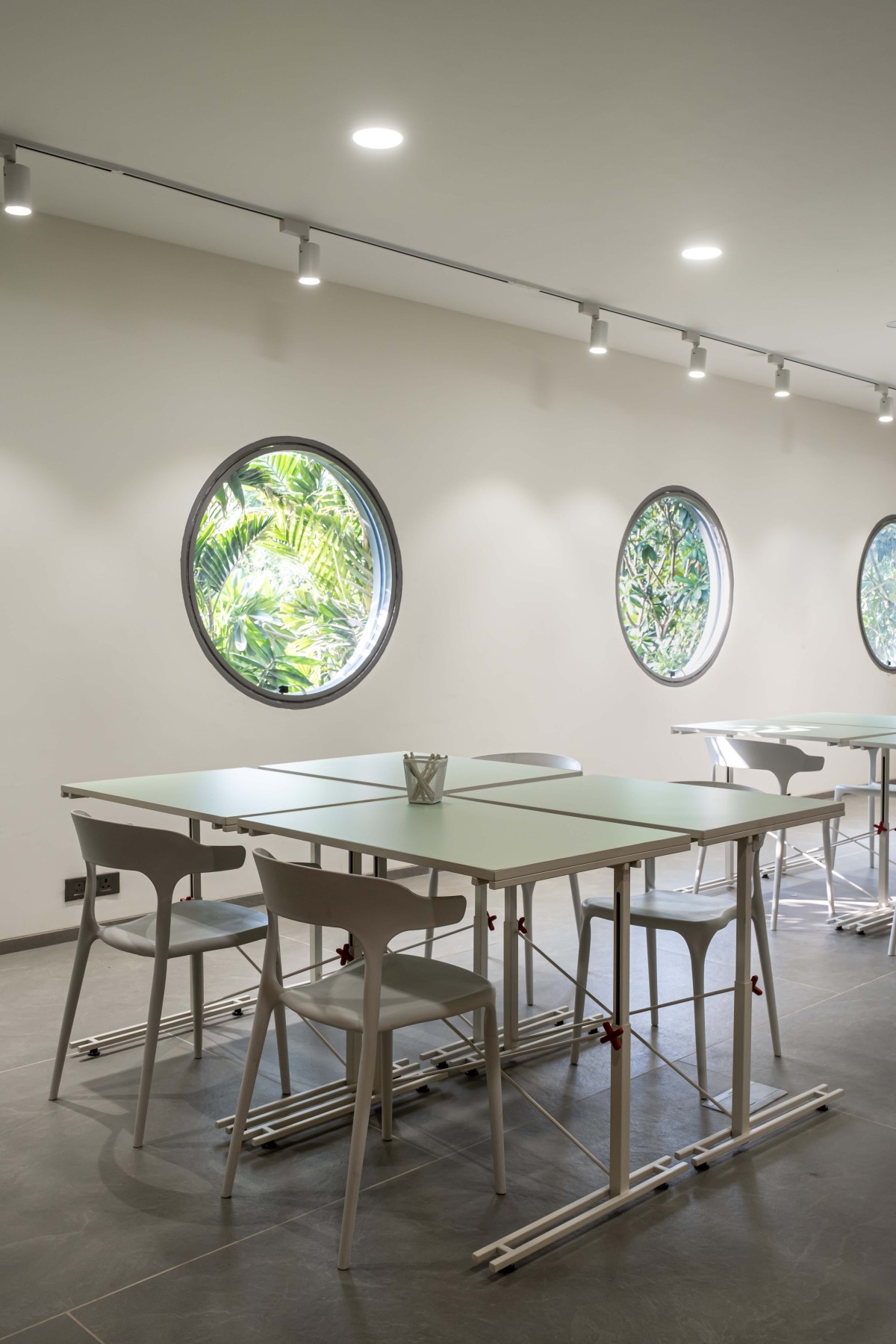
Studio of Art Academy at Ahmedabad by Spatial Inquiry
Studio of Art Academy at Ahmedabad by Spatial Inquiry
Loose and movable furniture allows the studio to shift rapidly between modes of use. During the day, the space functions as a teaching environment; after hours, it accommodates open mics, board game nights, and community gatherings. This temporal flexibility extends the academy’s role beyond formal instruction. A custom height-adjustable table, developed in collaboration with Dhruv Mehta, supports users ranging from eight-year-old children to adults. The design adapts a simple friction-lock mechanism, translating an industrial principle into a tactile, robust element that remains cost-effective.
The project establishes an institutional interior through restrained spatial moves and material discipline. Walls operate as working surfaces, furniture adapts to bodies of different scales, and select elements carry memory across time. The result is a space calibrated for both pedagogy and community: structured enough to support learning and open enough to absorb improvisation.
Cabin of Art Academy at Ahmedabad by Spatial Inquiry
View from cabin of Art Academy at Ahmedabad by Spatial Inquiry
View of the wash area of the Art Academy at Ahmedabad by Spatial Inquiry
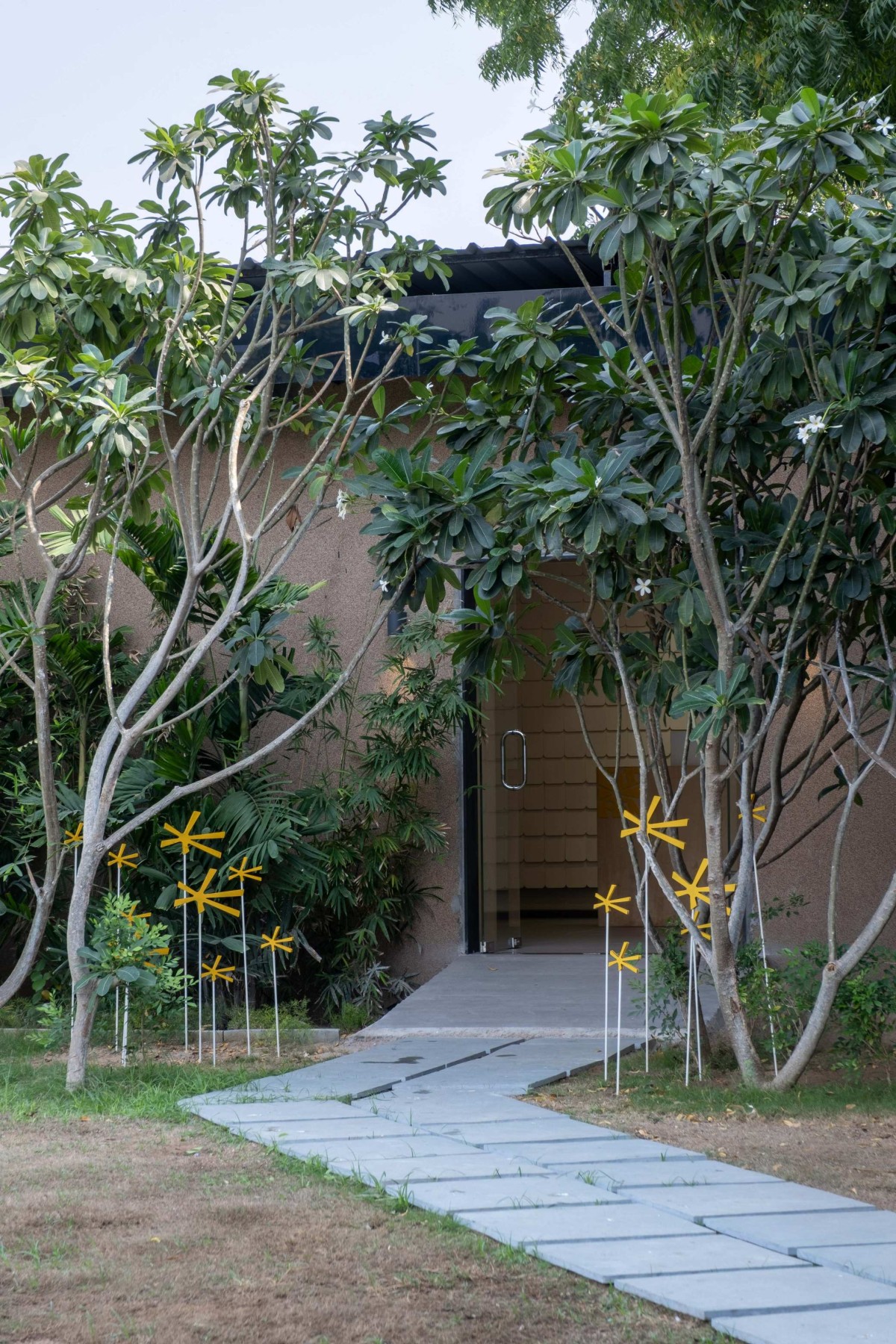
Entryway of Art Academy at Ahmedabad by Spatial Inquiry
Detailed shot of furniture of Art Academy at Ahmedabad by Spatial Inquiry
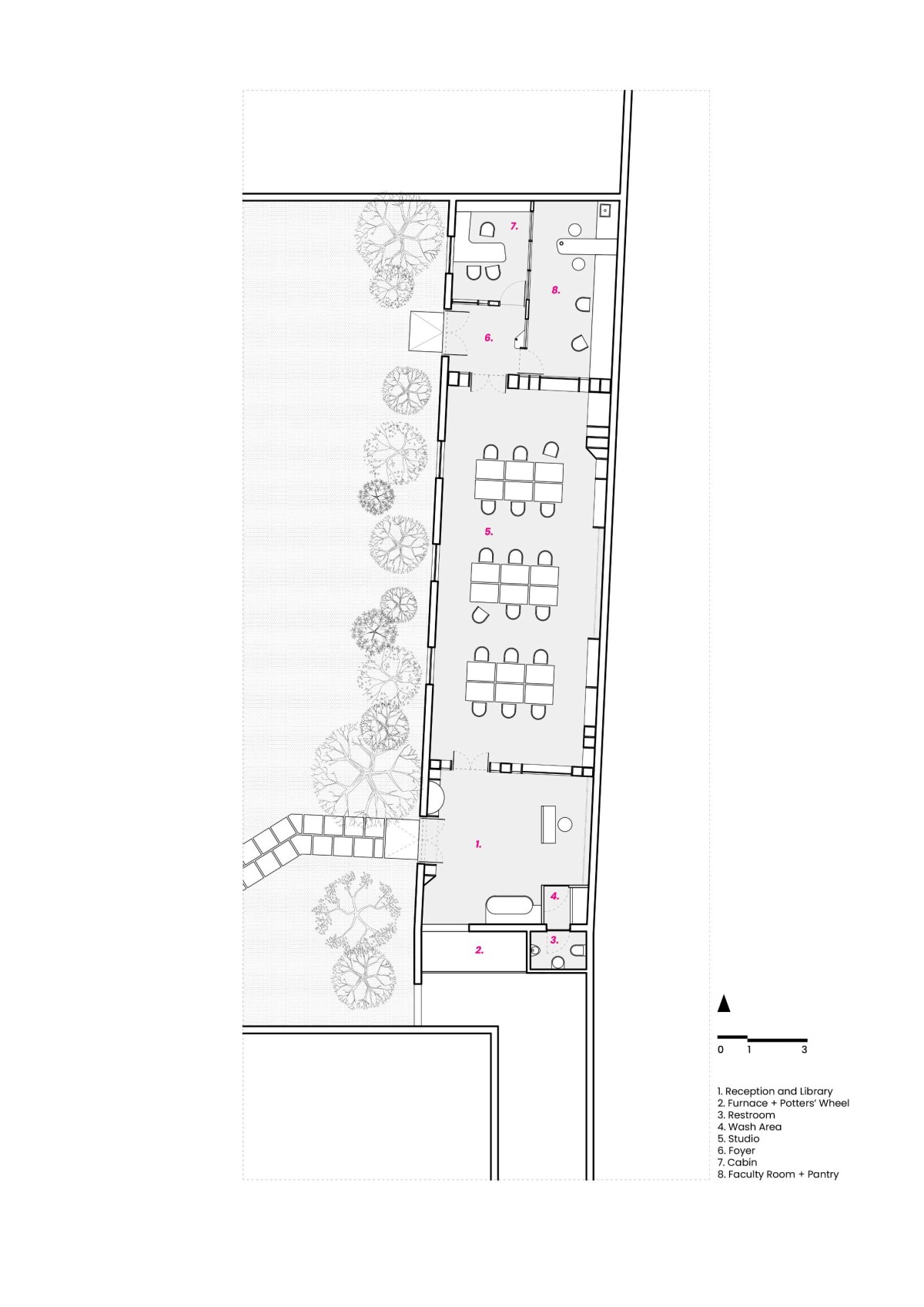
Plan of Art Academy at Ahmedabad by Spatial Inquiry
Partition Wall Detail 1 of Art Academy at Ahmedabad by Spatial Inquiry
Partition Wall Detail 2 of Art Academy at Ahmedabad by Spatial Inquiry