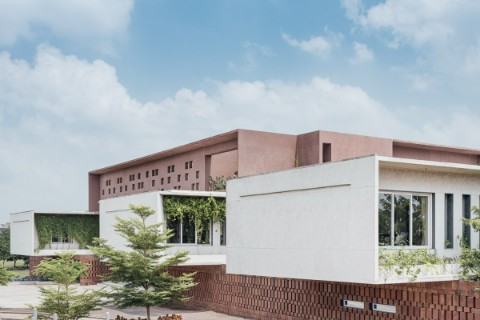
Exterior view of Infosys Campus by Morphogenesis
Exterior view of Infosys Campus by Morphogenesis
Site Planning and Morphology
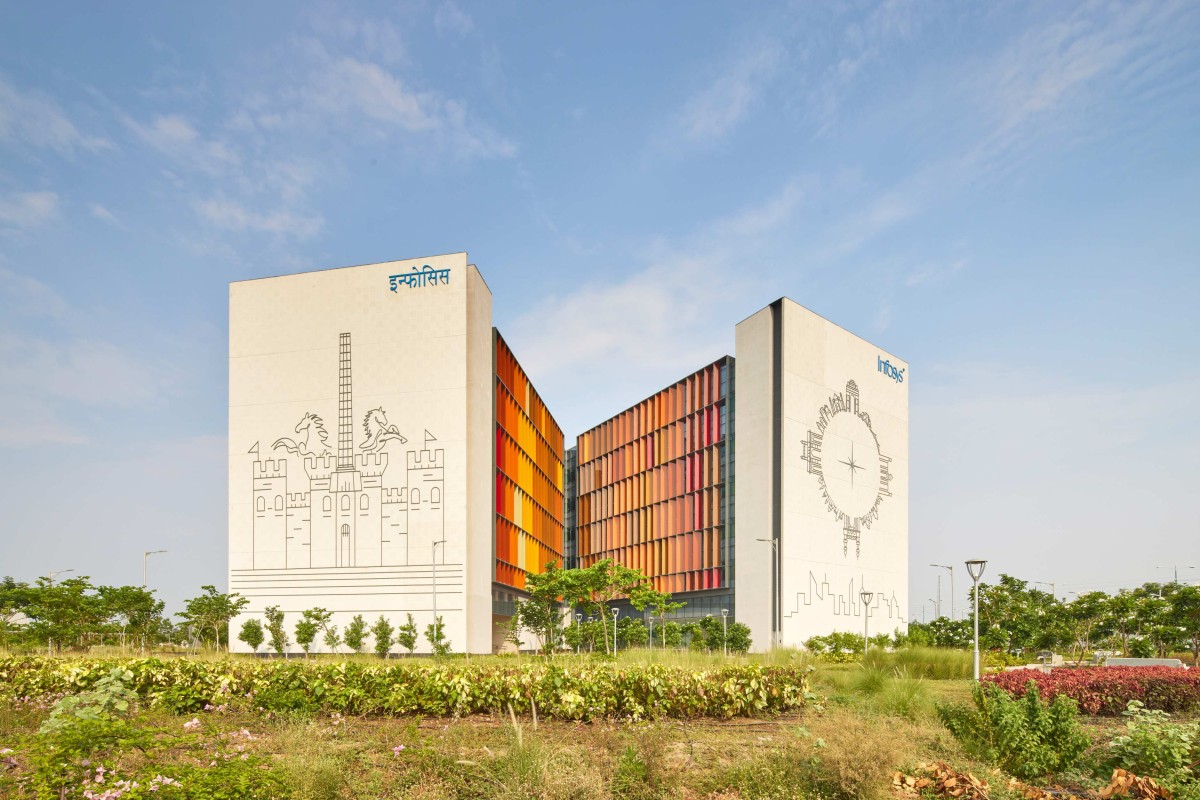
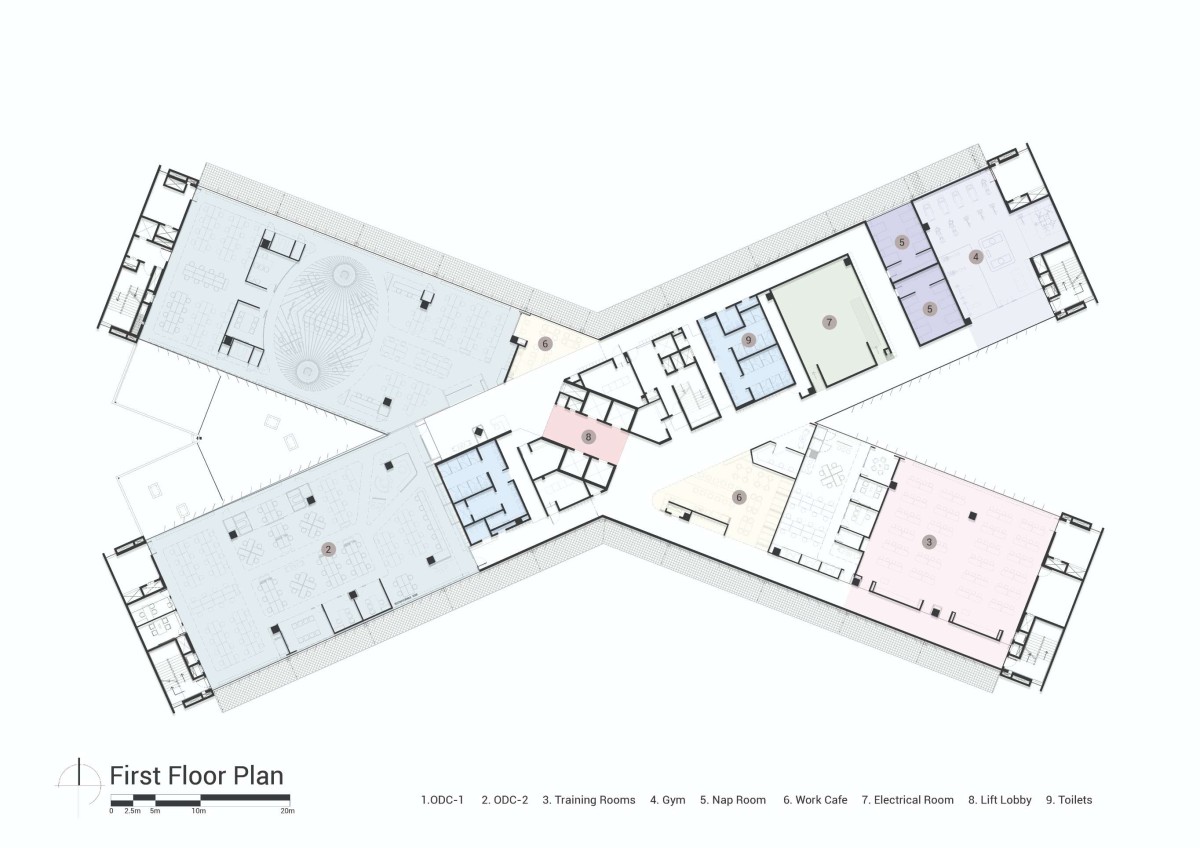
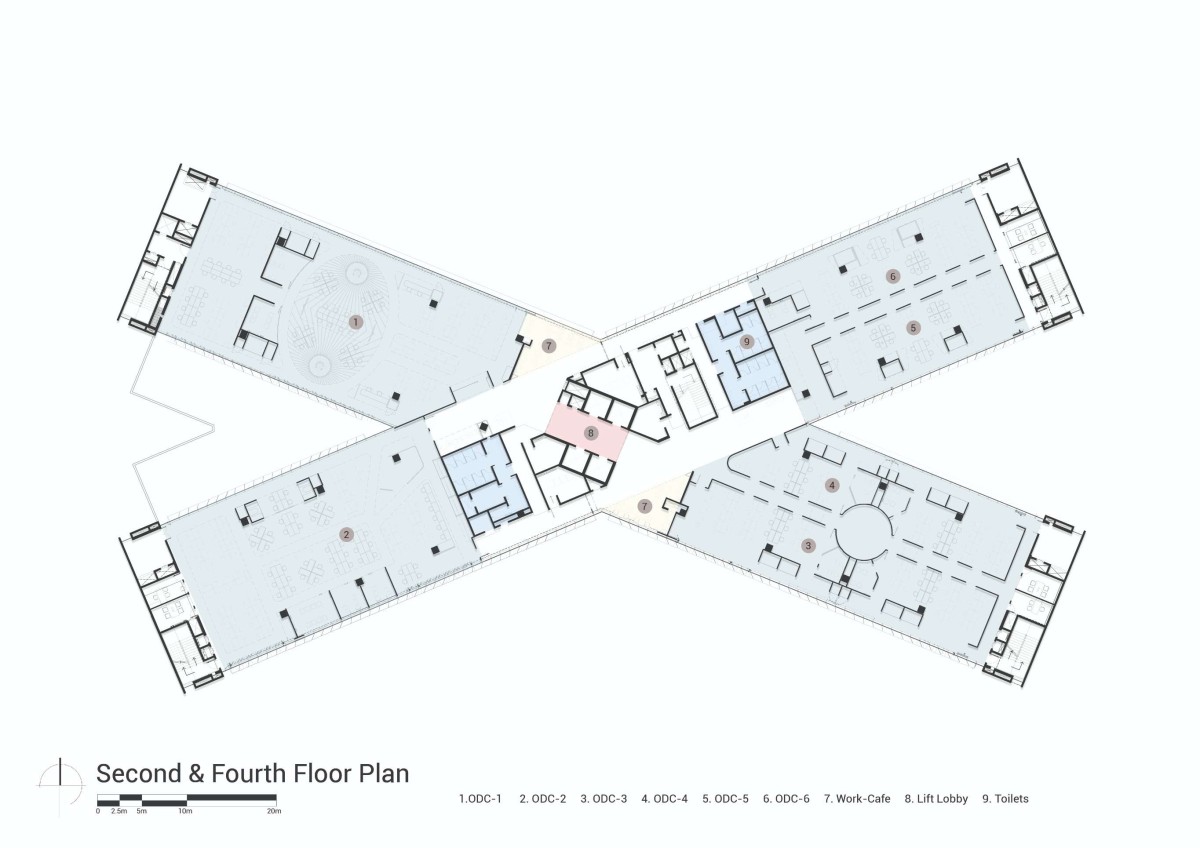
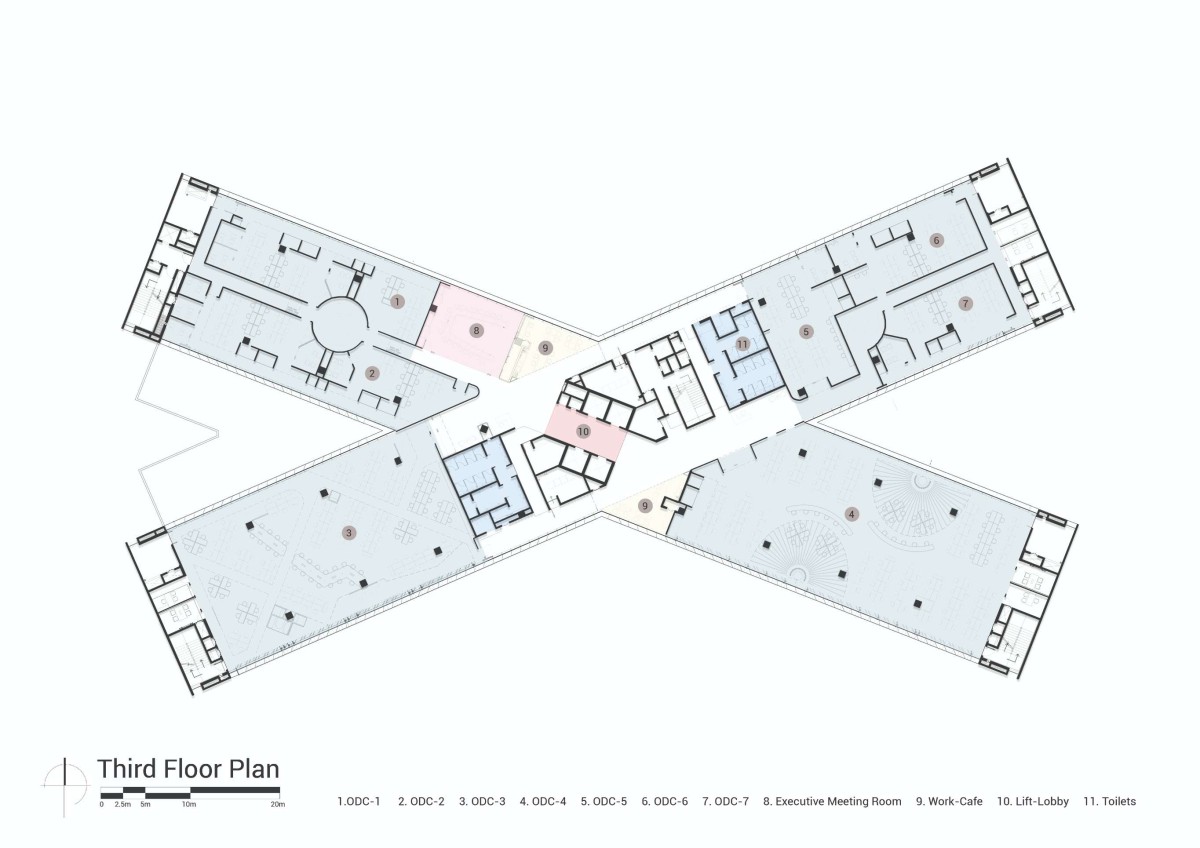
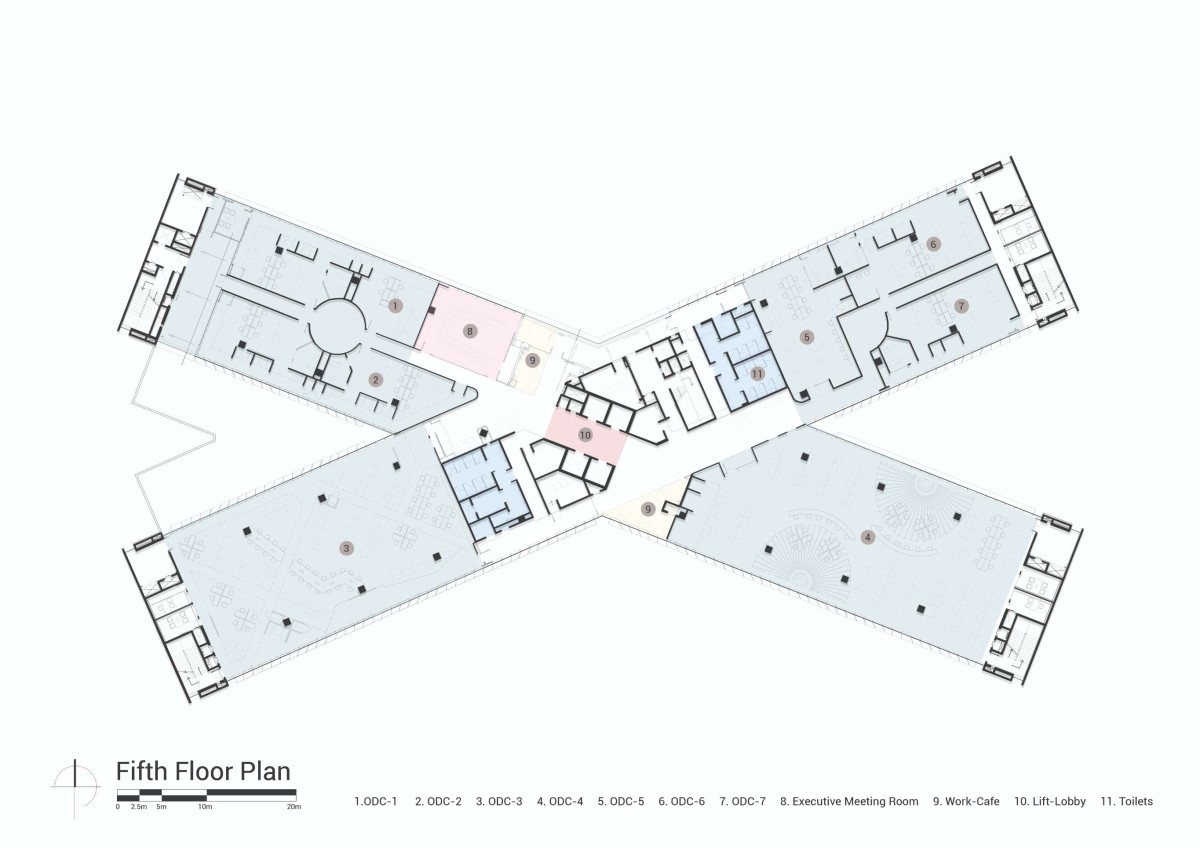
The building’s form and orientation played an integral role in achieving the numerous sustainability goals. It features a distinctive X-shaped plan, with each of the 100m long wings oriented at 22.5 degrees to the tropic of Cancer, and the central intersection forming the core. This intervention, long with limiting the depth of each floor plate to 18m, ensures that 90% of the workspaces receive ample daylight from both sides. The morphology also responds to programmatic requirements, establishing a central circulation node that brings together the Offshore Development Centres (ODC) located in the wings.
Exterior view of Infosys Campus by Morphogenesis
Exterior view of Infosys Campus by Morphogenesis
Planning Efficiency
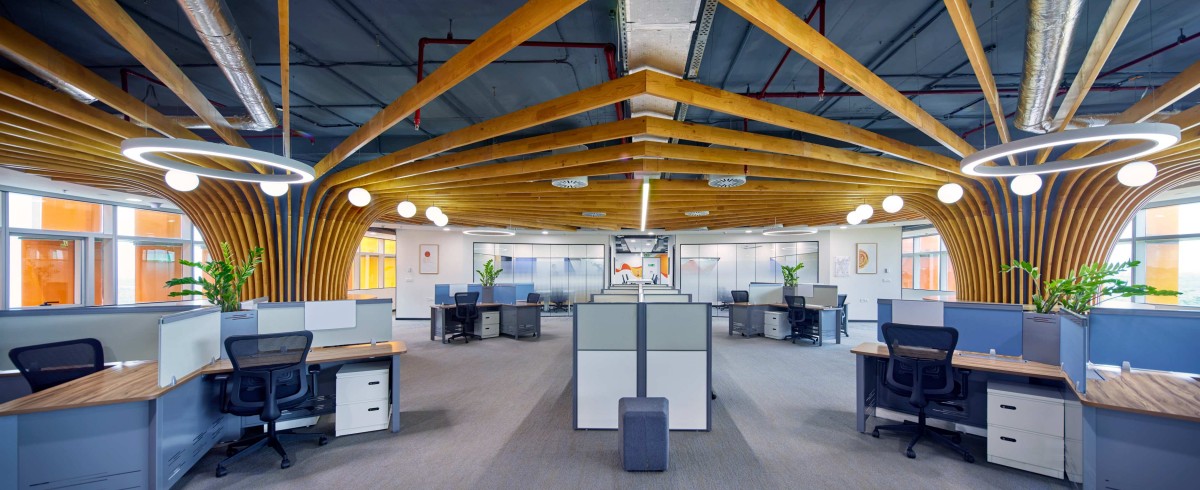
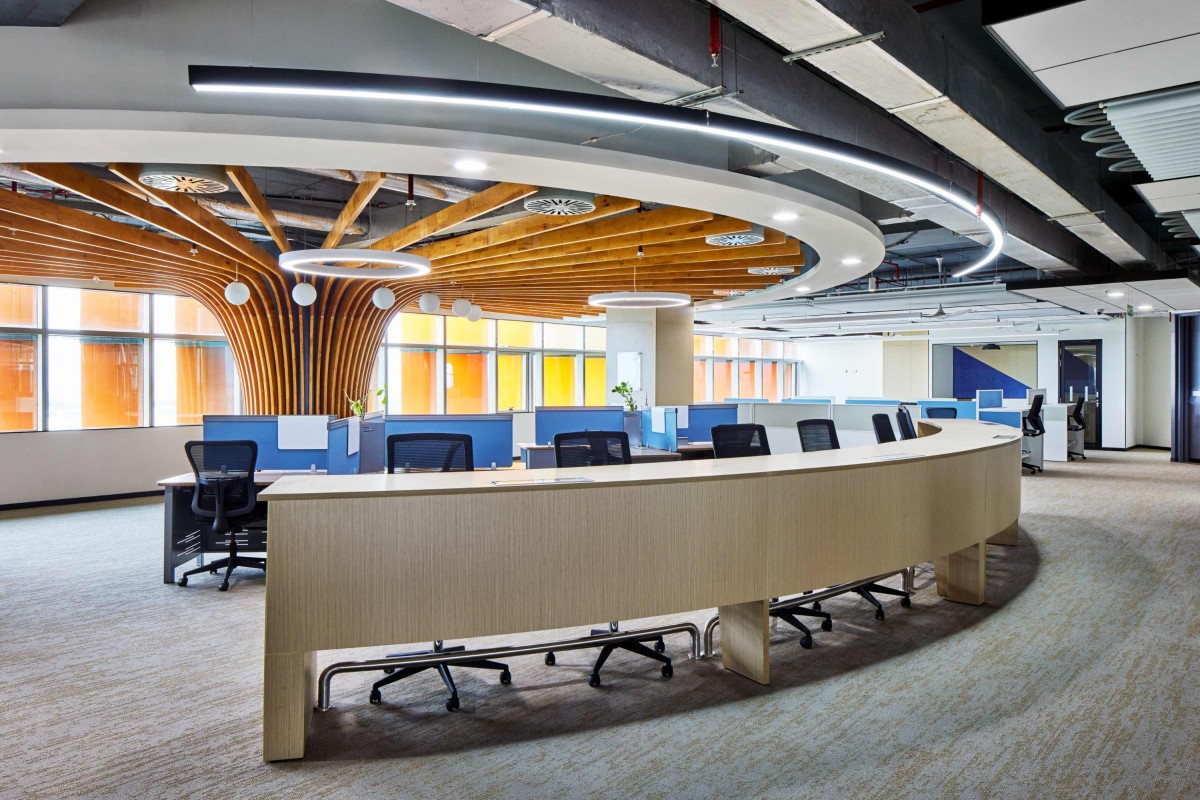
The Offshore Development Centres (ODC) are designed with high levels of efficiency. Roughly twenty percent of the area is dedicated to circulation cores, and eighty per cent reserved for workspaces. The diverse programme includes collaborative workstations, conference rooms, break-out areas, and office pods.
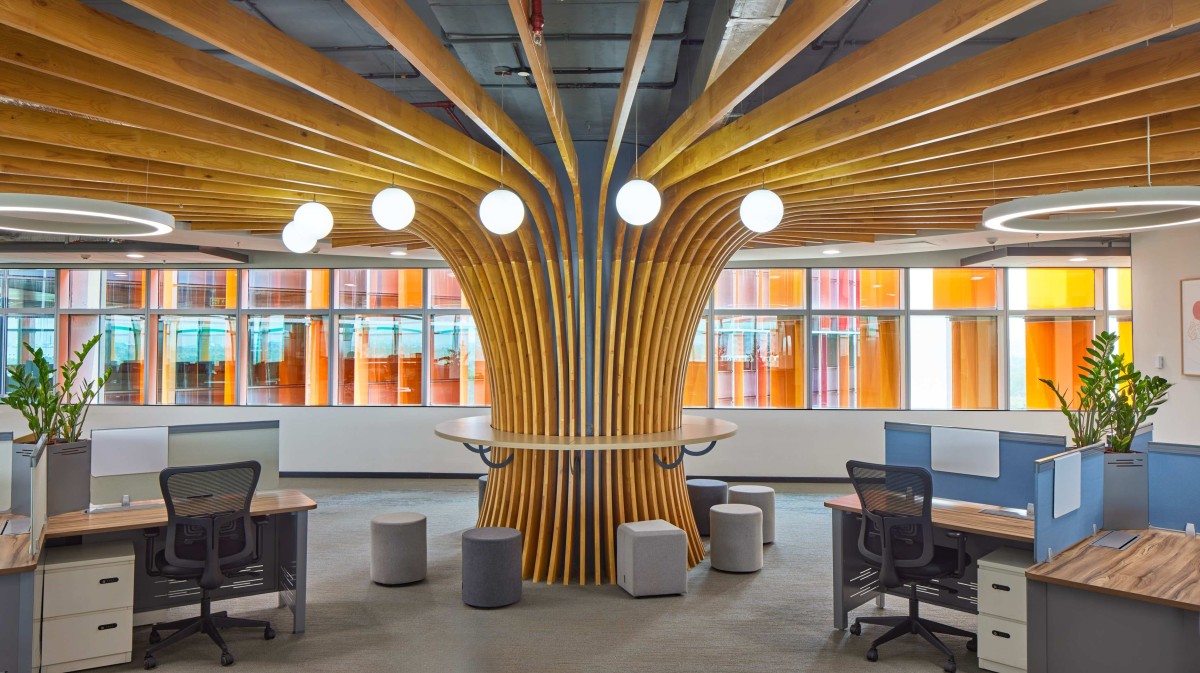
Each workspace is uniquely designed using a myriad of materials—and is characterised by a distinct shift in flooring patterns, adaptable furniture such as high stools, tables, etc., and a diverse colour palette. Amenities like gyms and relaxation pockets are included in the programme to promote health and well-being.
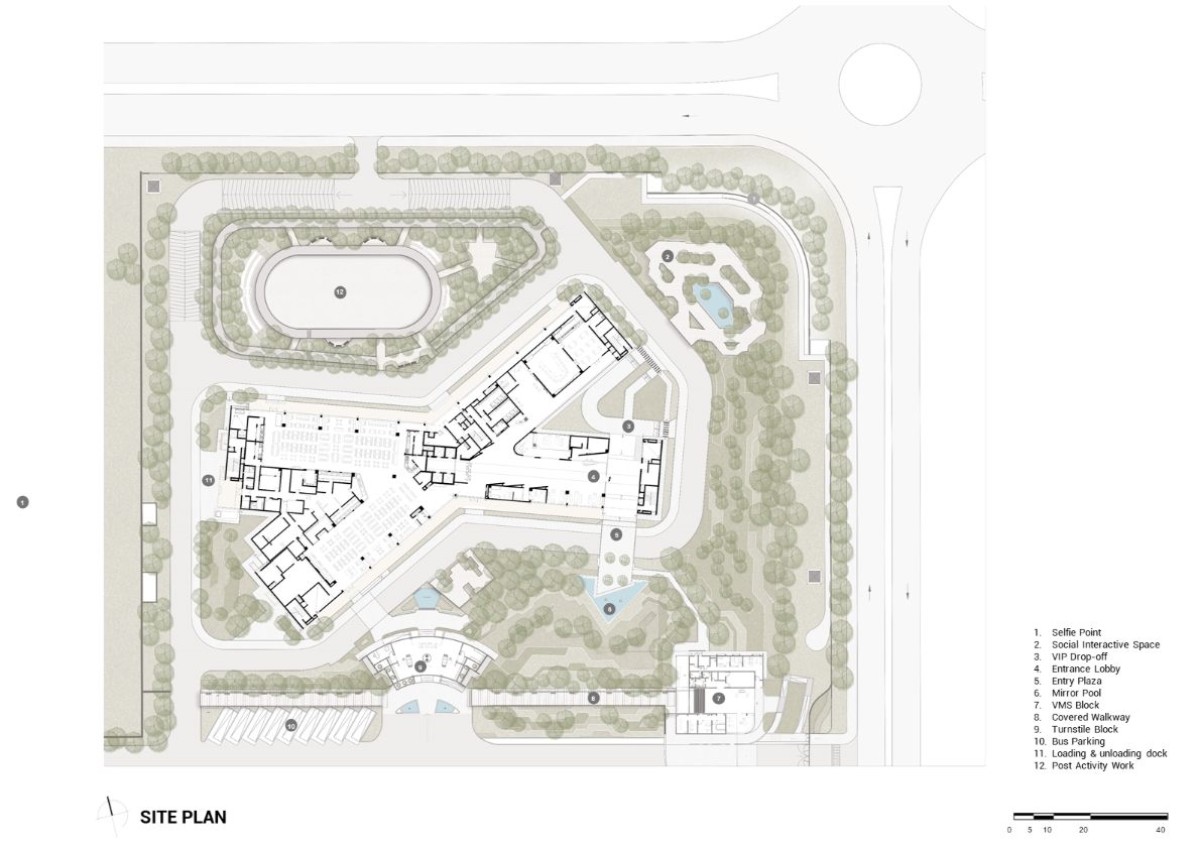
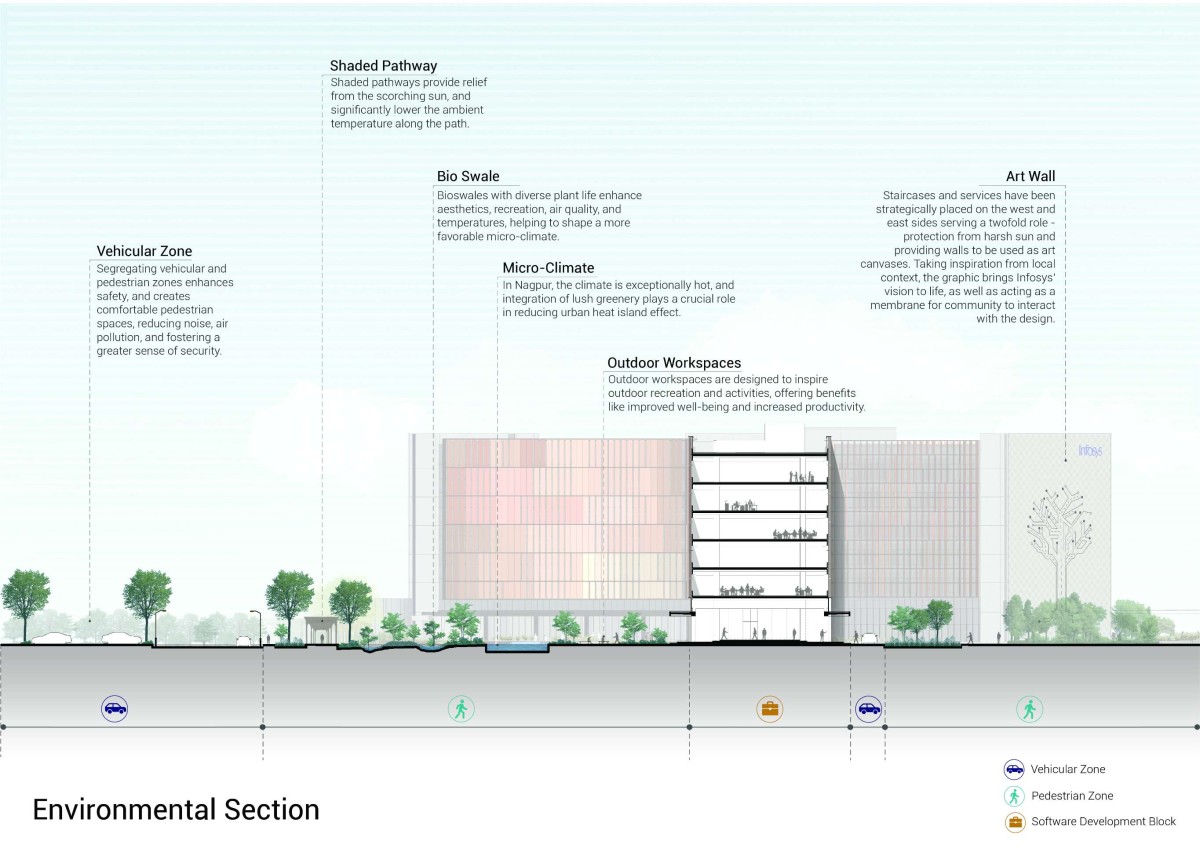
The utility zones are separated from the workplace, optimizing circulation patterns for various user groups. Parking layouts have been designed efficiently, and the strategic placement of service cores enables operations to be carried out smoothly without disrupting any workflows. This helps ensure a pedestrian-friendly campus. The low building height maintains proximity to the surrounding landscape, facilitating human-nature interaction.
Exterior view of Infosys Campus by Morphogenesis
Exterior view of Infosys Campus by Morphogenesis
Passive and Sustainable Design Strategies
One of the key design strategies employed was the integration of passive cooling techniques tailored to Nagpur's climate. Borrowing from traditional architectural principles, the campus features natural ventilation systems and thermal mass elements that regulate indoor temperatures, reducing reliance on mechanical cooling.
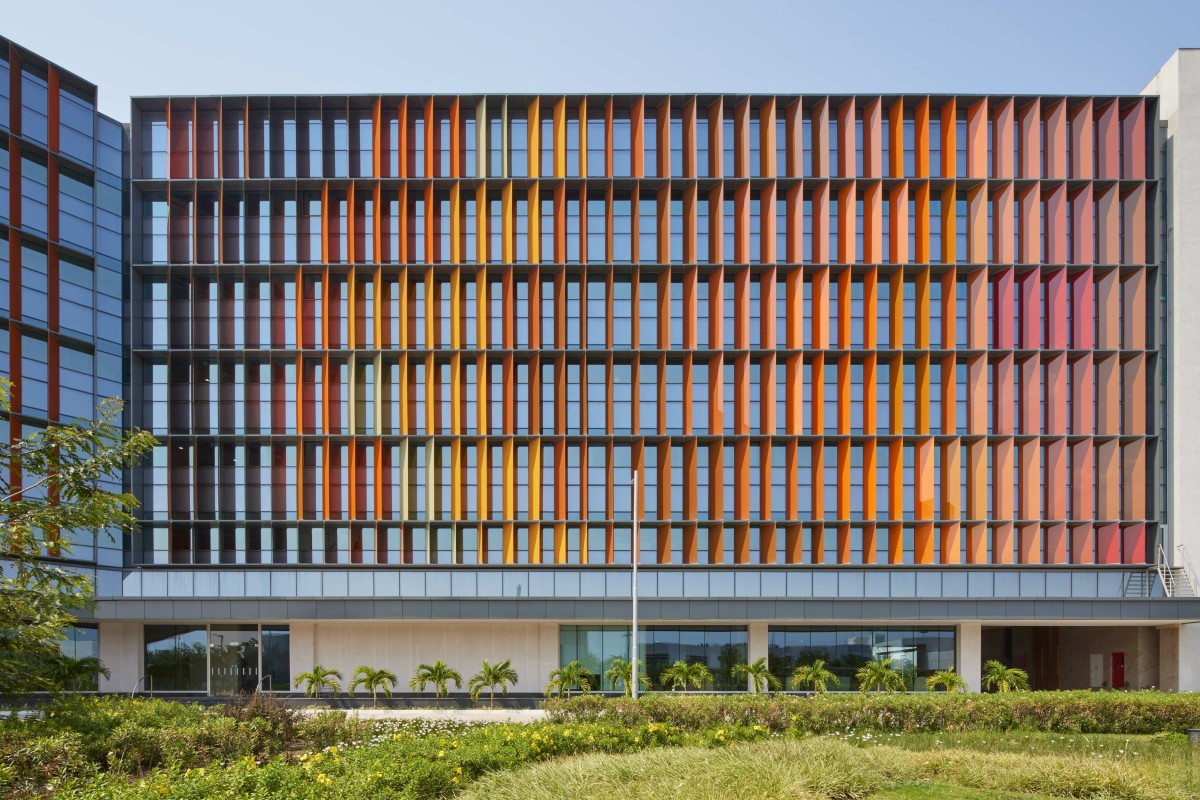
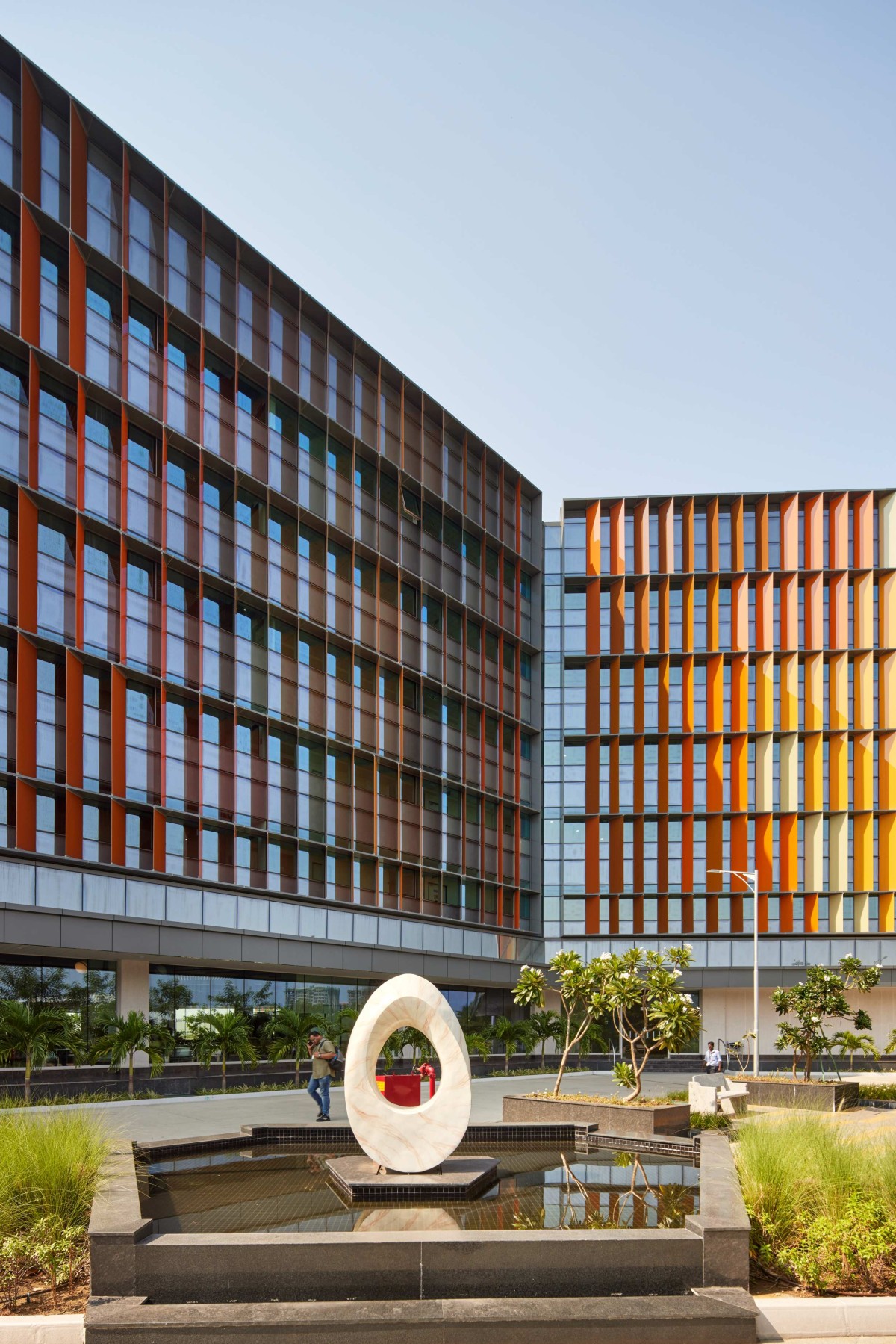
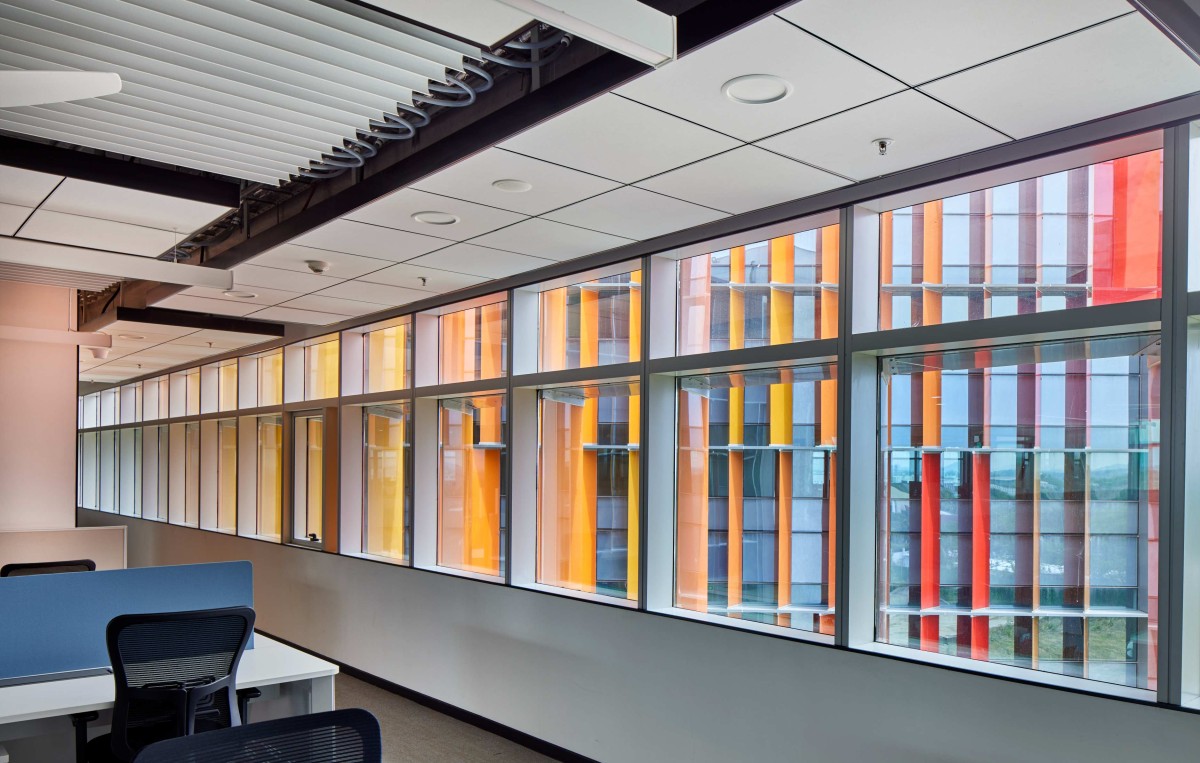
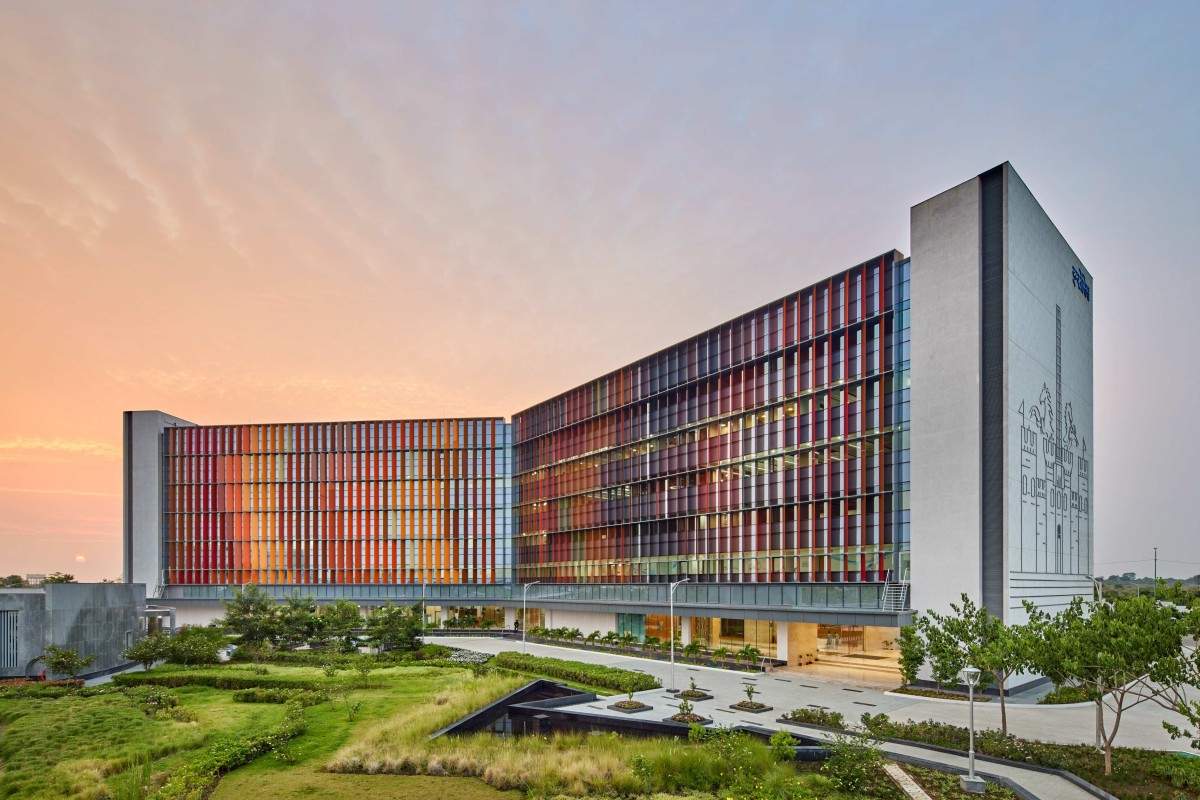
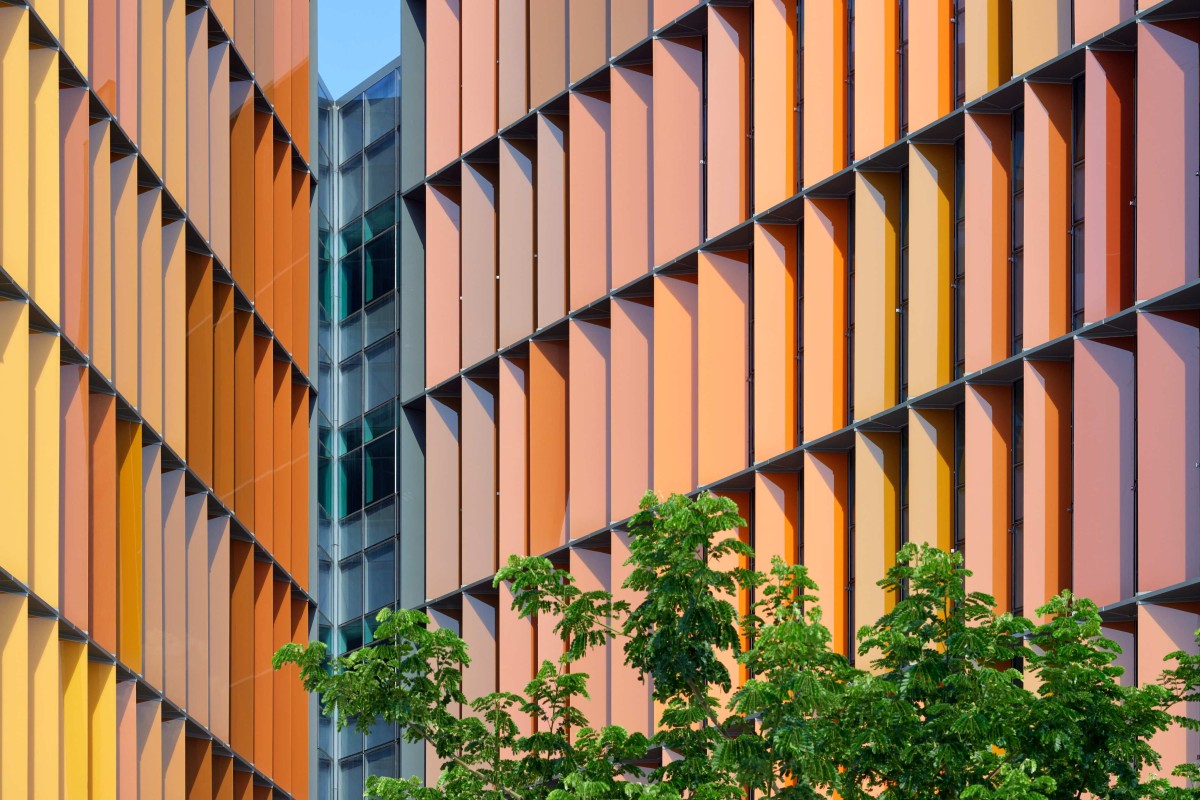
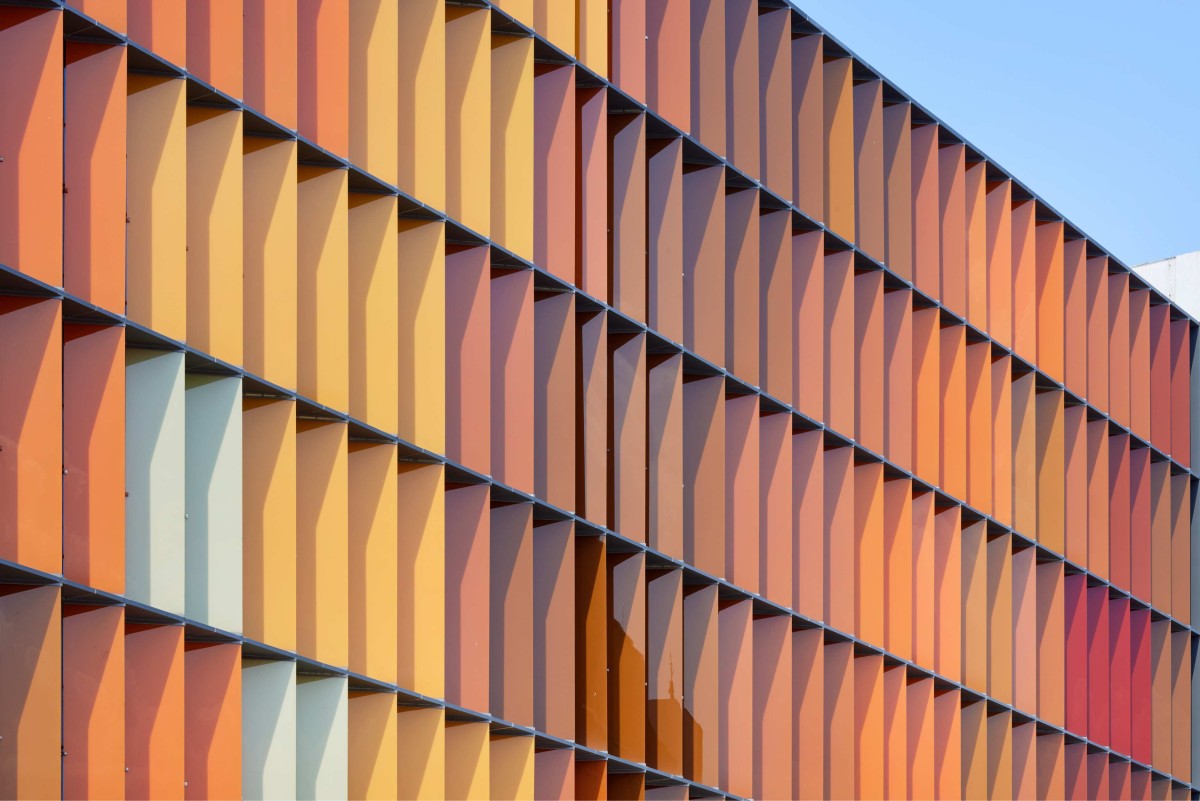
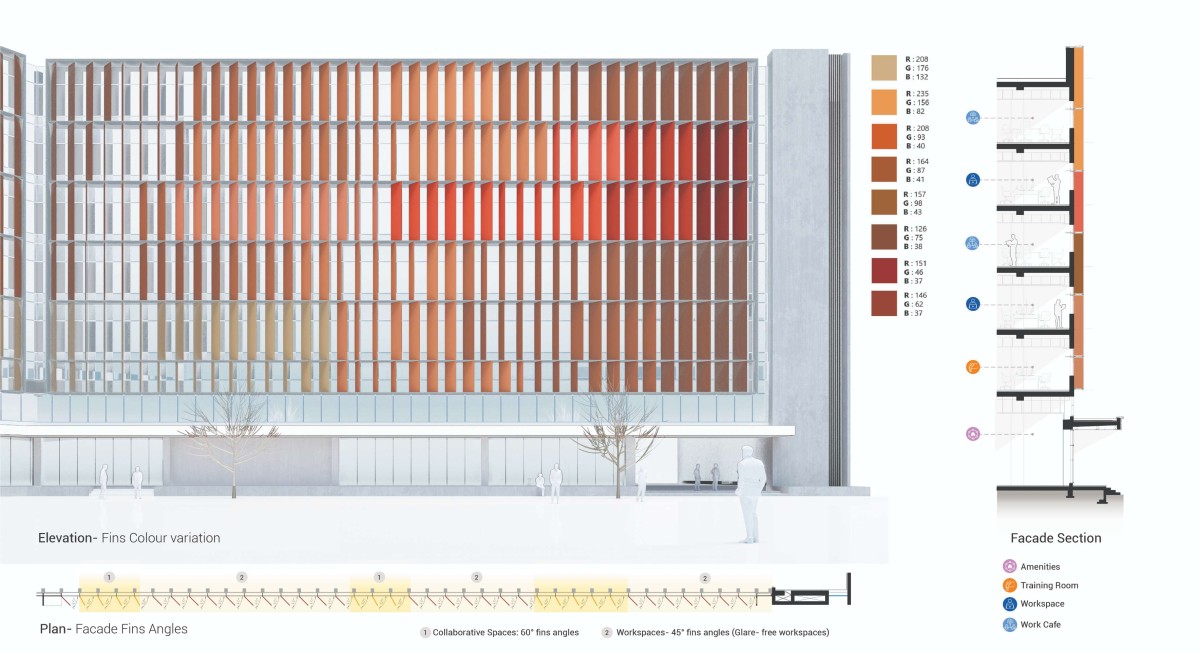
Vertical fins are strategically oriented at varying angles along the entire length of the facades to regulate ingress of light. The base hue for the fins is orange, and earthy tones are added to develop a gradient. The design is inspired by the seven swaras (Indian classical music notes) and adds a sense of rhythm and visual dynamism to the building exterior.
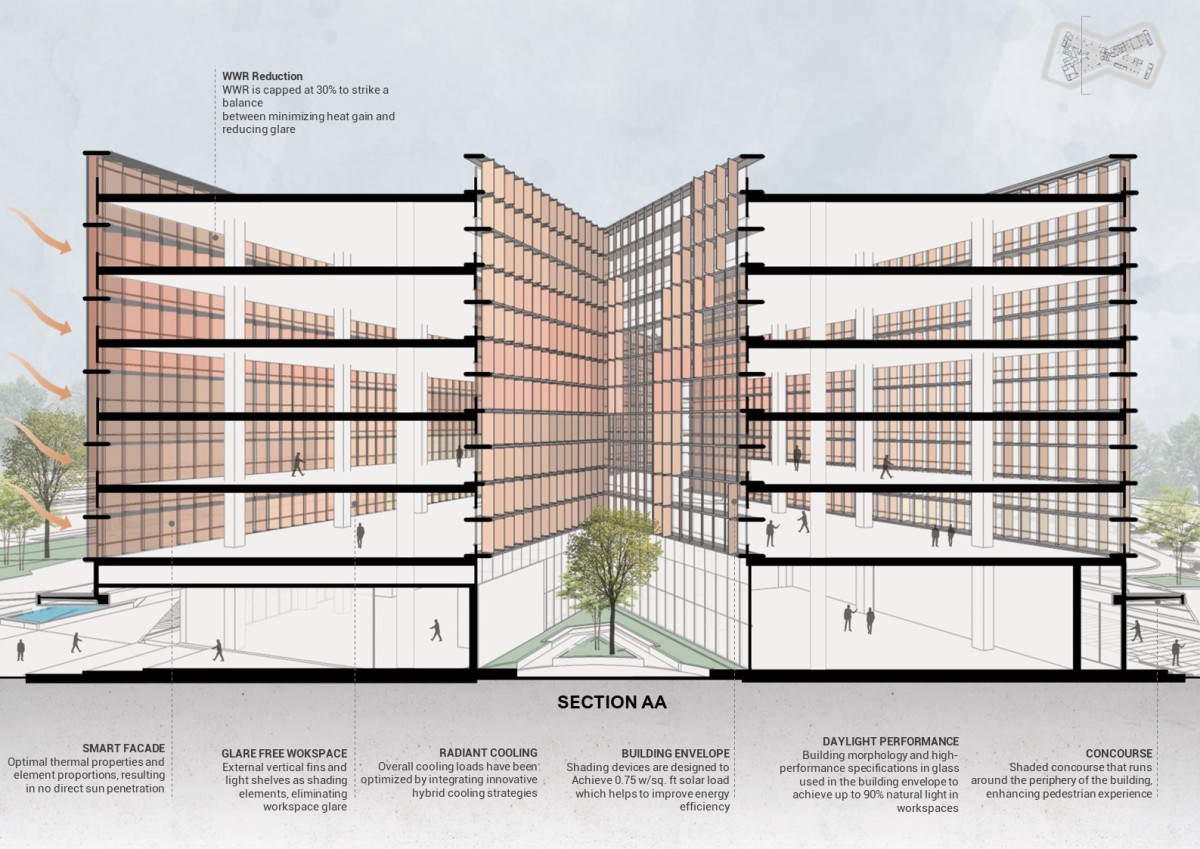
The fins’ configuration responds to the specific programme and is different for workspaces, break-out areas, and meeting spaces. A narrow 40-degree angle is employed for workspaces, whereas the fins open up to a wider, welcoming 60-degree angle in break-out spaces and meeting areas, granting ample views to the adjacent landscape. By decreasing the window-to-wall ratio, coupled with light shelves, glare on workstations is significantly reduced.
Reception Area of Infosys Campus by Morphogenesis
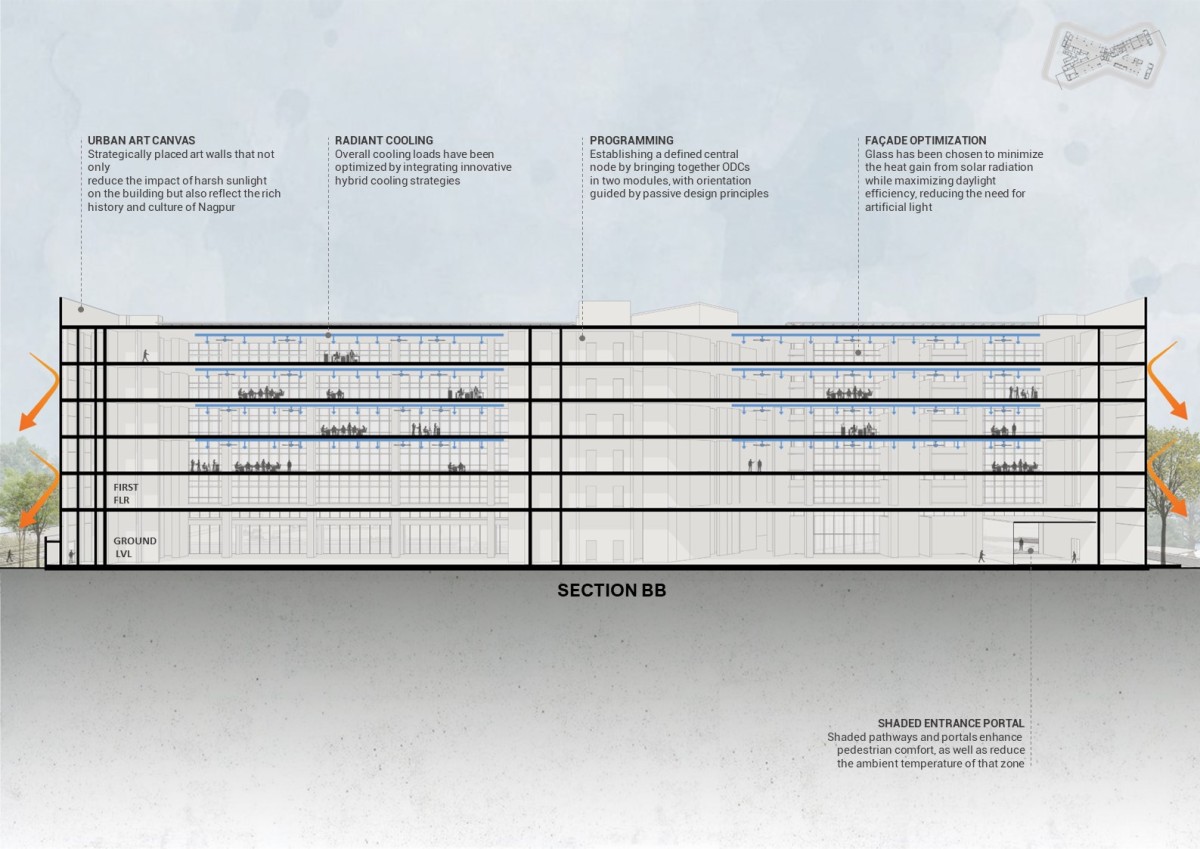
The design also integrates state-of-the-art technologies such as a radiant waffle cooling system, projected to result in substantial operational cost savings. This system utilizes the mass of the concrete slabs to absorb and dissipate heat, maintaining comfortable indoor conditions without the need for excessive energy consumption. The integration of smart building controls further optimizes energy usage, allowing for real-time monitoring and adjustment of environmental parameters.
These design strategies have led to a 52% reduction in the Energy Performance Index (EPI) compared to GRIHA benchmarks. This also means that the campus consumes only one-fifth of the energy of a typical office building.
Workstation of Infosys Campus by Morphogenesis
Workstation of Infosys Campus by Morphogenesis
Elements of History and Culture
Beyond its functional aspects, the architectural design of the Infosys campus reflects a deep appreciation for cultural and historical contexts. The design borrows inspiration from Nagpur's rich heritage, incorporating elements of local art, symbolism, and craftsmanship into the built form.
The perpendicular edges of the building feature monolithic concrete walls and are visualized as urban canvases. The 30m tall RCC walls showcase a ‘Zero-Mile Location’ contemporary illustration of Nagpur Fort on one end and a mind tree representative of Infosys’ work culture on the other. From the contemporary art depicted on the façade to the thematic artwork scattered throughout the interior spaces, every aspect of the campus reflects a celebration of regional identity and tradition.
The Infosys Campus stands as a pioneering 21st-century workspace, showcasing innovative design strategies aligned with sustainability goals and cultural identity. It serves as a model for India's urbanization challenges (an estimated 1 billion sq. ft. of construction) in the next decade, emphasizing the importance of responsible architecture in shaping the future of workspaces.
Workstation of Infosys Campus by Morphogenesis
Workstation of Infosys Campus by Morphogenesis
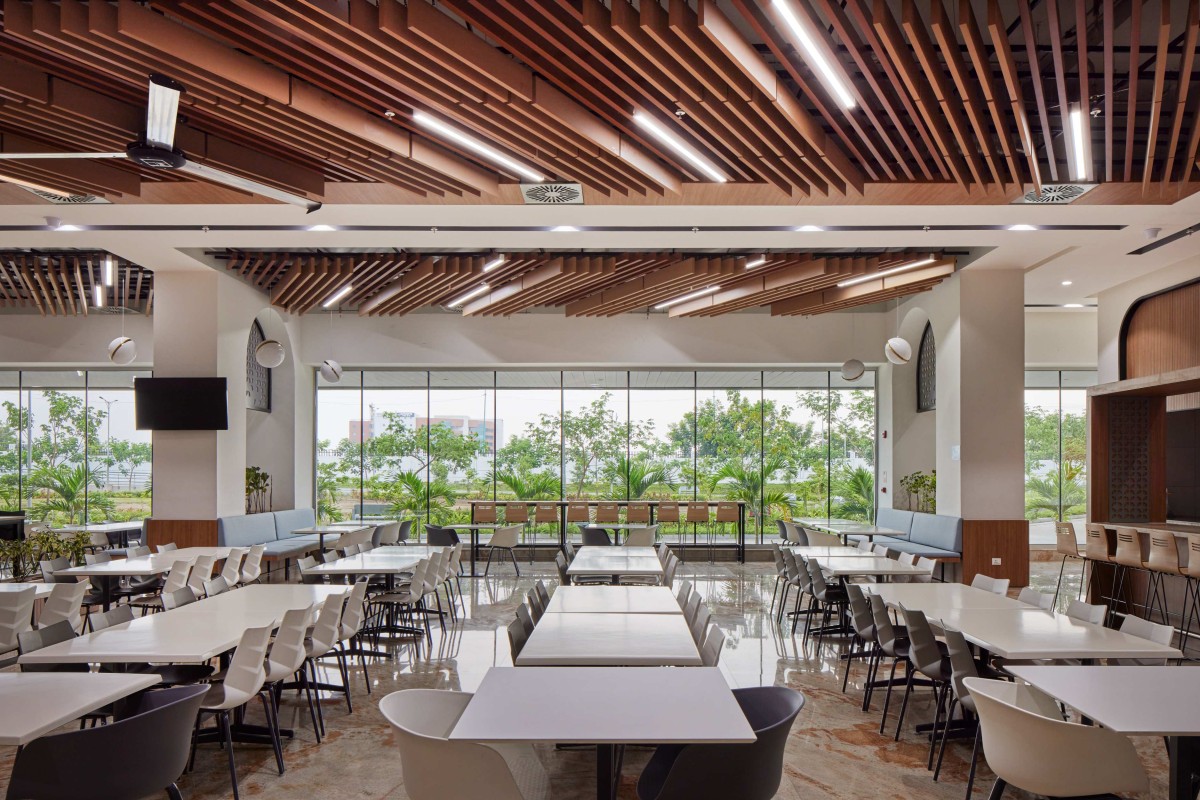
Pantry of Infosys Campus by Morphogenesis
Dusk light exterior view of Infosys Campus by Morphogenesis
Night exterior view of Infosys Campus by Morphogenesis
Detailed shot of external facade of Infosys Campus by Morphogenesis
Detailed shot of external facade of Infosys Campus by Morphogenesis
Elevation with Colour Code and Fin Angles of Infosys Campus by Morphogenesis
Site Plan of Infosys Campus by Morphogenesis
Masterplan of Infosys Campus by Morphogenesis
Ground Floor Plan of Infosys Campus by Morphogenesis
First Floor Plan of Infosys Campus by Morphogenesis
Second & Fourth Floor Plan of Infosys Campus by Morphogenesis
Third Floor Plan of Infosys Campus by Morphogenesis
Fifth Floor Plan of Infosys Campus by Morphogenesis
Section AA of Infosys Campus by Morphogenesis
Section BB of Infosys Campus by Morphogenesis
Environmental Section of Infosys Campus by Morphogenesis