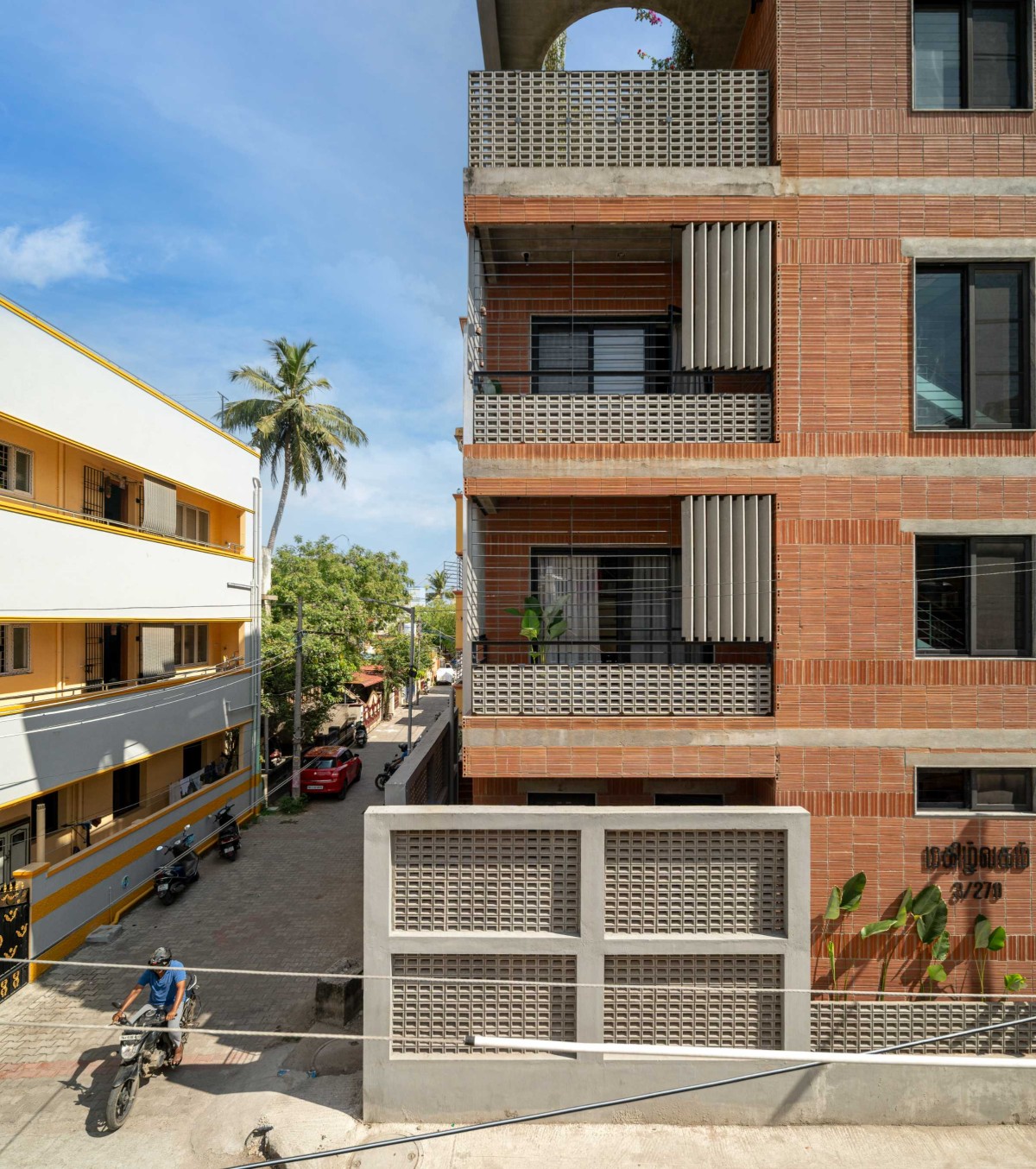
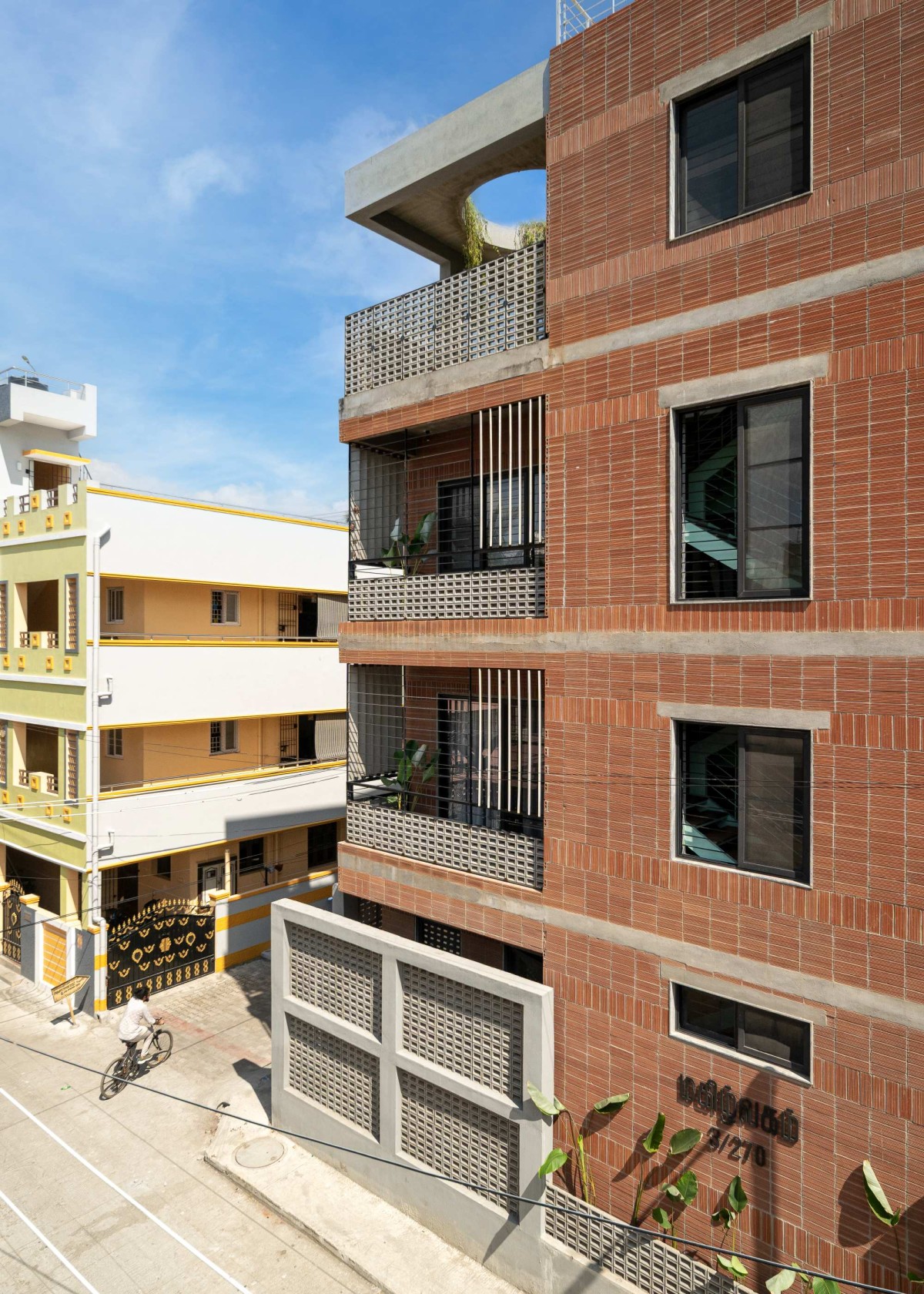
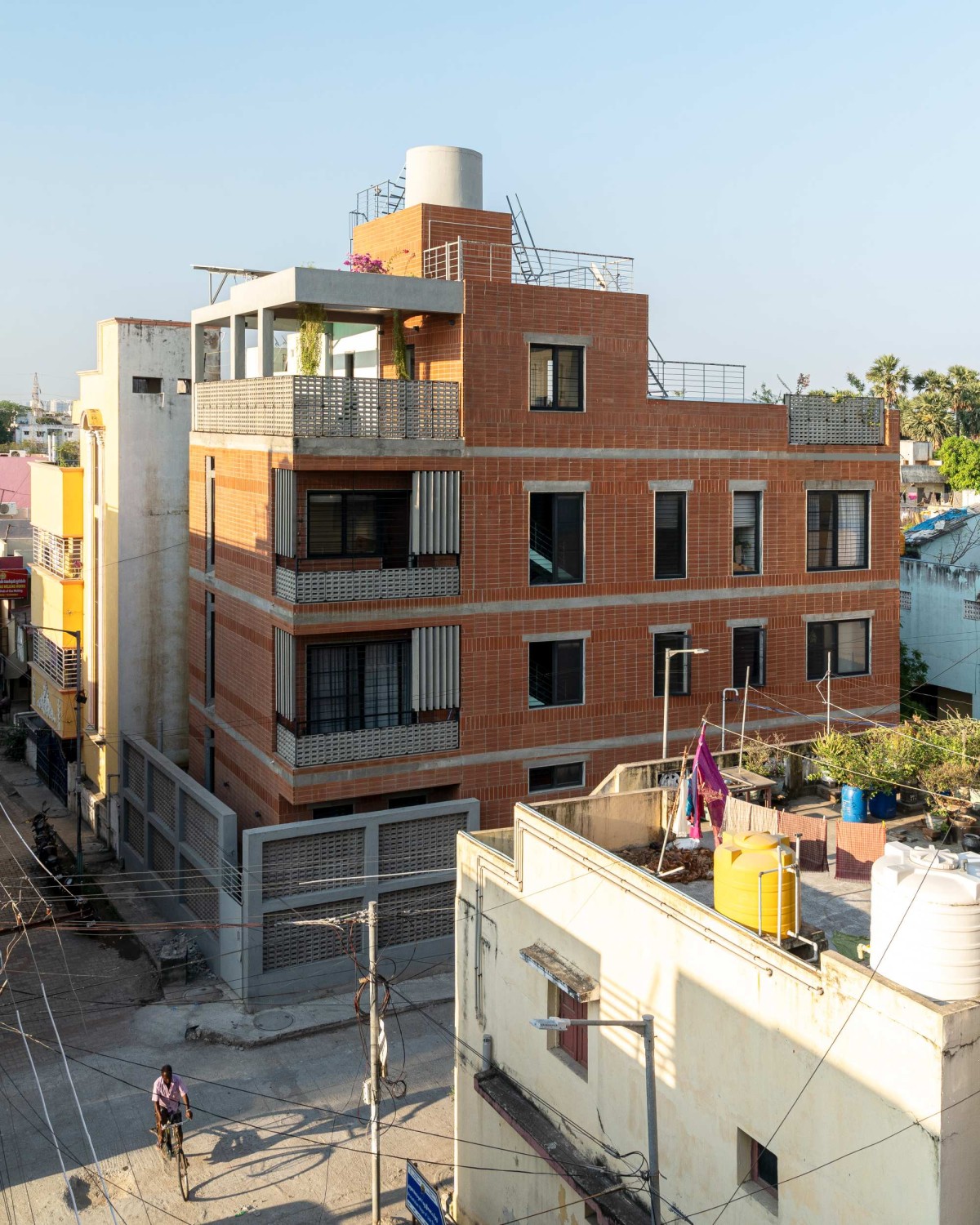
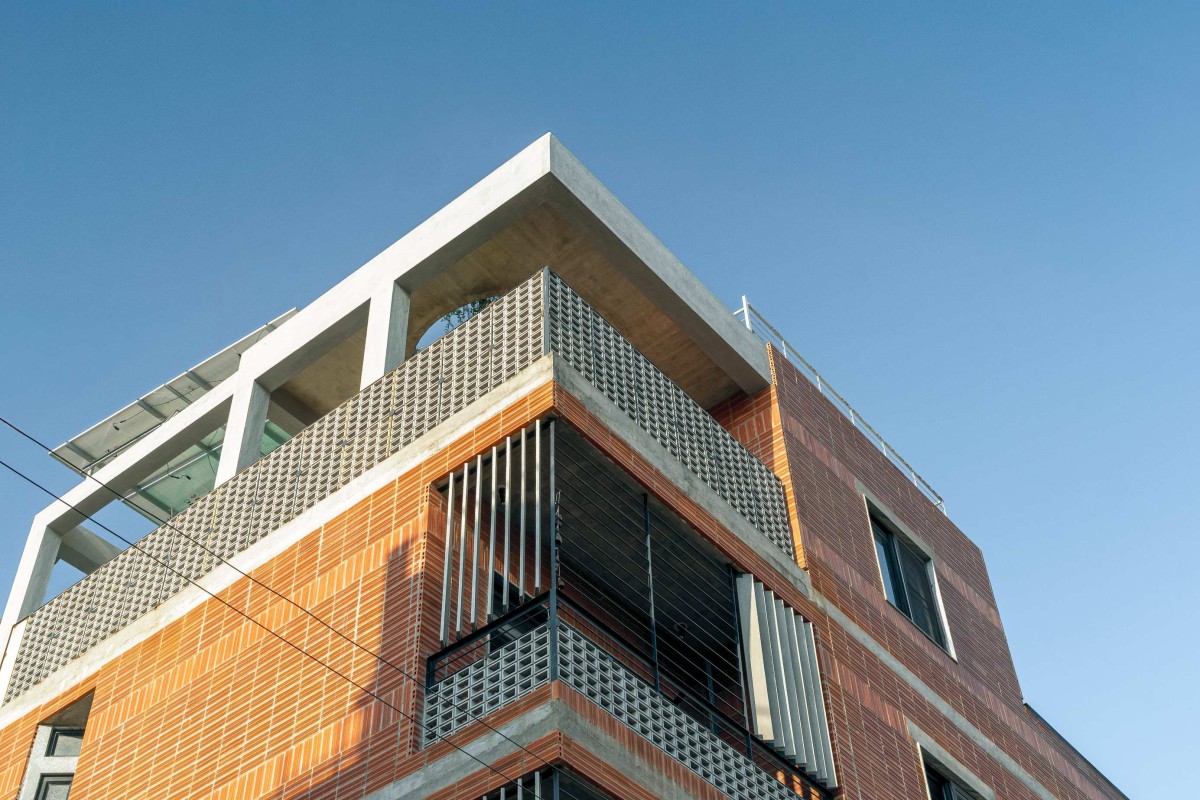
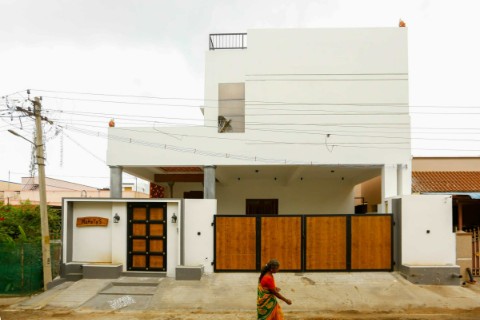
Exterior view of Magizhvagam by Studio Aasary
Exterior view of Magizhvagam by Studio Aasary
As the team says, two primary challenges shaped the design: clay soil conditions and the narrow plot width. These constraints demanded careful structural planning and efficient space utilisation. The zoning of the home began with a clear narrative of organising spaces clearly across levels. Another defining idea was to locate the lift core at the centre of the building, while each level was carefully planned to cater to the lifestyle needs of its respective users.
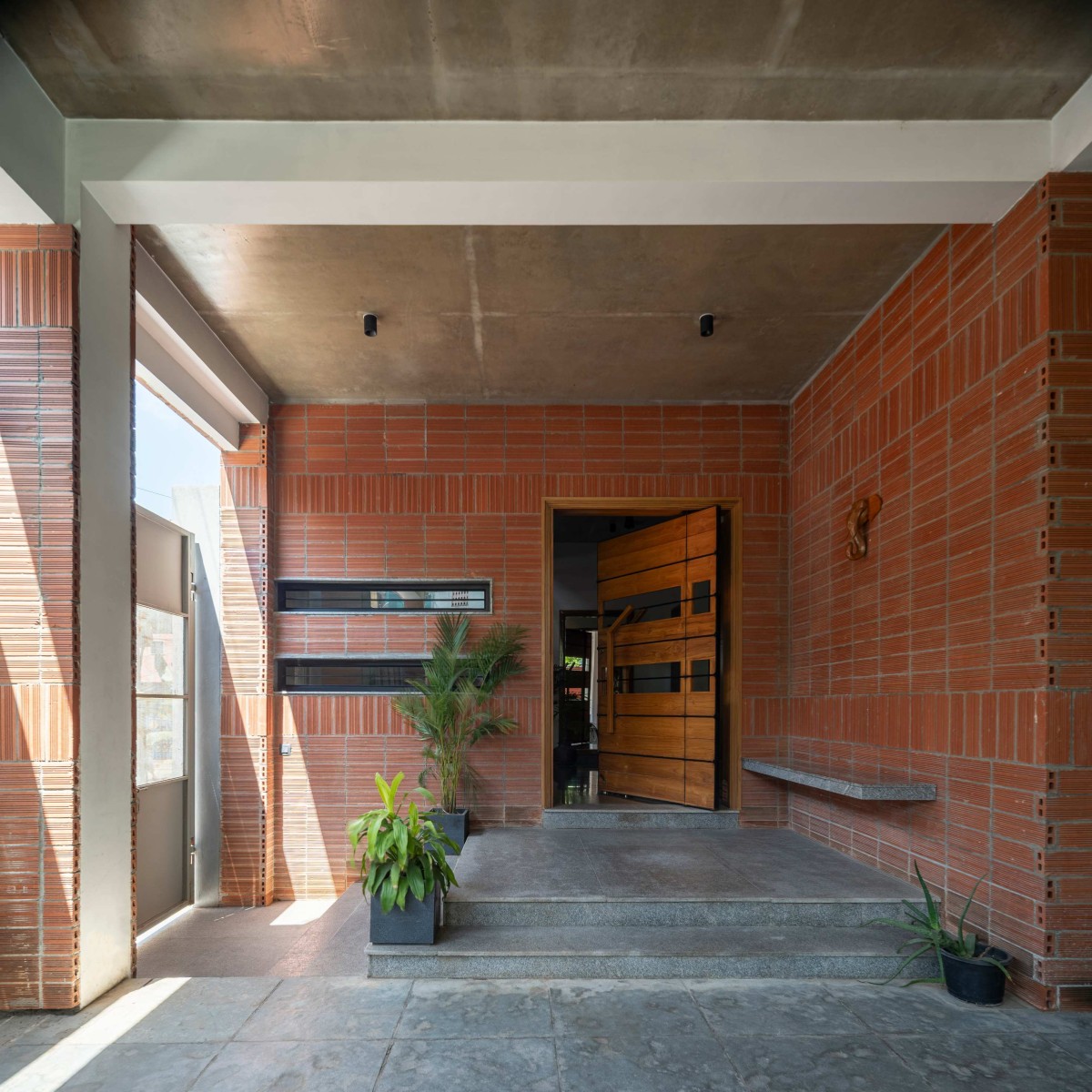
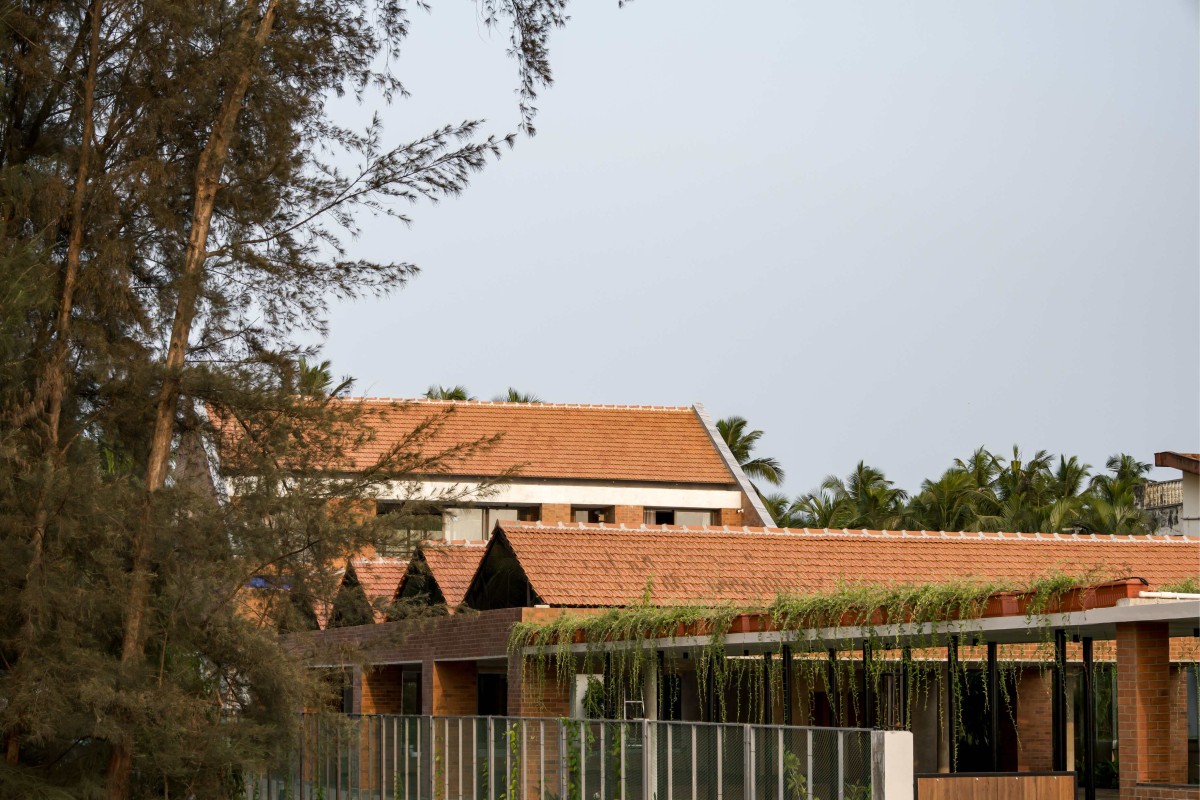
As far as the facade design was concerned, Chennai’s hot and humid climate served as the primary cue. The southern façade defines the linear edge of the building, with generous openings that allows ample daylight and south-western winds into the space. This side accommodates most of the public spaces and allows better daylight and views. The west facade is treated with a single linear window that extends from the ground floor to the second floor. This window is oriented inward to capture the south-west prevailing winds of Chennai. Structurally, the house has been built using exposed RCC slabs with AAC bricks and Porotherm blocks to improve thermal performance. Glass has been used selectively to maintain a balance between openness and atmospheric control.
Exterior view of Magizhvagam by Studio Aasary
Exterior view of Magizhvagam by Studio Aasary
Verandah of Magizhvagam by Studio Aasary
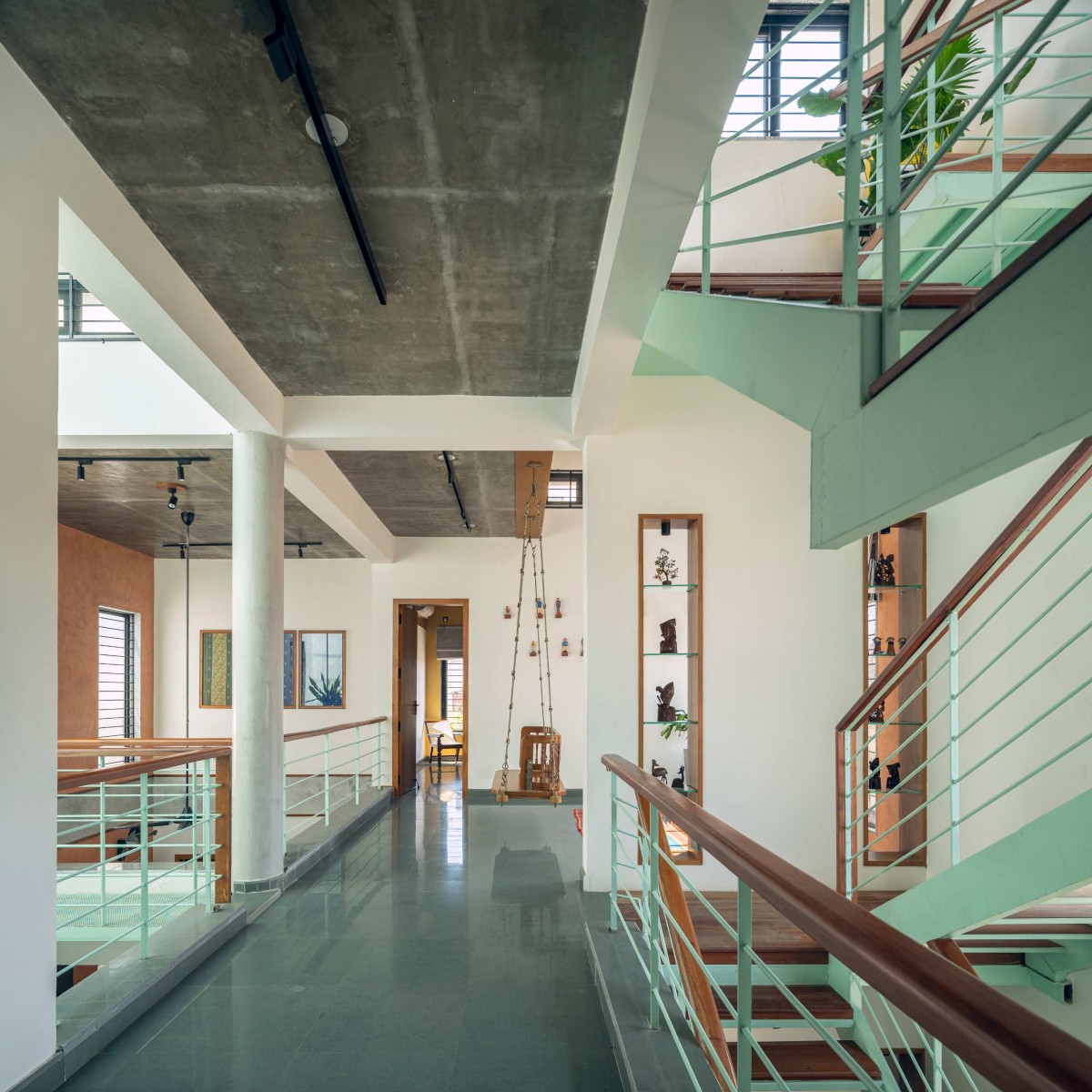
Staircase of Magizhvagam by Studio Aasary
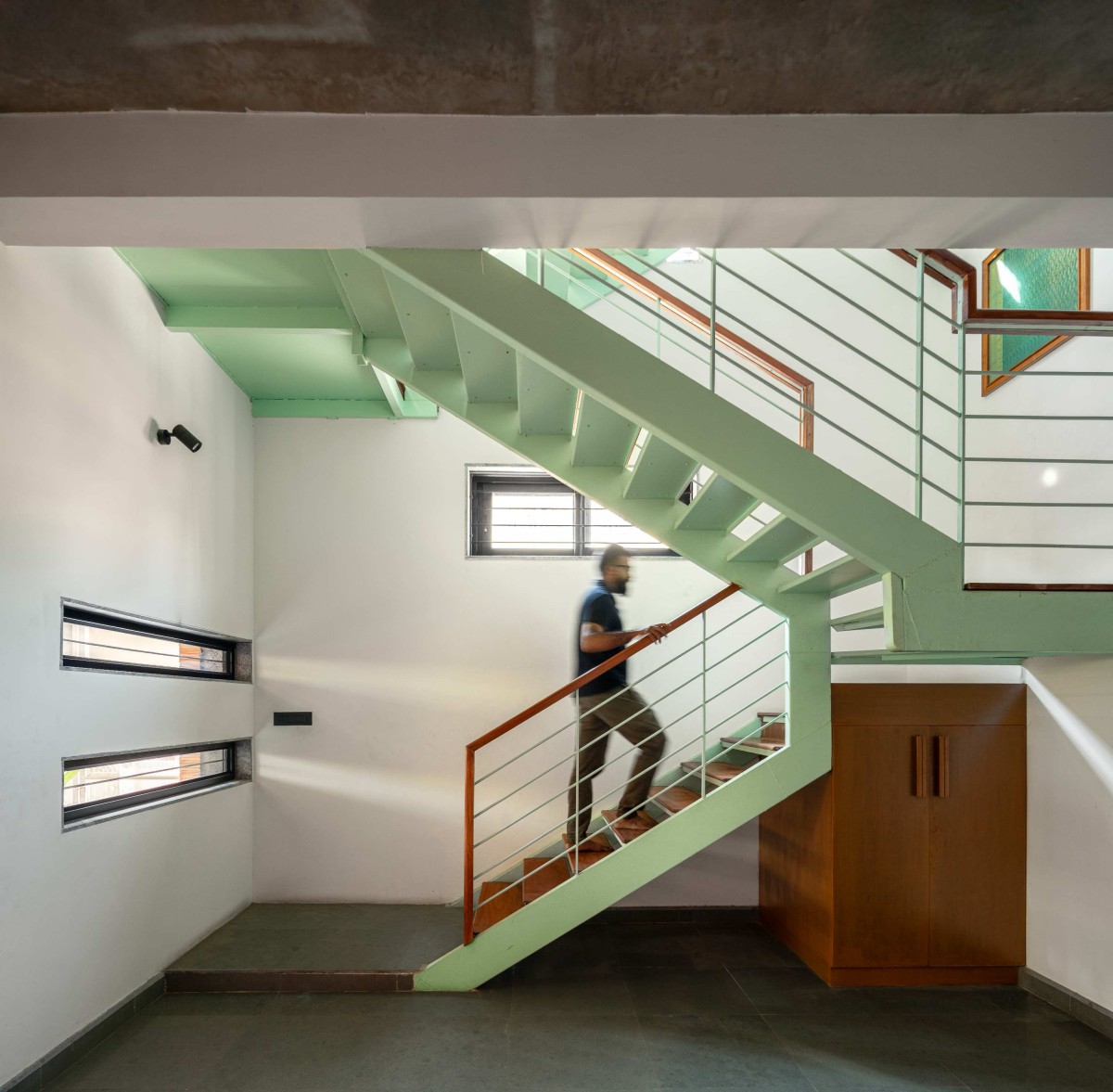
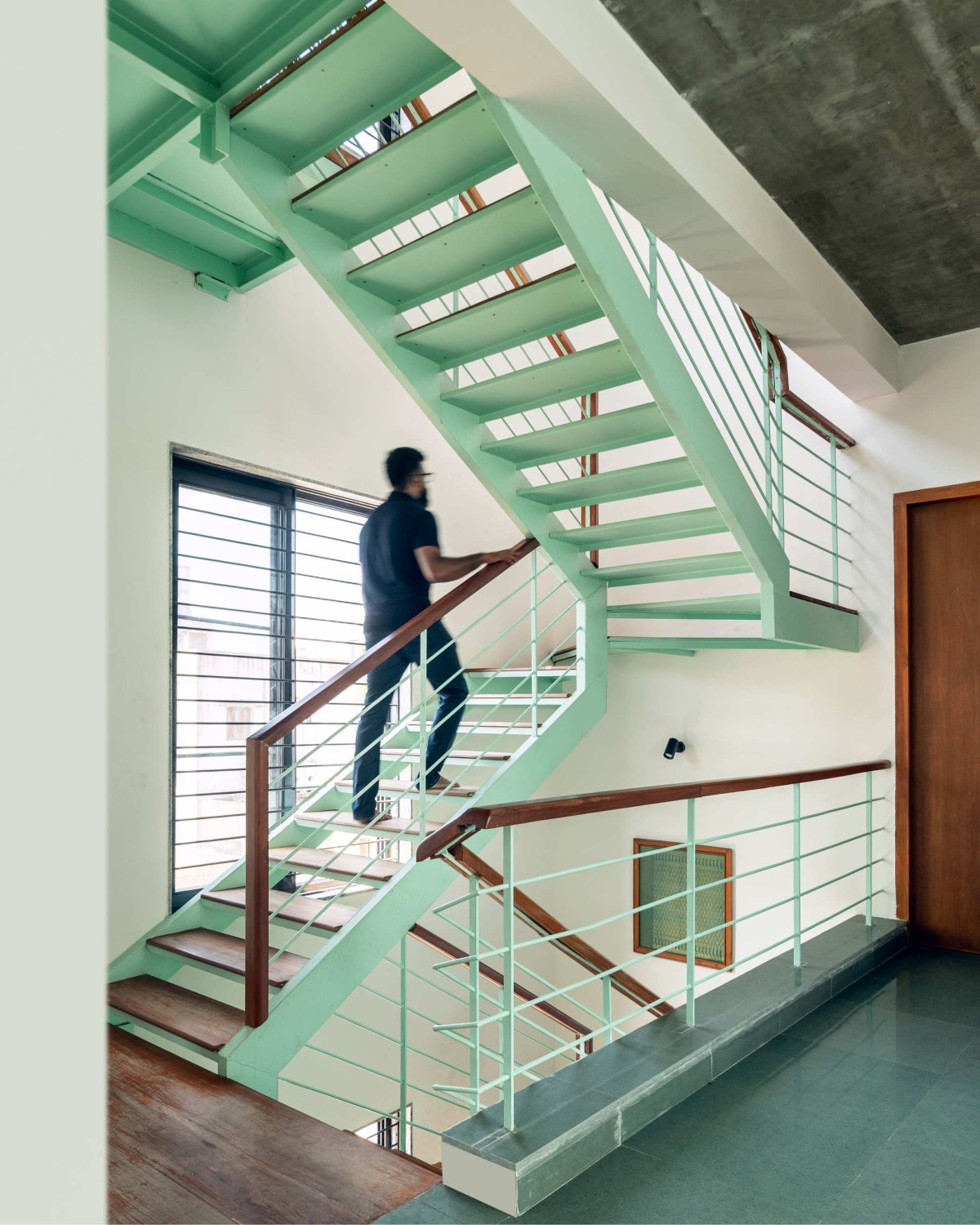
The residence unfolds in a vertical layout, unified through courtyards, flow, and visual continuity. The ground floor functions as the most public layer of the home, with car parking and a well at the entrance. This leads into a warm foyer that introduces the home’s earthy language right from the beginning, marked by a repurposed teak main door. On one side of the foyer is a mint-green staircase that leads to the upper floors. On the other side is a centrally placed lift core that serves functional needs. The ground floor includes a bedroom for the guests and a toilet. A home theatre, designed as a flexible space, can accommodate gatherings and family events.
Staircase of Magizhvagam by Studio Aasary
Passage to living of Magizhvagam by Studio Aasary
Living room of Magizhvagam by Studio Aasary
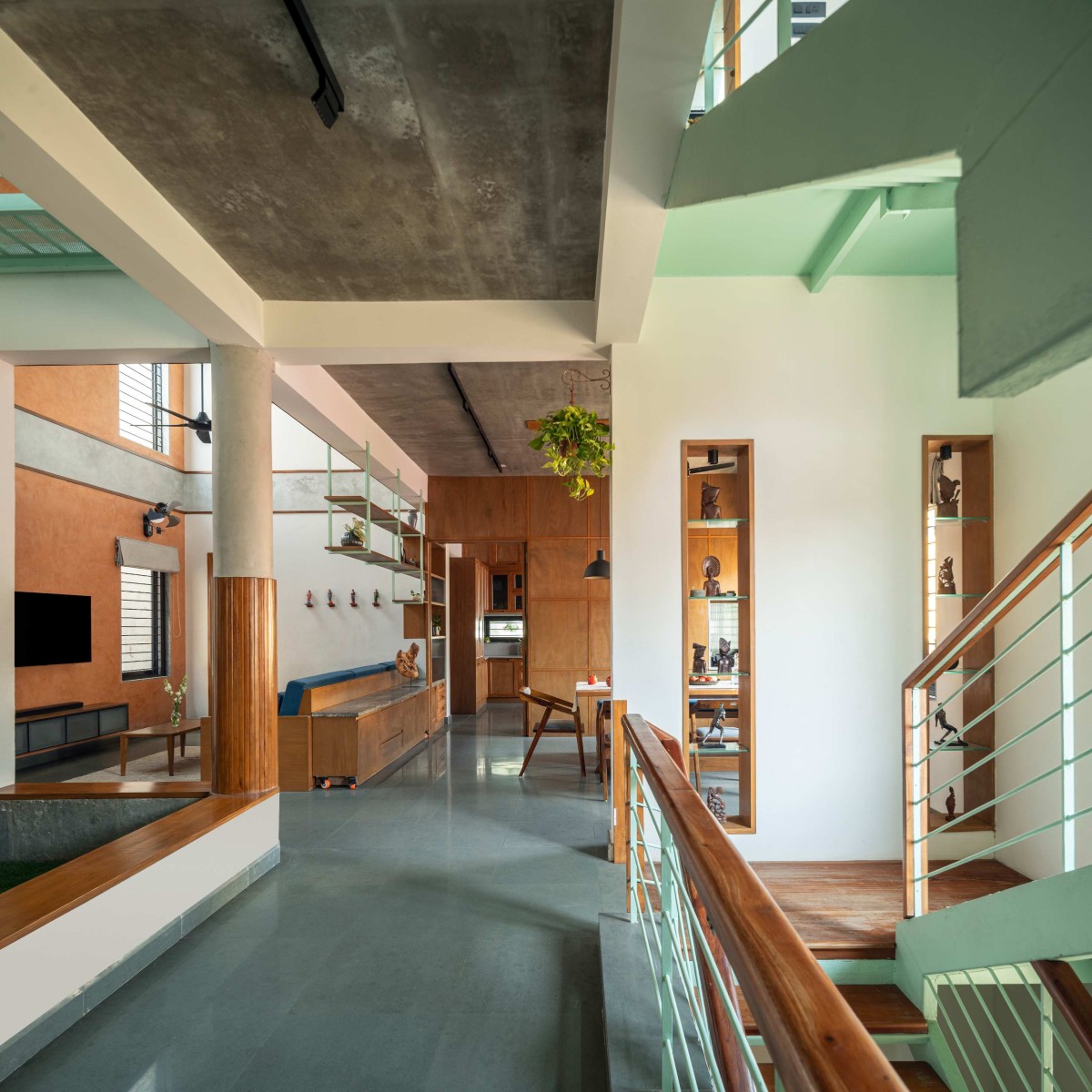
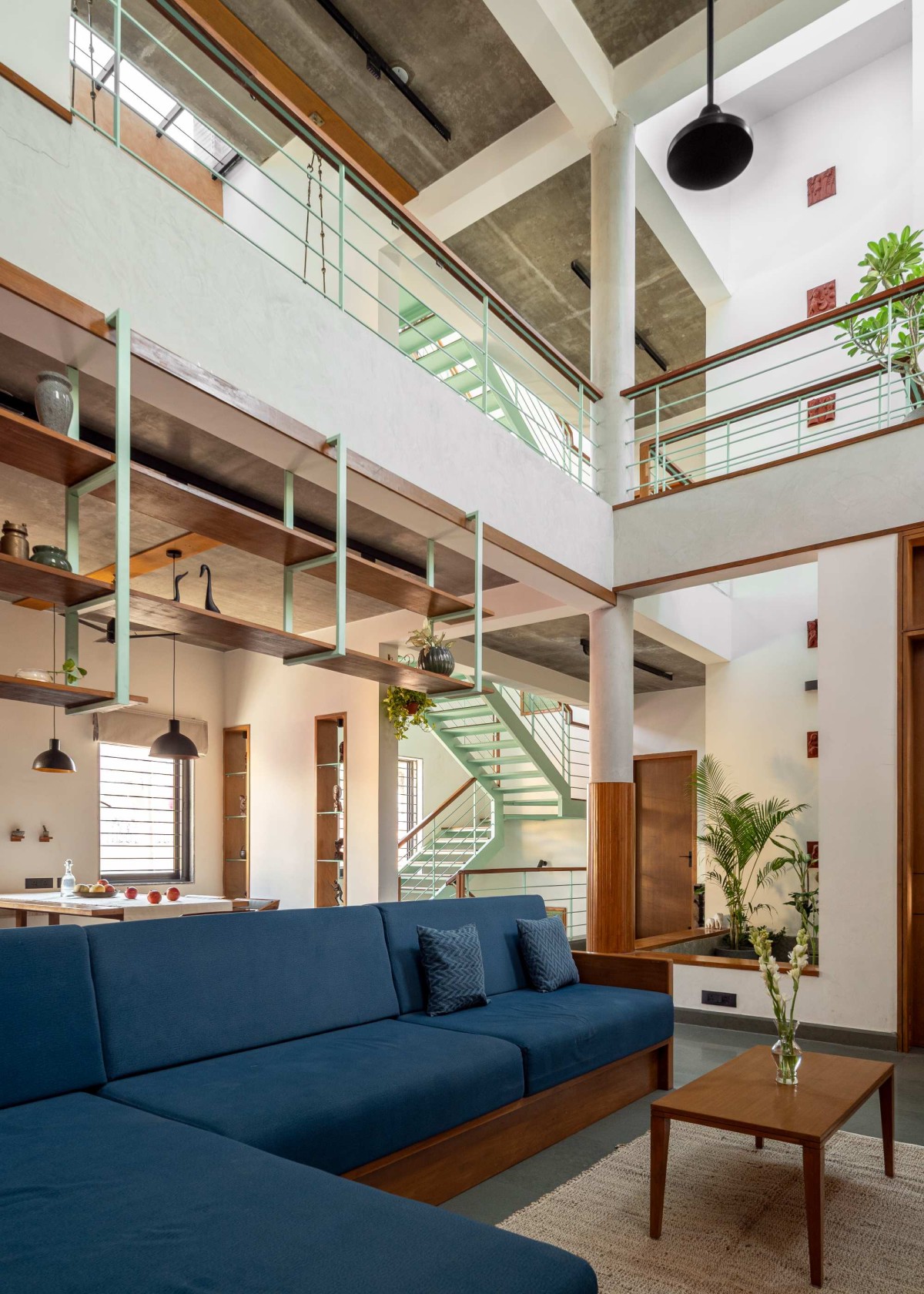
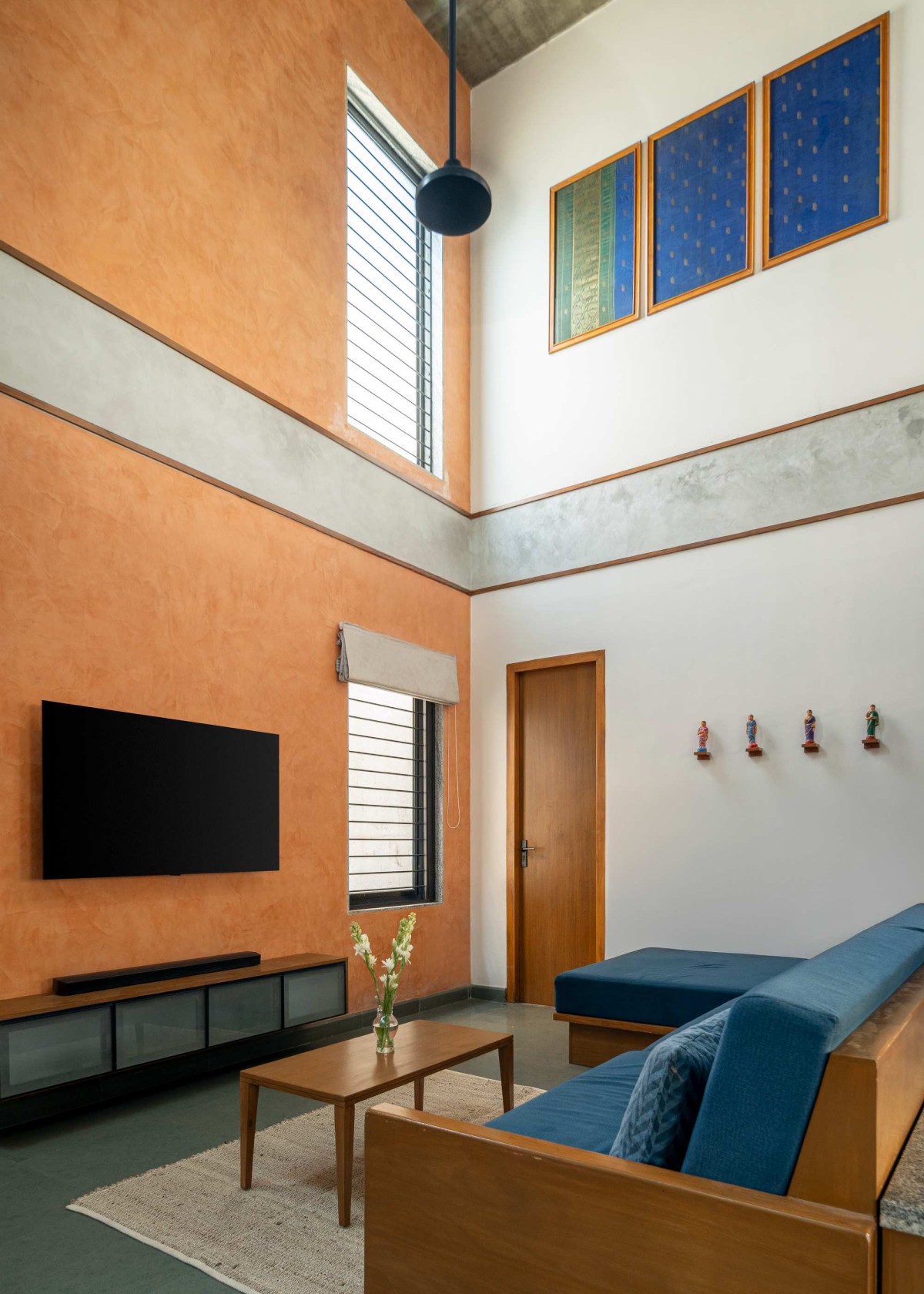
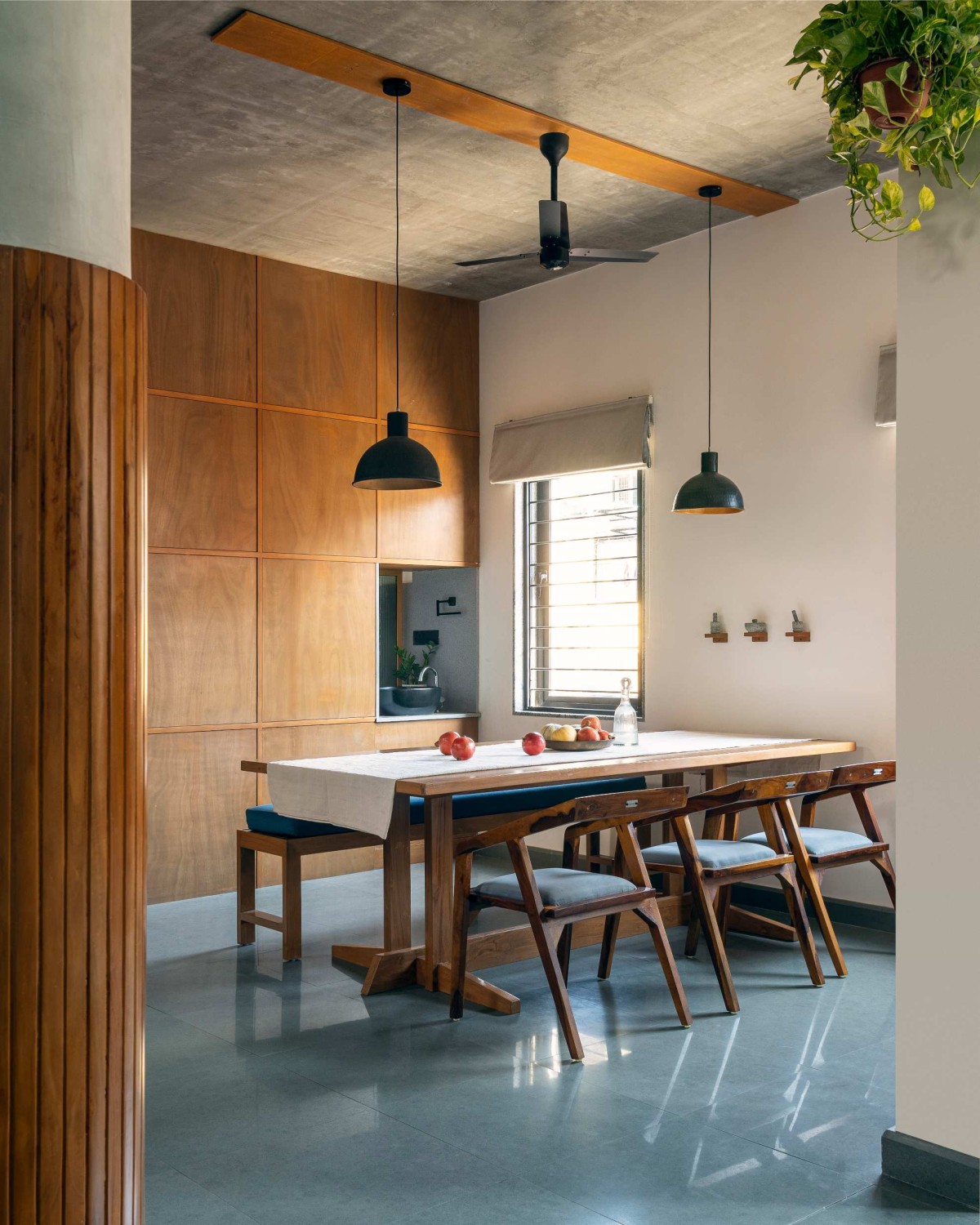
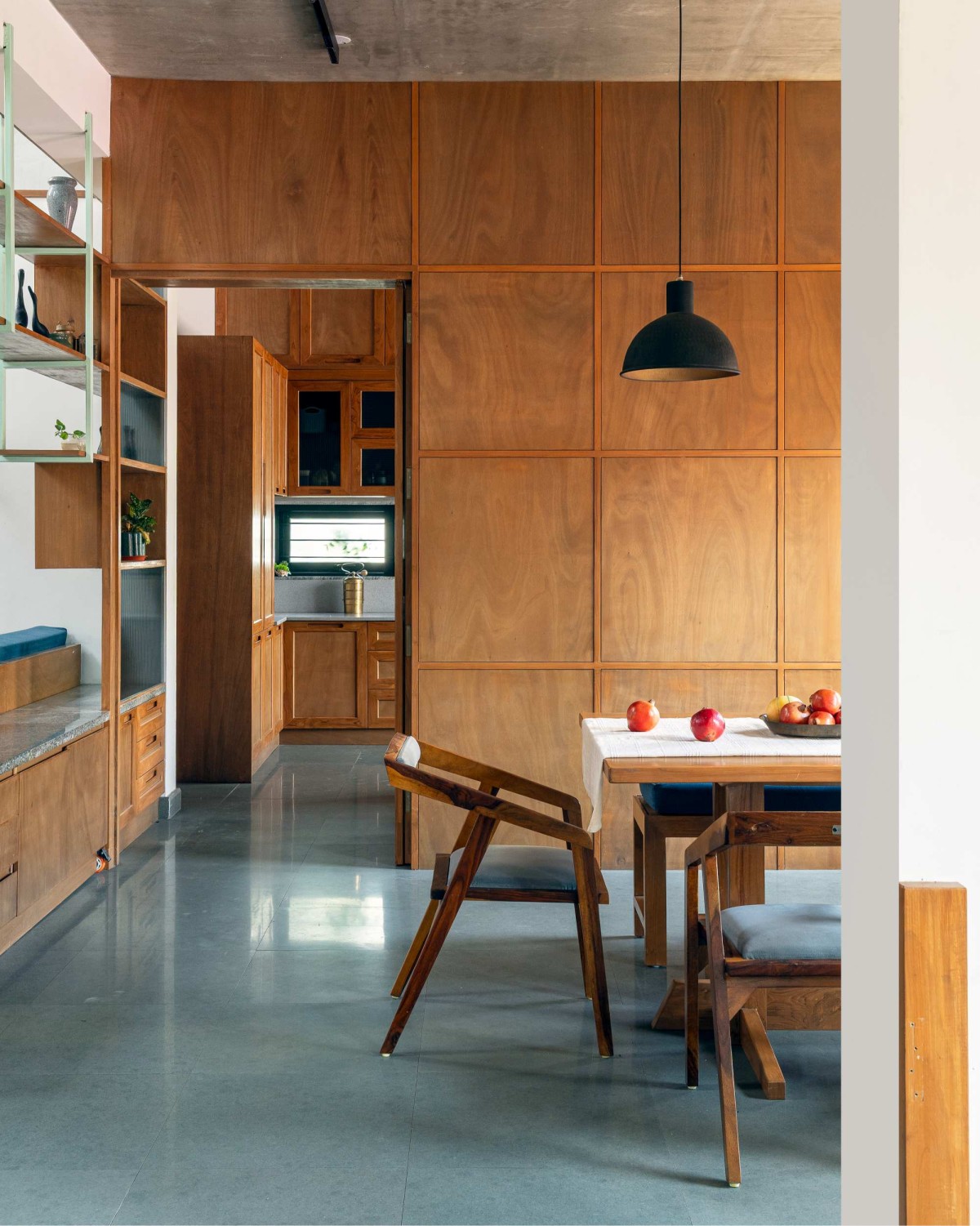
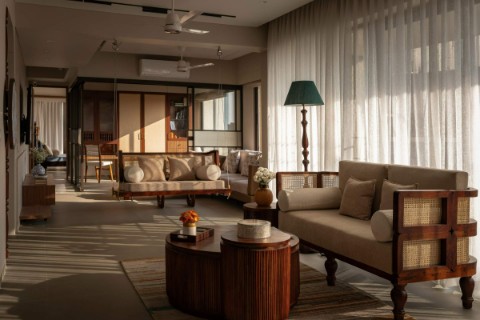
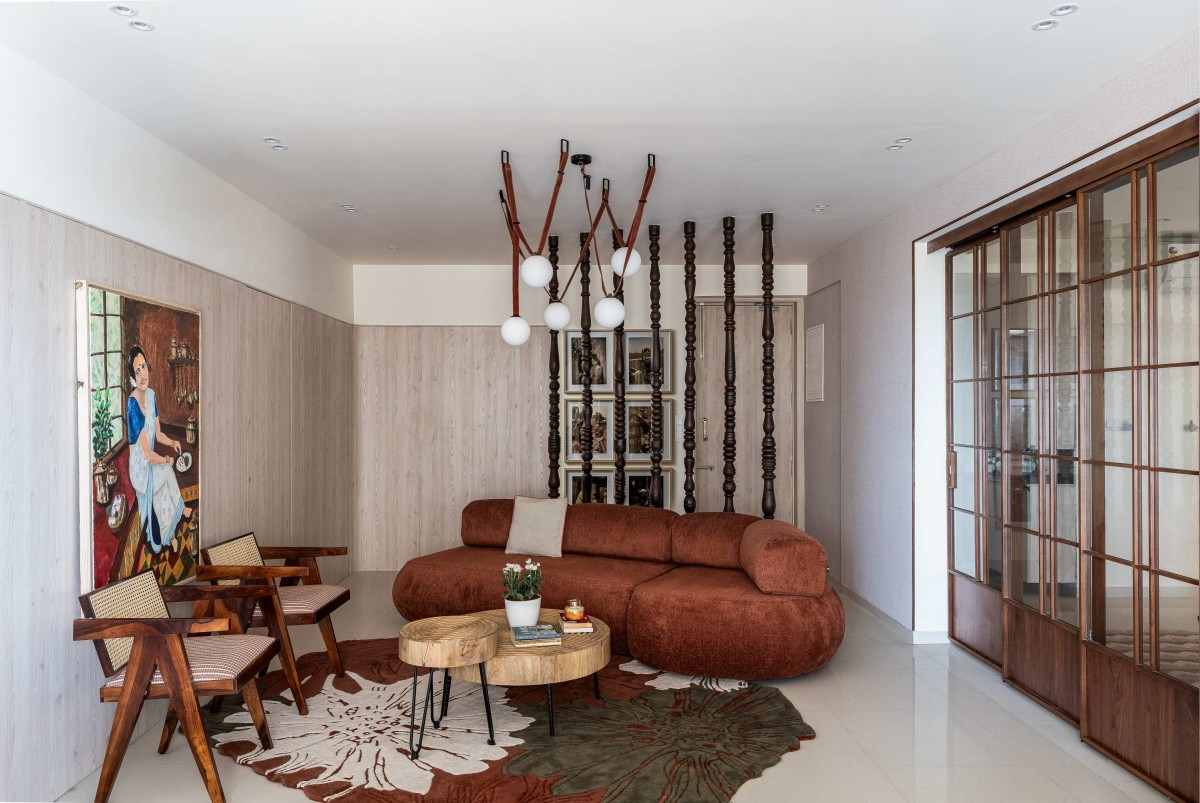
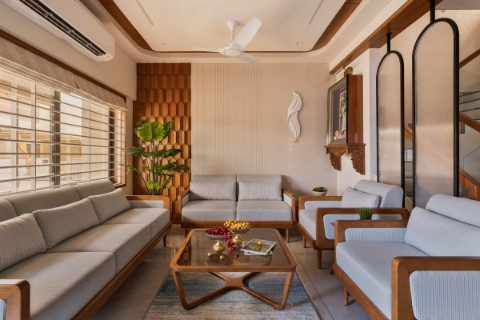
Climbing up, a double-height courtyard greets you with a massive opening, unfolding into distinct zones, with the living, dining, and kitchen placed on one side. The other side opens into the master bedroom with a balcony. Here, the living room becomes the focal point. Conceived as a double-height space, it is accessorised in tones of royal blue and teak wood. Anchoring the space is a beautifully framed piece made from an old silk saree, which feels like a layer of memory and personal history. Seatings, partitions, and circular columns further enrich the living room, introducing a sense of nostalgia. Designed with openness at its core, the first floor is very fluid and naturally lit.
Living room of Magizhvagam by Studio Aasary
Dining of Magizhvagam by Studio Aasary
Dining of Magizhvagam by Studio Aasary
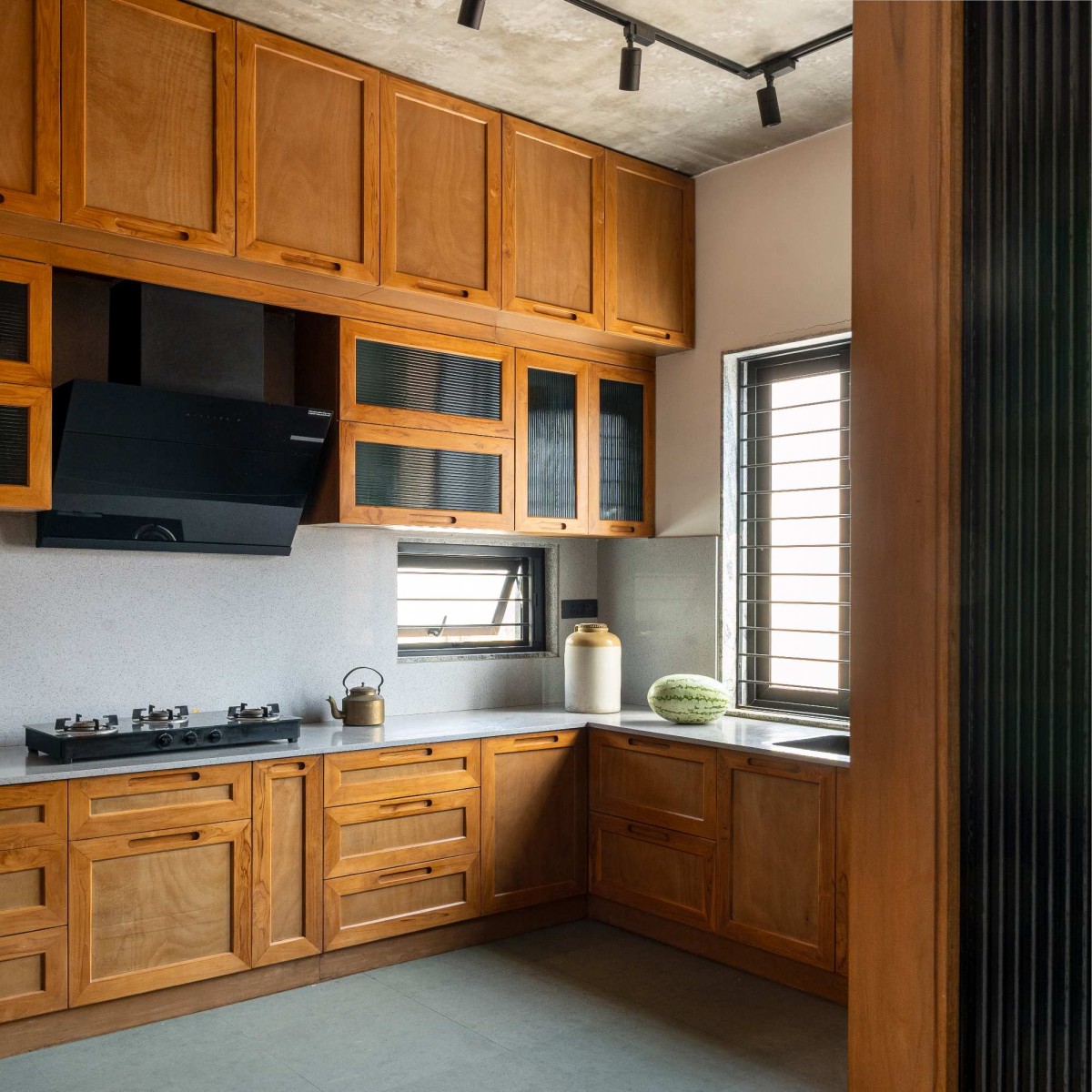
Kitchen of Magizhvagam by Studio Aasary
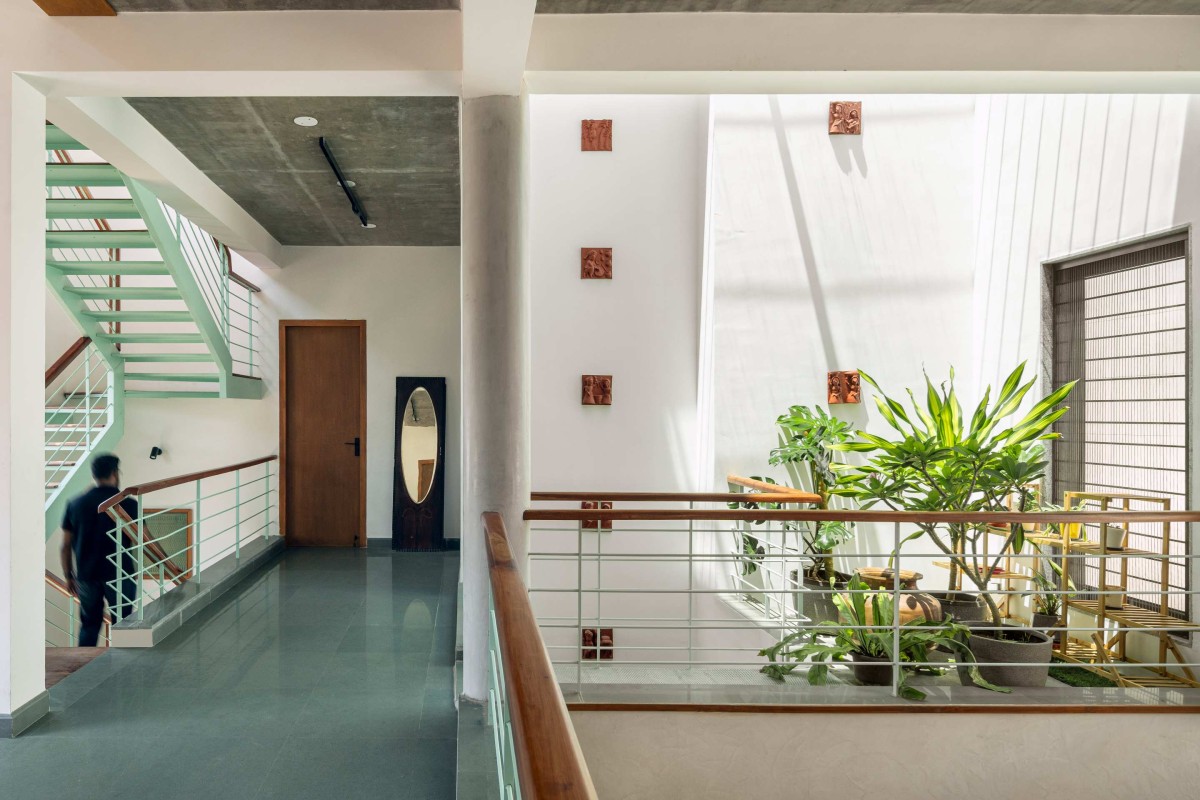
Lobby of Magizhvagam by Studio Aasary
Lobby of Magizhvagam by Studio Aasary
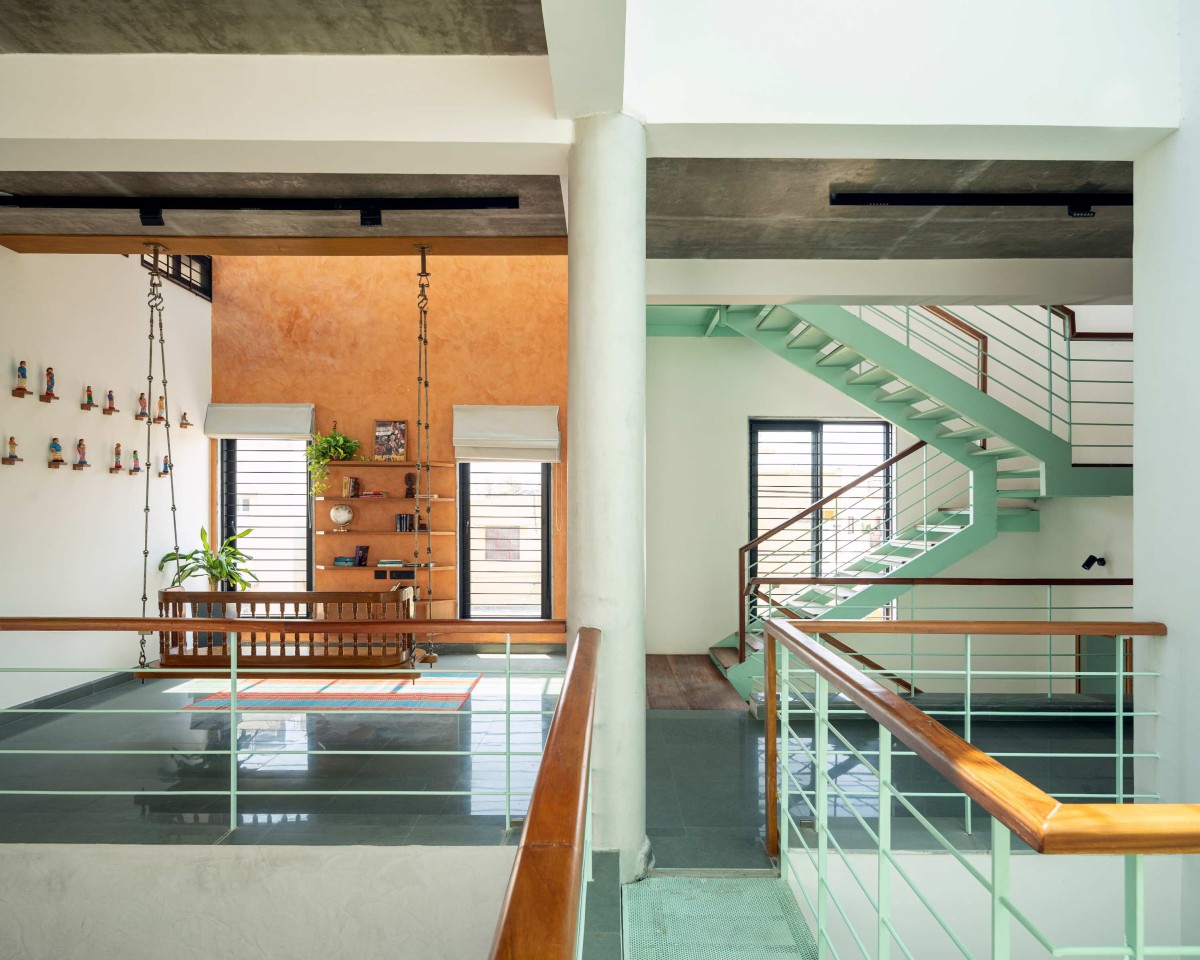
Passage to reading nook of Magizhvagam by Studio Aasary
Reading nook of Magizhvagam by Studio Aasary
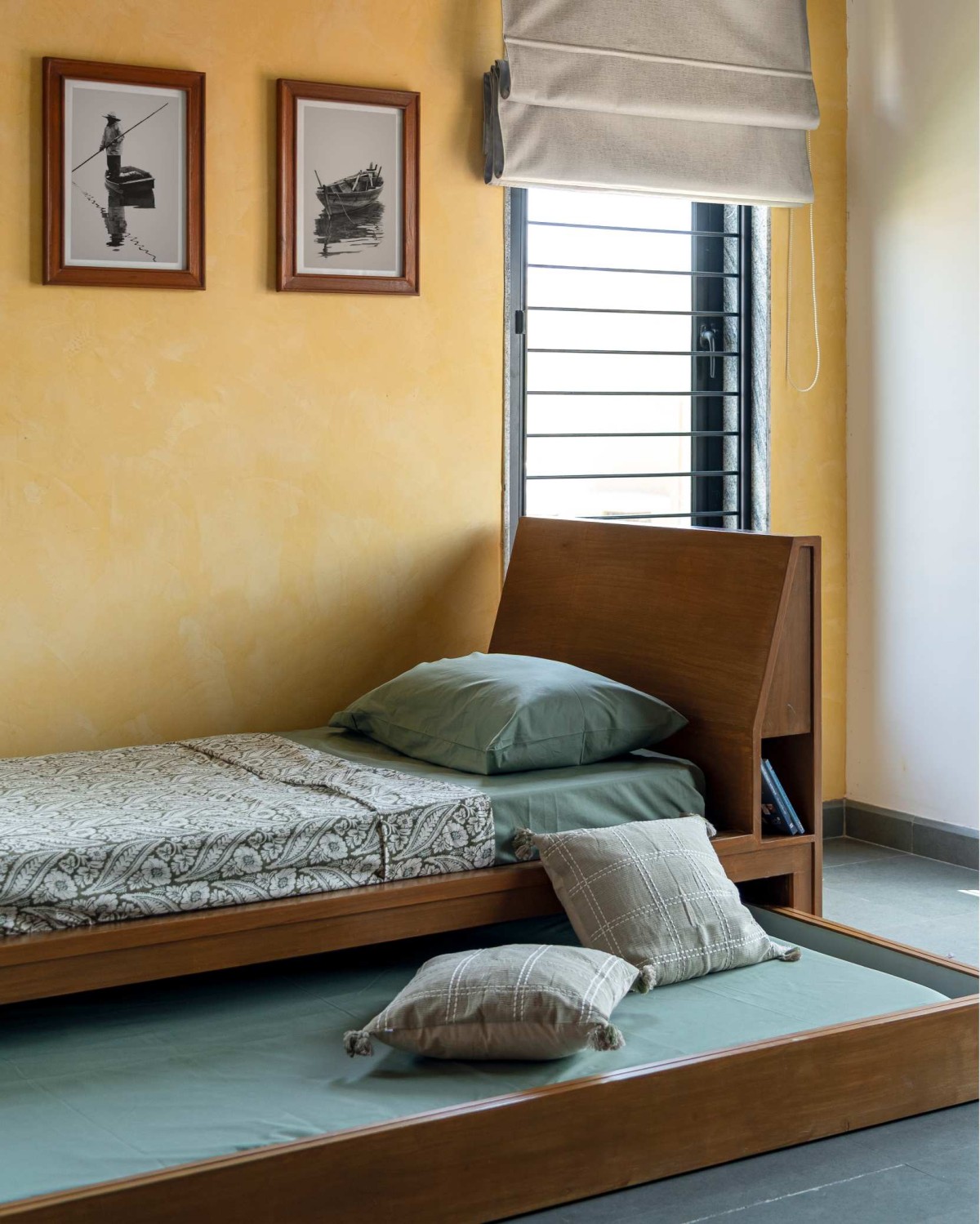
Bedroom 1 of Magizhvagam by Studio Aasary
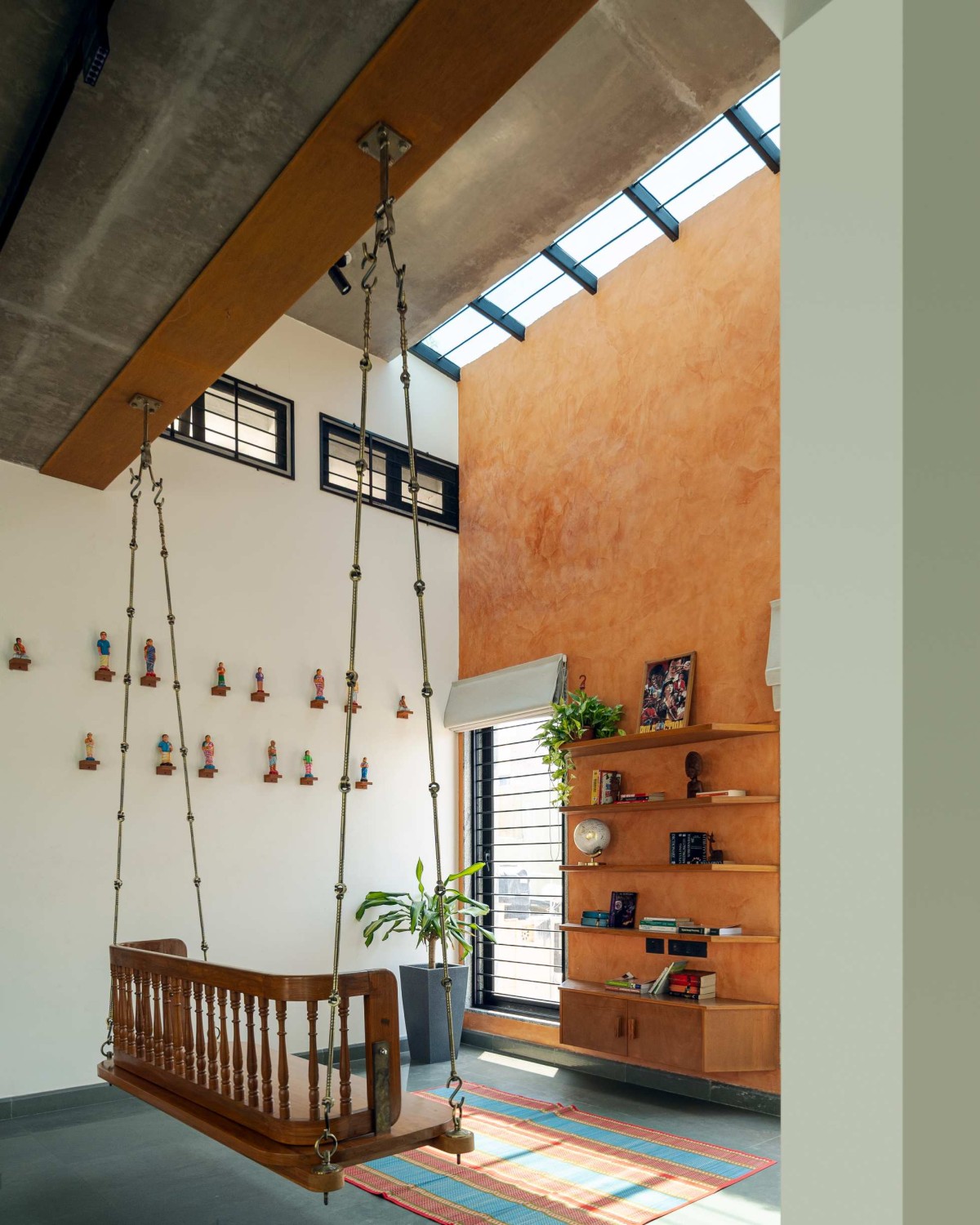
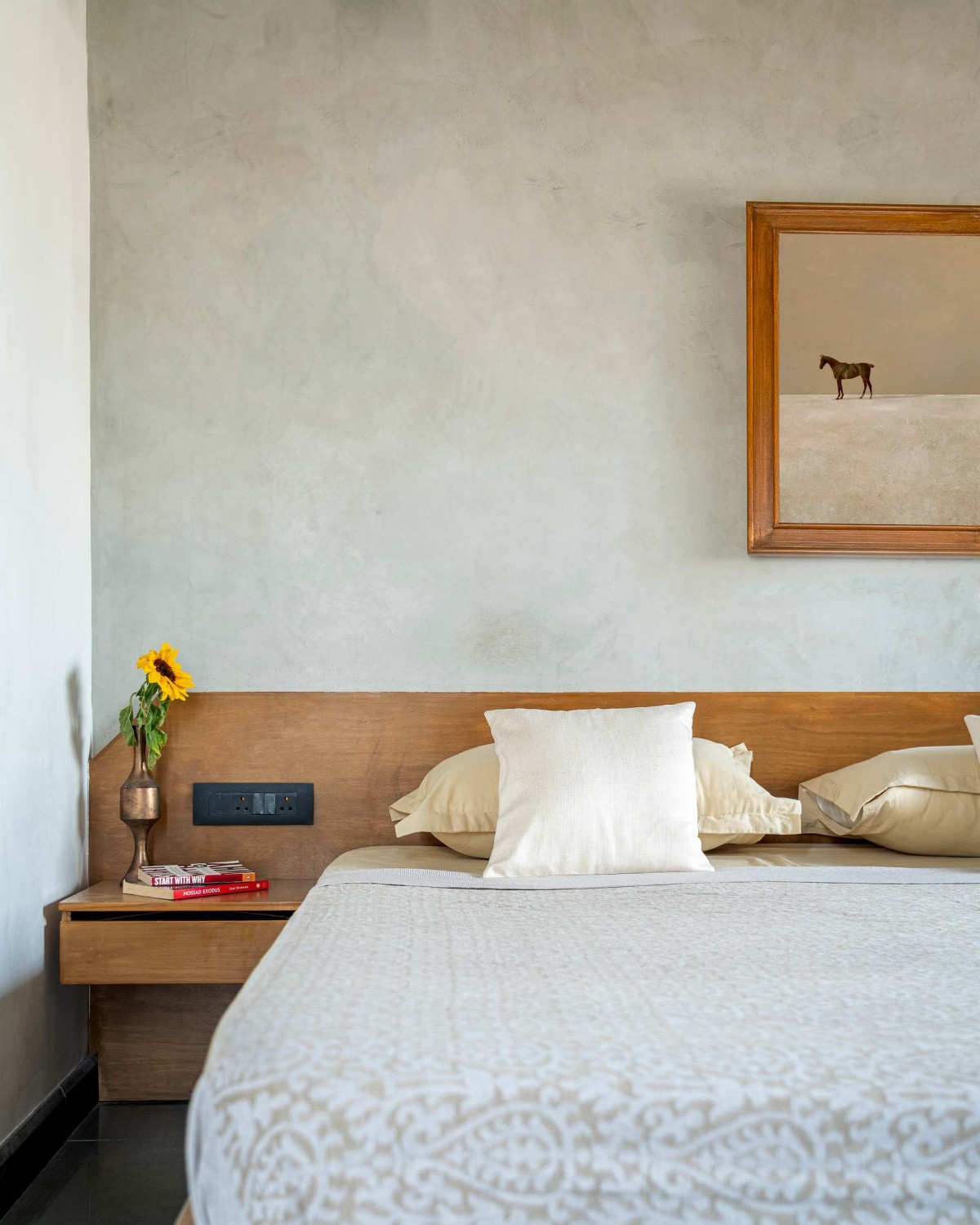
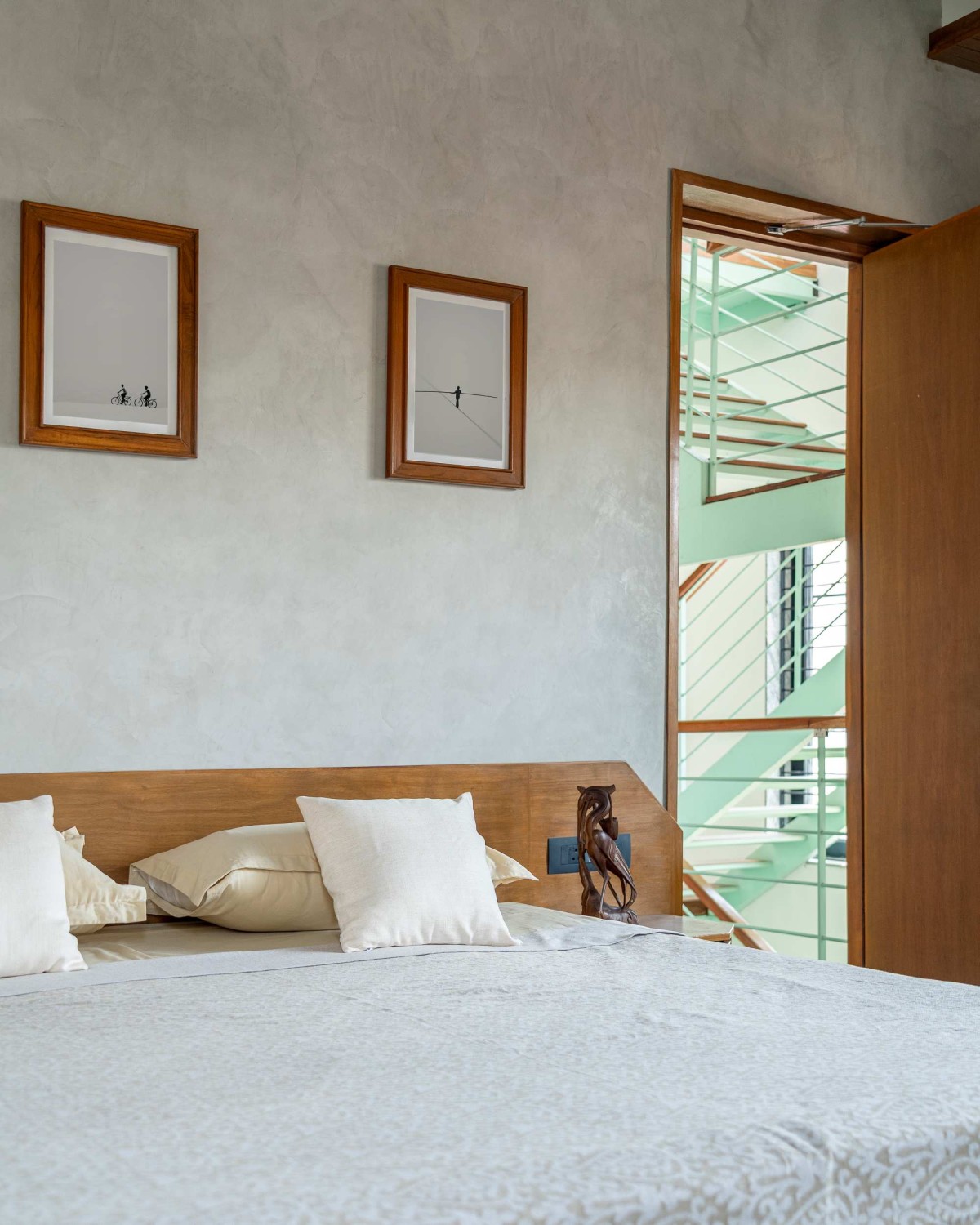
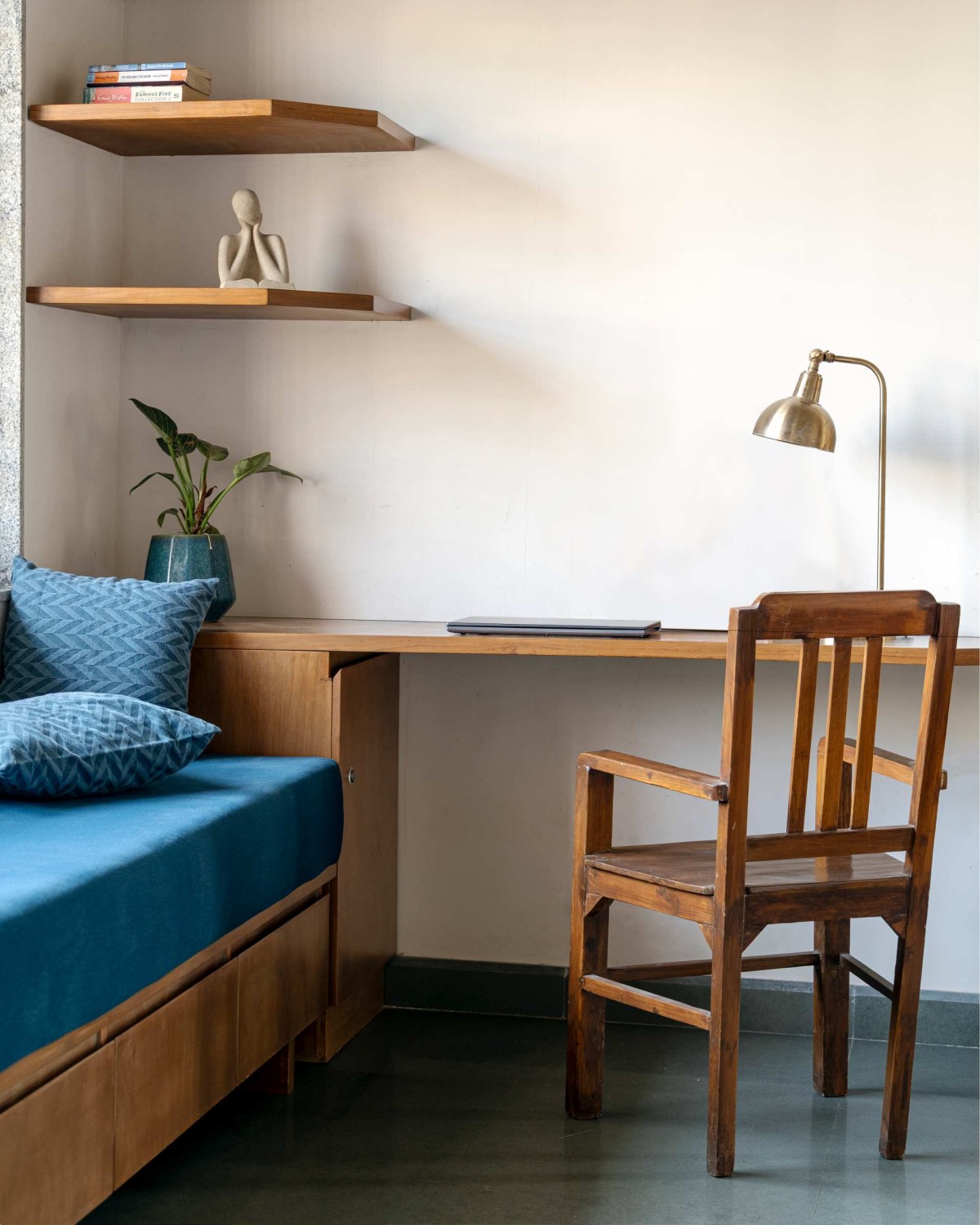
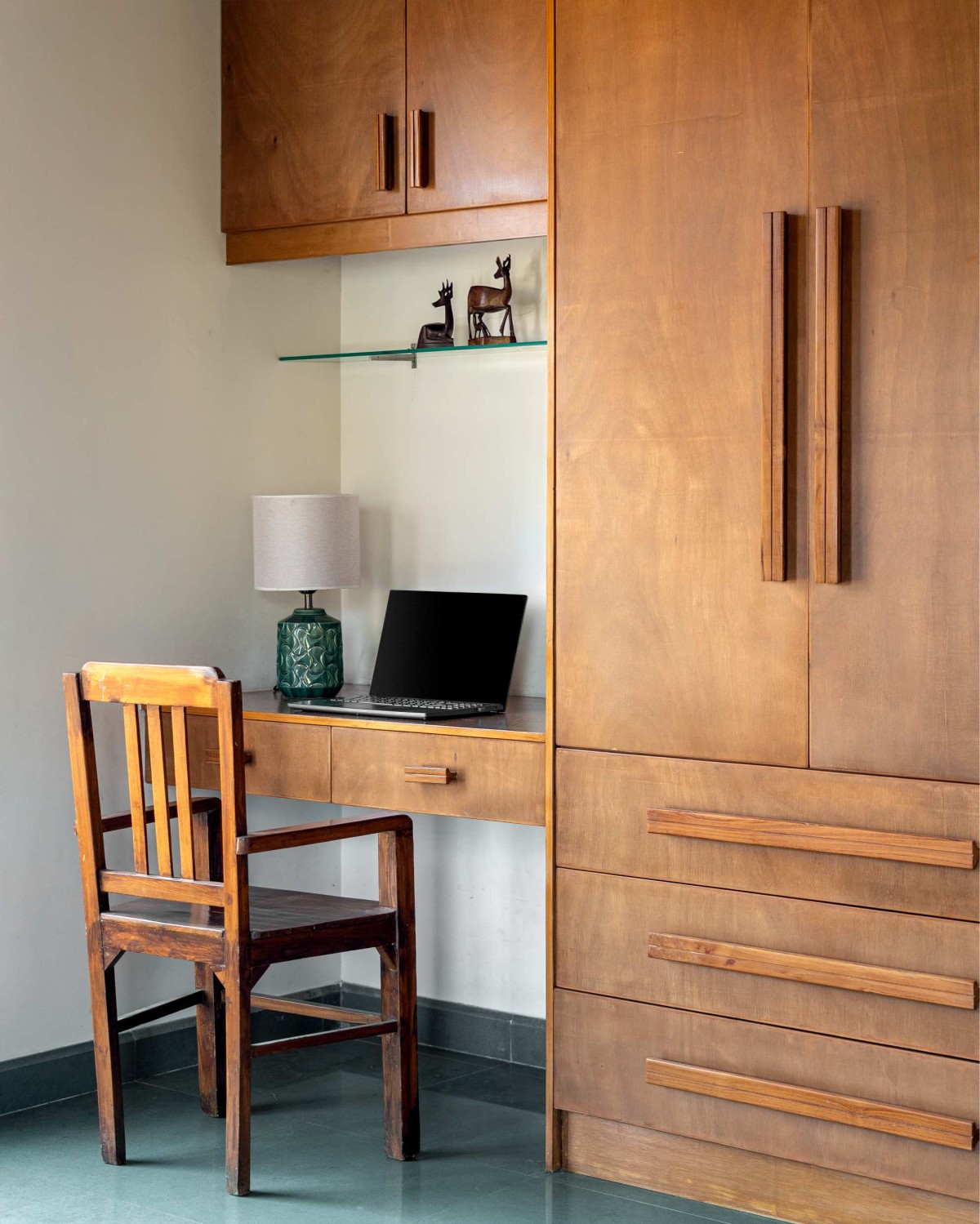
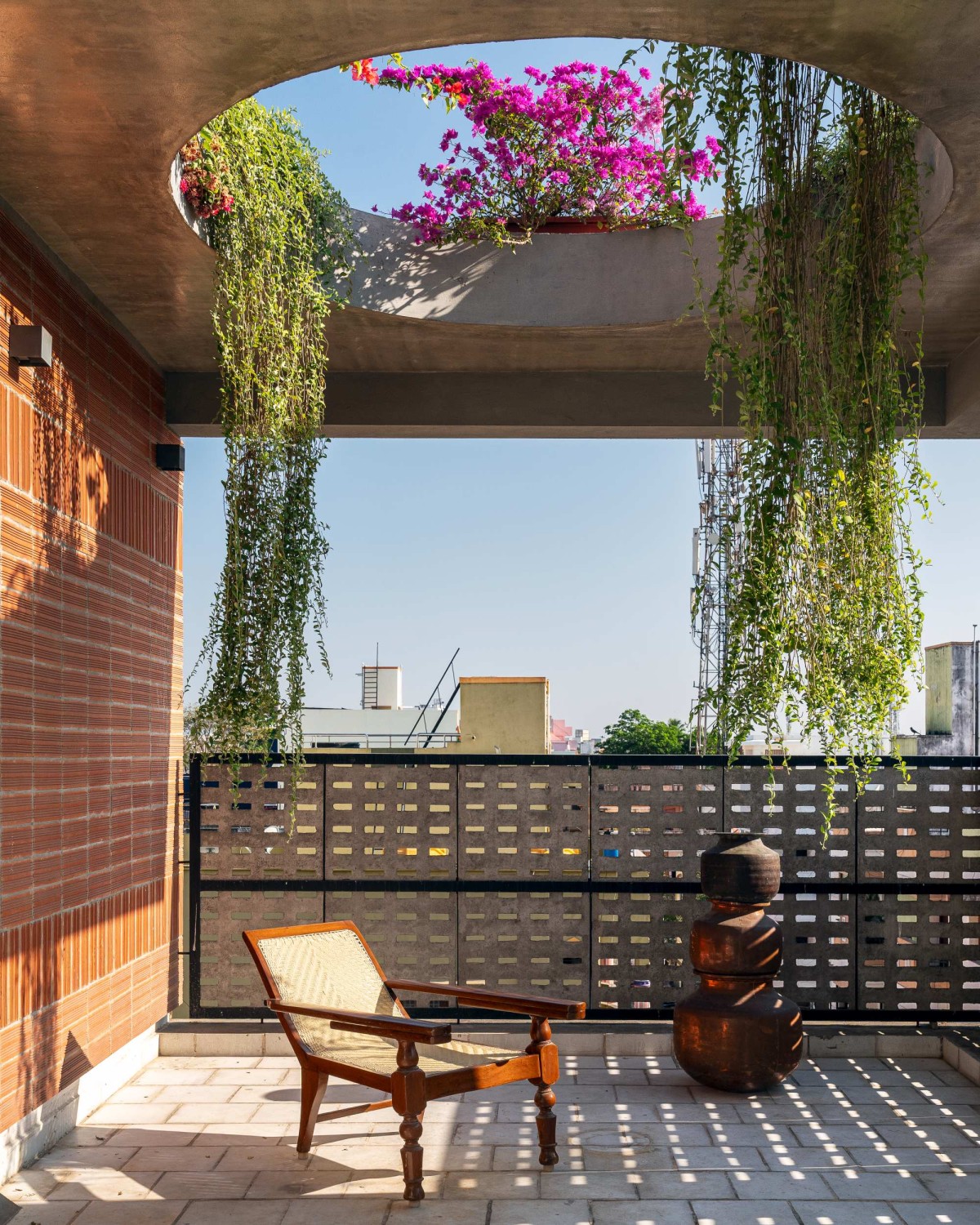
The second floor houses the bedrooms for the couple and their children. It also includes a study/workstation, balconies, and internal visual bridges overlooking the courtyards and living spaces below. Rising above all these layers lies the terrace, which accommodates laundry, built in seating, an overhead tank, and shaded leisure zones, with clerestory windows and glass roof elements. One of the terrace’s key features is a circular slab cut-out from above. Climbers and creepers frame this opening and allow sunlight to enter the space. Together, this carefully layered vertical zoning ensures a cohesive living experience for a multi-generational household.
The material language of Magizhvagam is honest. Studio Aasary relies on locally available materials and craftsmen to support sustainability and contextual relevance. Kota stone flooring is used for its robustness and natural cooling properties. Lime-plastered wall finishes allow the walls to breathe, offering a soft quality to the interiors. Glass and aluminium windows are used to control transparency. A mild steel staircase forms part of the circulation. The architecture here relies on proportion, light, and material textures to define spaces.
Bedroom 1 of Magizhvagam by Studio Aasary
Bedroom 2 of Magizhvagam by Studio Aasary
Bedroom 3 of Magizhvagam by Studio Aasary
Study Area of Magizhvagam by Studio Aasary
Terrace of Magizhvagam by Studio Aasary
The interiors reflect a simple and adaptable design approach. Furniture arrangements allow spaces to adjust for daily use and gatherings. Complementing the built form, landscape elements and indoor plants decorate the courtyards and transitional spaces, opting for a calmer, more breathable living environment.
Layer by layer, the home brings three generations into quiet proximity. Voices travel across the levels. Light shifts through the courtyards as the day unfolds. The terrace gathers small pauses in between routines. Nothing feels isolated, with each space remaining aware of the other. Materials soften with each touch and slowly take on the marks of use. Over time, the house begins to echo the lives within it—footsteps on the stairs, conversations across balconies, the stillness of late evenings. Through its clarity of design and response to climate, Magizhvagam remains true to its name, unfolding gently with time and those who inhabit it.