Architecture

01-02-2026

Photographer : Inclined Studio

Text provided by Architect

Blue Lotus Café is conceived as an experiential, multi-sensory space inspired by the spiritual geometry of the Shree Chakra. Rather than being a visually driven object, the project is designed as a journey of transition—from the outer, material world to an inward, contemplative core. 

Blue Lotus Café is a fusion of past and present, where architecture becomes a medium for storytelling rather than spectacle. Each visitor carries away a different perception, memory, and emotional imprint, shaped by movement, light, sound, material, and time. It is not merely a café—it is a journey inward.

The architectural planning follows a circular, layered configuration, symbolizing spiritual ascent and emotional transformation. Much like traditional Indian temples. 

The café unfolds through four concentric layers, each marking a shift in sensory perception and emotional state: 
Layer 1: The Peripheral Threshold (Wall of Ruins) 
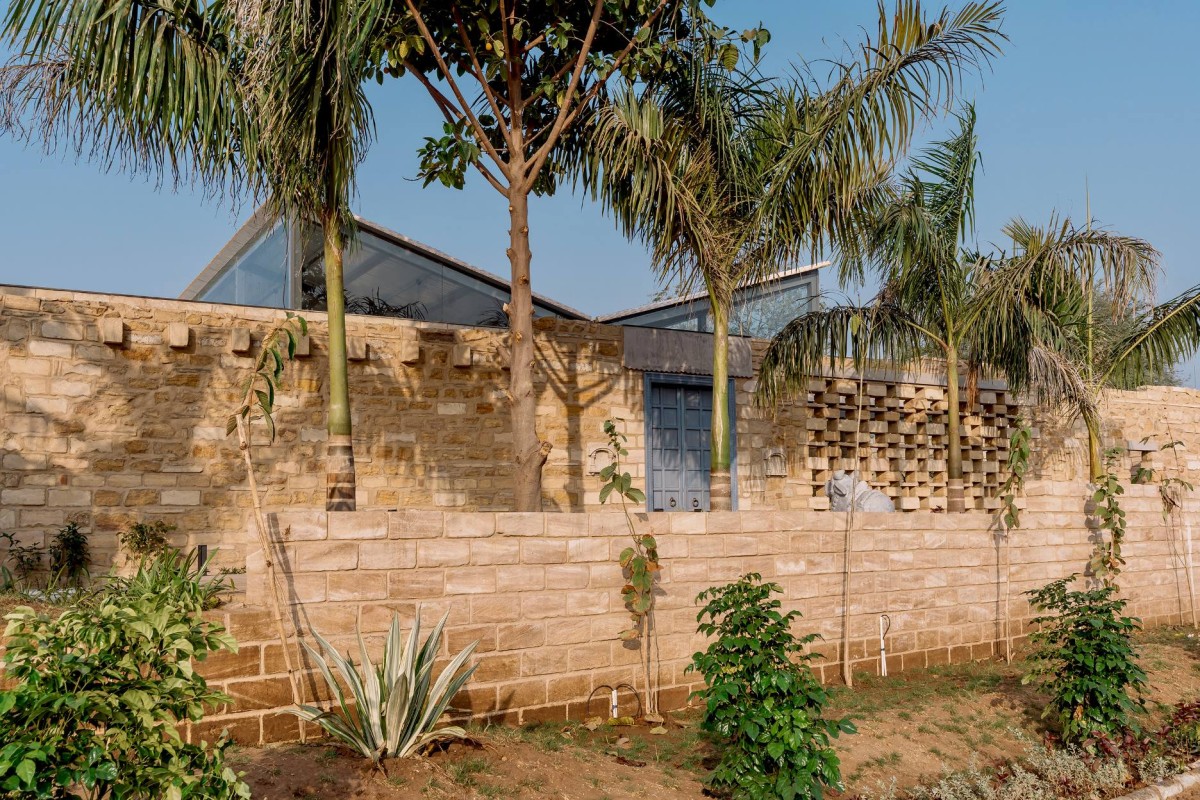
The journey begins at the outermost layer, defined by a ruins-like enclosure incorporating jharokhas and jaali elements. This layer represents memory, time, and life’s journey, echoing fragments of India’s architectural past. The porous edges allow filtered light, shadows, and glimpses inward—creating curiosity and anticipation. 

Layer 2: The Water Court (Transition Zone) 
Crossing the threshold leads to a peripheral water courtyard with seating. The presence of water immediately alters the microclimate and emotional rhythm, calming the senses. This is the first visual and experiential encounter with the inner core, where the outside world begins to dissolve and the inward journey truly begins. 

Layer 3: Internal Circulation & Social Pause 
The third layer accommodates circulation interwoven with informal seating, allowing pauses, conversations, and moments of reflection. This layer acts as a buffer—neither entirely social nor fully introspective—encouraging fluid movement and choice. 

Layer 4: The Central Pavilion – Bindu 
At the heart lies the central pavilion, conceptualized as the Bindu—the spiritual and spatial nucleus. Positioned on the central axis, this pavilion connects all layers visually and experientially. It embodies symbolic values, serving as a space of gathering, stillness, and shared presence. 

Nadiad,Gujarat,India

Architects : MISA Architects
Area : 10500 sq. ft.
Year of Completion : 2025
Website : https://www.instagram.com/misaarchitects/?igshid=MzRlODBiNWFlZA%3D%3D

External facade of Blue Lotus Café by MISA Architects
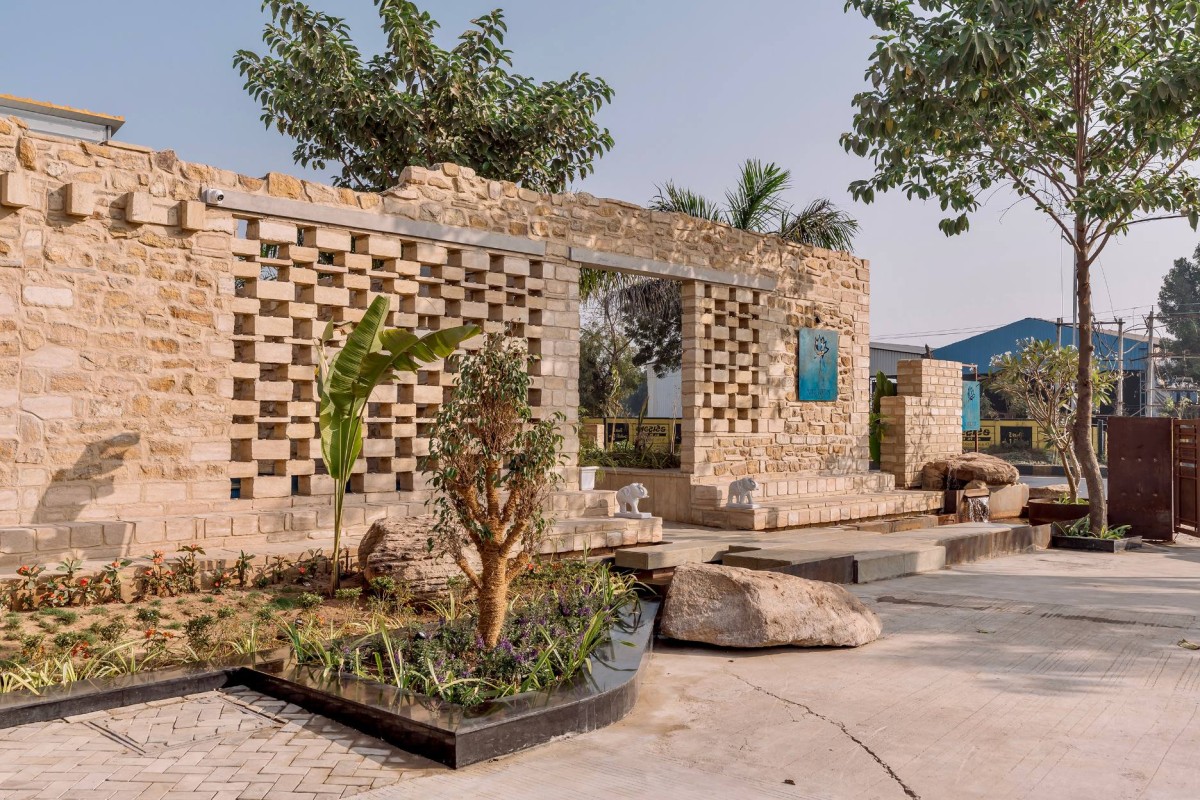

Entrance of Blue Lotus Café by MISA Architects
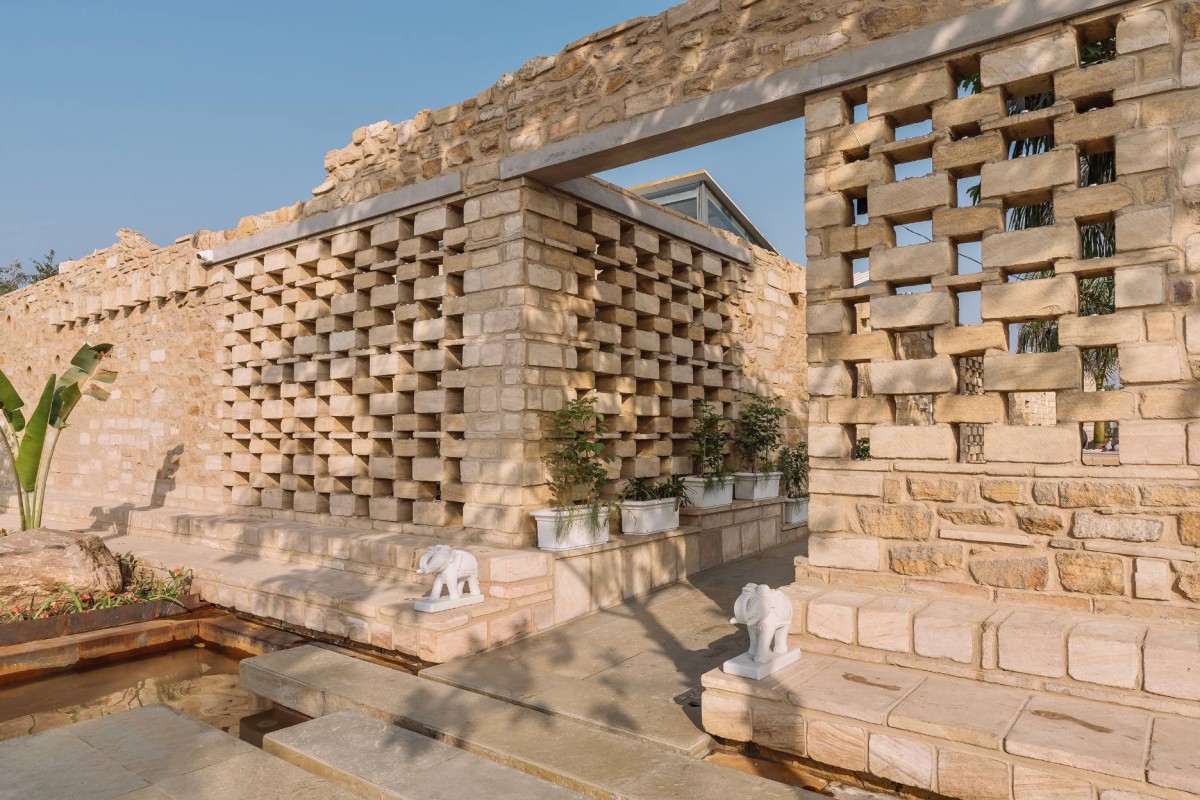

Entrance of Blue Lotus Café by MISA Architects
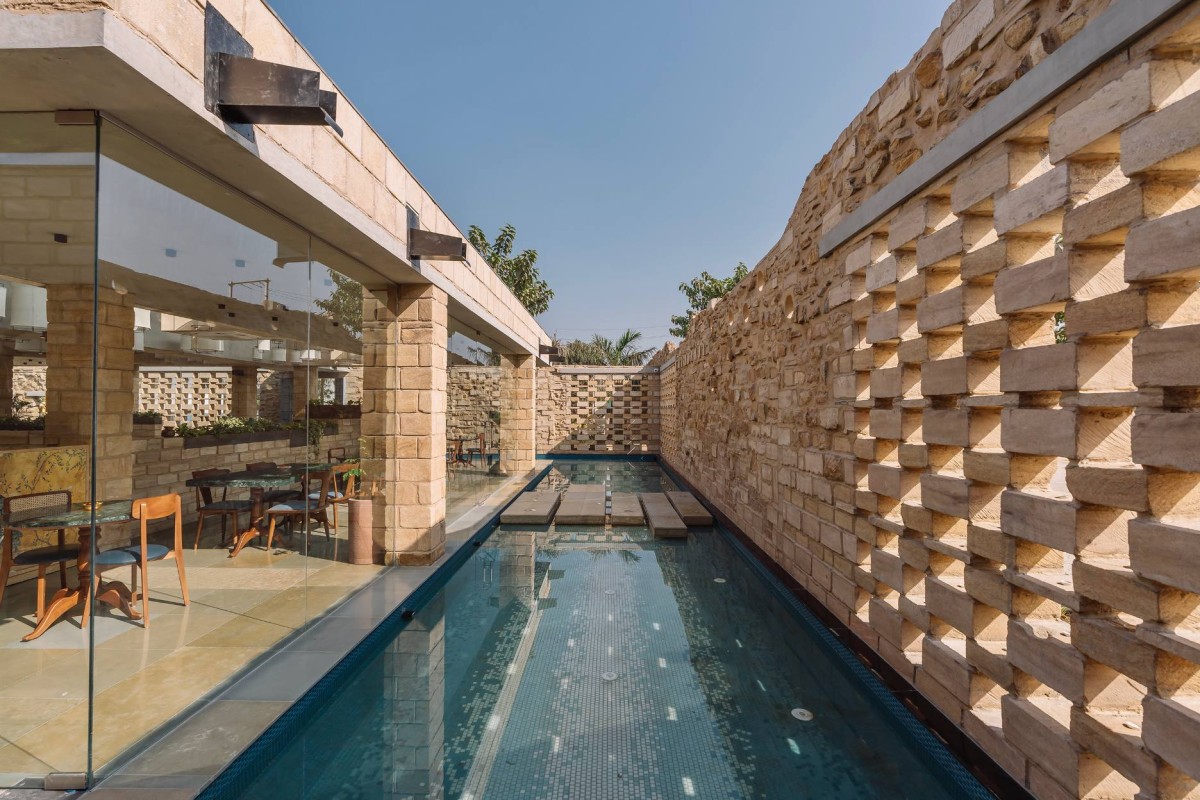

Waterbody of Blue Lotus Café by MISA Architects
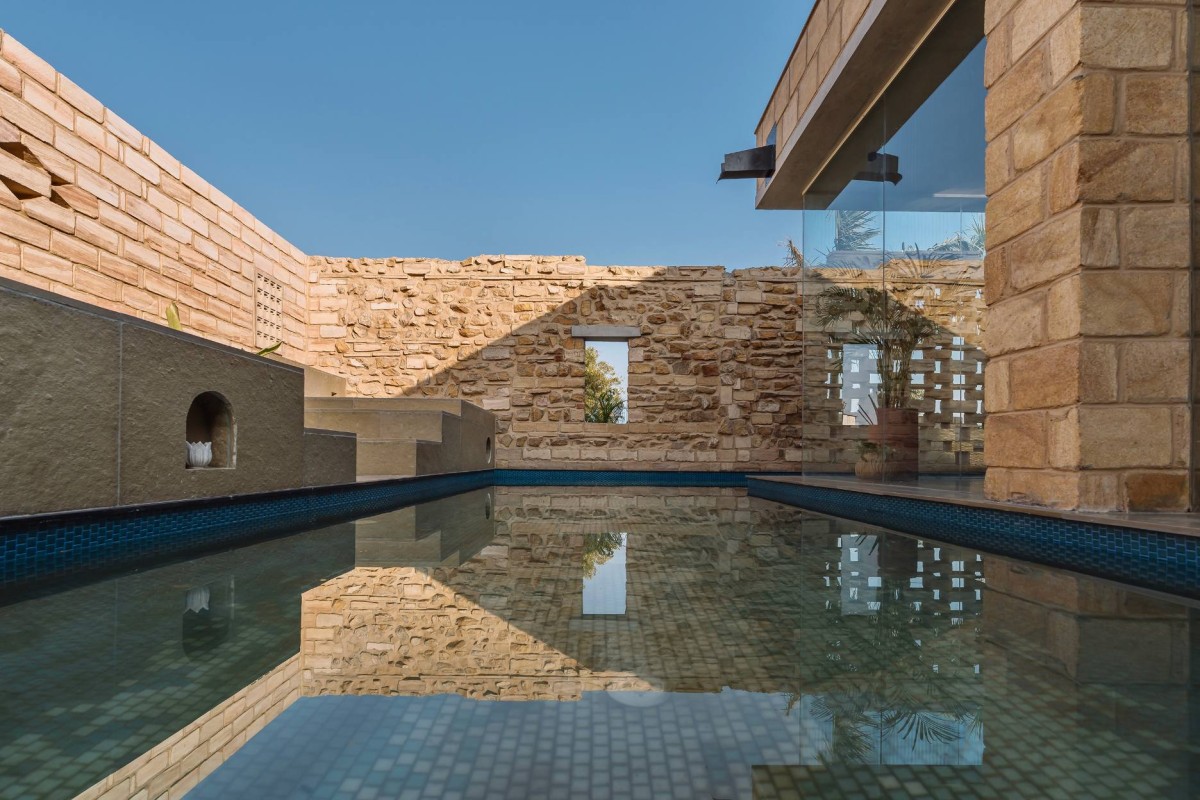
Before entering the café, visitors encounter a water body with a natural boulder fountain, evoking the feel of a small waterfall. Reflections from the jaali walls animate the water surface, producing a dramatic play of light and shadow that evolves throughout the day. During monsoons, the experience intensifies—sounds of rain, reflections, and cooled air transform the central pavilion into a deeply immersive environment. 


Waterbody of Blue Lotus Café by MISA Architects
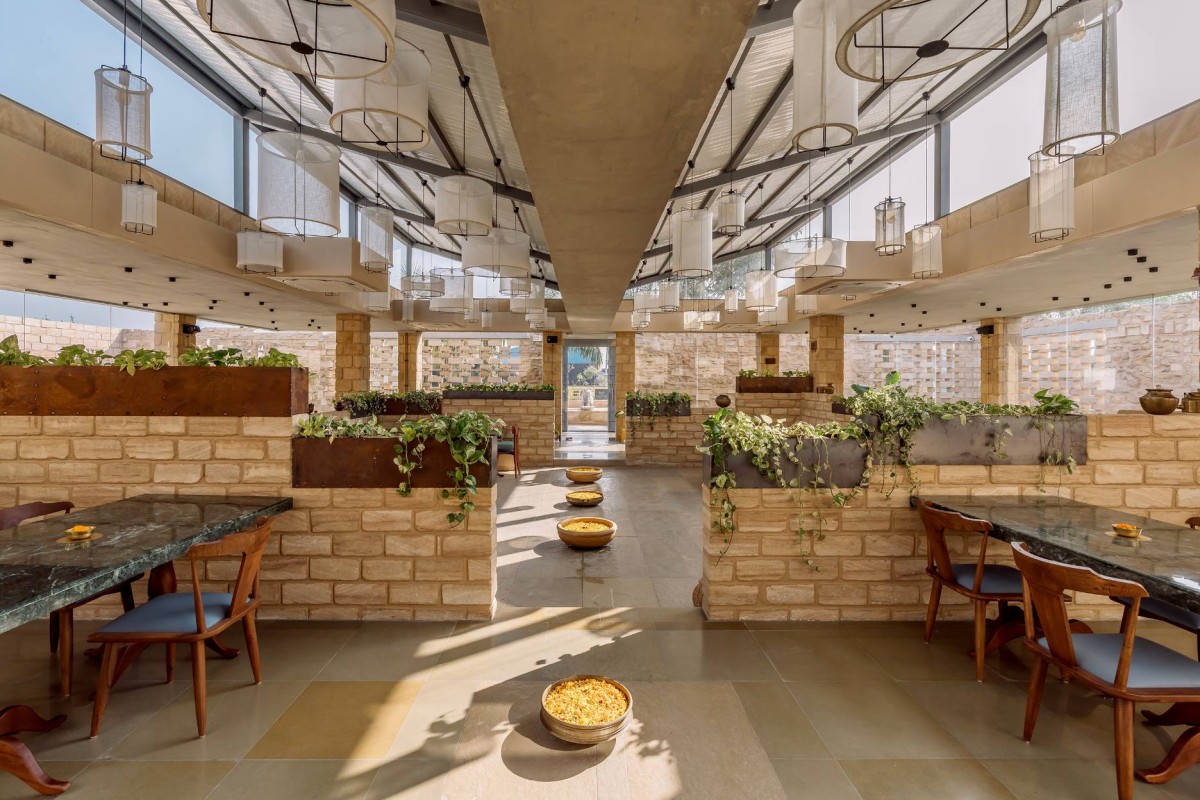

Cafeteria Seating Space of Blue Lotus Café by MISA Architects
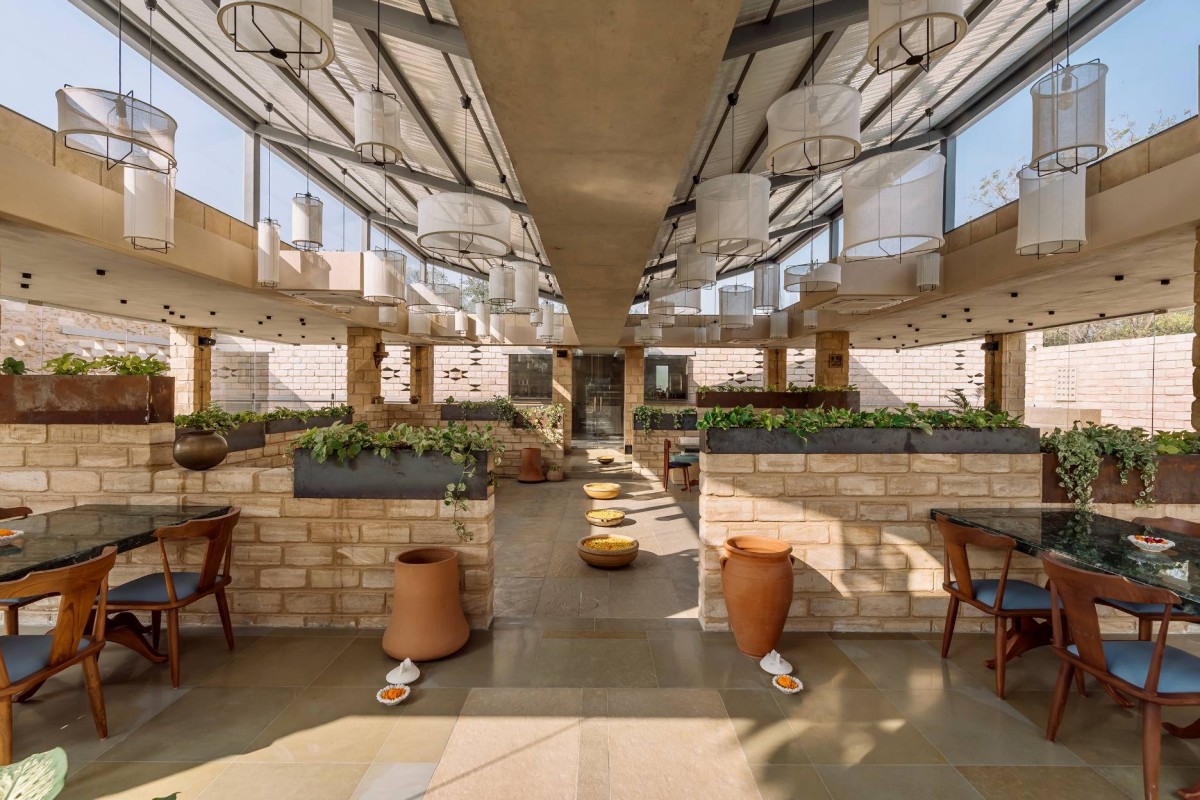
The café is thoughtfully organized along the North–East–South–West axes, reinforcing a sense of sacred geometry within its spatial planning. The primary entrance is positioned to the east, where arrival culminates in an immediate reveal of the central geometric core. To the west, the kitchen and service areas are efficiently integrated, ensuring seamless functionality. The northern edge accommodates pavilion seating and a dedicated performance space, fostering interaction and gathering. To the south, a framed picturesque view is anchored by a textured jaali wall, adding depth and visual character to the setting. During festivals, the periphery transforms with tea lights, floating petals, and shimmering water reflections, allowing the architecture to be reimagined through time and occasion.


Cafeteria Seating Space of Blue Lotus Café by MISA Architects


Cafeteria Seating Space of Blue Lotus Café by MISA Architects
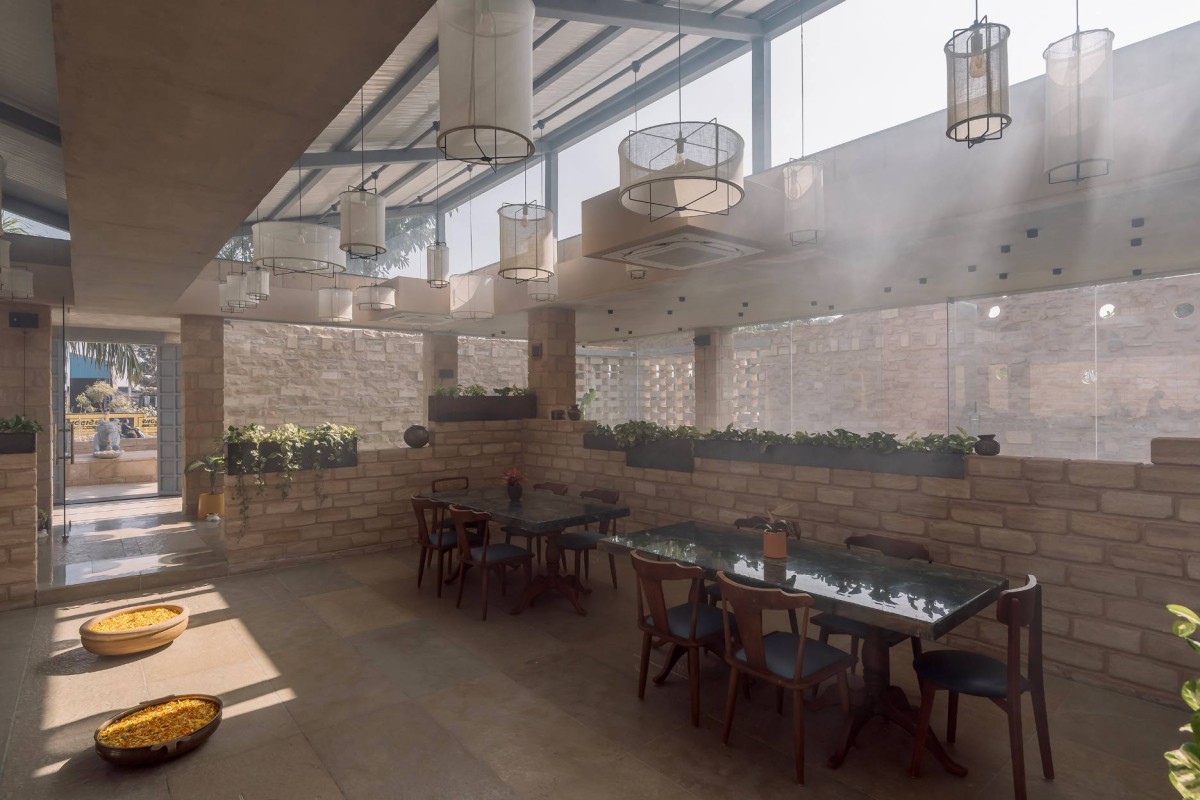
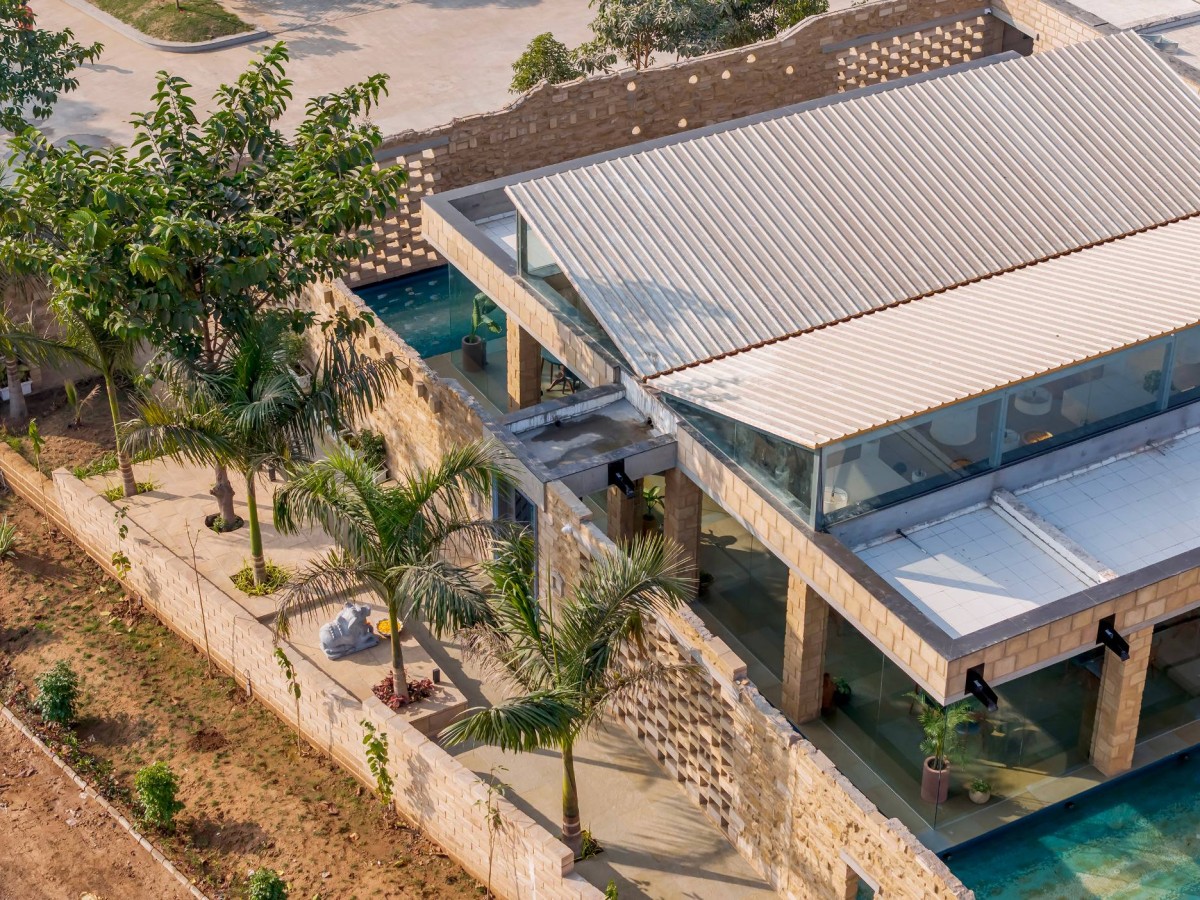
Material choices are deeply rooted in the local context, climate, and craft traditions of the region. The walls are constructed using thick Dhangadhra stone masonry—an ideal response to hot and dry climates—offering substantial thermal mass while lending tactile richness and depth to the built form. The sloping roofs are inclined inward, channeling rainwater toward the center through a thoughtfully designed gutter-beam system. Lightweight PUF roof panels allow soft, diffused daylight to filter gently from above, enhancing the spatial experience. Light is further modulated through roof planes, intricately detailed jaalis, and reflections from water surfaces, creating ever-changing patterns of light and shadow. Each material embodies an inherent sensory quality, inviting touch, naturally regulating temperature, and aging gracefully over time.

At the heart of the space, a stepkund with an adjoining seating area functions as a fluid and adaptable environment. This flexible setting seamlessly accommodates a range of activities—from reading and informal gatherings to musical performances, dining, and quiet contemplation. Rather than prescribing specific uses, the architecture remains open-ended, responding intuitively to human presence and emotion.


Cafeteria Seating Space of Blue Lotus Café by MISA Architects
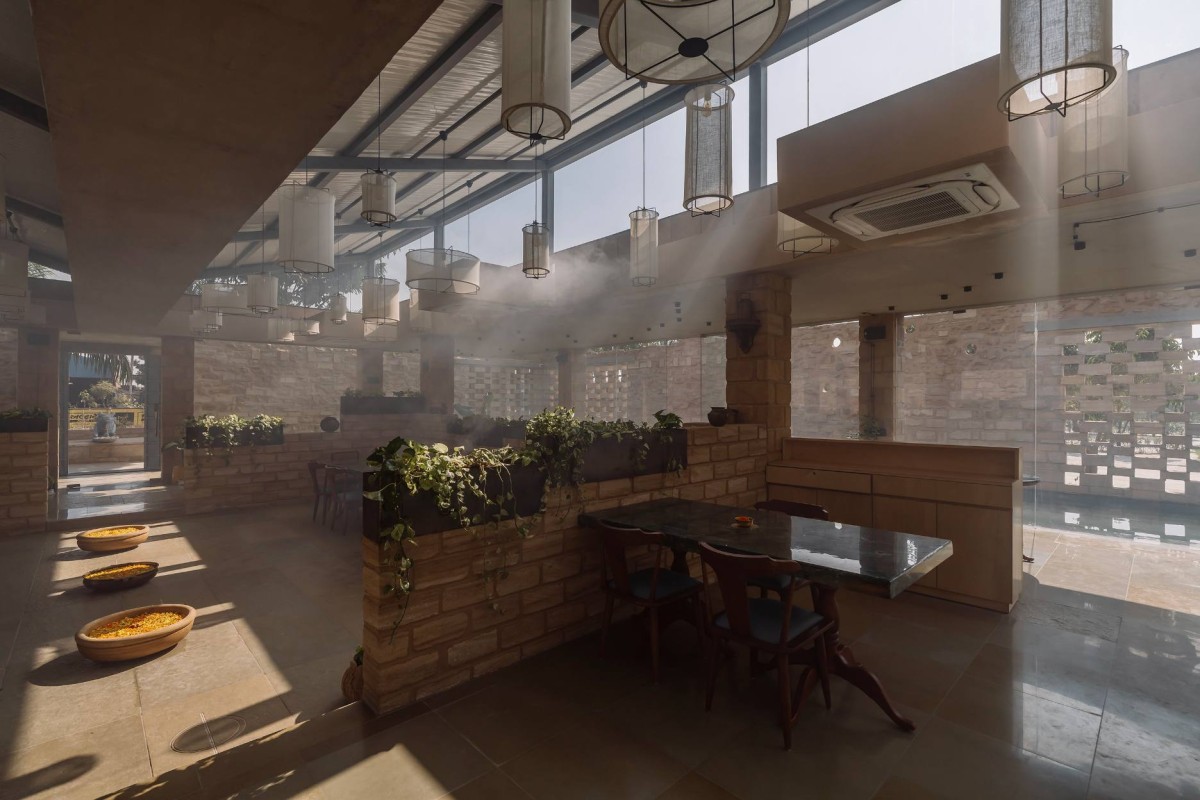

Aerial view of Blue Lotus Café by MISA Architects
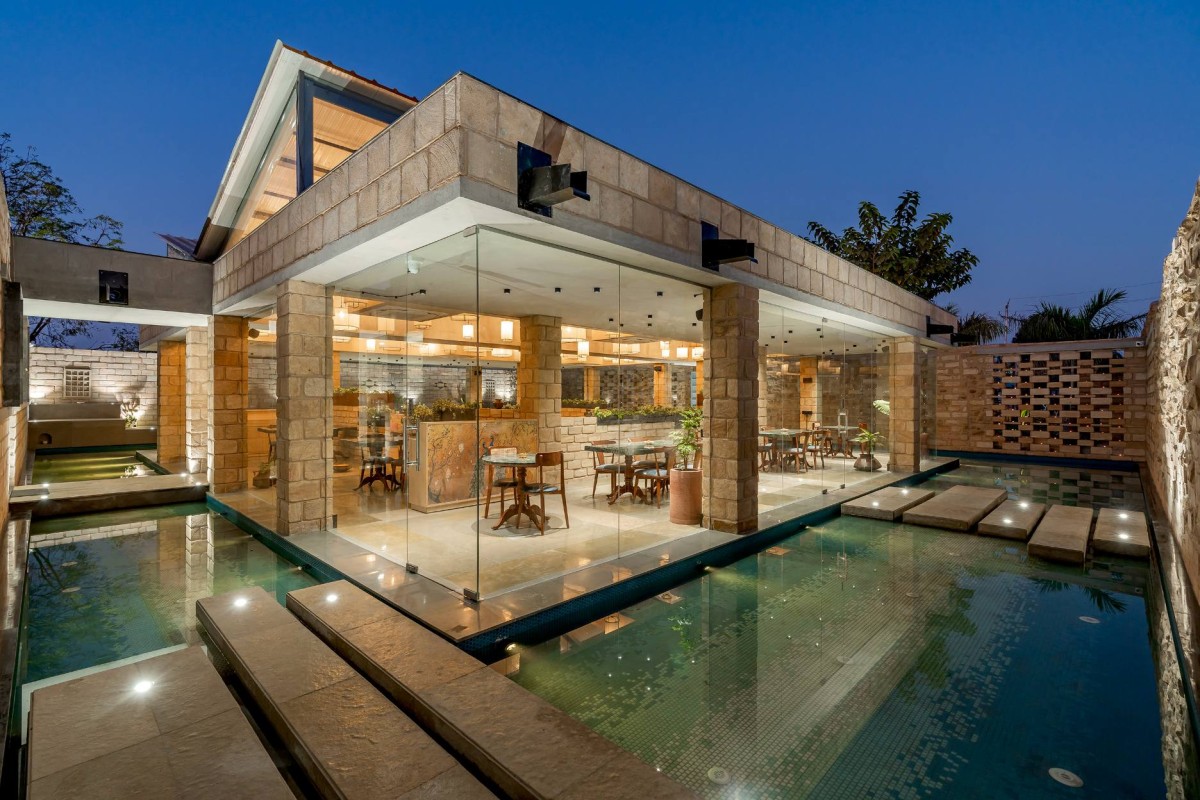

Night exterior view of Blue Lotus Café by MISA Architects
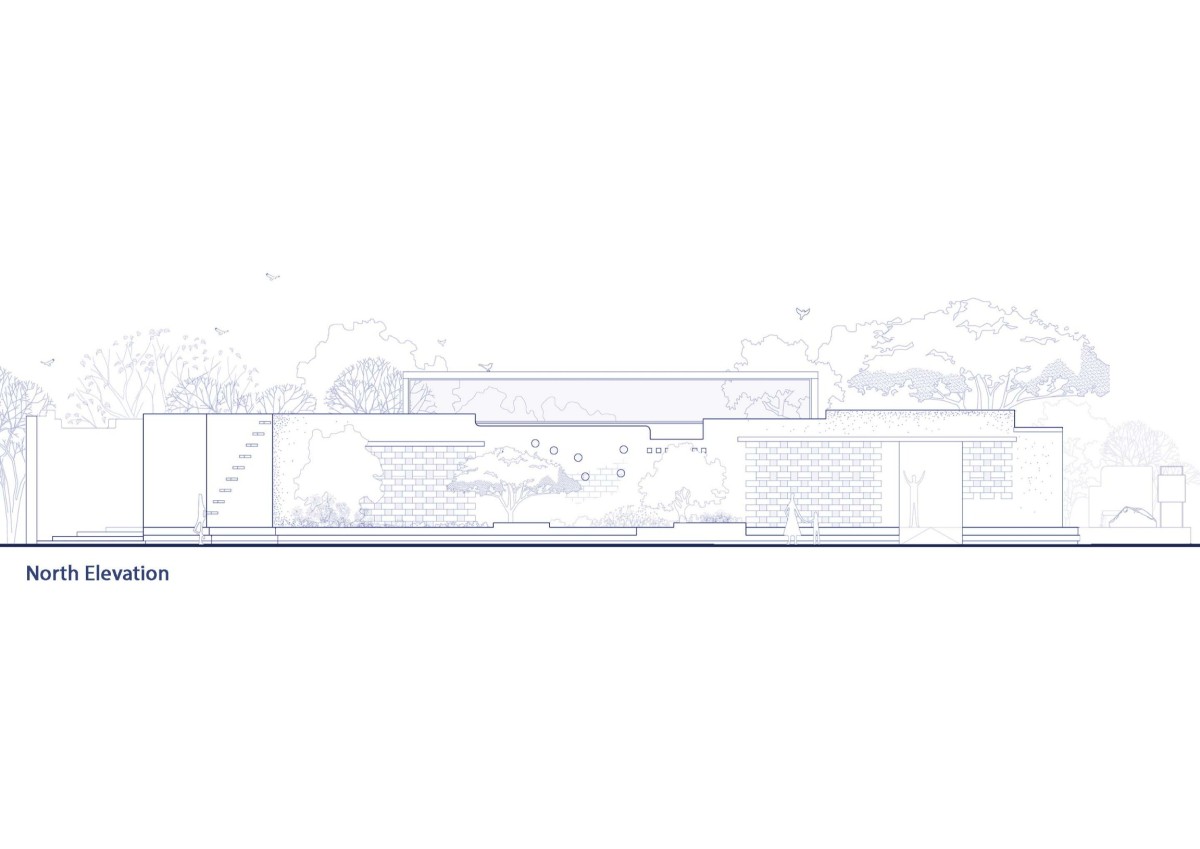

Elevation 01 of Blue Lotus Café by MISA Architects
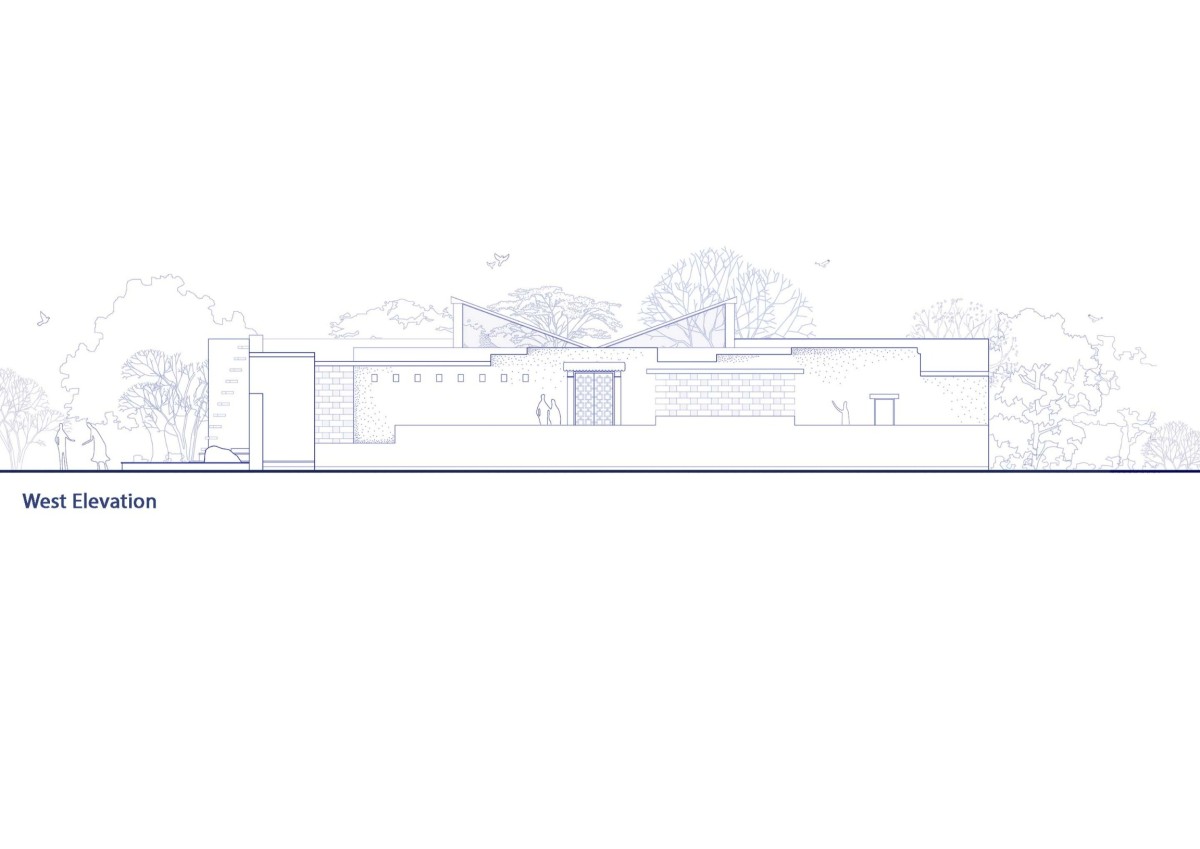

Elevation 02 of Blue Lotus Café by MISA Architects
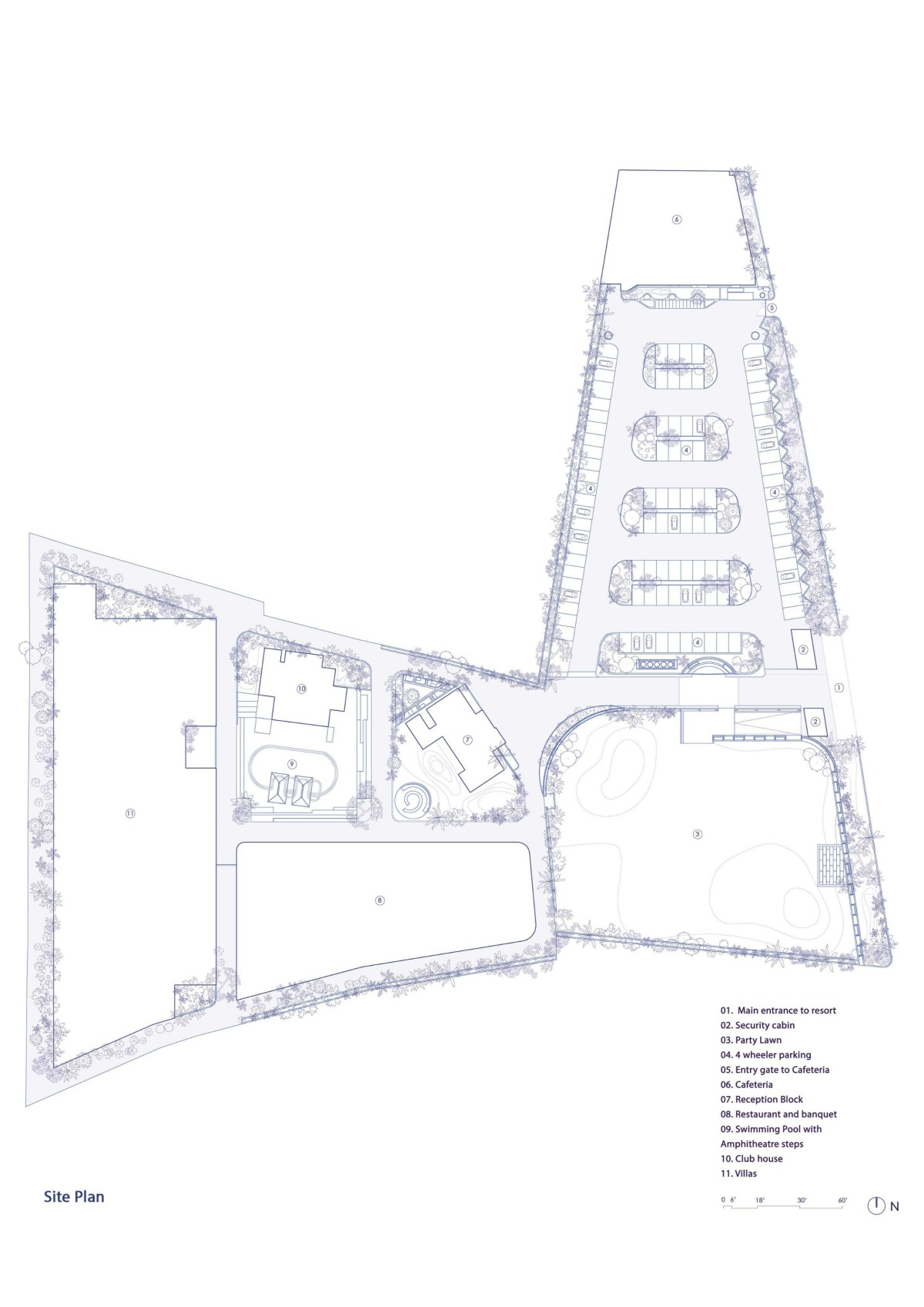

Site Plan of Blue Lotus Café by MISA Architects
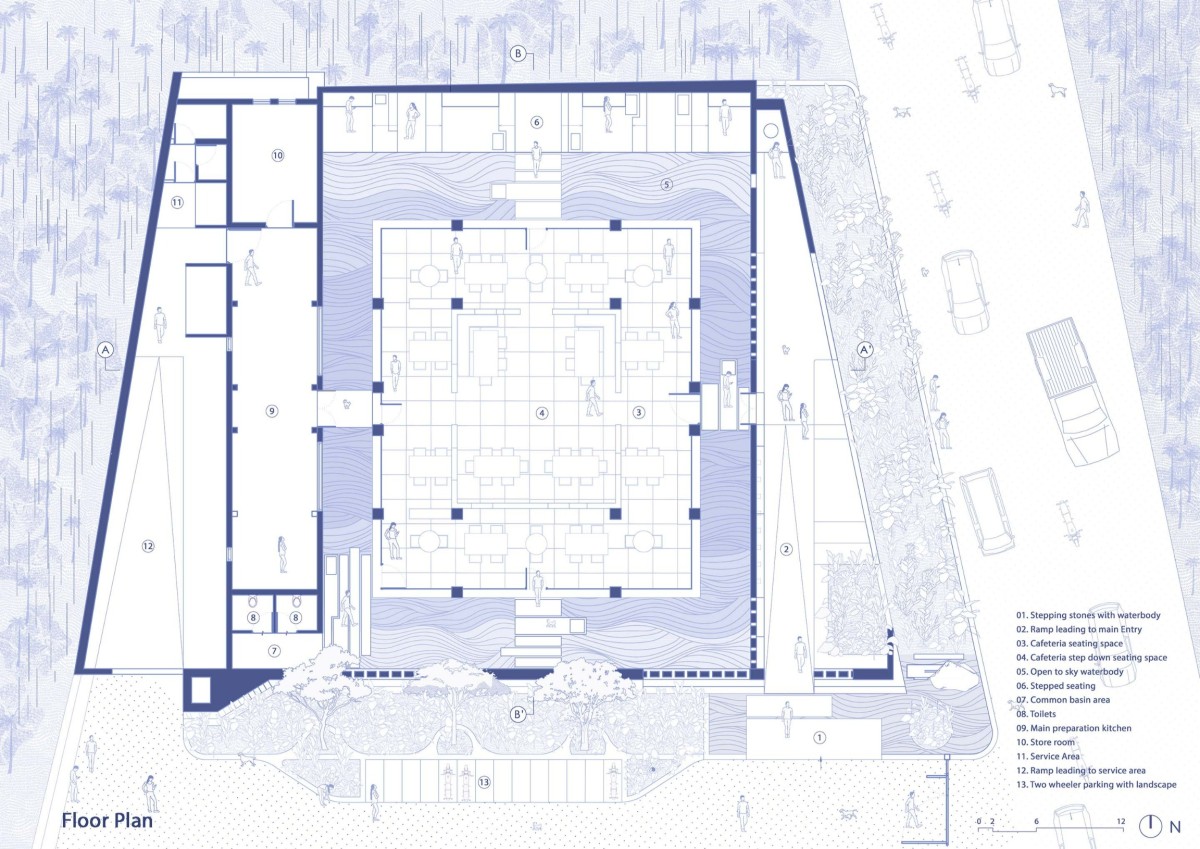

Floor Plan of Blue Lotus Café by MISA Architects
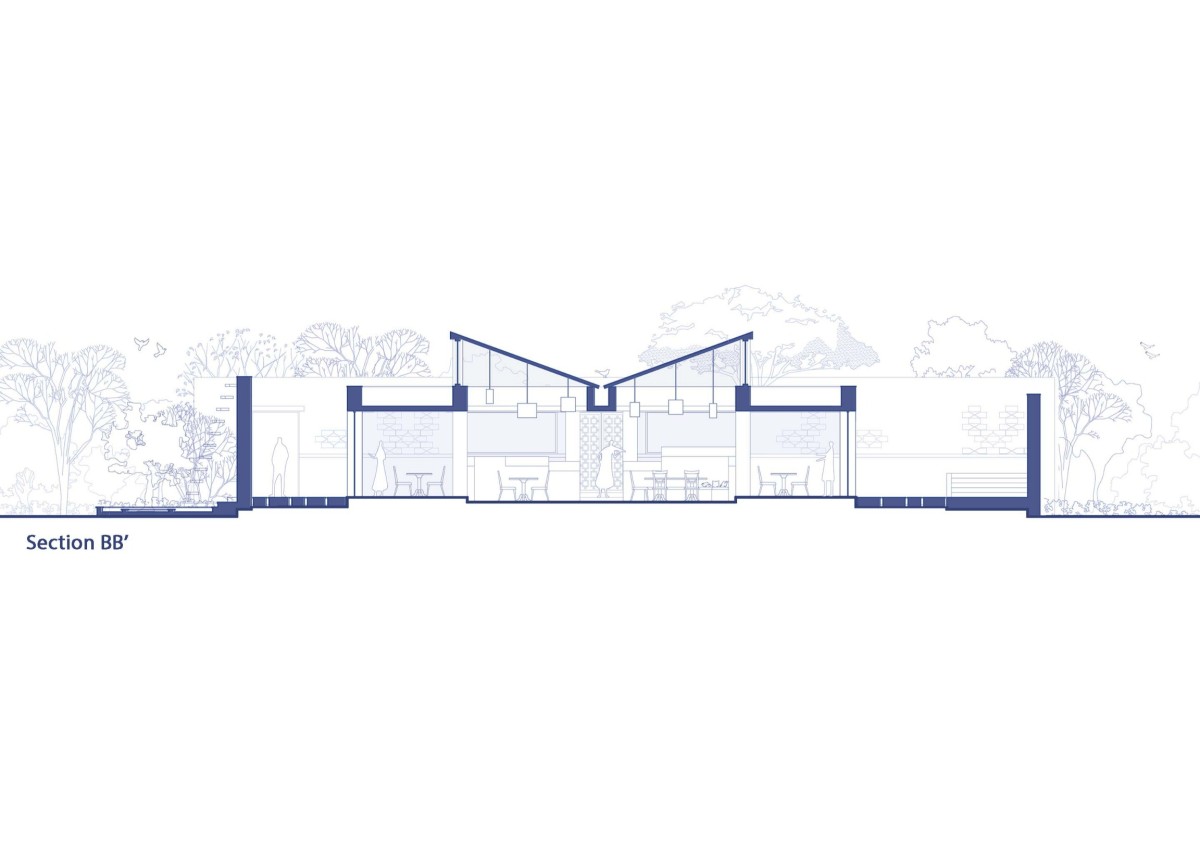

Sections 01 of Blue Lotus Café by MISA Architects
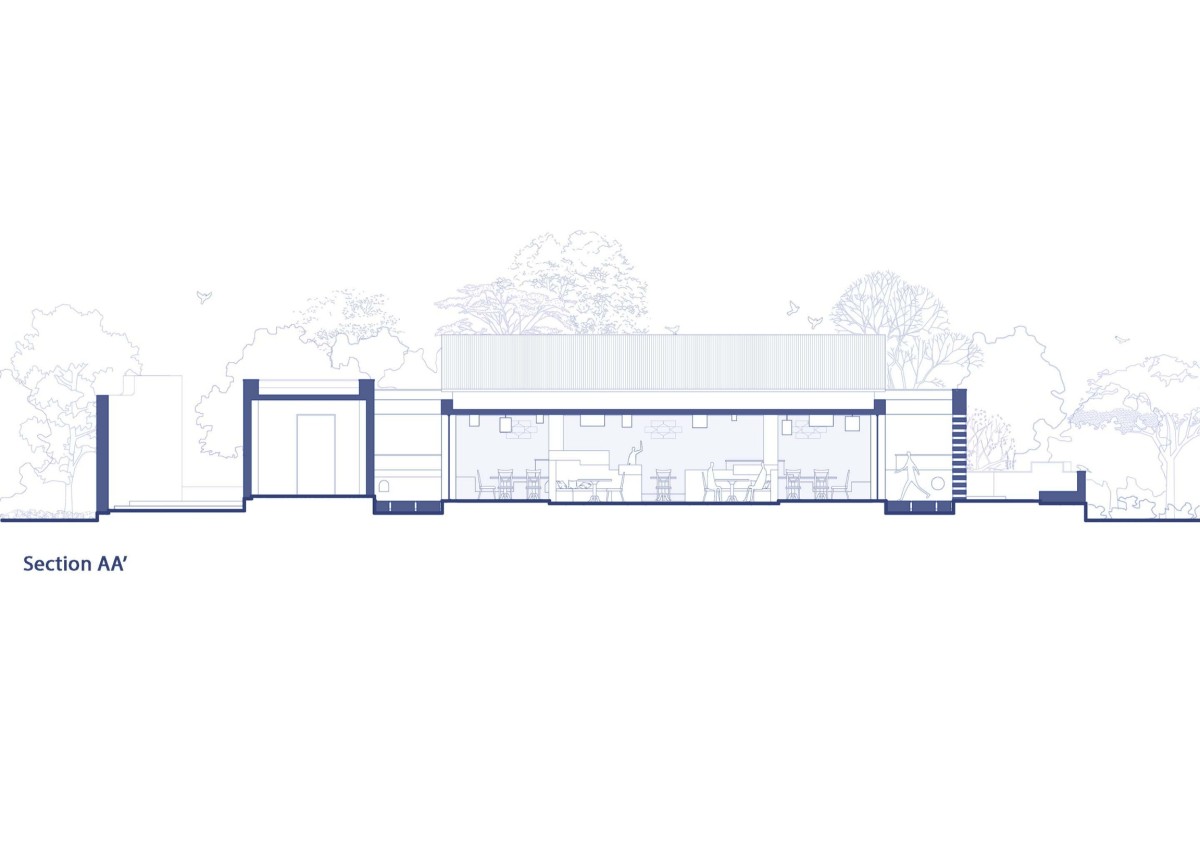

Sections 02 of Blue Lotus Café by MISA Architects


Most Visited Articles


Subscribe

Get our latest article and updates delivered straight to your inbox.