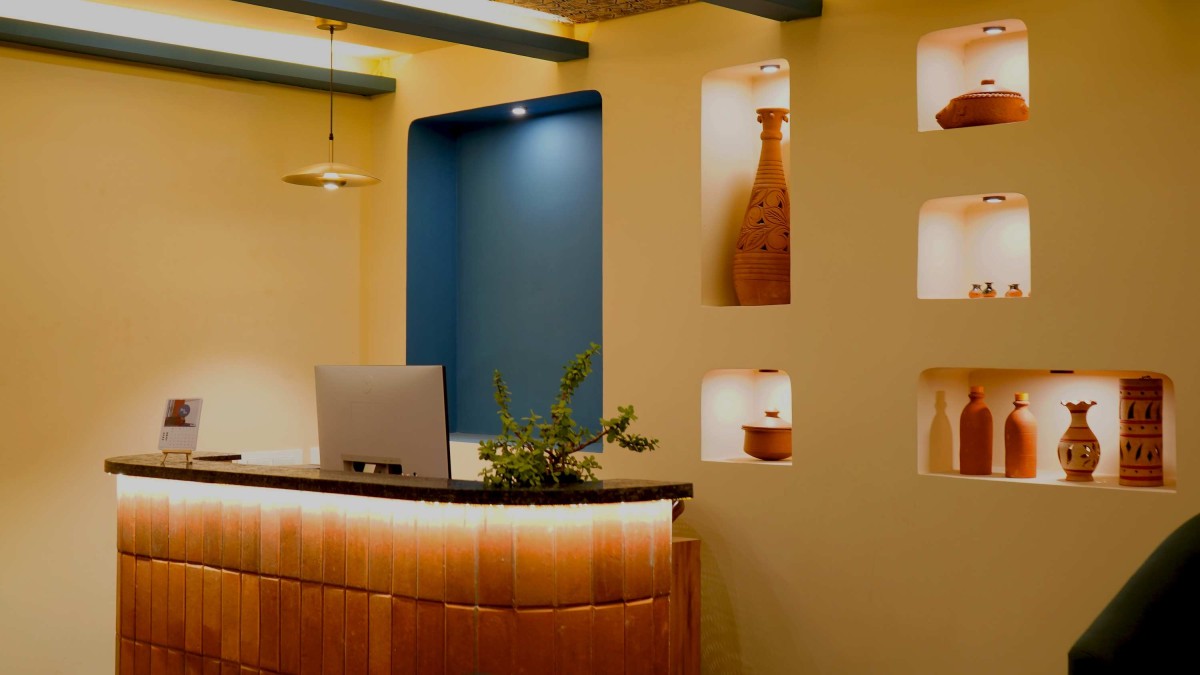
Reception of Mandi King by Smash Studios
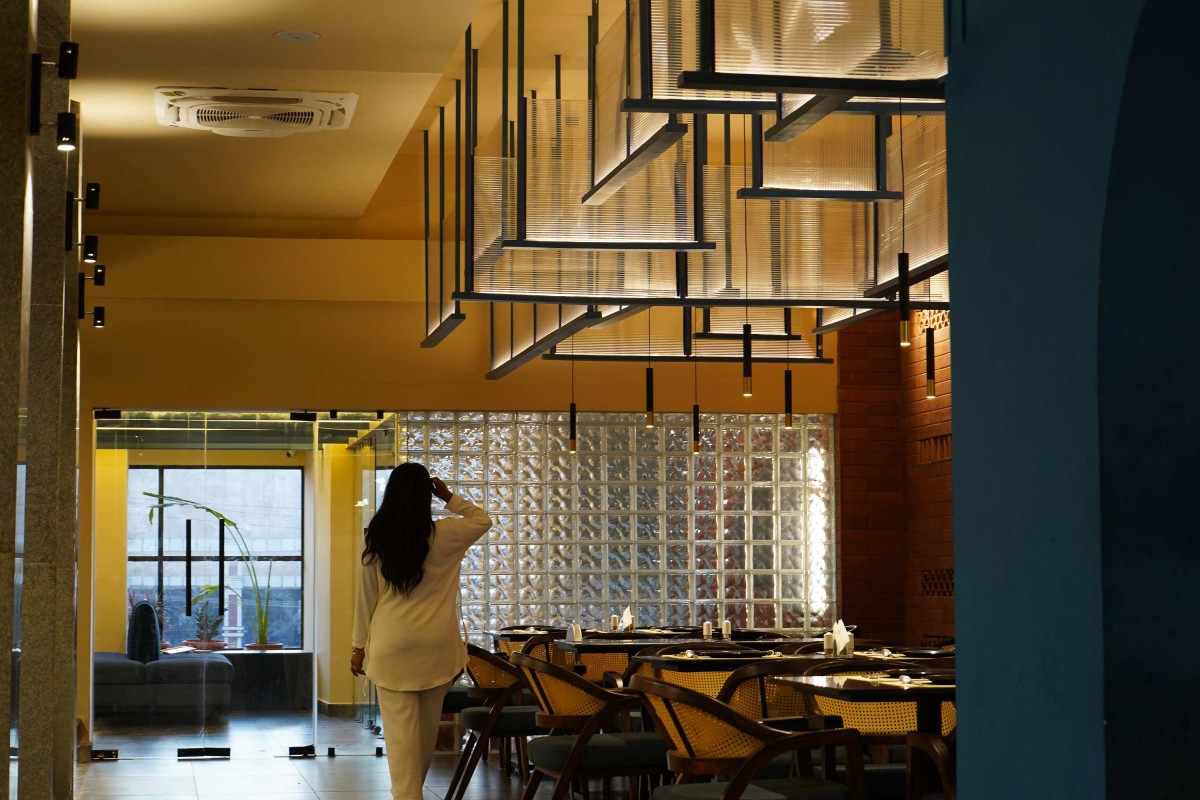
Indoor Dining of Mandi King by Smash Studios
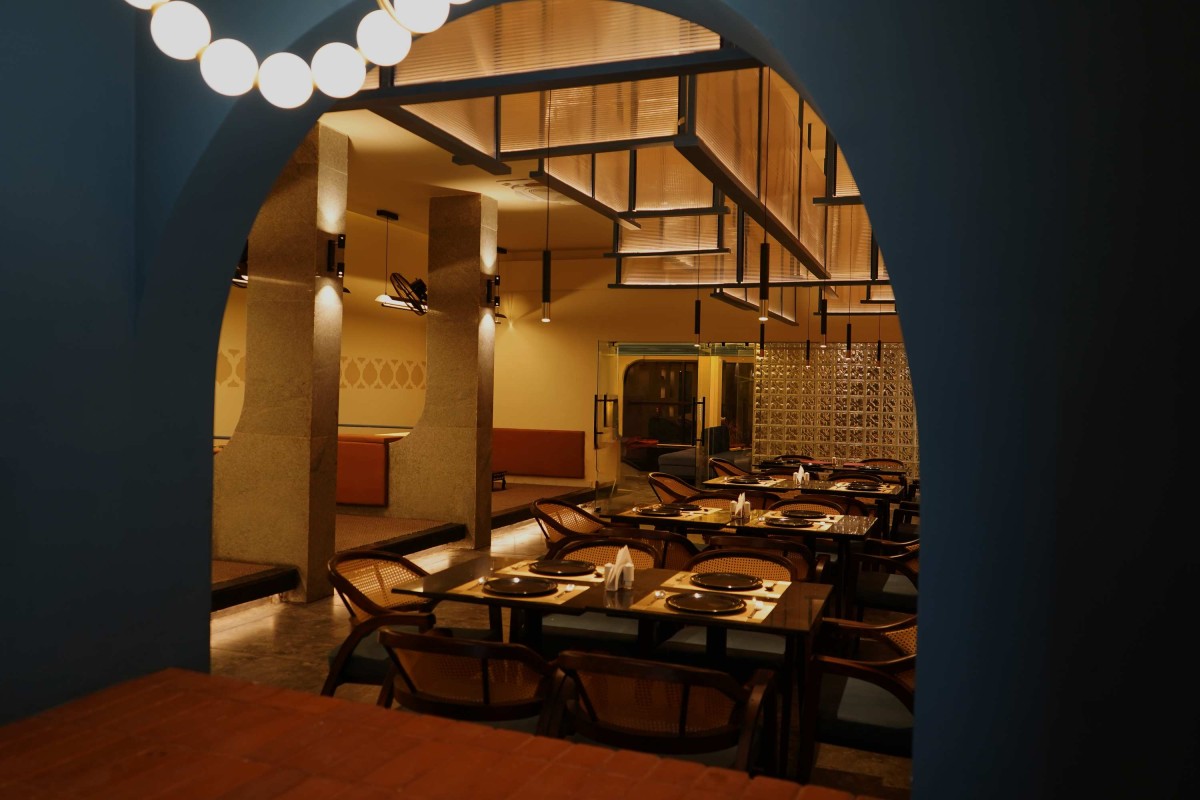
Indoor Dining of Mandi King by Smash Studios
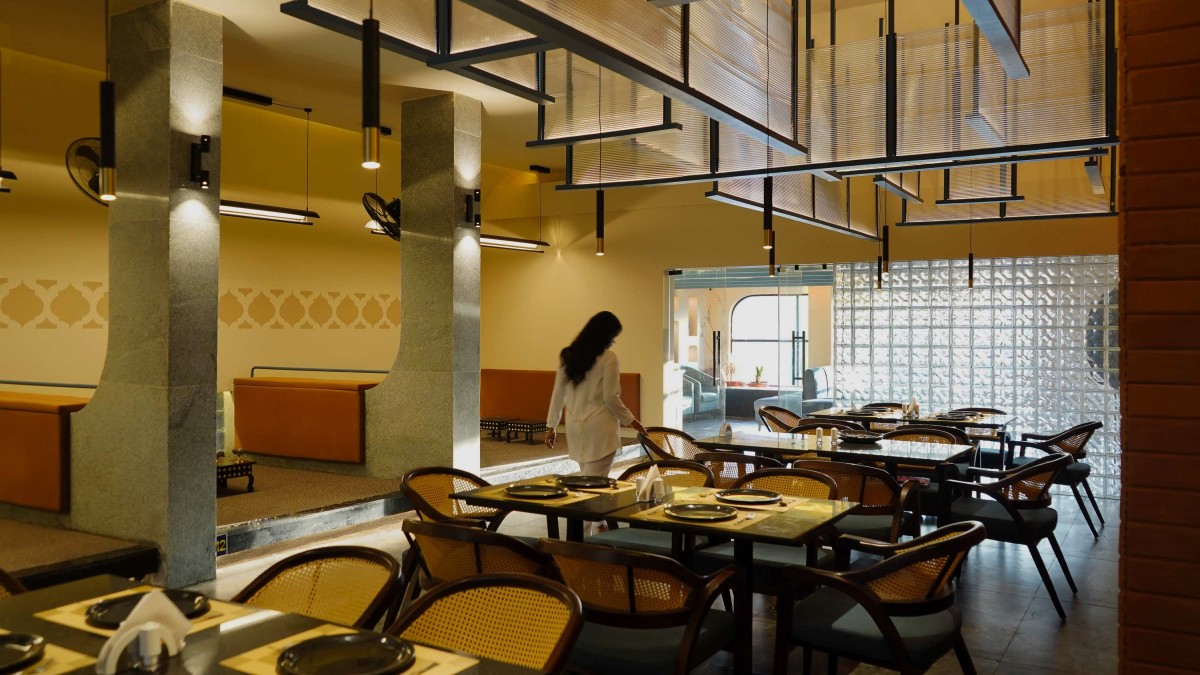
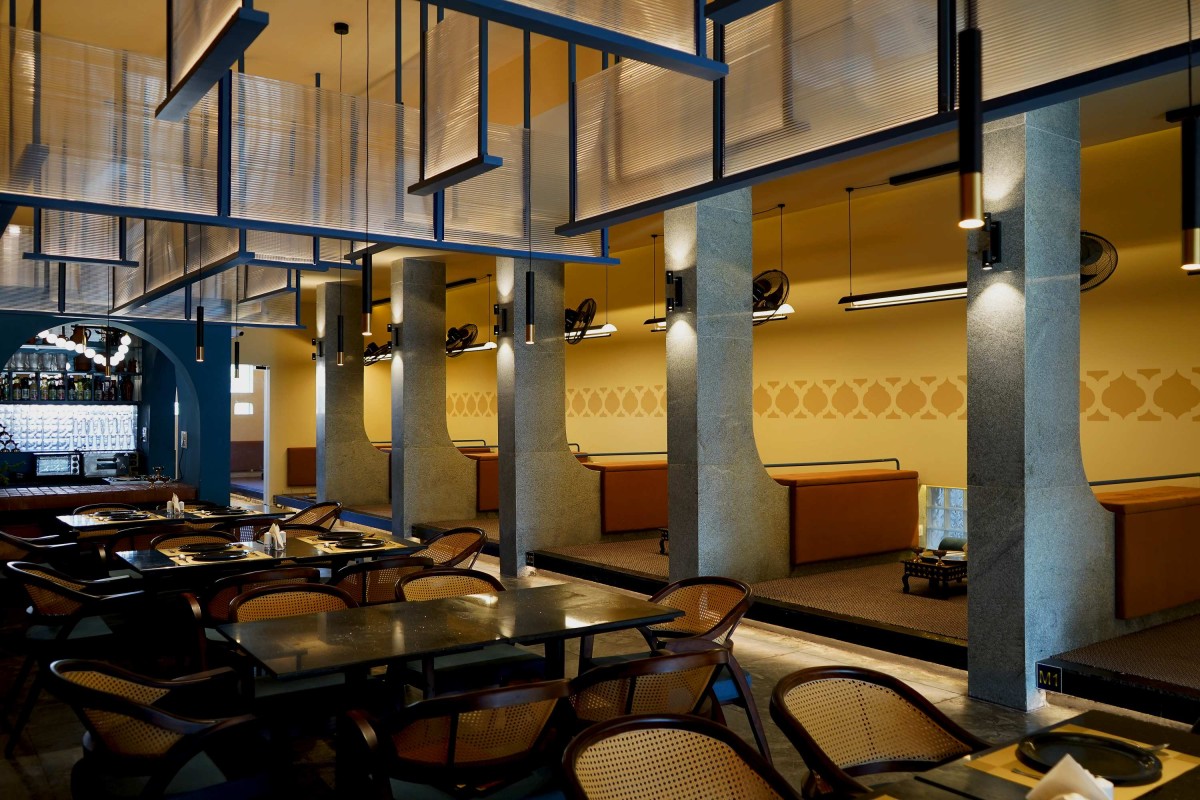
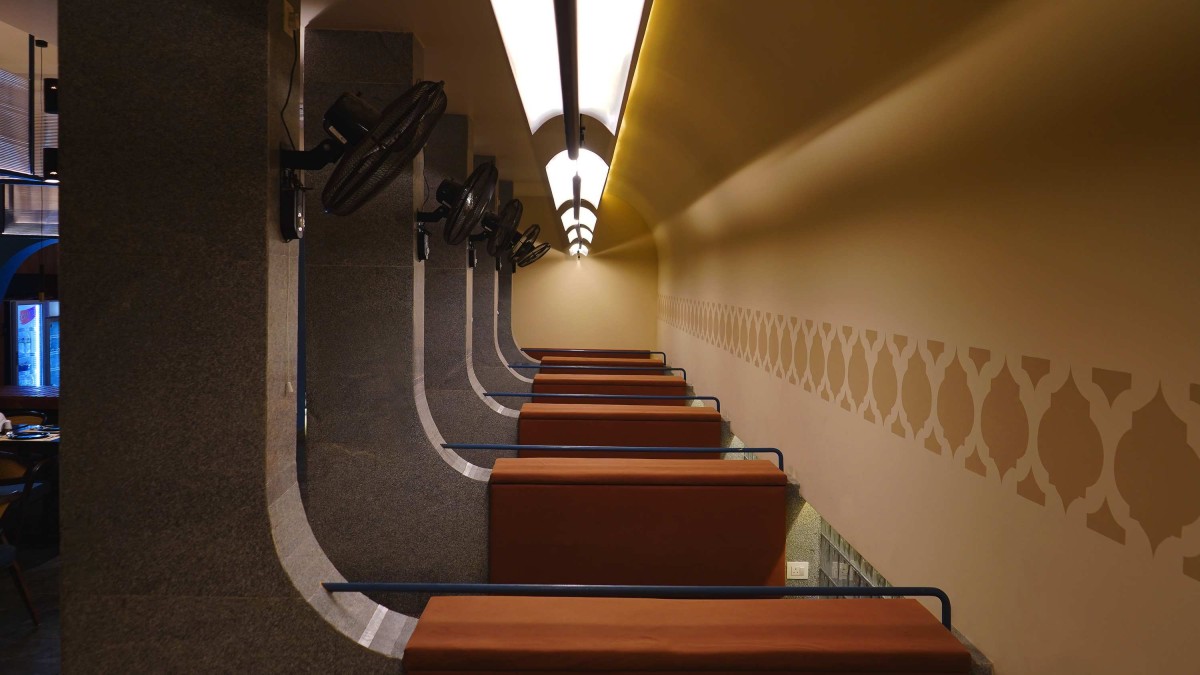
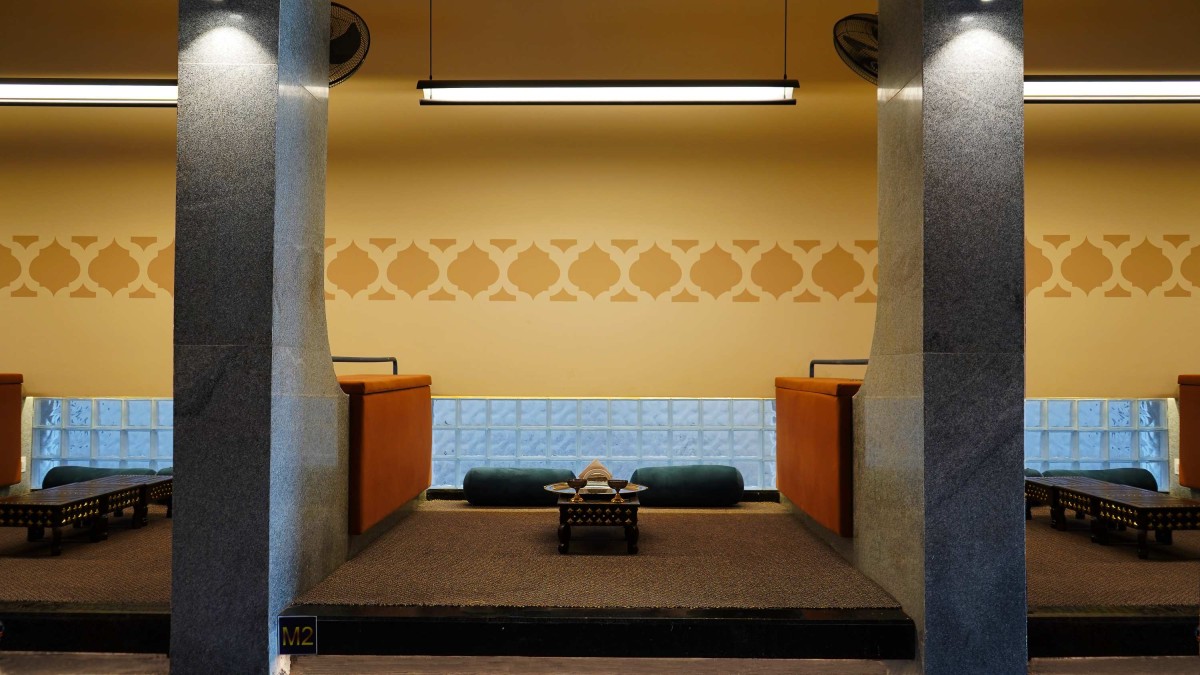
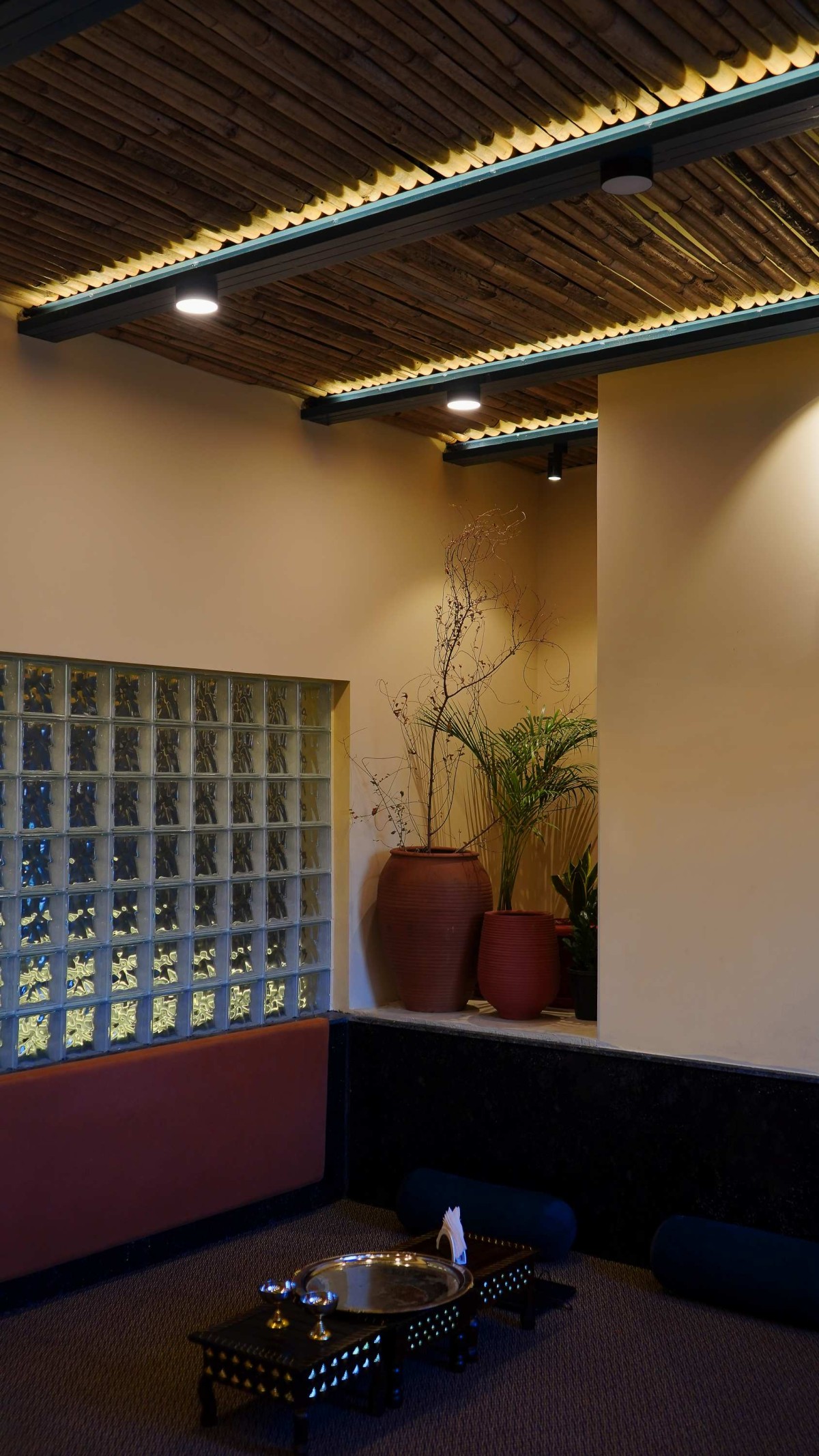
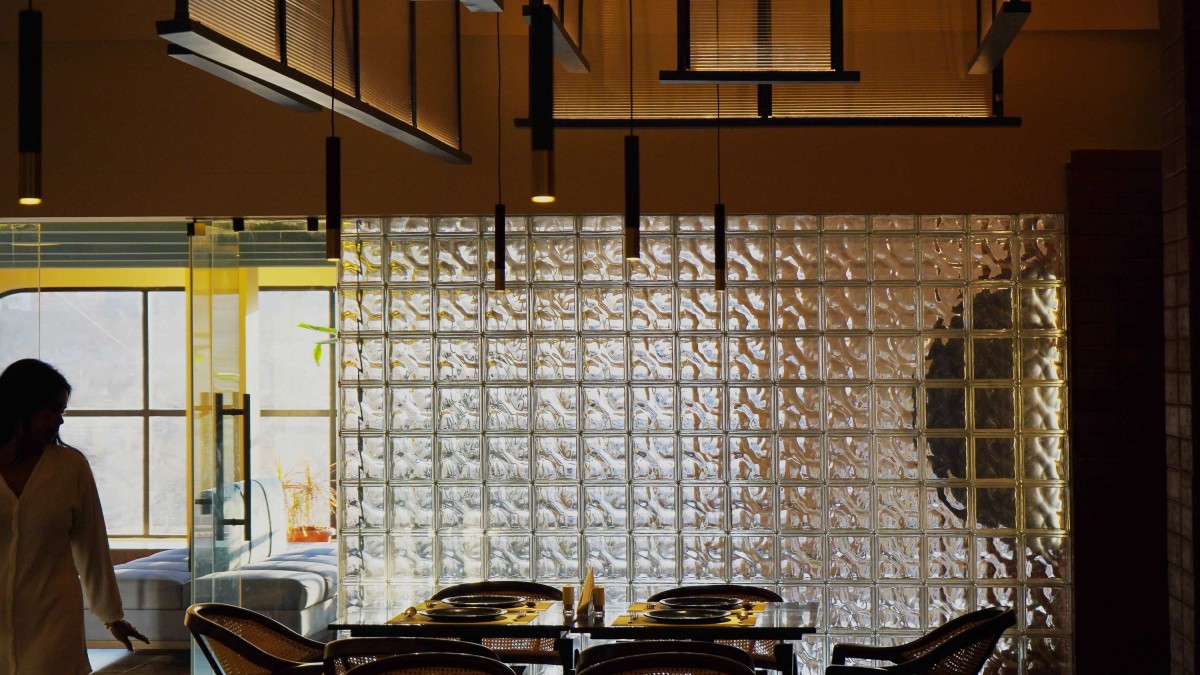
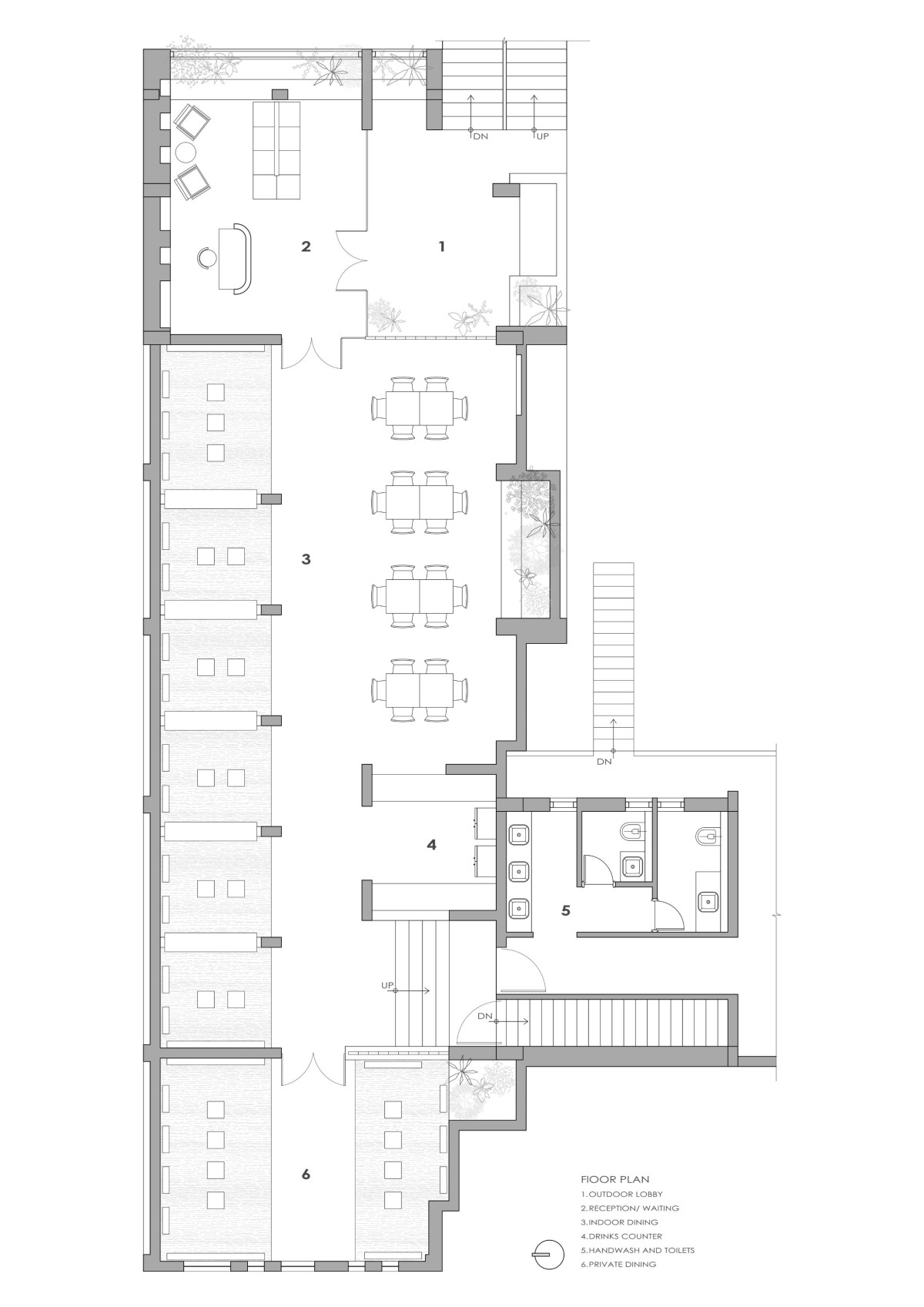
Zoning does quiet but important work here. Public, semi-private, and private areas are thoughtfully separated — families and students each finding corners that feel calibrated to their needs. The majlis area practices the floor-level seating Arabic culture perfected centuries before Western furniture standardized posture. Turquoise blue cushions, glass block indirect lighting, upholstered backrests — comfort calibrated to extended dwelling, not quick dining turnover. Seating accommodates every variety of visitor: those who want the floor, those who want a chair, those who want to be seen, and those who simply want to disappear into the warmth of a meal. Landscaping introduces life without domestication: terracotta planters, areca palms dotting the milieu, creating what they describe as "a lively atmosphere."
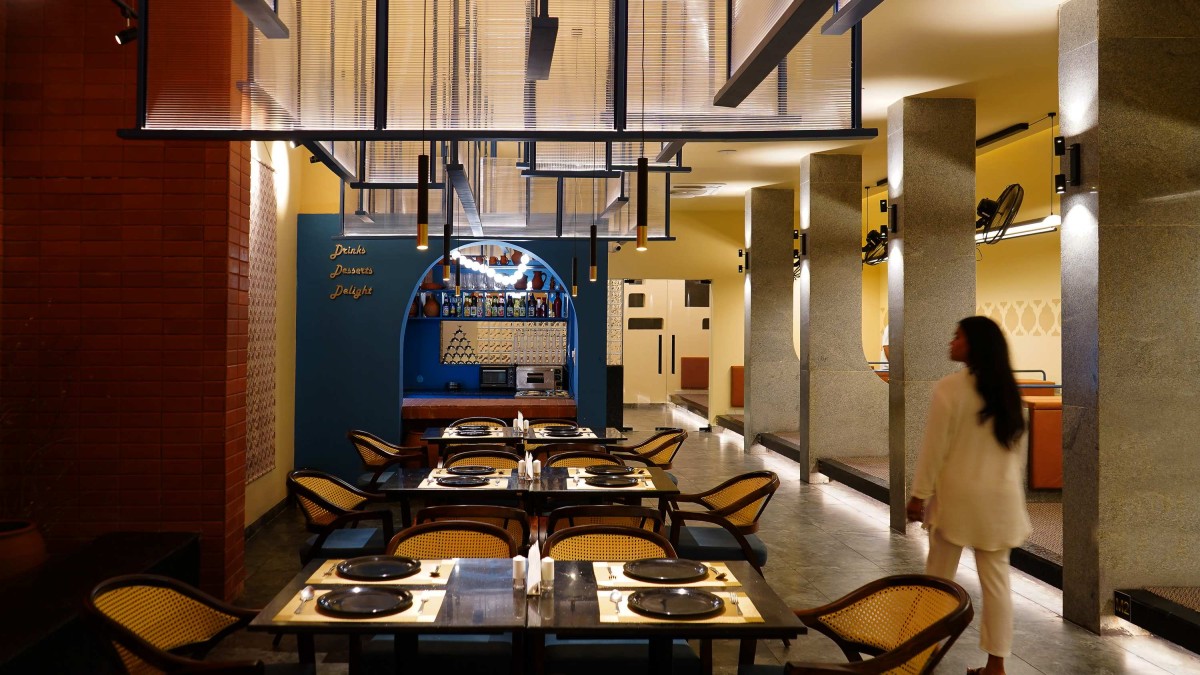
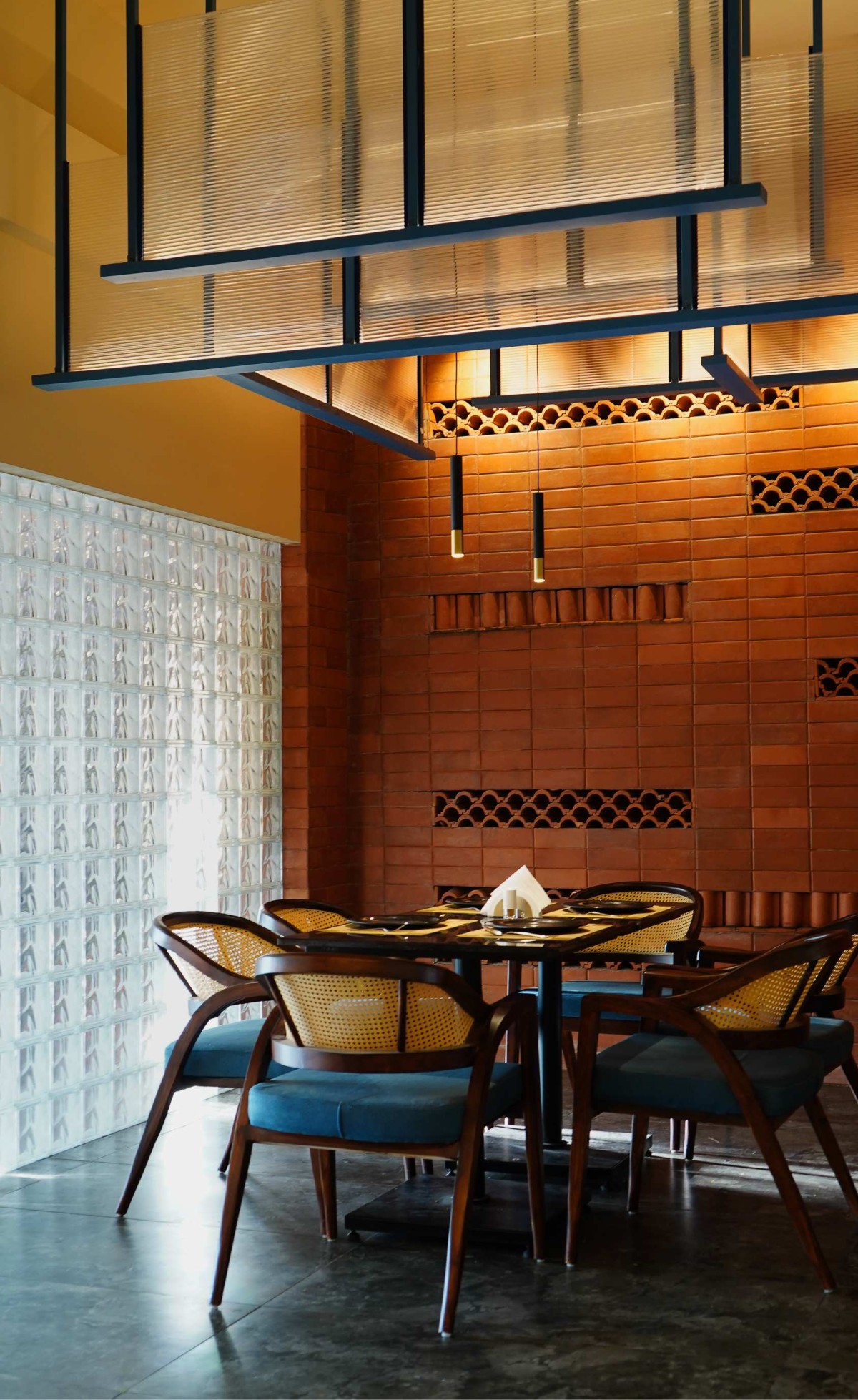
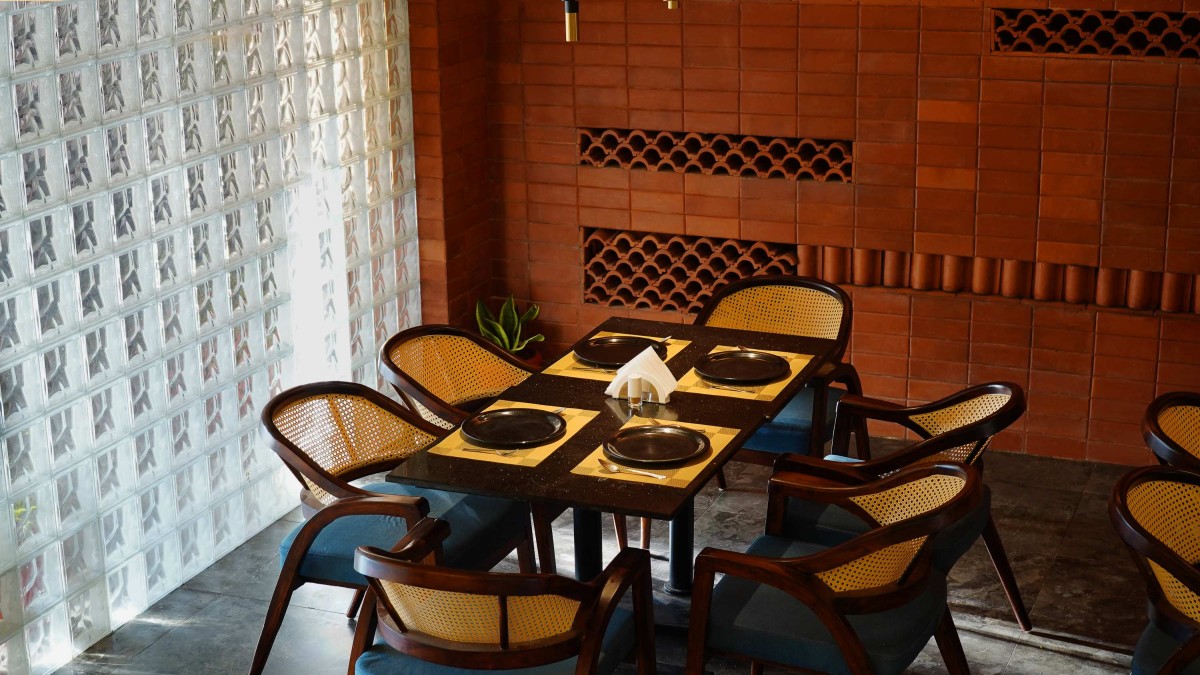
Fine dining tables employ granite tops paired with wooden cane chairs, illuminated by indirect suspended lights. Custom decorative lighting and Arabic-inspired wall patterns enhance without overwhelming. The patterns operate as texture rather than iconography, geometry creating visual rhythm without demanding cultural literacy to appreciate. Soft, moody ambience is achieved almost entirely through indirect and artificial lighting — there is no harsh overhead glare, only pools of warmth that encourage the eye to linger.
Indoor Dining of Mandi King by Smash Studios
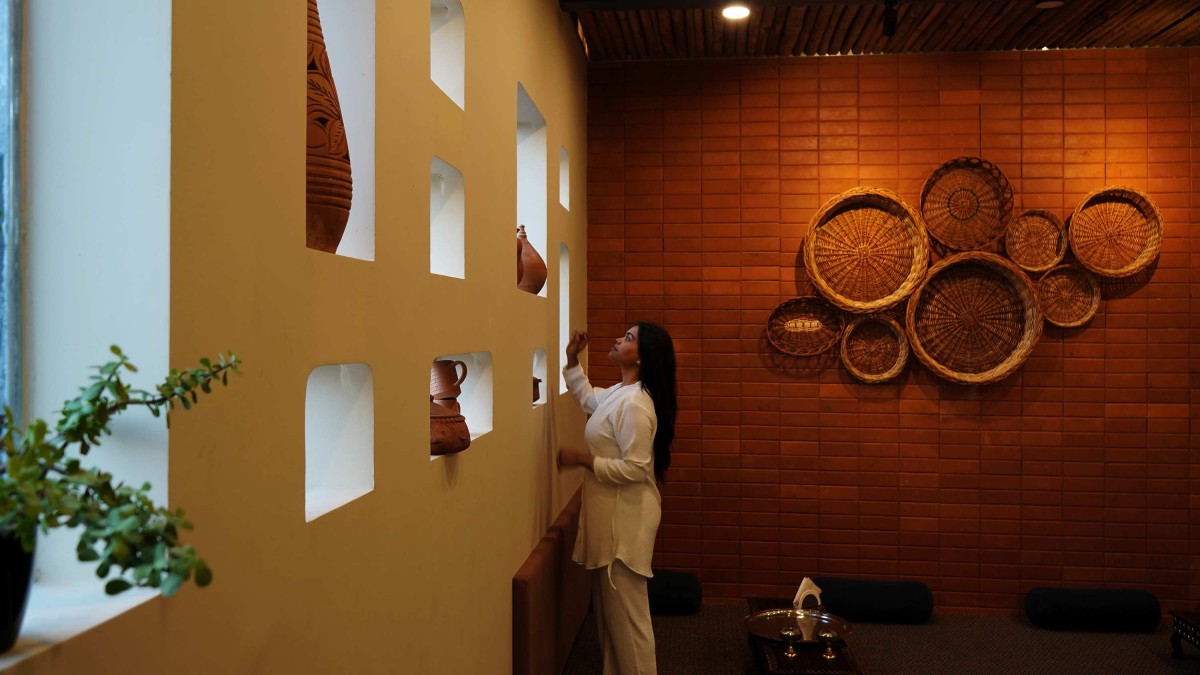
A versatile counter—serving drinks, mocktails, and desserts — functions as more than a service point. It's spatial hinge, central focal element that screens the back-of-house operations while remaining visually accessible. Terracotta tiles and glass blocks create what might be called calibrated transparency: visual privacy maintained while natural light penetrates. In private dining zones, this strategy repeats — separation achieved through material intelligence rather than solid partition.
Throughout, the design employs built-in partitions and structural elements. "We used more structural elements so it looks more architectural than an interior project," they explain. This distinction matters: architecture implies permanence, timelessness, the kind of spatial decision that outlasts trend cycles. Indirect and artificial lighting creates a soft, moody ambience.
Indoor Dining of Mandi King by Smash Studios
Indoor Dining of Mandi King by Smash Studios
Indoor Dining of Mandi King by Smash Studios
Indoor Dining of Mandi King by Smash Studios
Majilis of Mandi King by Smash Studios
Majilis of Mandi King by Smash Studios
Timelessness, the team insisted, was non-negotiable. And in this translation of Arabia into Andhra, what Smash Studios achieved isn't fusion — that overused term implying equal parts blending—but something more precise: cultural translation. This project understands that essence isn't borrowed through literal reproduction but earned through comprehending underlying logic and rebuilding it, element by element, in a new context. The result doesn't feel Arabic. It feels like hospitality — that older, deeper thing that Arabic architecture understood long before it became an aesthetic category.
Private Dining of Mandi King by Smash Studios
Private Dining of Mandi King by Smash Studios
Detailed shot of glass blocks screen of Mandi King by Smash Studios
Plan of Mandi King by Smash Studios