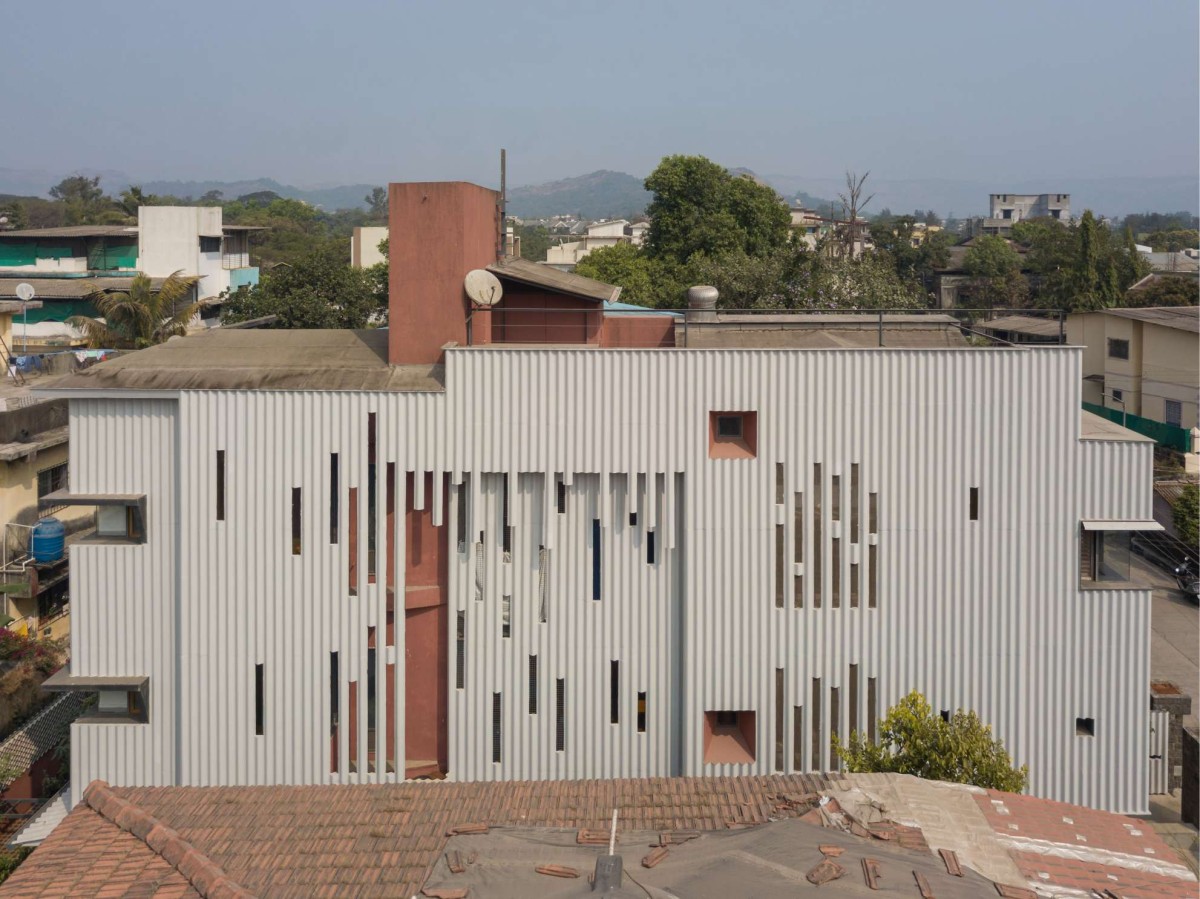
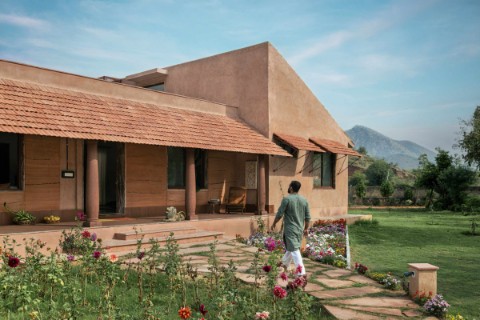
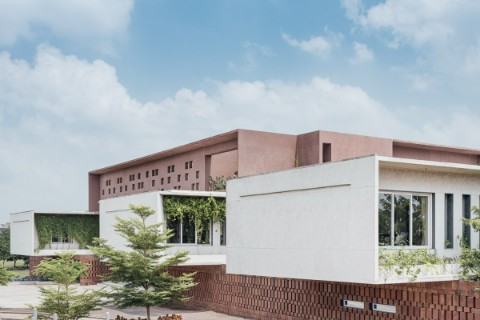
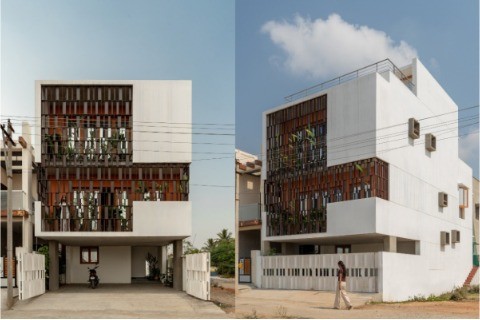
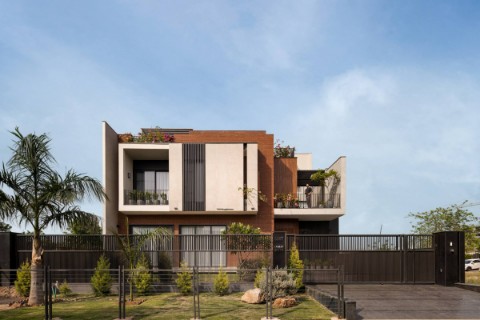
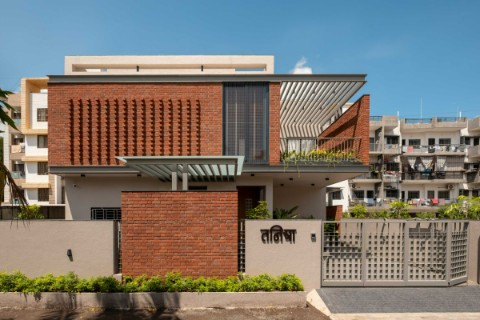
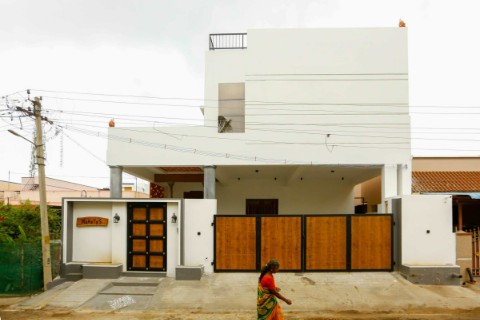
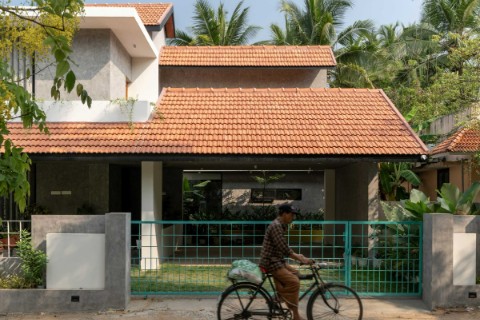
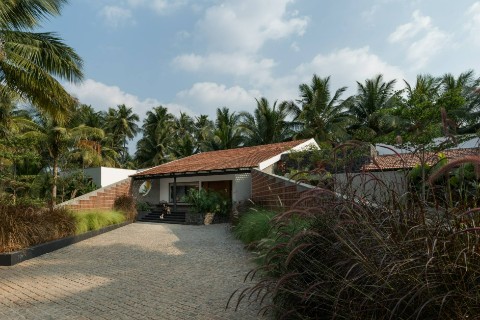
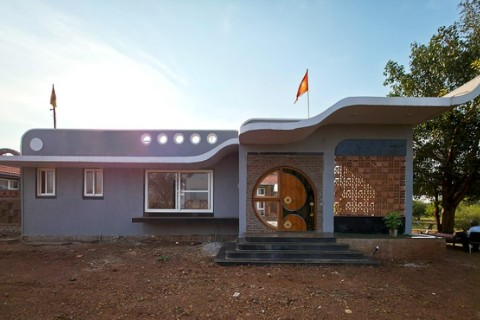
Exterior view of Malhar by Studio Anhad
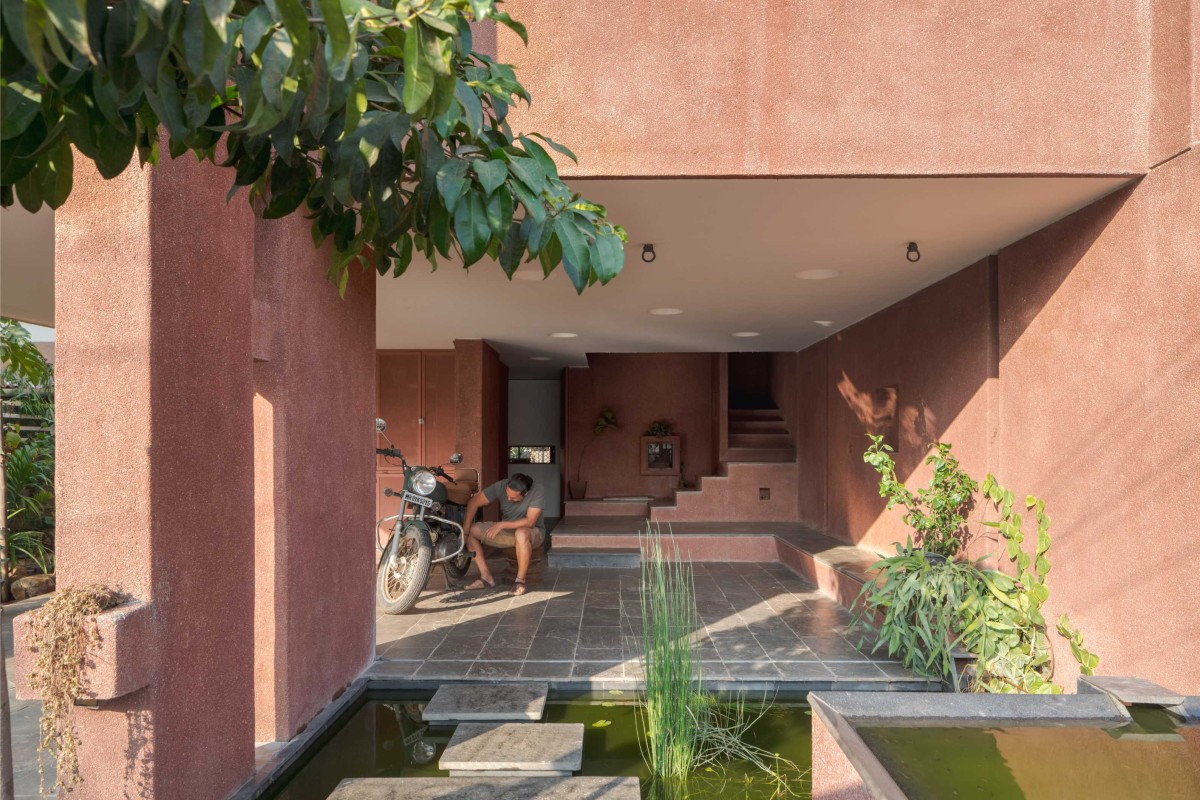
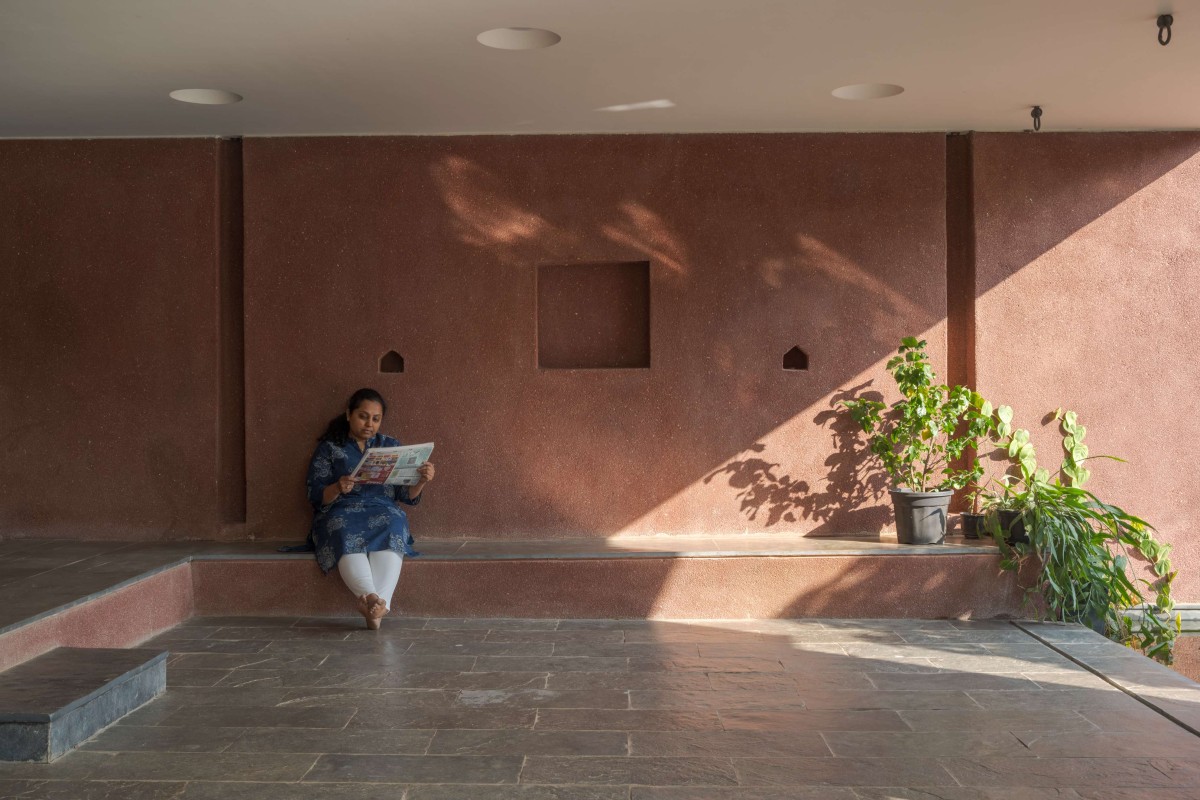
Entrance of Malhar by Studio Anhad
A waterbody at the entrance introduces evaporative cooling while reinforcing a sense of arrival. Terraces connected to bedrooms act as transitional outdoor spaces, enhancing livability and engagement with the surroundings.
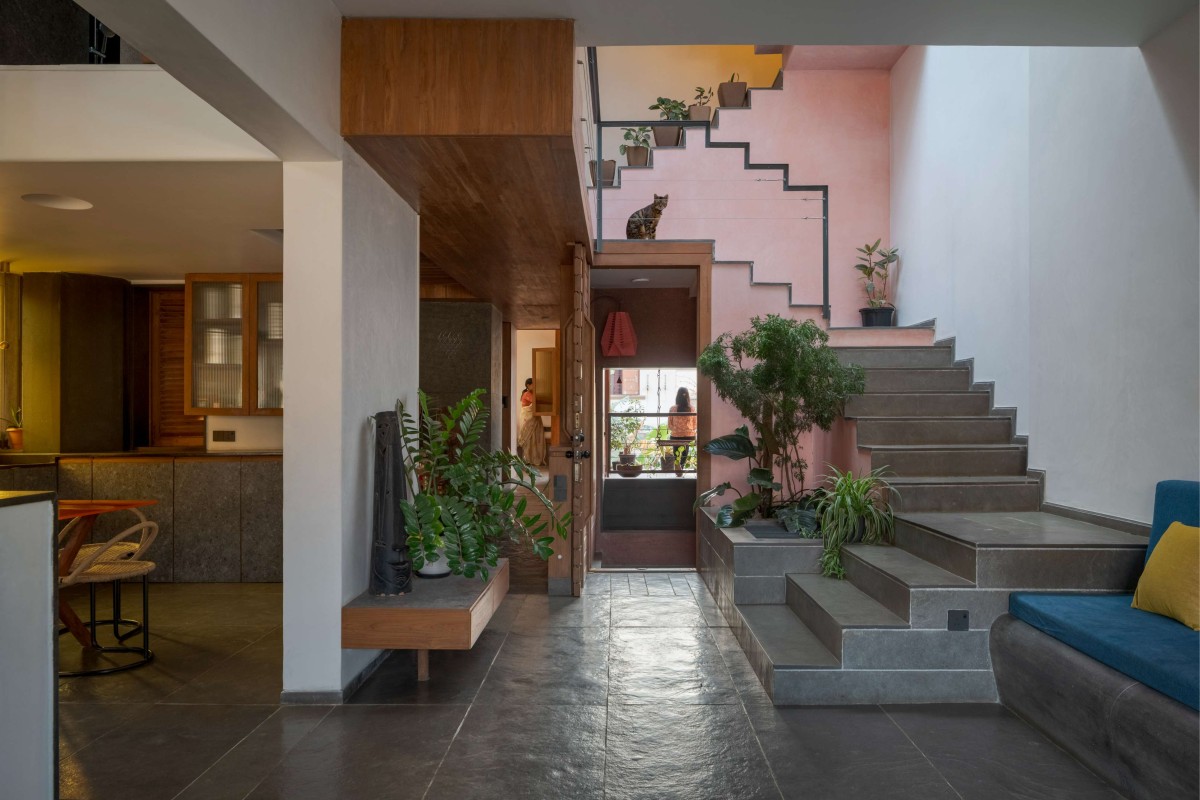
Foyer of Malhar by Studio Anhad
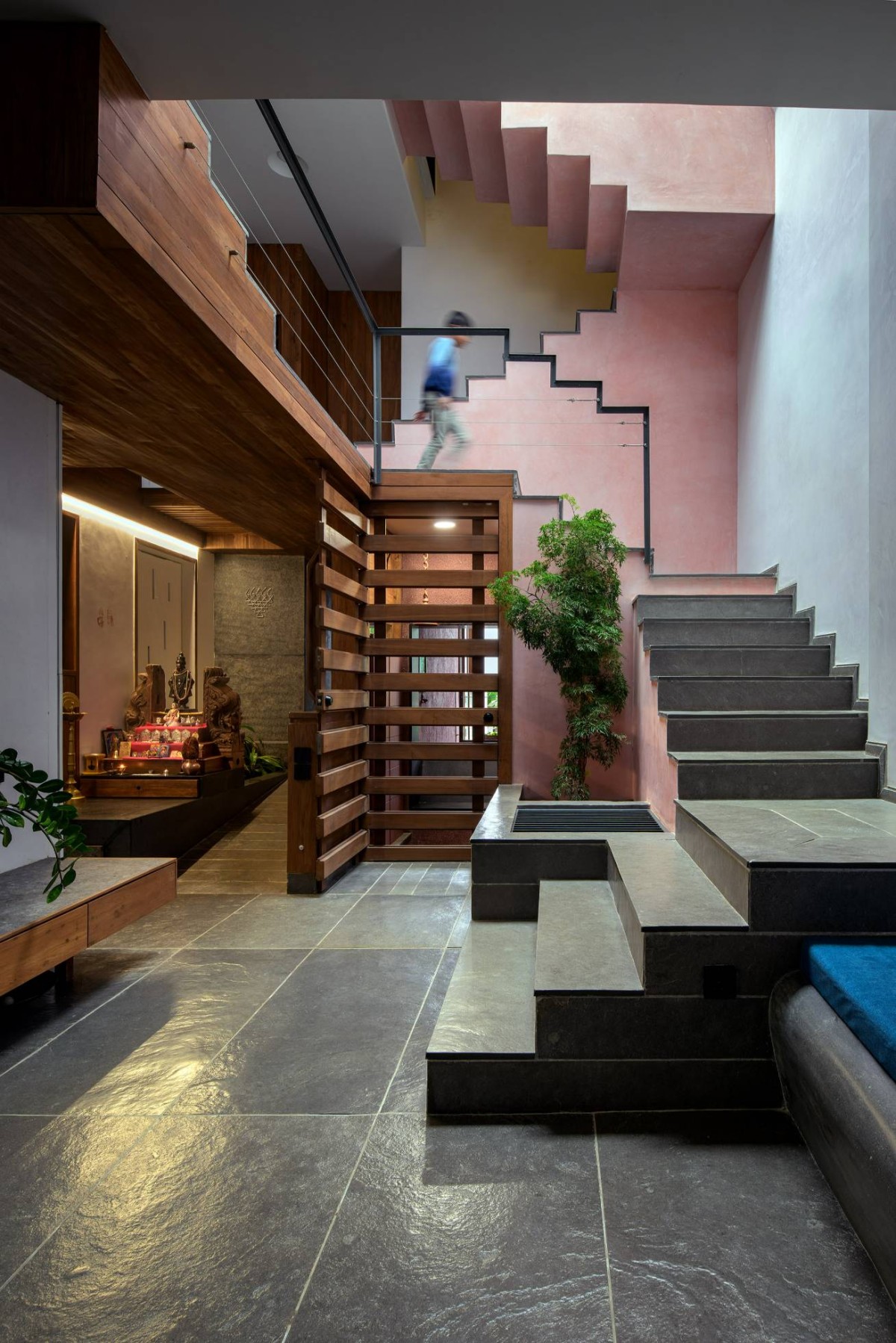
Staircase court of Malhar by Studio Anhad
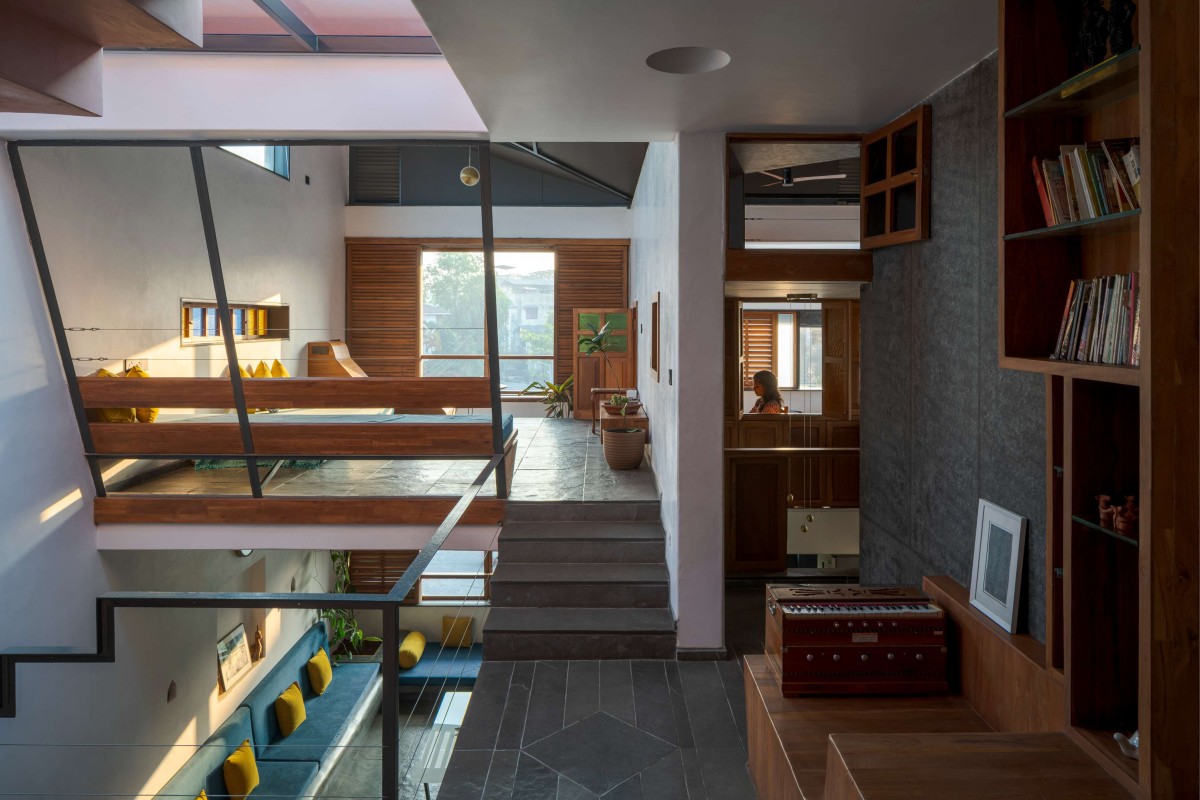
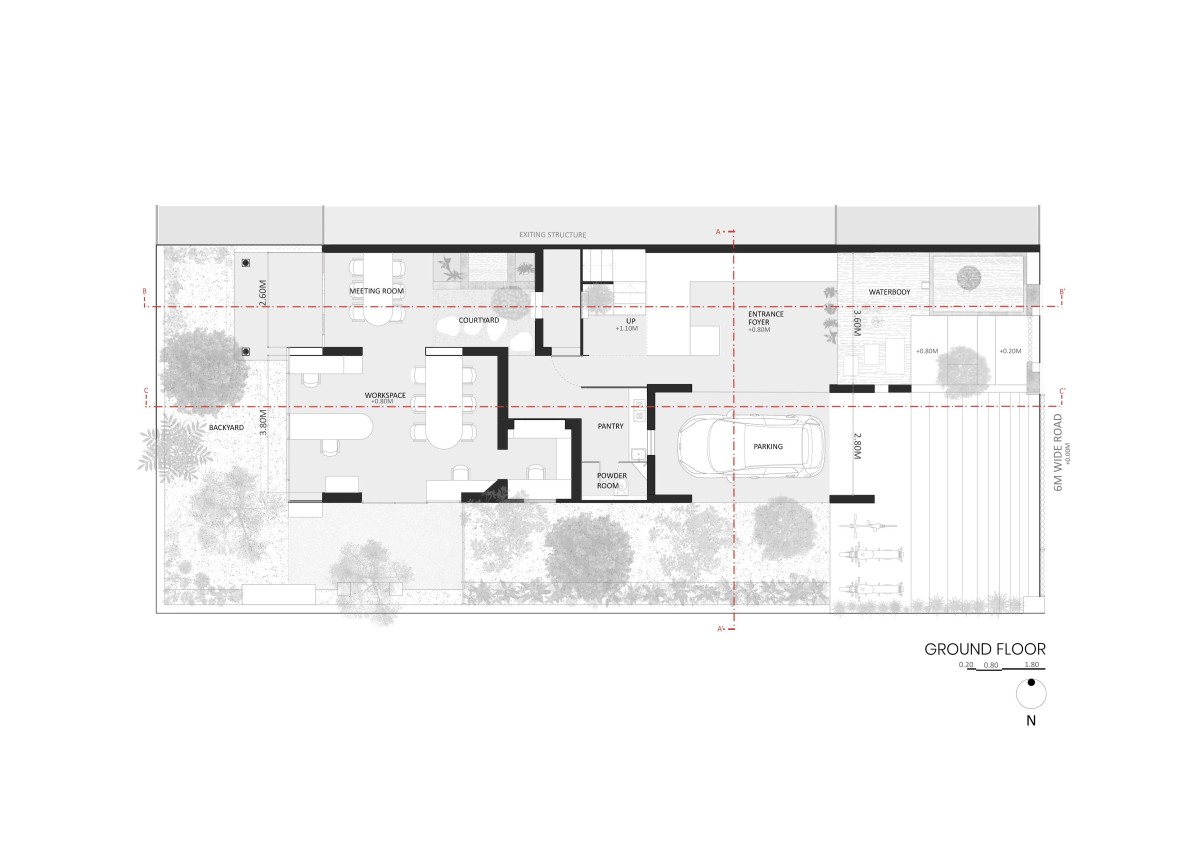
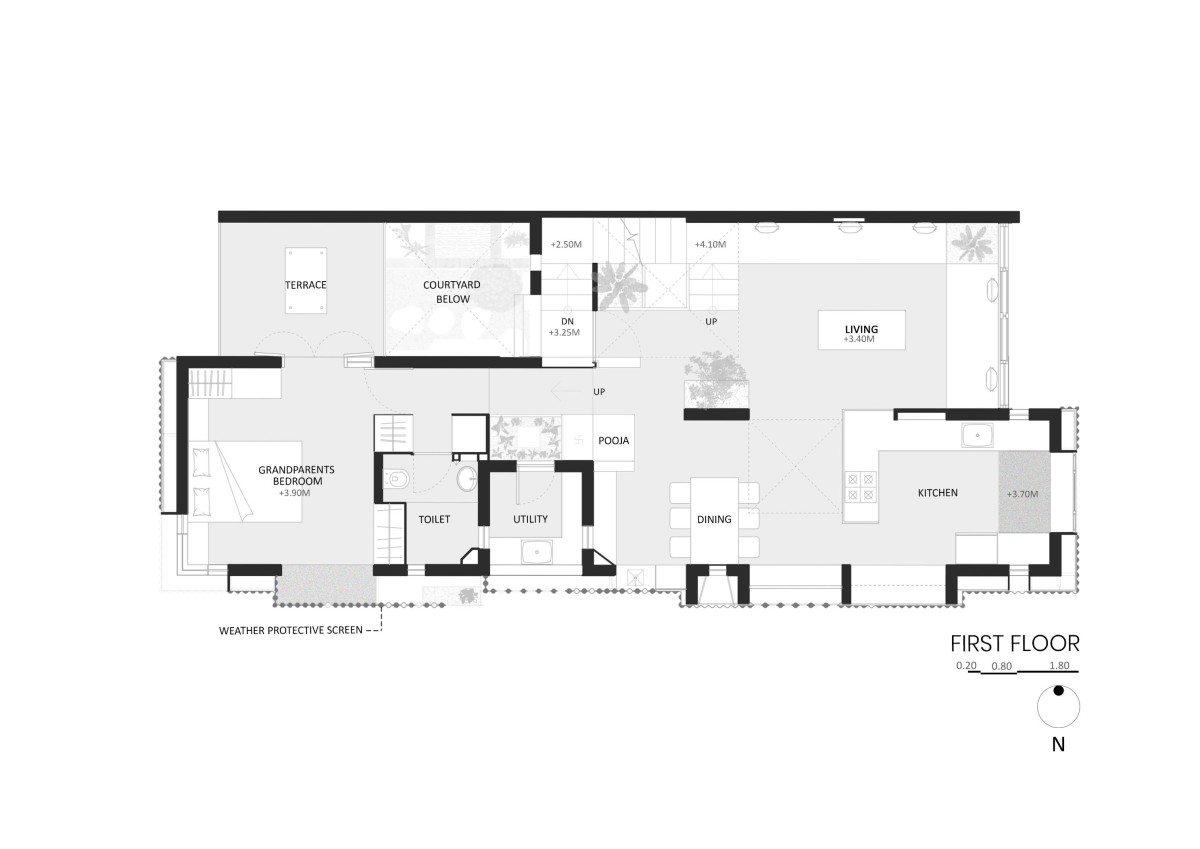
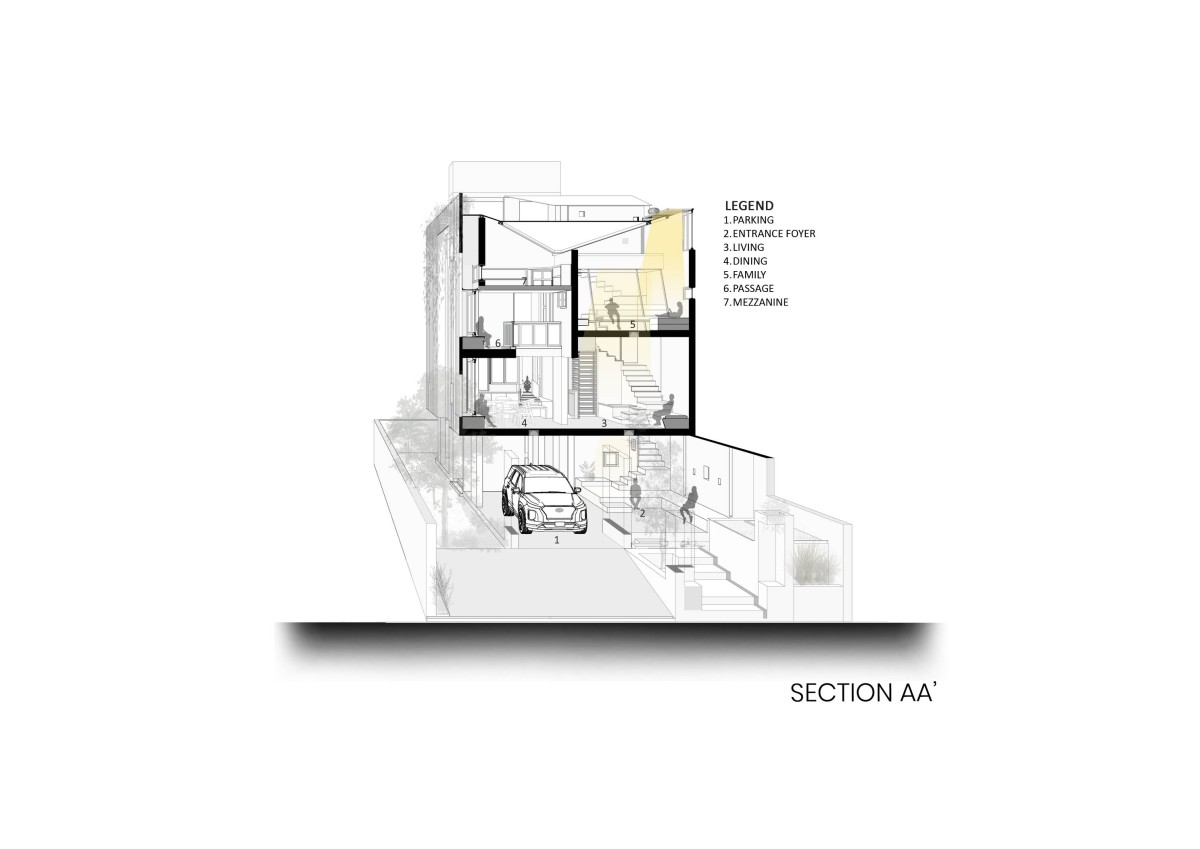
The spatial organization is driven by a clear gradient of privacy and a dynamic sectional approach. Public and semi-private spaces—including the living, dining, and kitchen—are positioned toward the front for direct engagement with the street, while private zones unfold toward the rear, opening to terraces and views of the landscape.
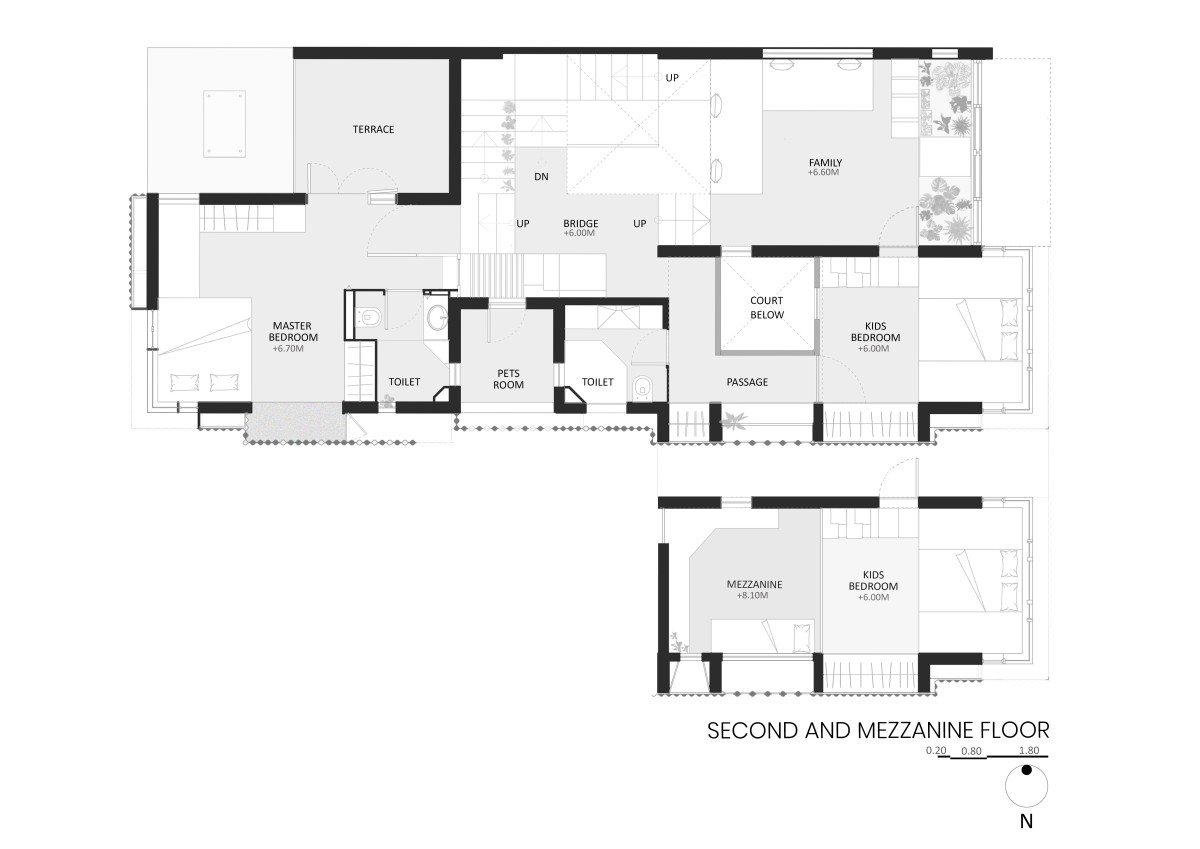
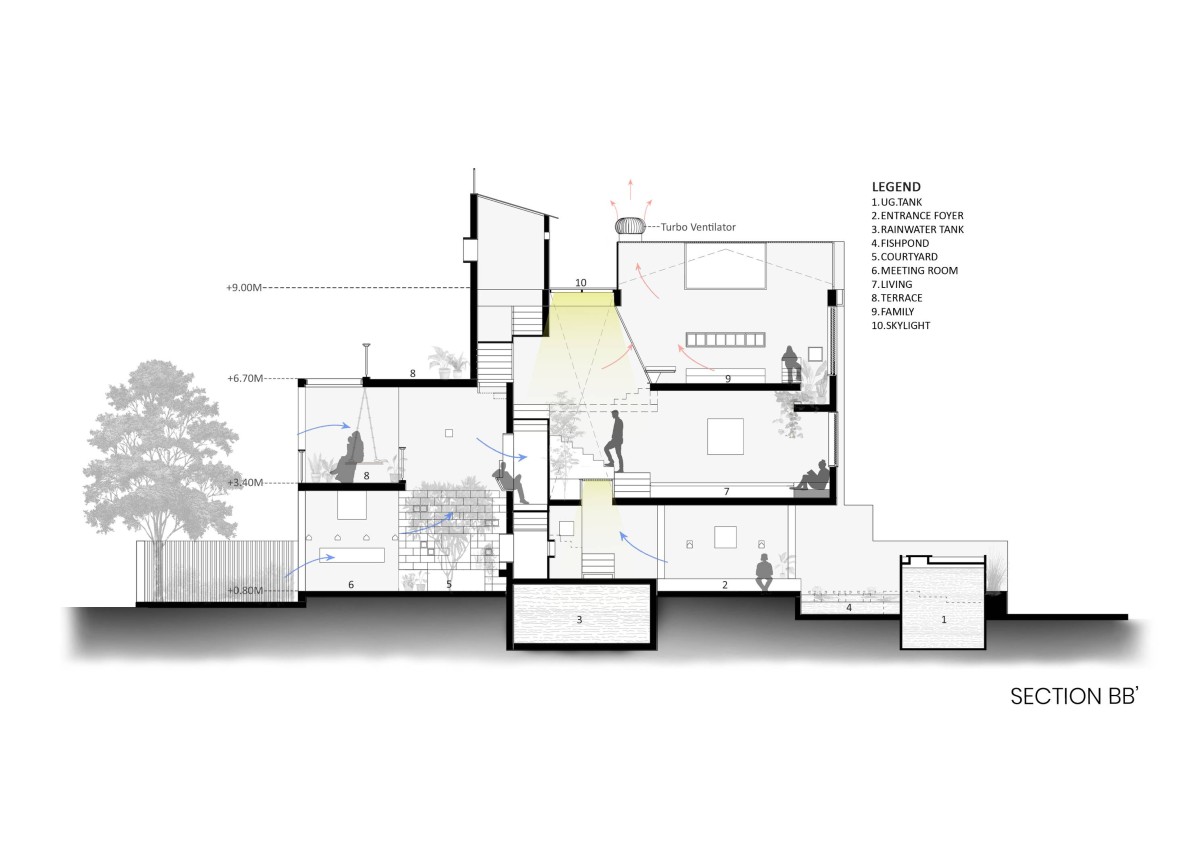
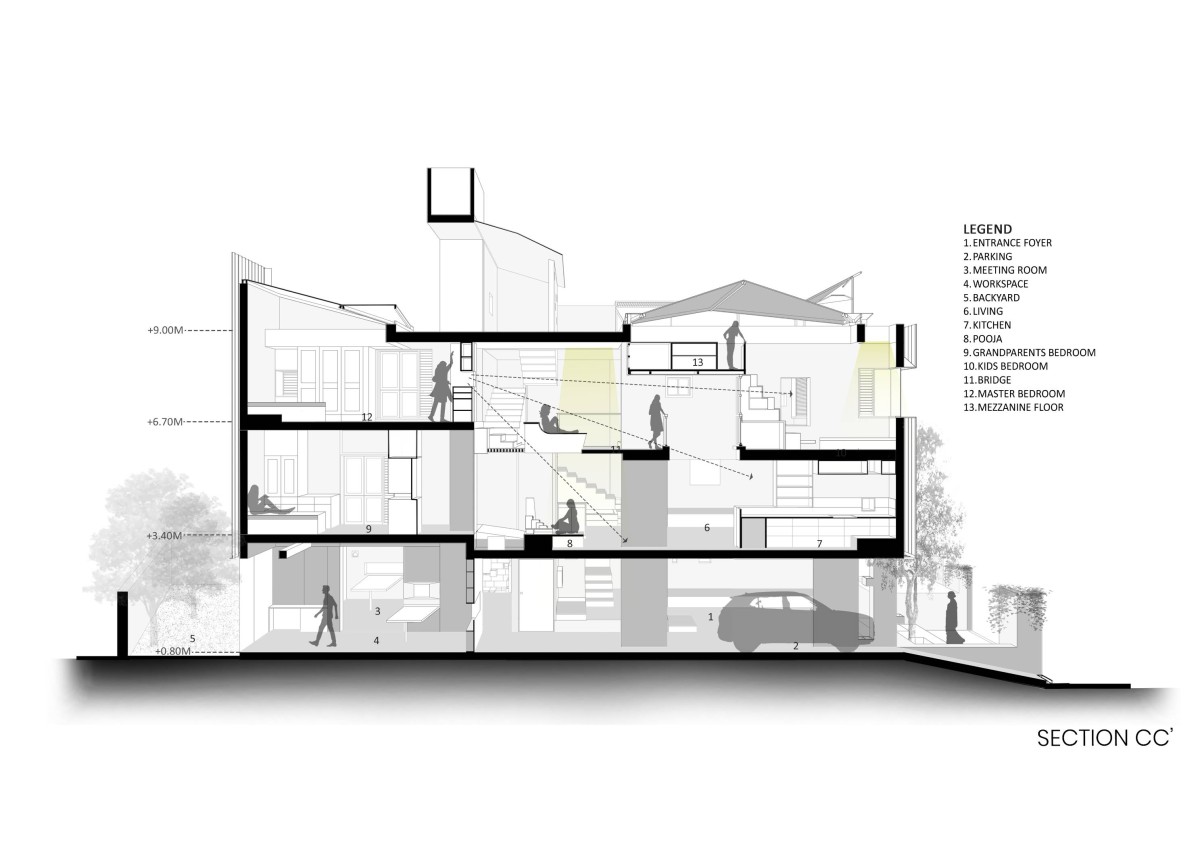
A central service core consolidates vertical circulation, utilities, and wet areas, enabling efficient planning and uninterrupted spatial flow around it. The house departs from conventional stacking by employing staggered floor plates, where each level shifts by approximately 8 feet. This sectional articulation creates a rich spatial sequence of volumes—ranging from intimate, low-height areas to expansive double-height spaces.
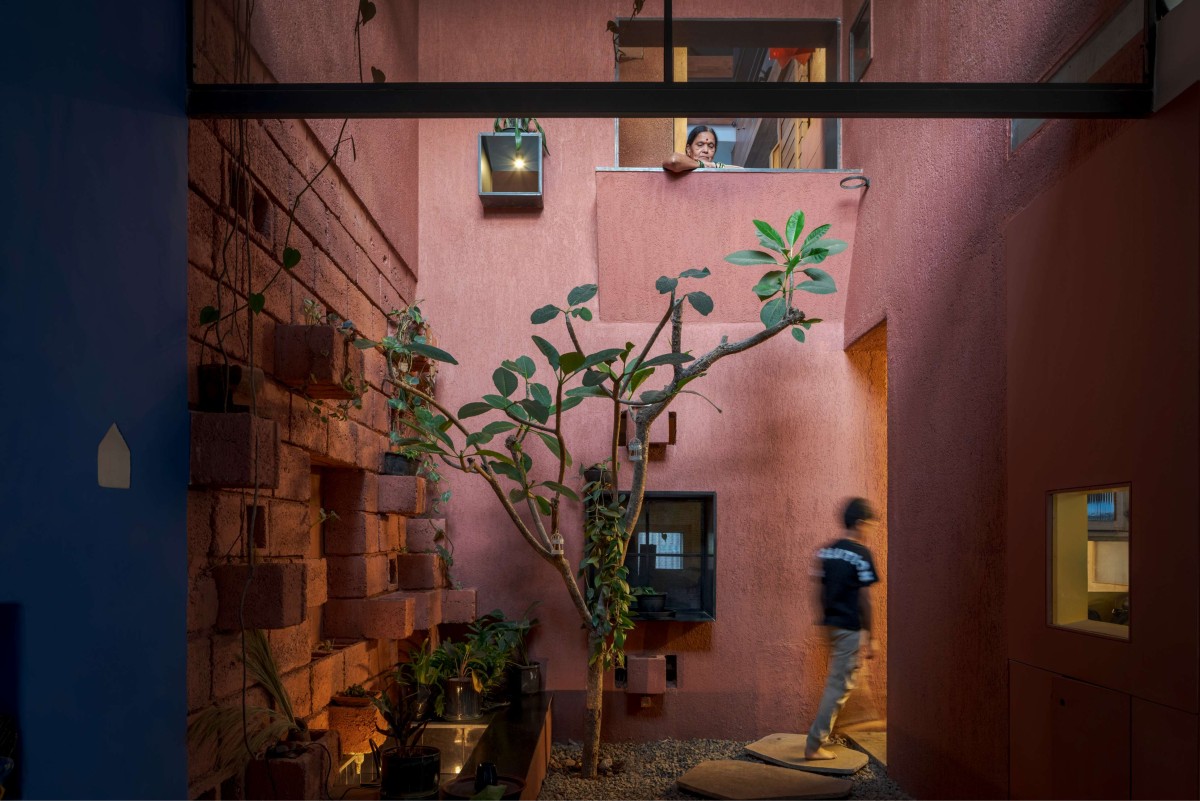
Courtyard of Malhar by Studio Anhad
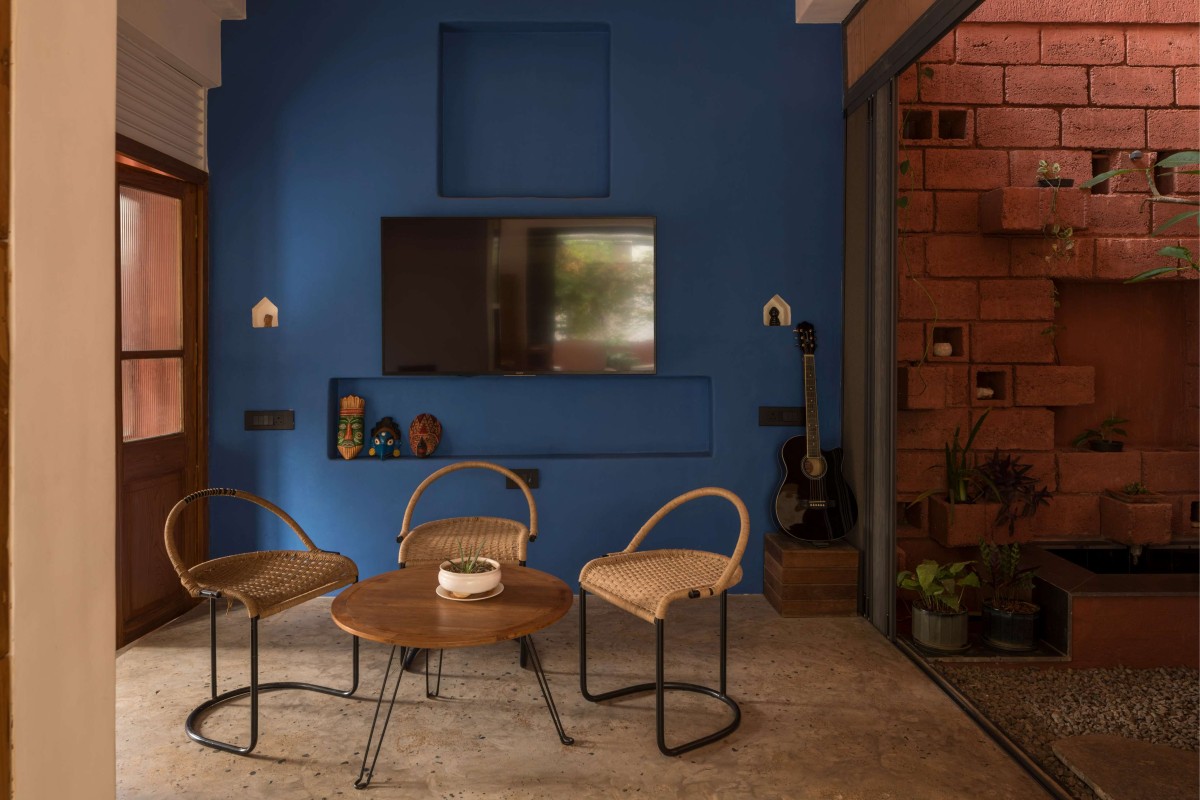
Meeting room of Malhar by Studio Anhad
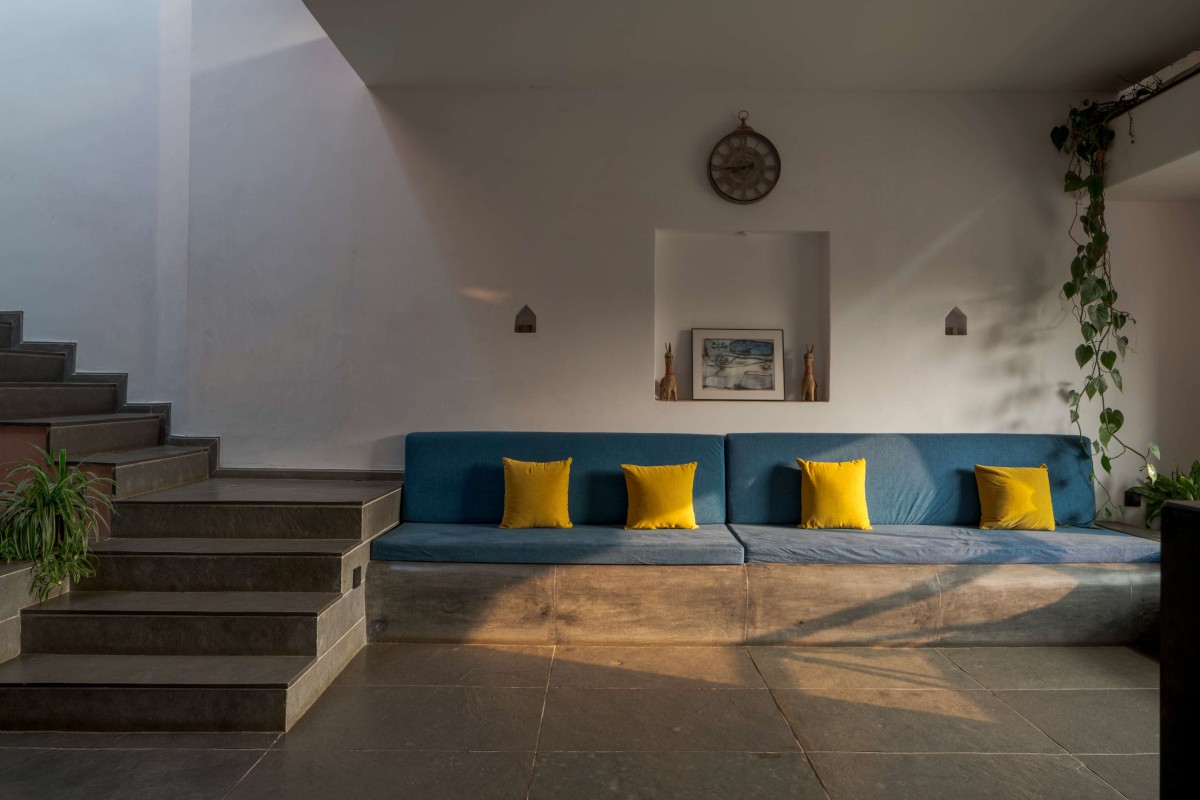
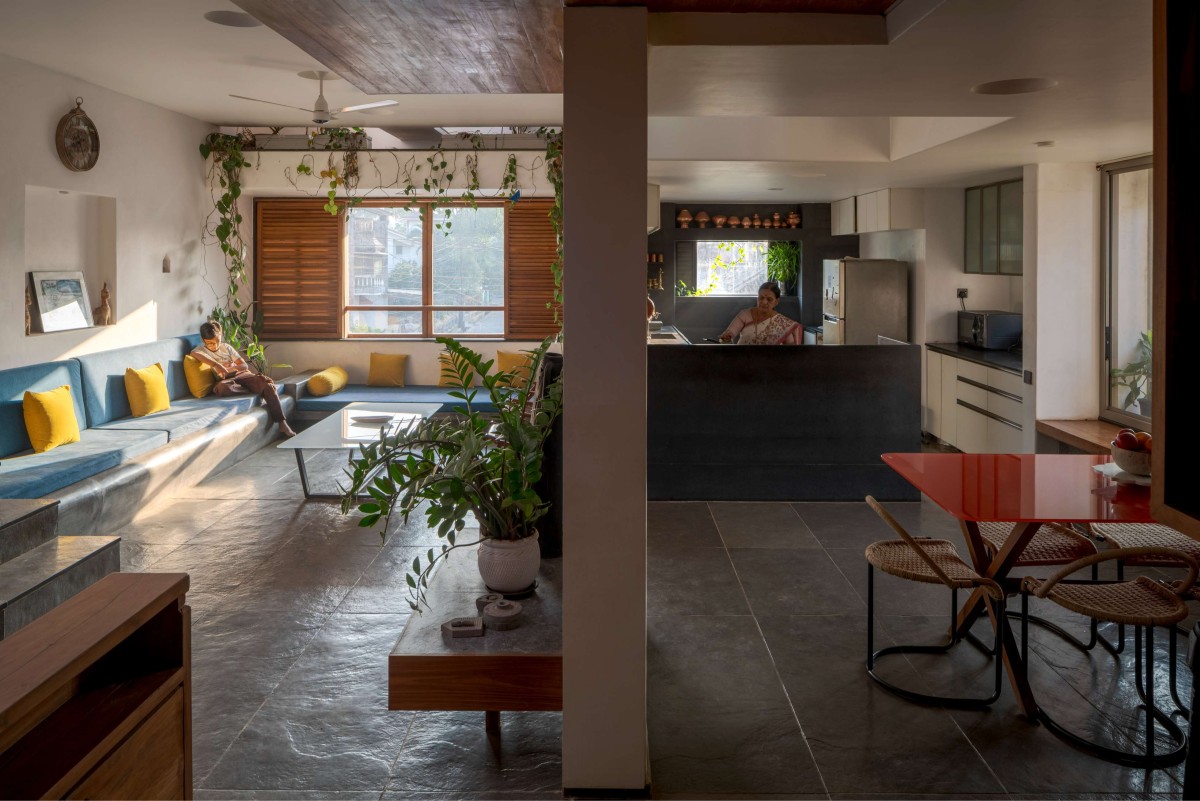
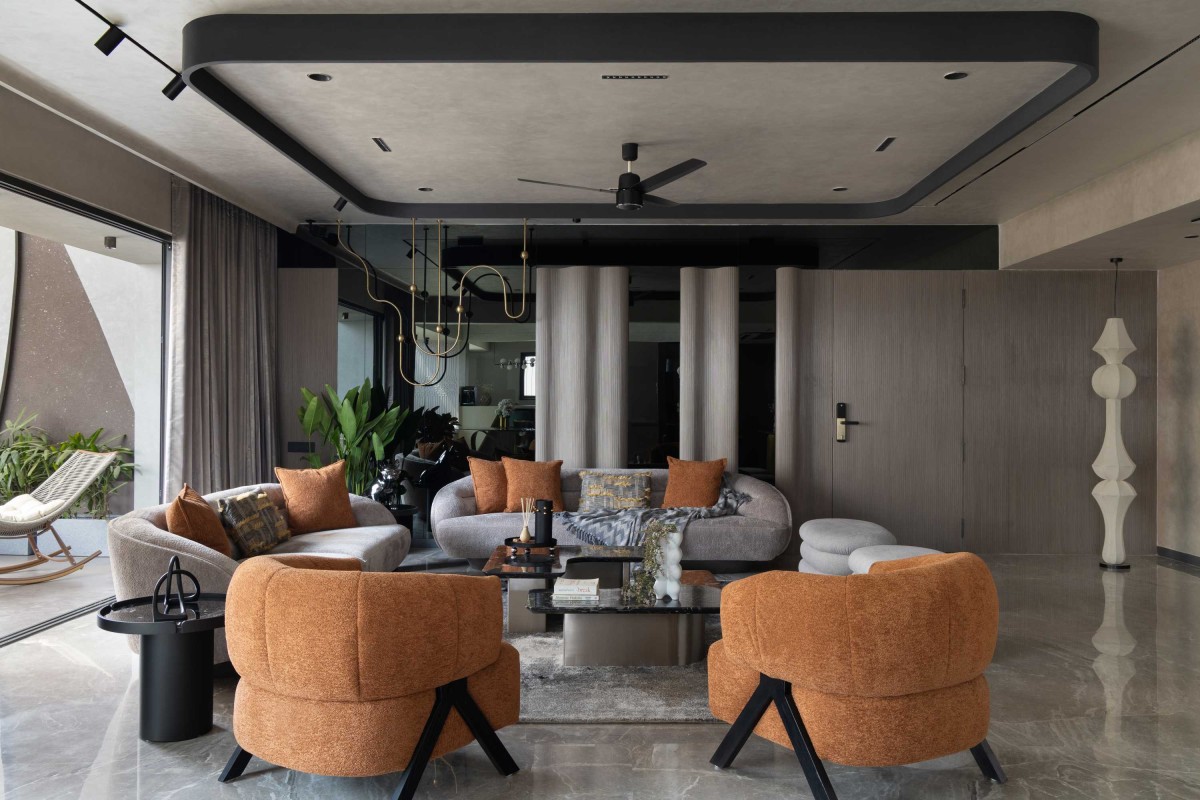
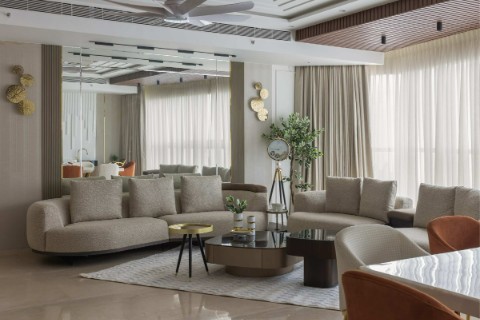
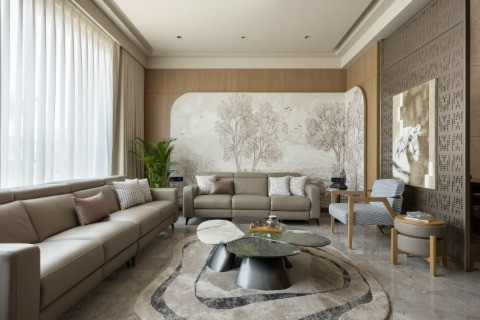
Living room of Malhar by Studio Anhad
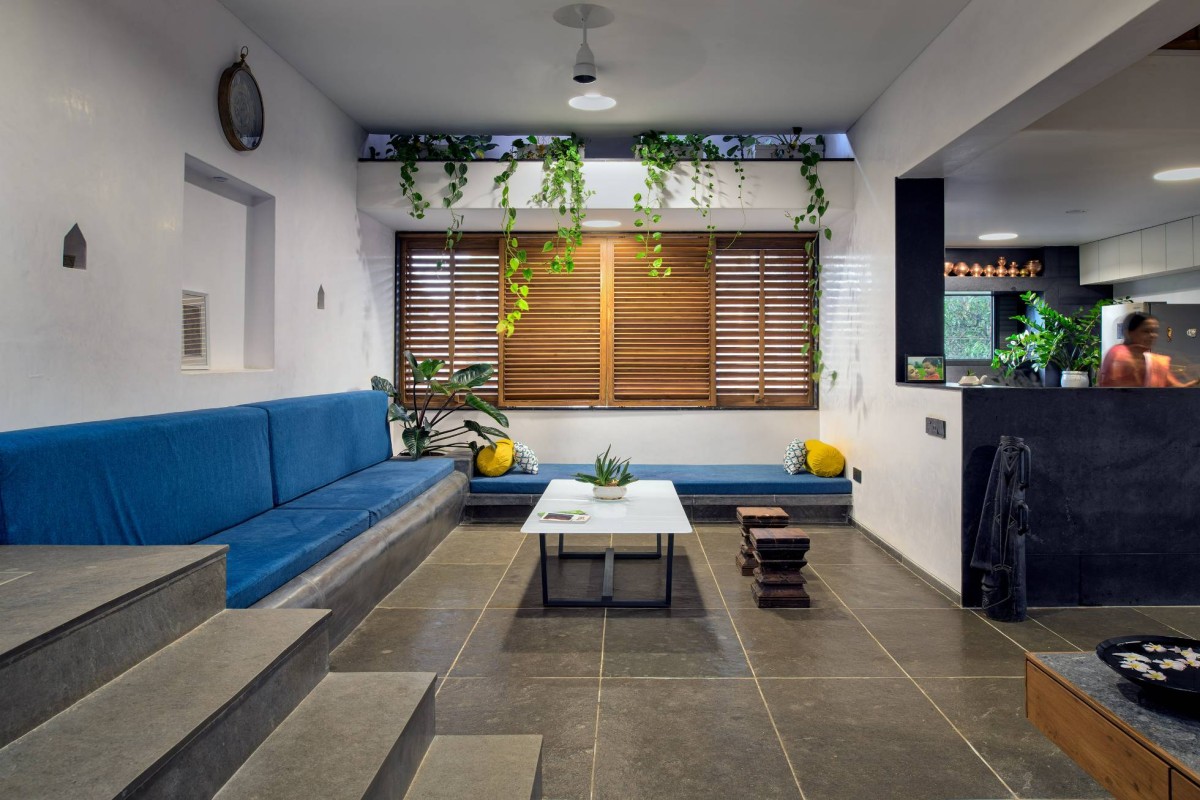
Living room of Malhar by Studio Anhad
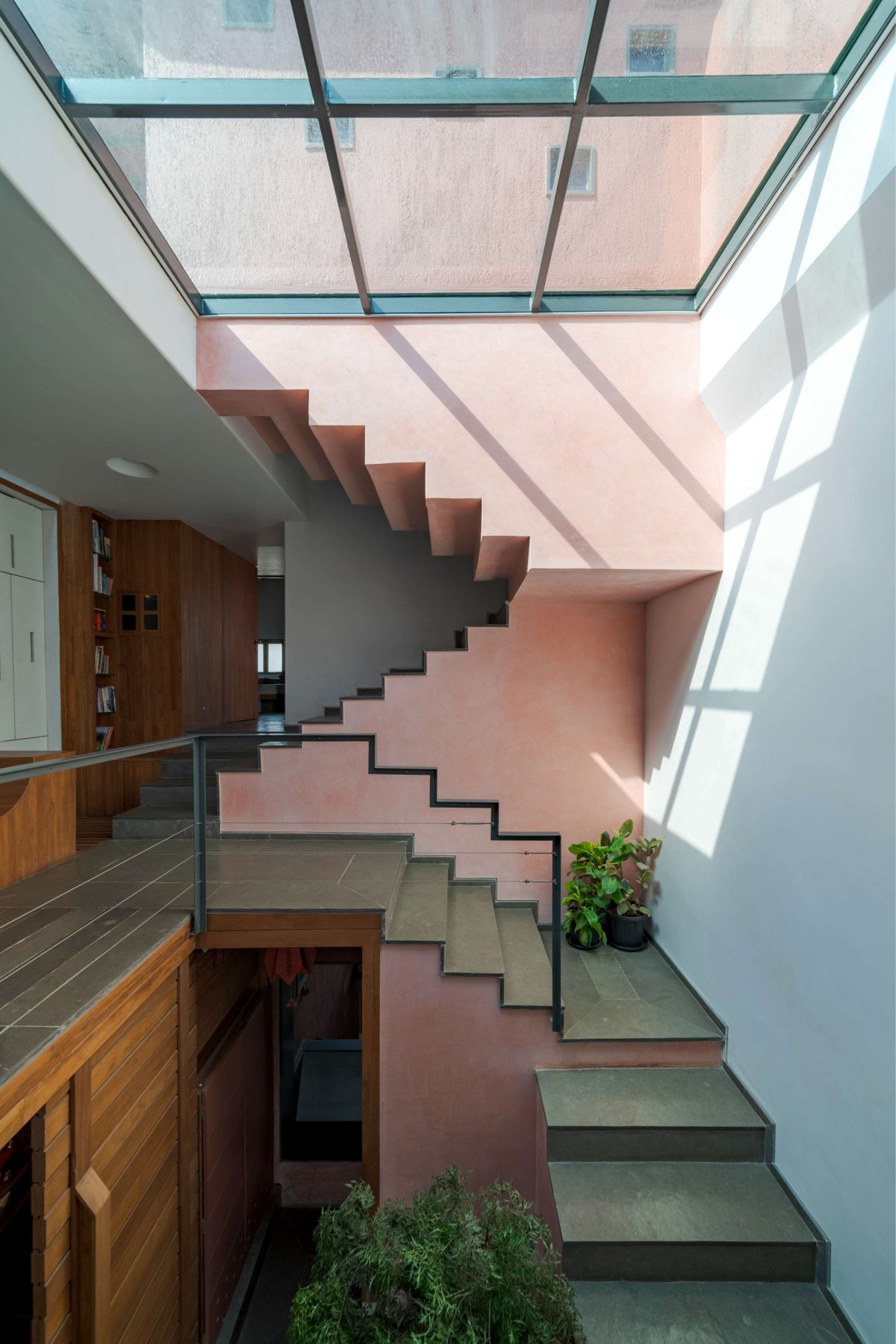
The living space forms the volumetric core, rising into a double-height volume with a skylight that draws natural light deep into the house and animates the staircase. Strategic cut-outs and visual connections between levels reinforce spatial continuity, making the house feel interconnected despite its compact footprint.
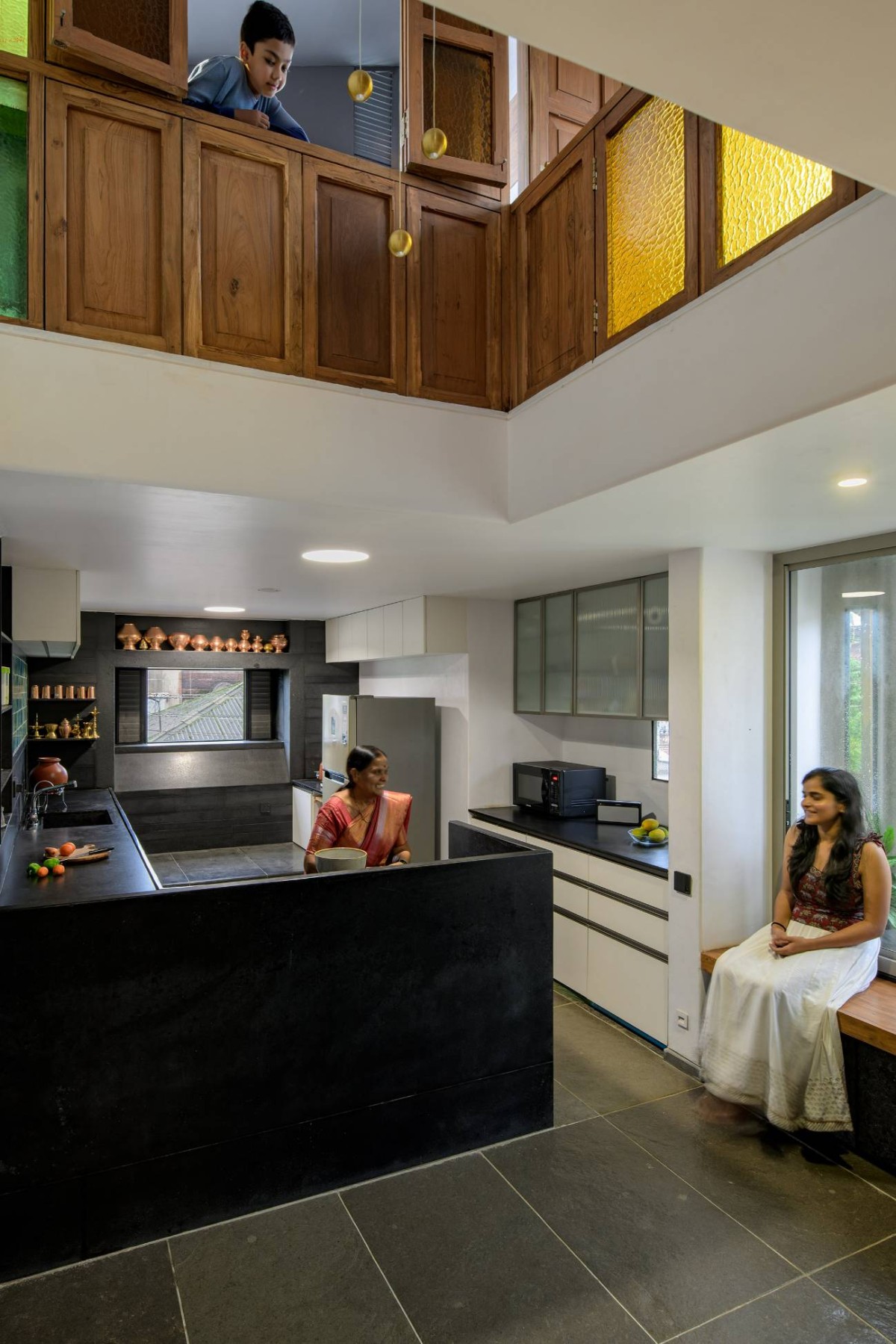
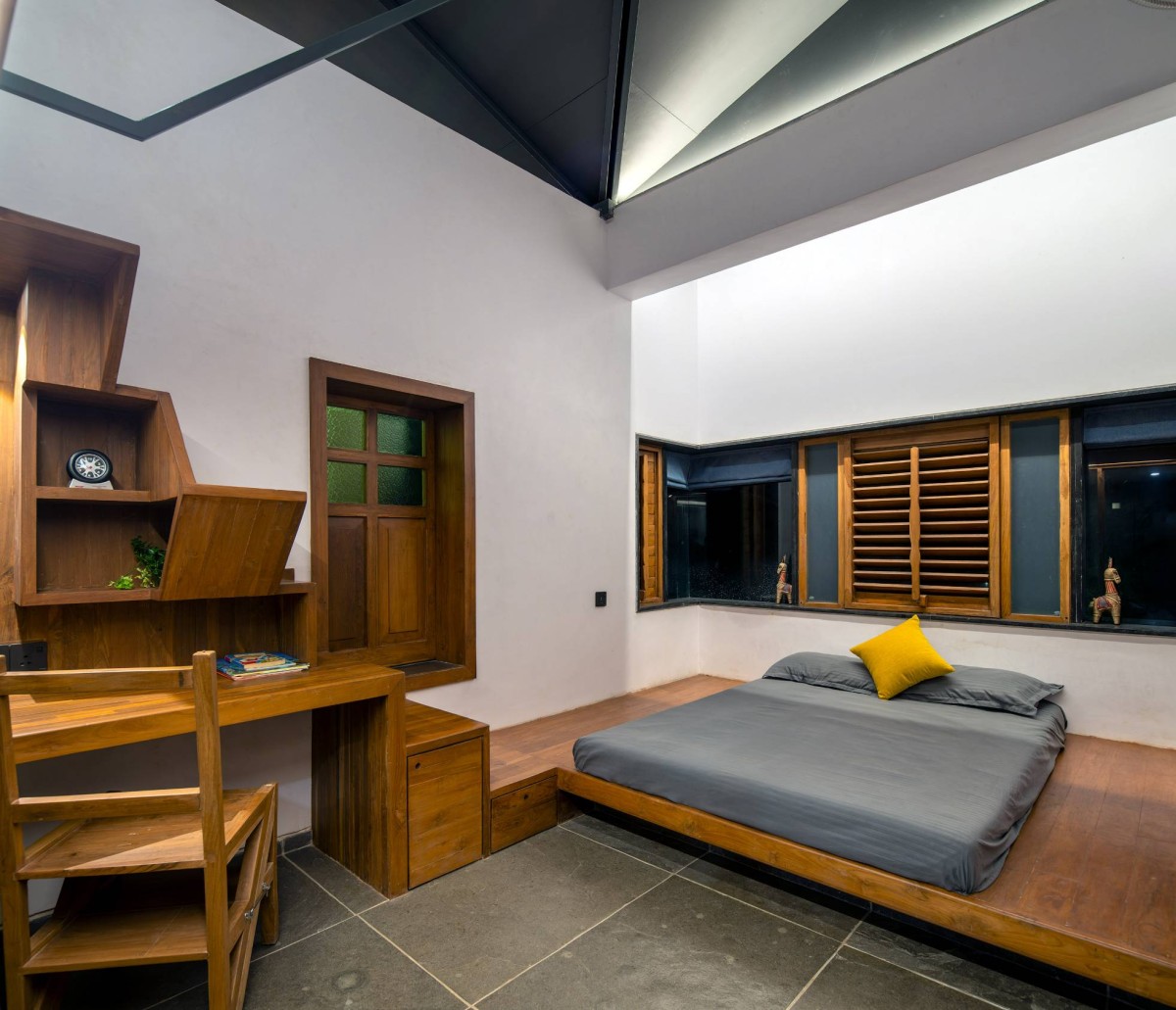
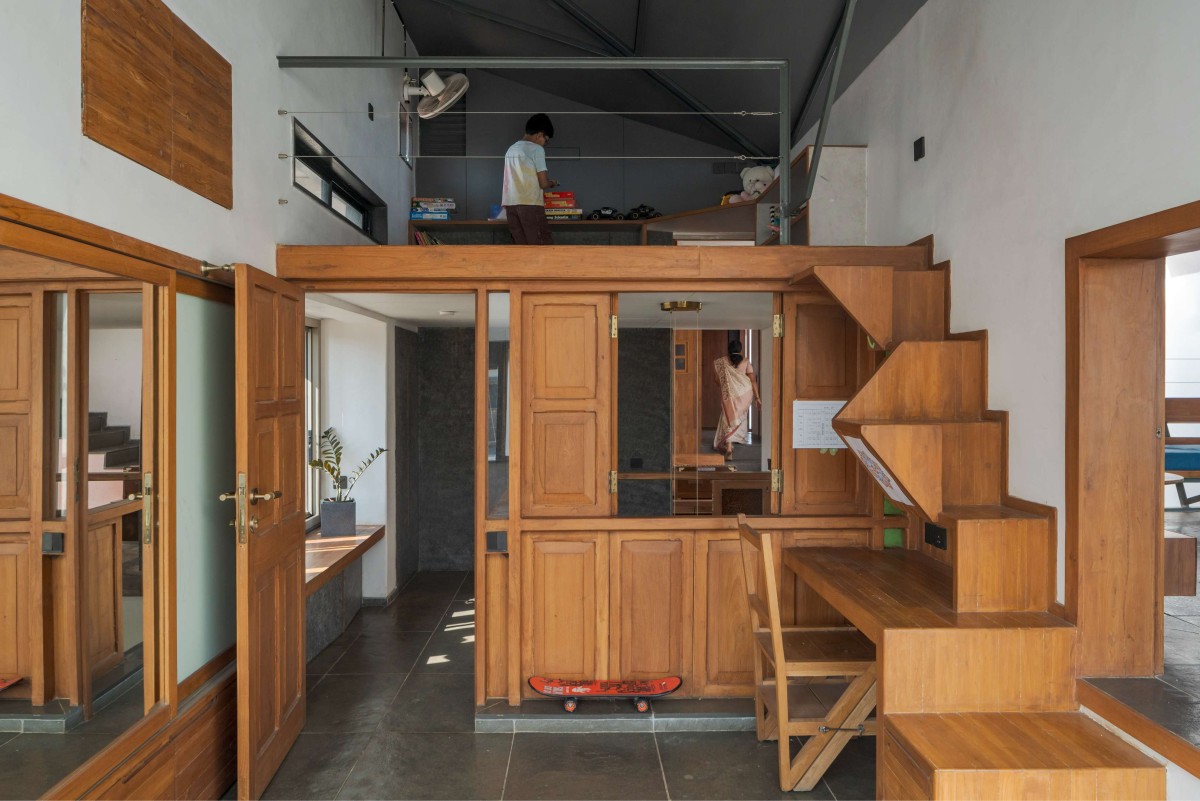
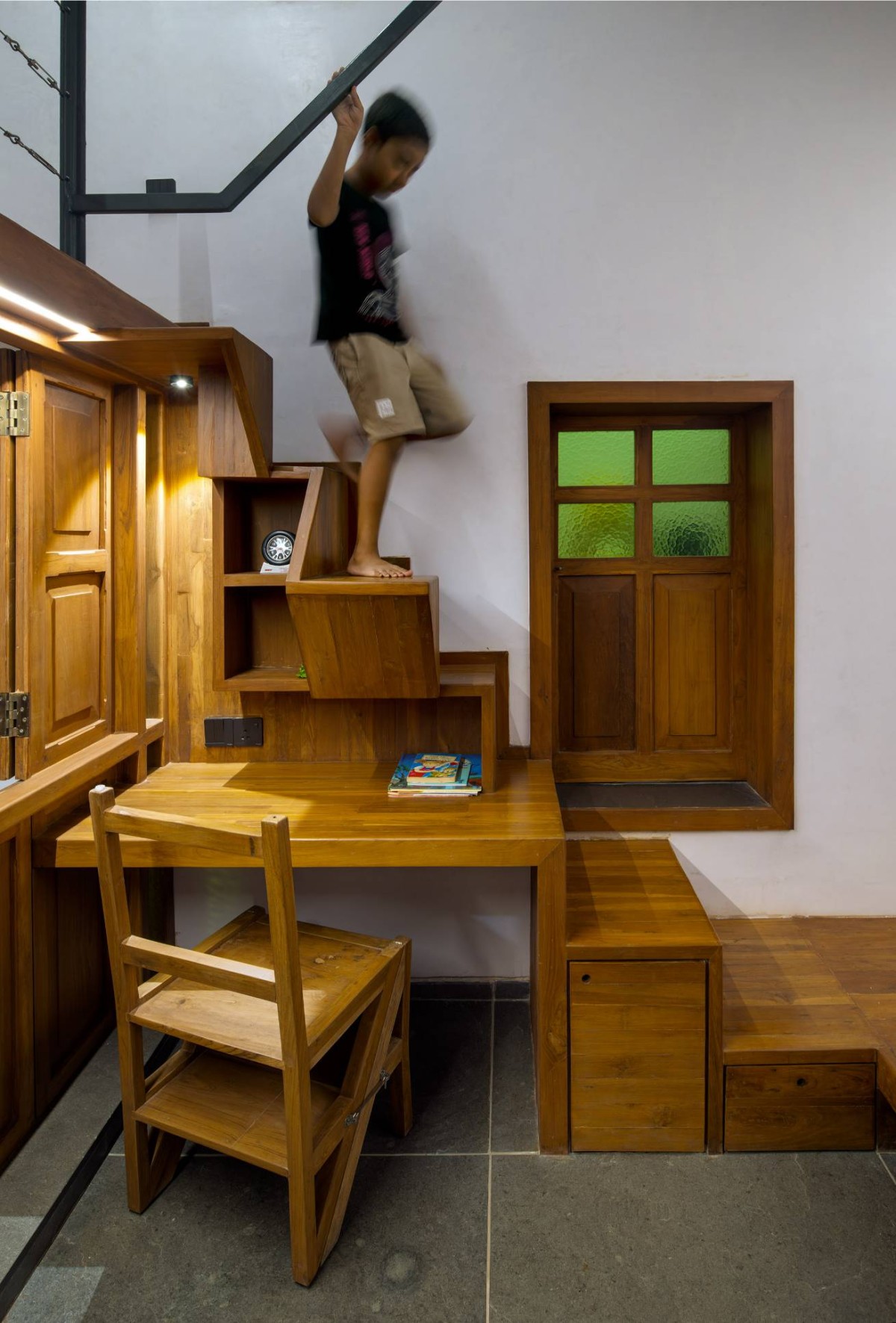
Climatic responsiveness is embedded within the planning. Despite the absence of openings on the north, west winds are drawn through terraces and vertical voids, enabling cross-ventilation. The home accommodates a multi-generational family, with accessible lower-level spaces for grandparents, and upper levels housing the master suite, children’s room with a mezzanine, and a family lounge. The kitchen integrates both standing and seated work surfaces, reflecting traditional Indian practices.
Living room of Malhar by Studio Anhad
Living, Dining & Kitchen of Malhar by Studio Anhad
The project adopts a composite load-bearing construction system using hollow and cavity concrete blocks. These blocks integrate structural reinforcement, reducing the need for conventional column-beam systems while also accommodating plumbing and electrical services within their cores. This approach optimizes material usage and enhances thermal insulation.
Filler slab construction is employed using cavity blocks, reducing concrete consumption and embedding lighting within the slab itself. The staircase is constructed using ferroconcrete technology, contributing to structural efficiency and material economy.
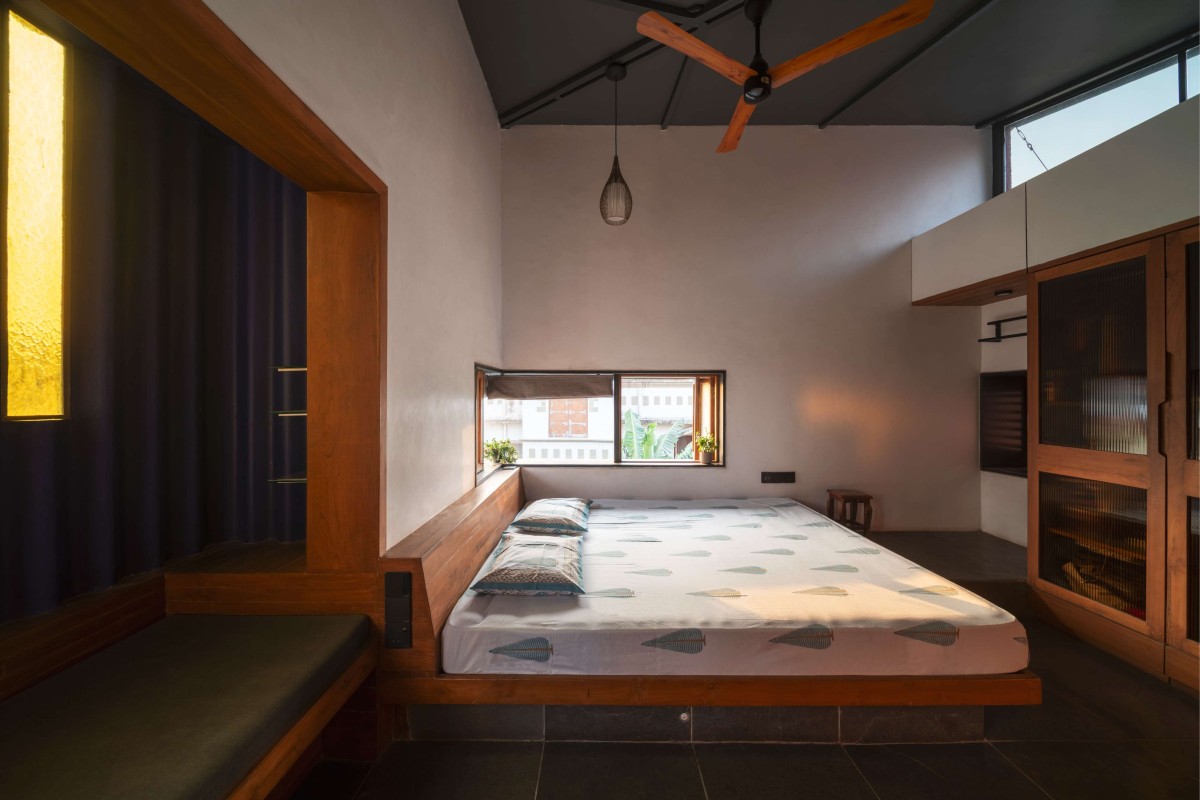
Material choices are guided by durability, climate responsiveness, and a tactile connection to place. Lime plastered walls, limestone flooring, and basalt stone partitions create a grounded material palette. Reclaimed wood is extensively used in furniture and interior elements, reinforcing a sustainable approach.
Openings are designed as adaptable systems, incorporating a mix of clear, colored, and fluted glass along with operable shutters and louvers. These variations allow flexibility in controlling light, ventilation, and privacy while reducing maintenance challenges in a humid, monsoon-prone environment.
Kitchen of Malhar by Studio Anhad
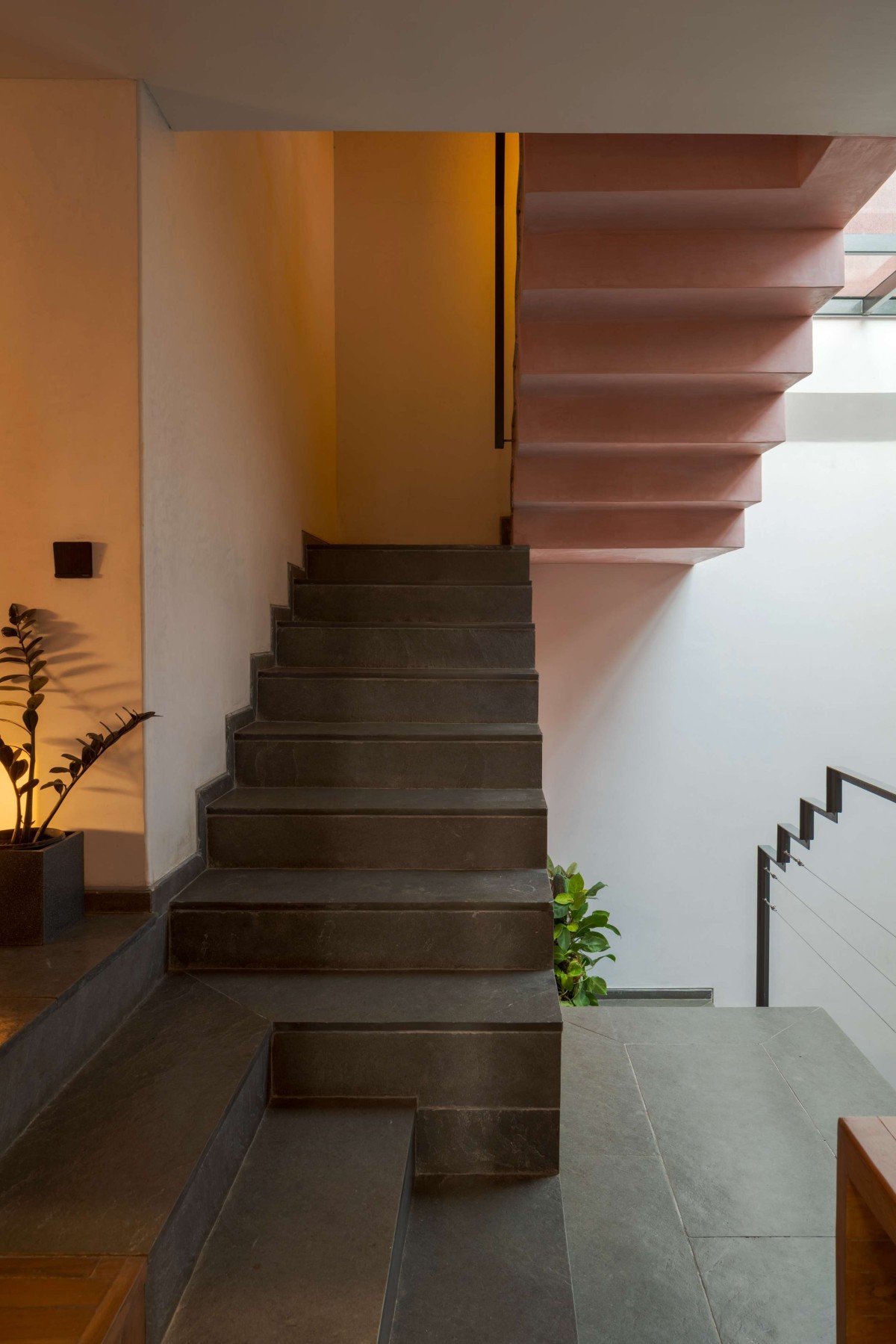
Staircase of Malhar by Studio Anhad
Skylight to Staircase court of Malhar by Studio Anhad
Passage to Family living of Malhar by Studio Anhad
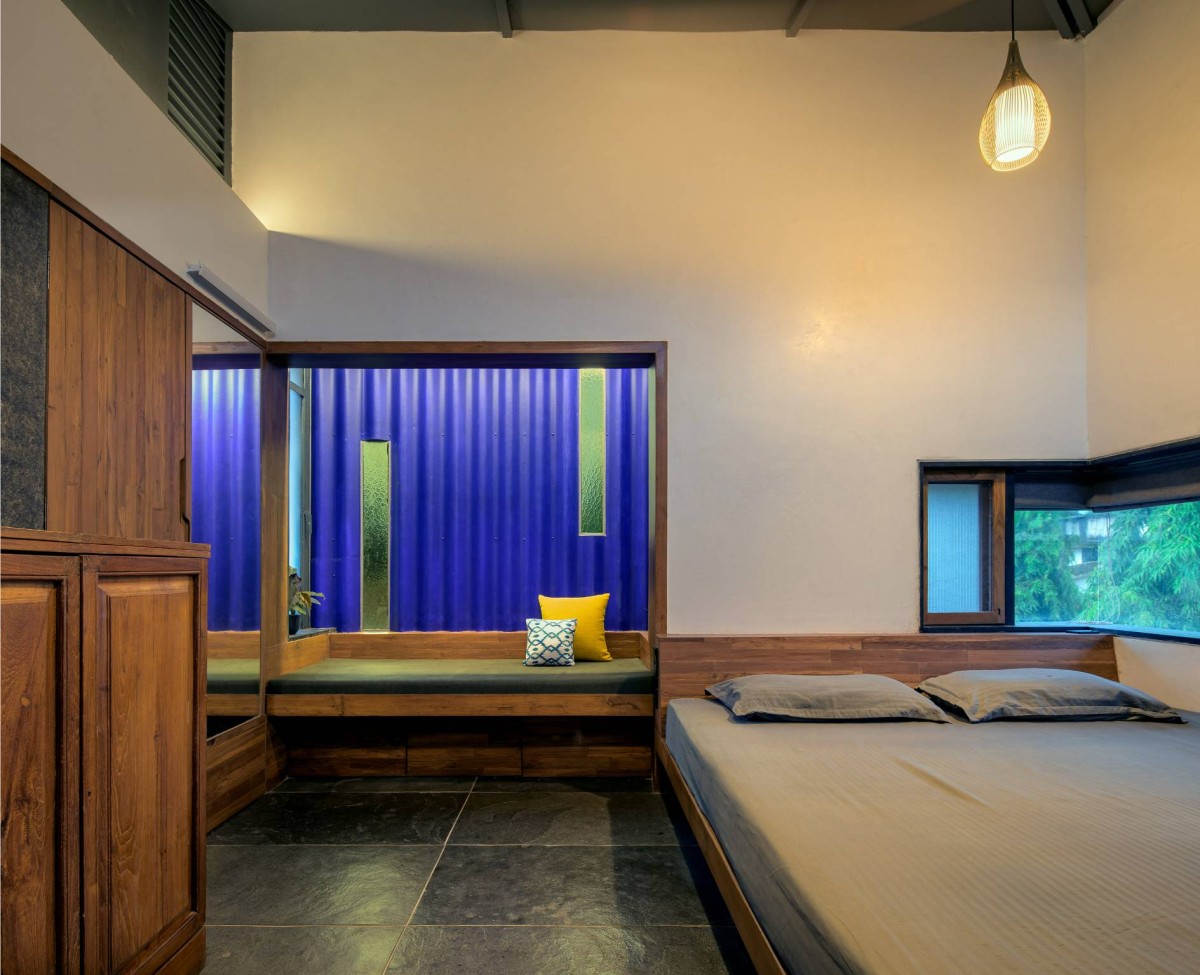
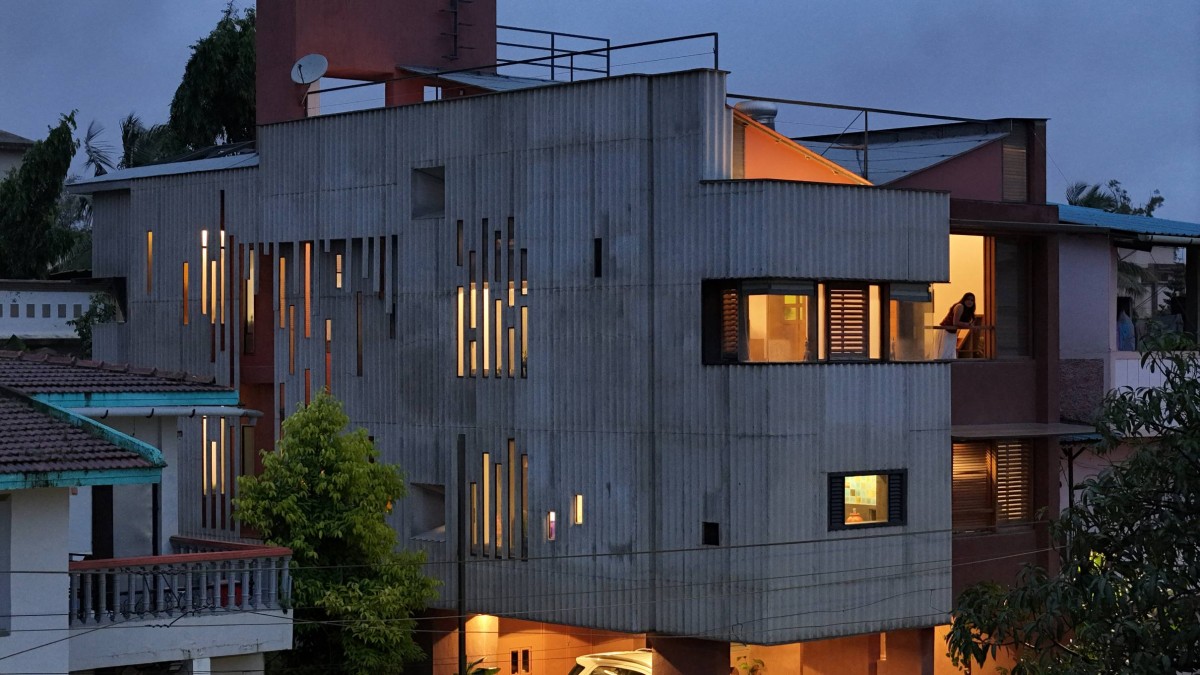
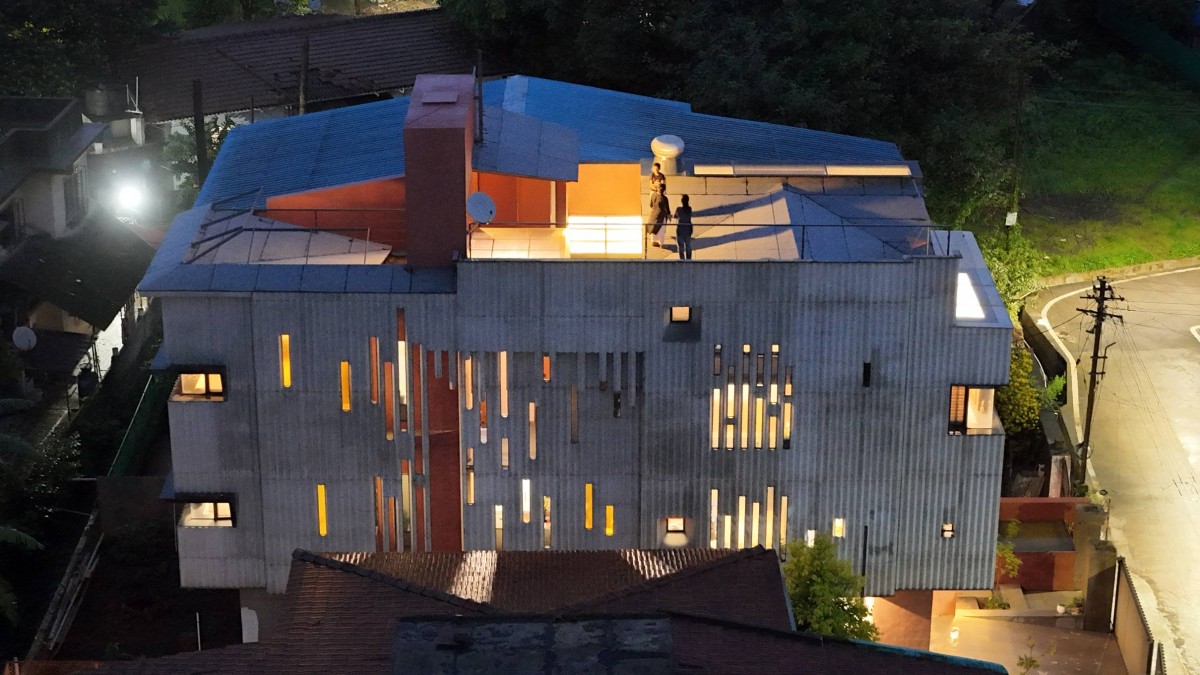
Climate-responsive design is integral to the project’s expression. The south façade, exposed to intense monsoon conditions, is protected by a secondary screen made of corrugated cement sheets with a concrete infill. This layered barrier mitigates rain impact and weathering, while perforations within the screen allow filtered light and ventilation, casting dynamic patterns across interior spaces.
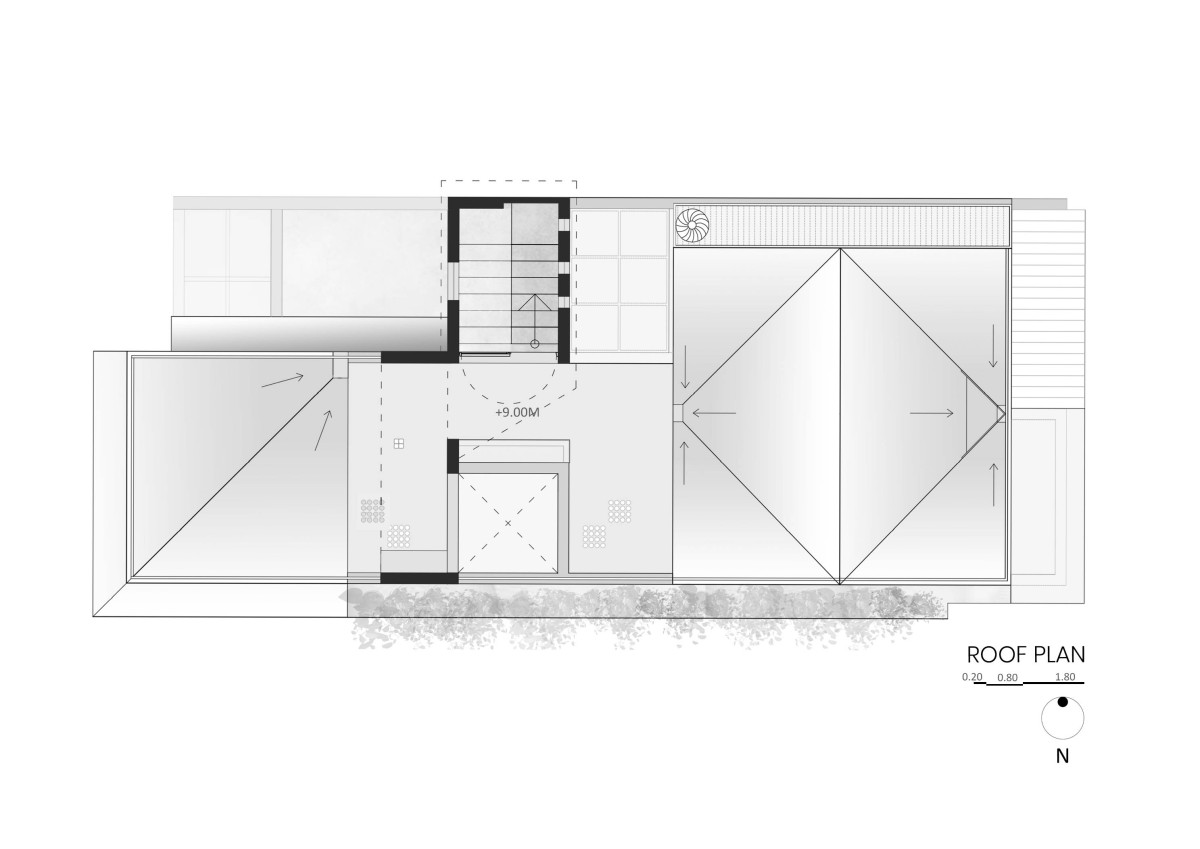
Sloping roofs respond to heavy rainfall, efficiently channeling water into a rainwater harvesting system. These roofs are designed as accessible surfaces, extending the usable space of the house and enabling informal gatherings.
Master Bedroom of Malhar by Studio Anhad
Kids Bedroom of Malhar by Studio Anhad
Kids Bedroom of Malhar by Studio Anhad
A key architectural feature is the design of terrace openings, conceived as flexible thresholds. Combining operable wooden louvers with layered shutter systems, these openings adapt to multiple conditions—functioning as windows, doors, or screened interfaces—allowing users to modulate light, airflow, and privacy.
Overall, the project reinterprets traditional spatial principles through a contemporary lens—where section, material, and climate work in tandem to create a responsive, layered, and contextually grounded home.
“A compact, climate-responsive home shaped by constraint, where section drives spatial richness and connection. Through layered volumes, light, and air, the house creates a deeply interconnected living environment for a multi-generational family.”
Kids Bedroom of Malhar by Studio Anhad
Bedroom 3 of Malhar by Studio Anhad
Night exterior view of Malhar by Studio Anhad
Aerial view of Malhar by Studio Anhad
Ground Floor Plan of Malhar by Studio Anhad
First Floor Plan of Malhar by Studio Anhad
Second & Mezzanine Floor Plan of Malhar by Studio Anhad
Roof Plan of Malhar by Studio Anhad
Section AA of Malhar by Studio Anhad
Section BB of Malhar by Studio Anhad
Section CC of Malhar by Studio Anhad