The Tiny Library Competition was envisioned to foster awareness,
encourage creative exposure, and enhance productivity—ultimately contributing
to community development through learning. The initiative underscores the
importance of accessible spaces that promote education and self-learning,
enabling local communities to benefit from knowledge within their immediate
environment.
The competition challenged its participants to rethink and
re-imagine the idea of the Library as a 21st-century self-learning and
educational incubation space that not only sheds light on conventional means of
knowledge but also encourages its users to interact, share ideas, and grow
together. Participants were required to design a Tiny Library optimized for 50
users with engaging multifunctional spaces for all ages and spatial experience,
where they need to choose a site in a rural or remote context for the proposal,
wherever they feel accessibility to knowledge may change the existing
circumstance and the structure should not exceed 300 sq.mt of built-up area.
Participants from more than 45 countries contributed
valuable concept ideas to the contest, which was evaluated by a panel of
international experts.
Volume Zero Competition thanks all the competitors for
participating in this competition and for contributing to this competition's research.
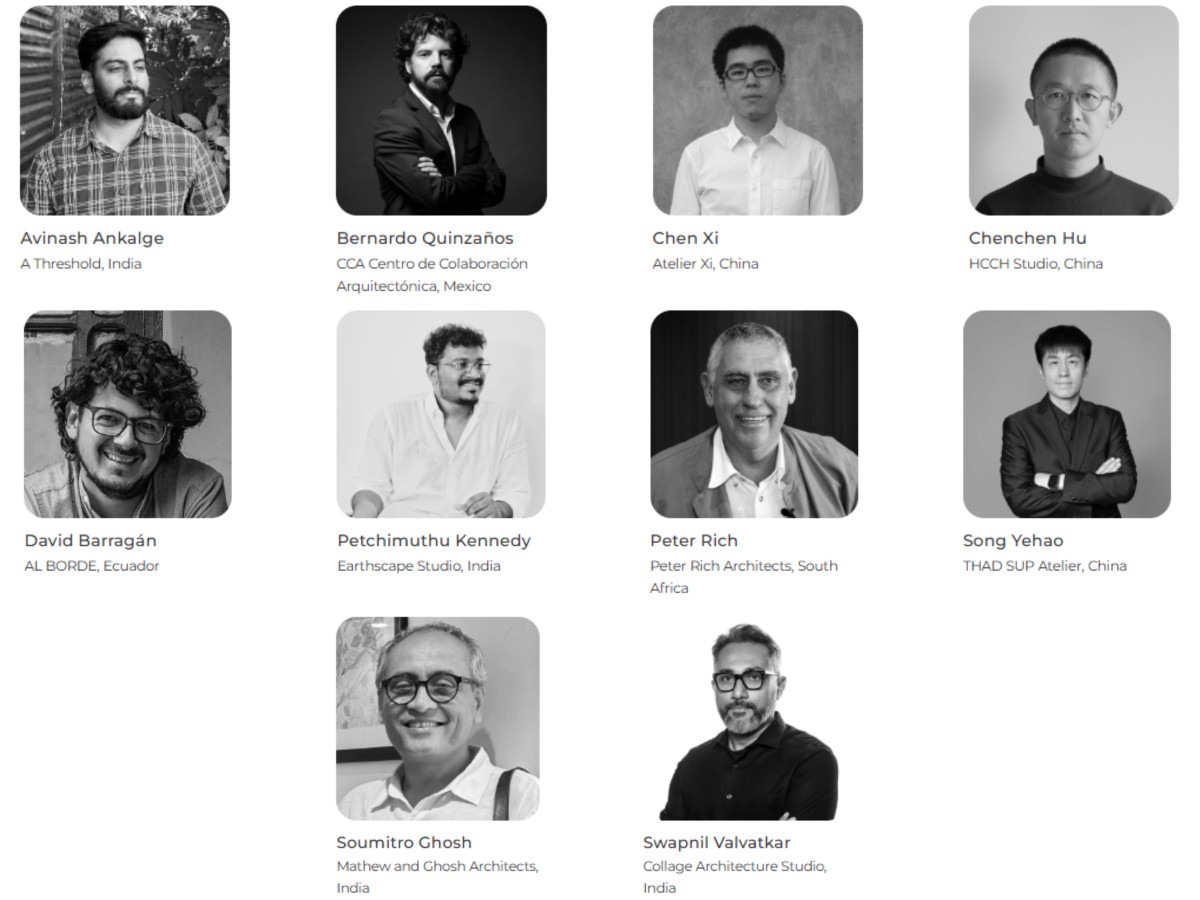
The esteemed jury for judging this competition consisted of Avinash
Ankalge (A Threshold), Petchimuthu Kennedy (Earthscape Studio), Swapnil
Valvatkar (Collage Architecture Studio), Chen Xi (Atelier Xi), Peter
Rich (Peter Rich Architects), Chenchen Hu (HCCH Studio), Soumitro
Ghosh (Mathew and Ghosh Architects), Song Yehao (THAD SUP Atelier), Bernardo
Quinzaños (CCA Centro de Colaboración Arquitectónica), David Barragán
(Al Borde).
Jury Panel of Tiny Library 2025 Architecture Competition
Jury Panel of Tiny Library 2025 Architecture Competition
The top three winners and Best Student were awarded total prize
money of $4,500 while ten entries received Honorable Mentions. Here are the
winning entries. The full result for the competition the Tiny Library 2025
Architecture Competition can be found at –
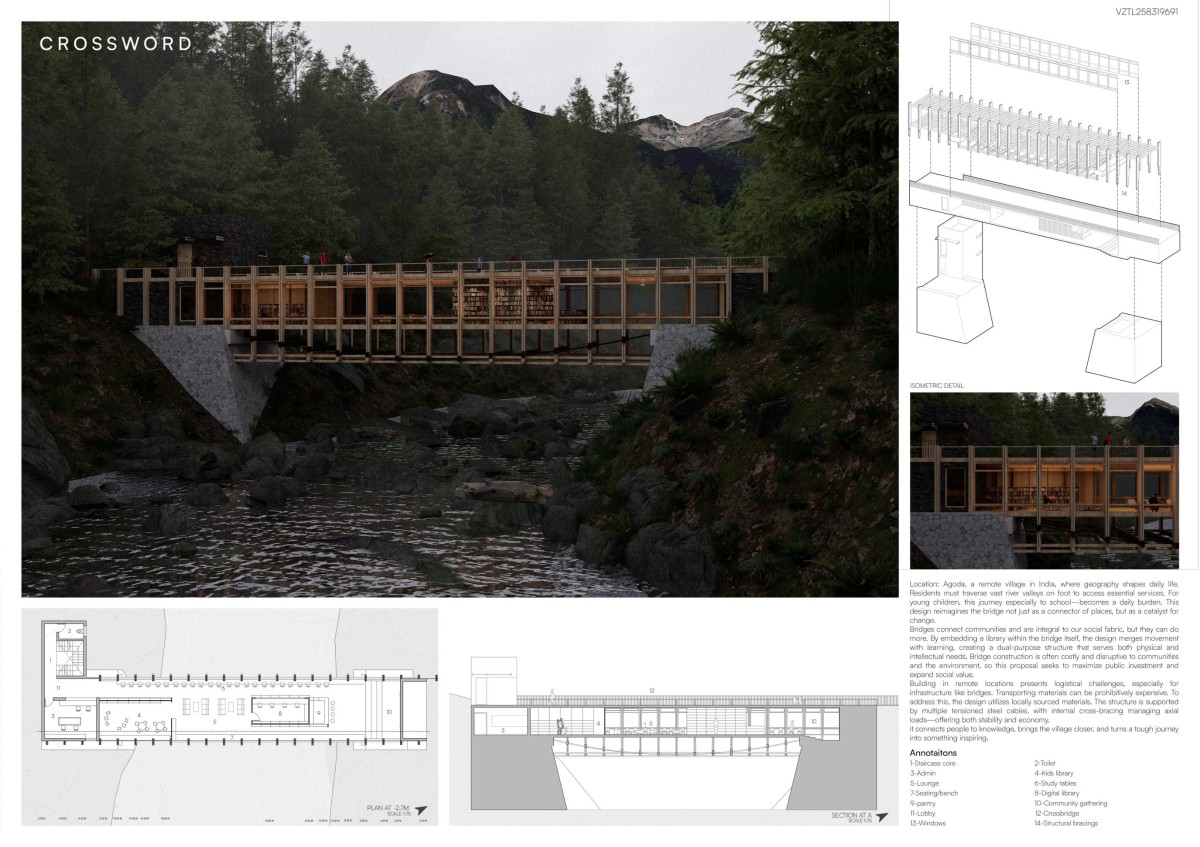
FIRST PLACE - Crossword by K Shashavindu (India)
Agoda, a remote village in India, where geography shapes
daily life. Residents must traverse vast river valleys on foot to access
essential services. For young children, this journey especially to school -
becomes a daily burden. This design reimagines the bridge not just as a
connector of places, but as a catalyst for change.
Bridges connect communities and are integral to our social
fabric, but they can do more. By embedding a library within the bridge itself,
the design merges movement with learning. Creating a dual-purpose structure
that serves both physical and intellectual needs. Bridge construction is often
costly and disruptive to communities and the environment, so this proposal
seeks to maximize public investment and expand social value.
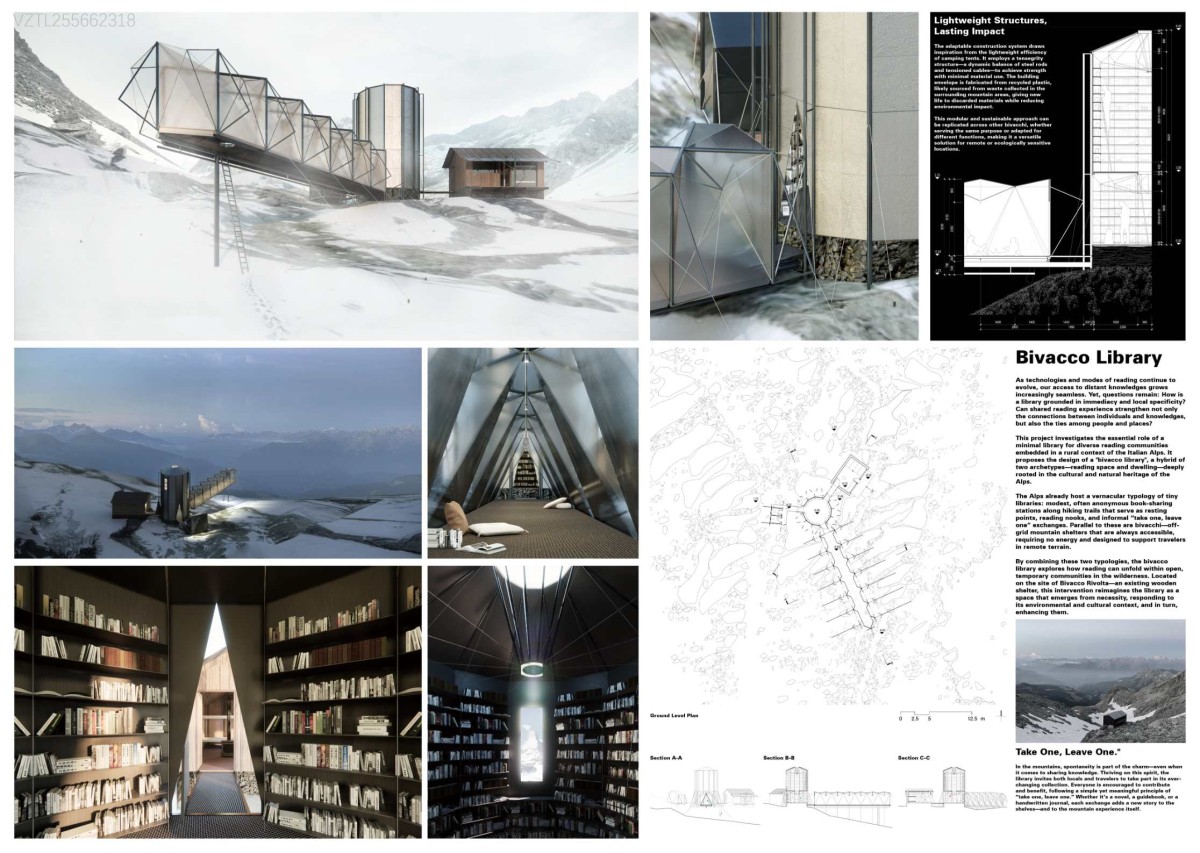
SECOND PLACE - Bivacco Library by Jinyue Hu & Xiang Li (United Kingdom)
As technologies and modes of reading continue to evolve, our
access to distant knowledges grows increasingly seamless. Yet, questions
remain: How is a library grounded in immediacy and local specificity? Can
shared reading experience strengthen not only the connections between
individuals and knowledges, but also the ties among people and places?
This project investigates the essential role of a minimal
library for diverse reading communities embedded in a rural context of the
Italian Alps. It proposes the design of a “bivacco library”, a hybrid of two
archetypes-reading space and dwelling-deeply rooted in the cultural and natural
heritage of the Alps.
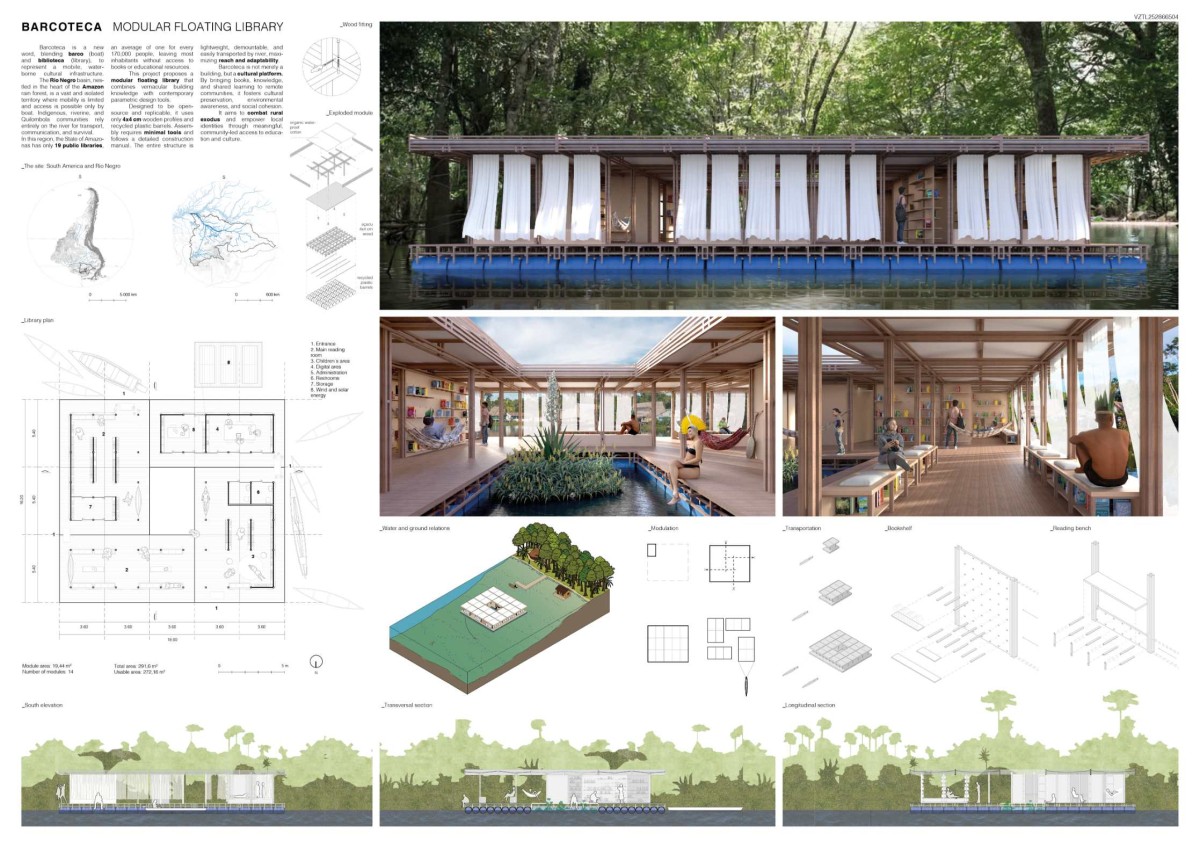
THIRD PLACE - Barcoteca by Lucas Karmann & Jean Pfrunner (Brazil)
Barcoteca is a new word, blending barco (boat) and
biblioteca (library), to represent a mobile, water-borne cultural
infrastructure.
The Rio Negro basin, nestled in the heart of the Amazon rain
forest, is a vast and isolated territory where mobility is limited and access
is possible only by boat. Indigenous, riverine, and Quilombola communities rely
entirely on the river for transport, communication, and survival.
In this region, the State of Amazonas has only 19 public
libraries, an average of one for every 170,000 people, leaving most inhabitants
without access to books or educational resources.
This project proposes a modular floating library that
combines vernacular building knowledge with contemporary parametric design
tools.
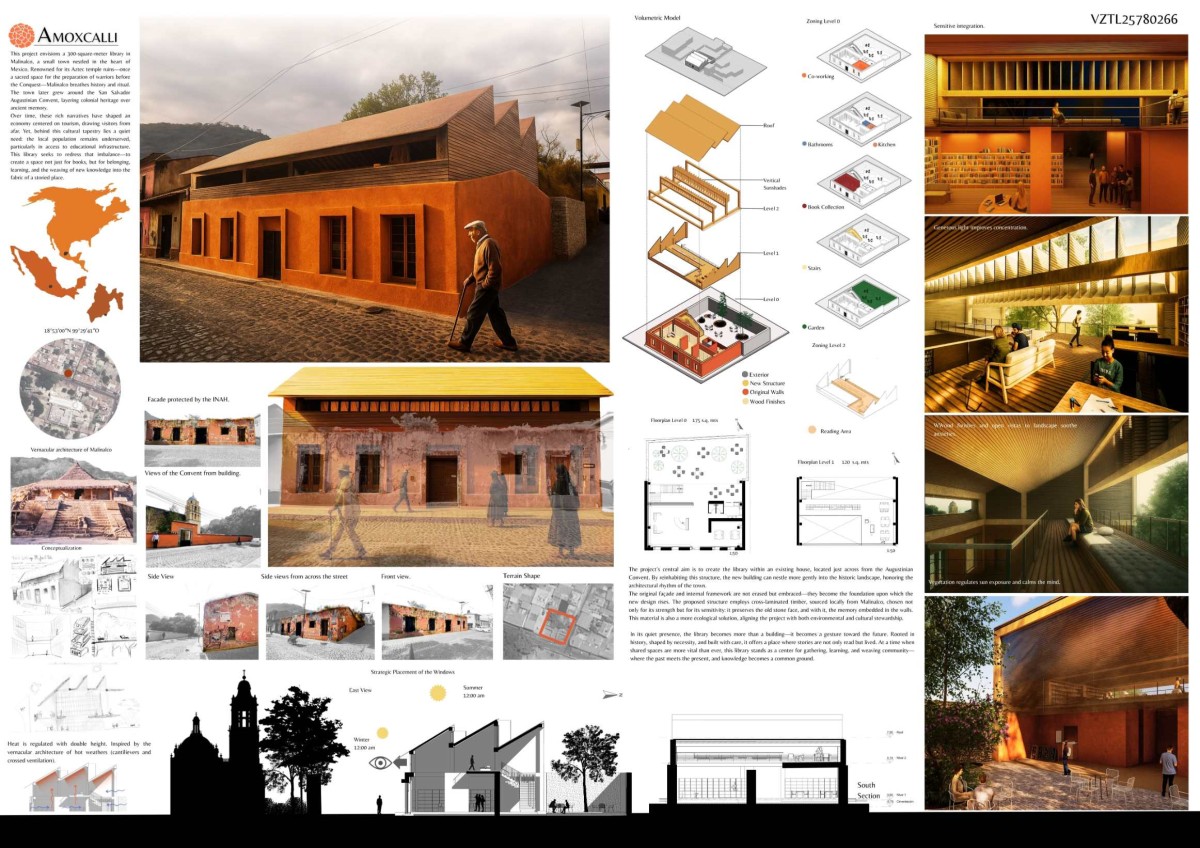
STUDENT AWARD – Amoxcalli Carlos by Francisco Nava Martinez (Mexico)
This project envisions a 300-square-meter library in
Malinalco, a small town nestled in the heart of Mexico. Renowned for its Aztec
temple ruins-once a sacred space for the preparationof warriors before the
Conquest—Malinalco breathes history and ritual. The town later grew around the
San Salvador Augustinian Convent, layering colonial heritage over ancient
memory.
Over time, these rich narratives have shaped an economy
centred on tourism, drawing visitors from afar. Yet, behind this cultural
tapestry lies a quiet need: the local population remains underserved,
particularly in access to educational infrastructure. This library seeks to
redress that imbalance-to create a space not just for book, but belonging,
learning, and the weaving of new knowledge into the fabric of a storied place.
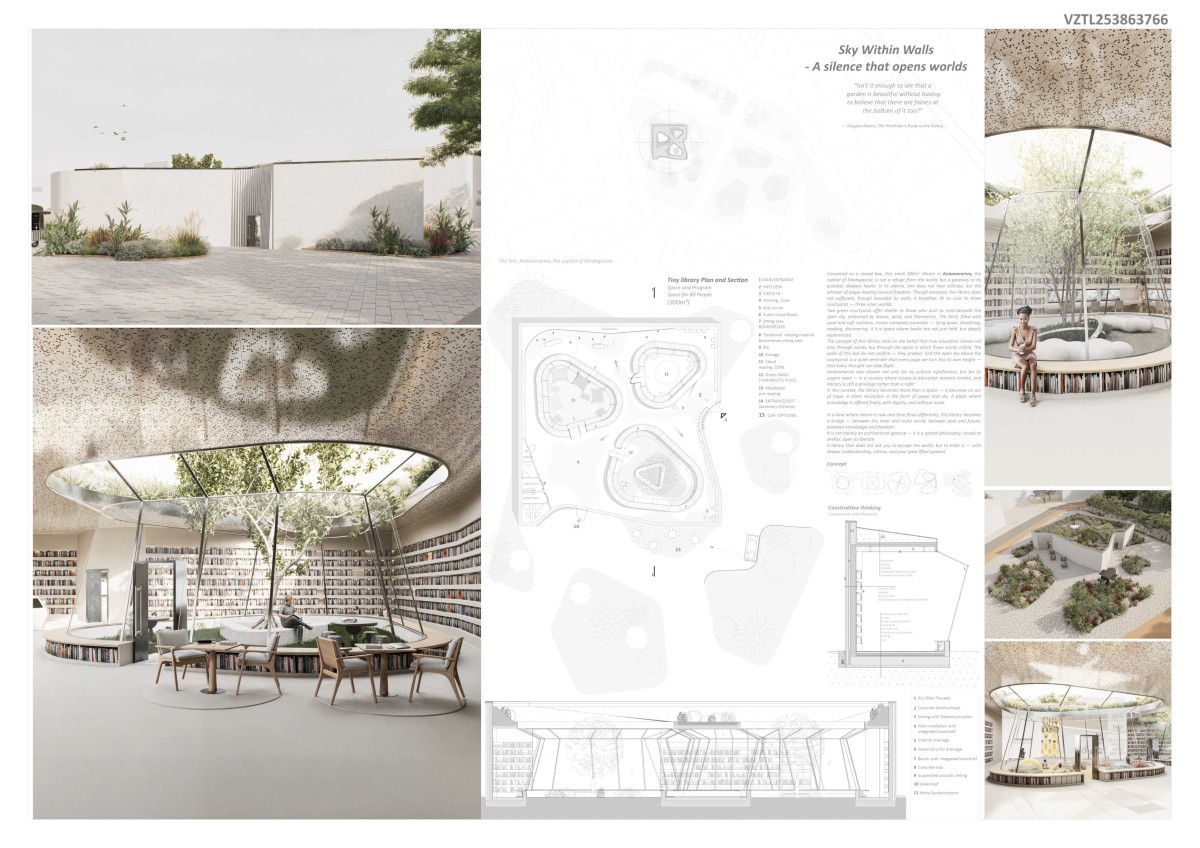
Honourable Mention 1: Sky Within Walls by Gregor Hufnagl & Jovana Milojevic (Austria)
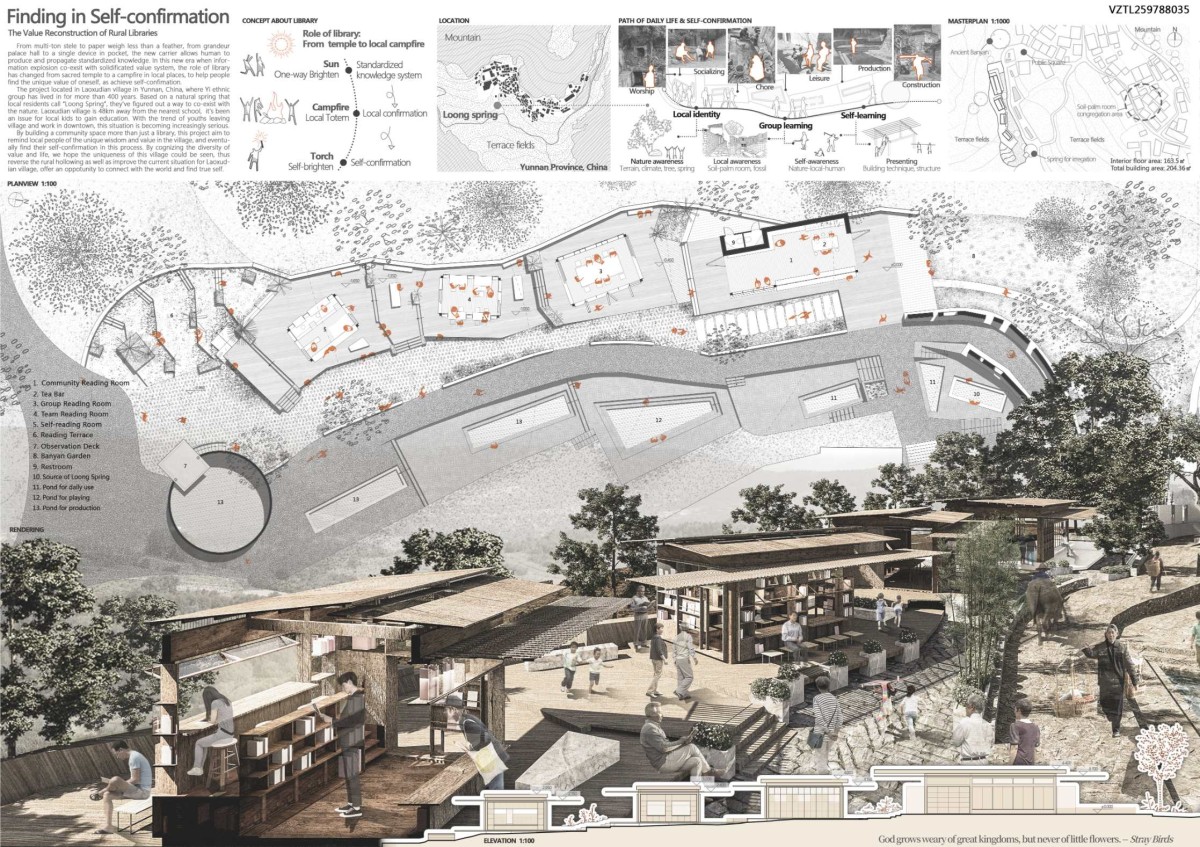
Honourable Mention 2: Finding in Self - Confirmation by Feng Yibo, Liu Qian & Zhang Yitian (China)
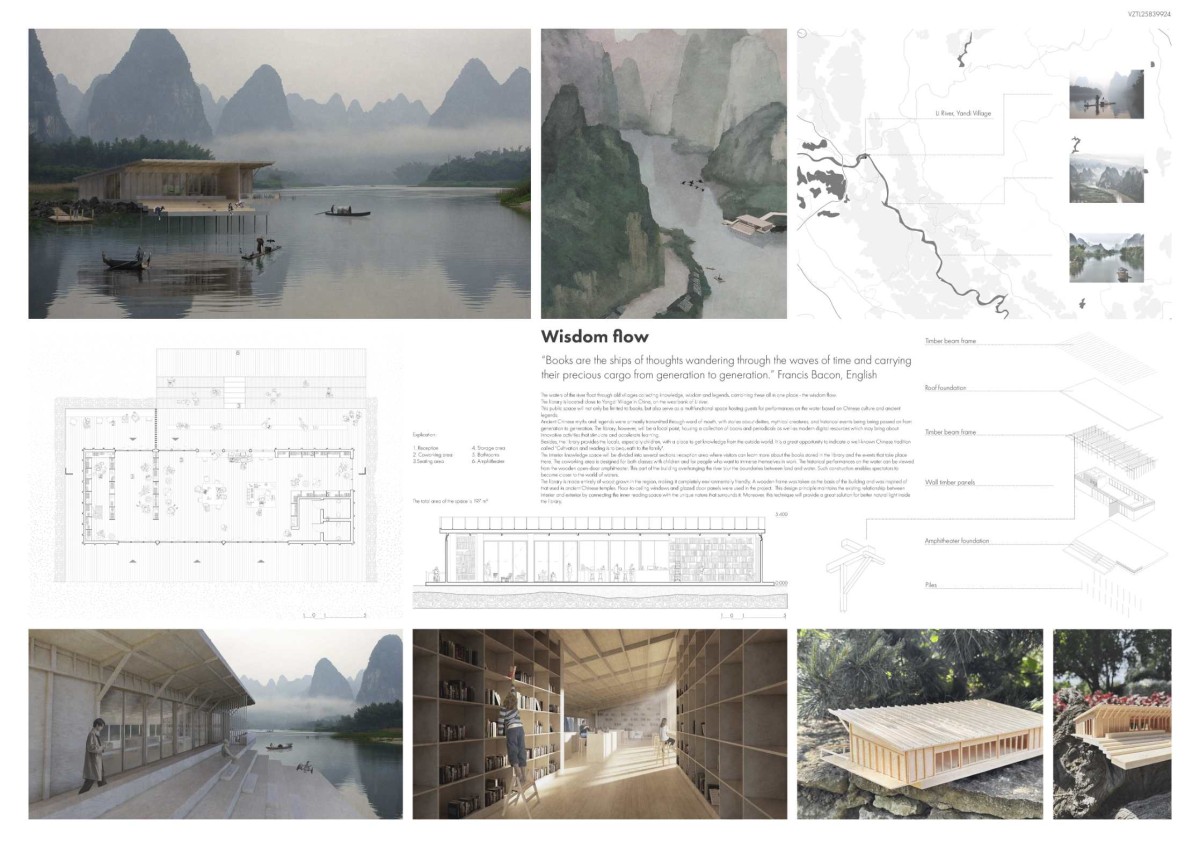
Honourable Mention 3: Wisdom flow by Milana Yanbukhtina & Elena Lvova (Russia)
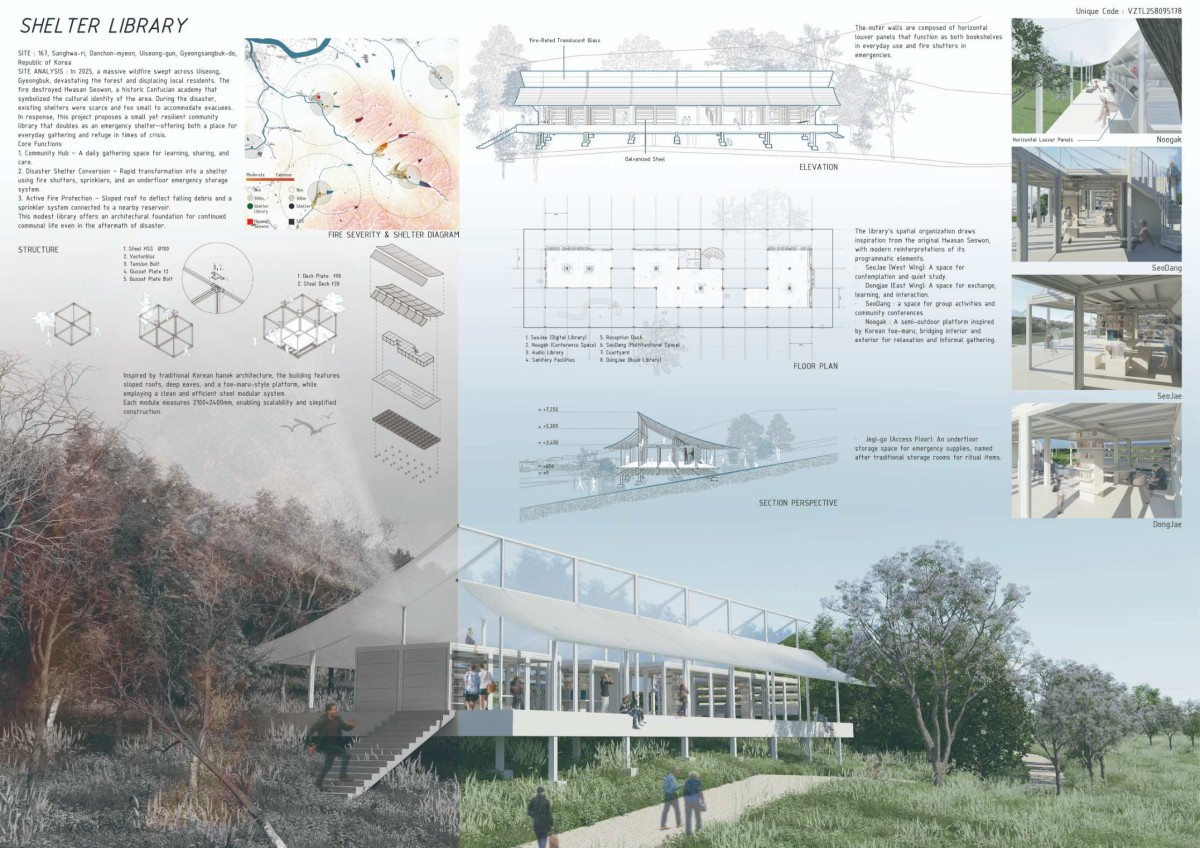
Honourable Mention 4: Shelter Library by Park Garam & Choi Yeonsoo (Korea South)
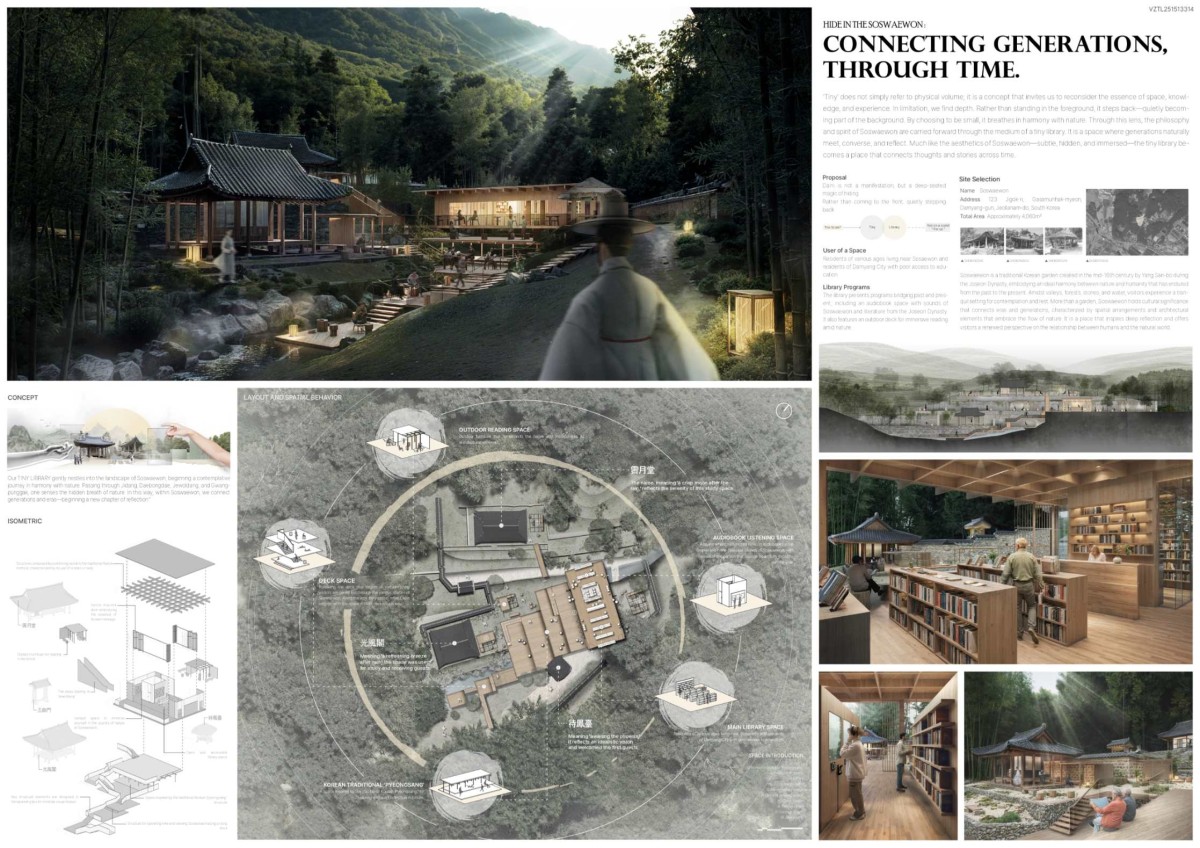
Honourable Mention 5: Connecting Generations, Through Time by Song Jieun & Yun Seobin (Korea South)
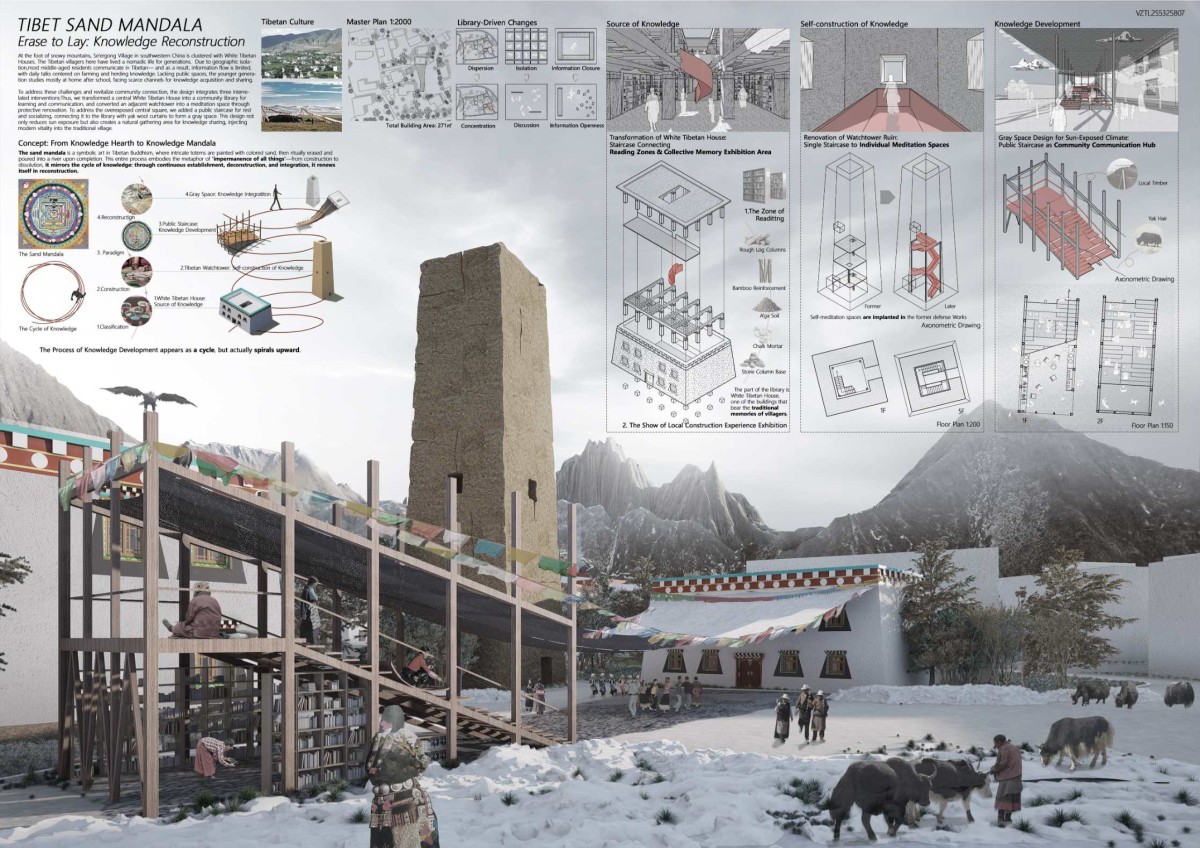
Honourable Mention 6: Tibet Sand Mandala by Wang Lan & Li Yujie (China)
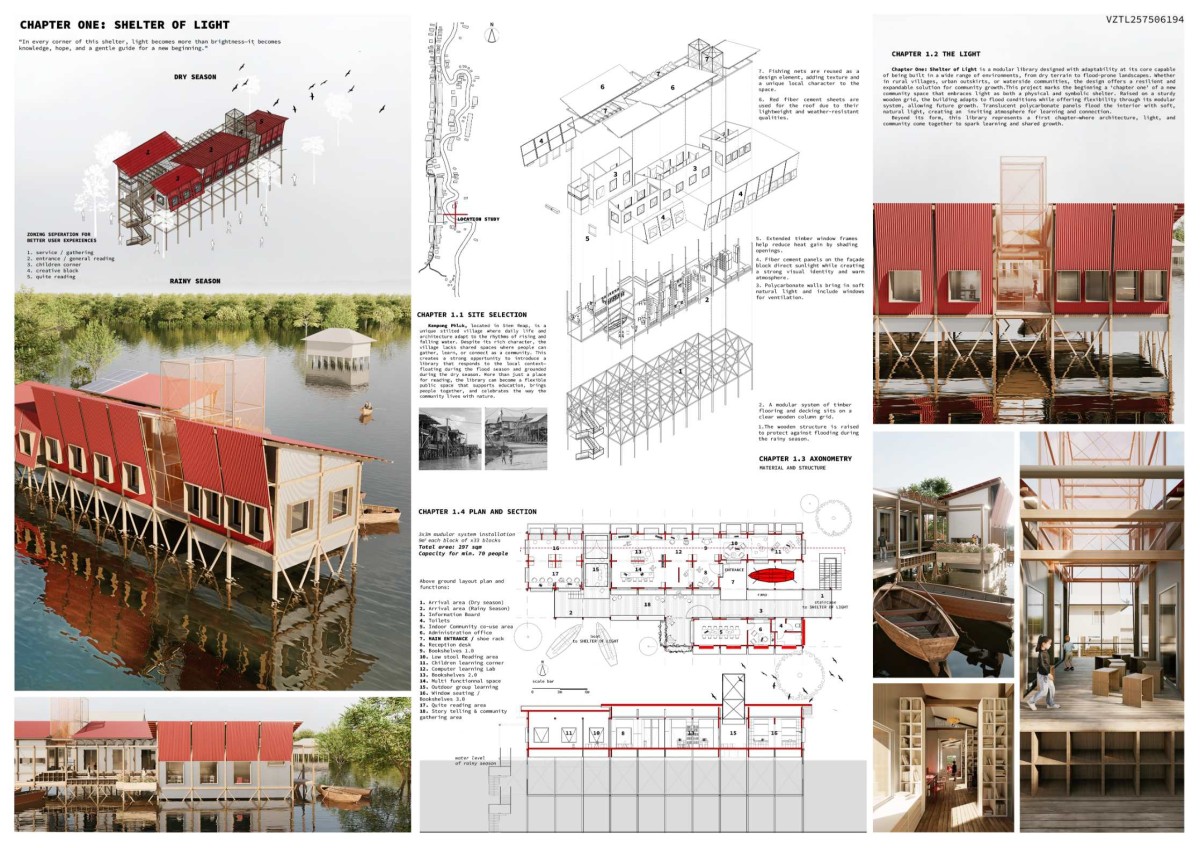
Honourable Mention 7: Shelter of Light by Vengseng Chiv & Dany Rith (Cambodia)
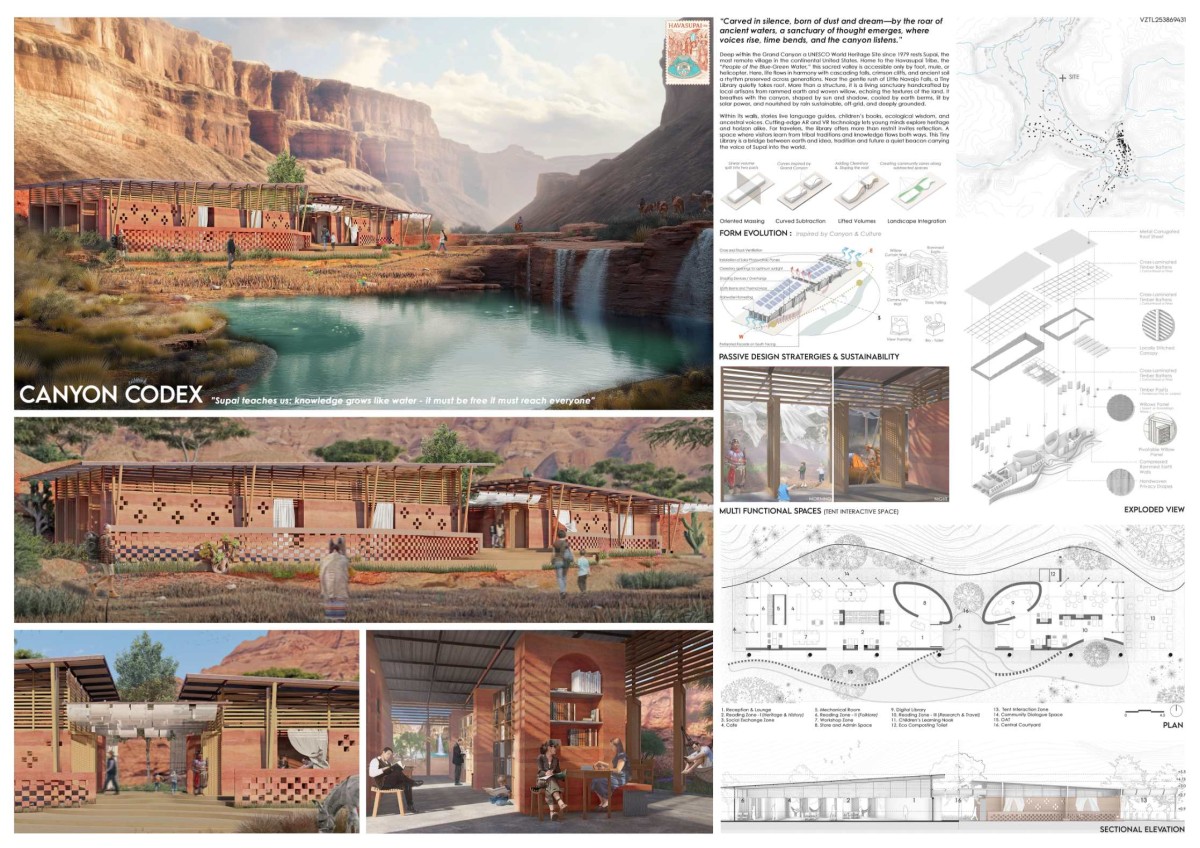
Honourable Mention 8: Canyon Codex by Darshan Dilipkumar, Shubham Negi & Priyanka Kalita (India)
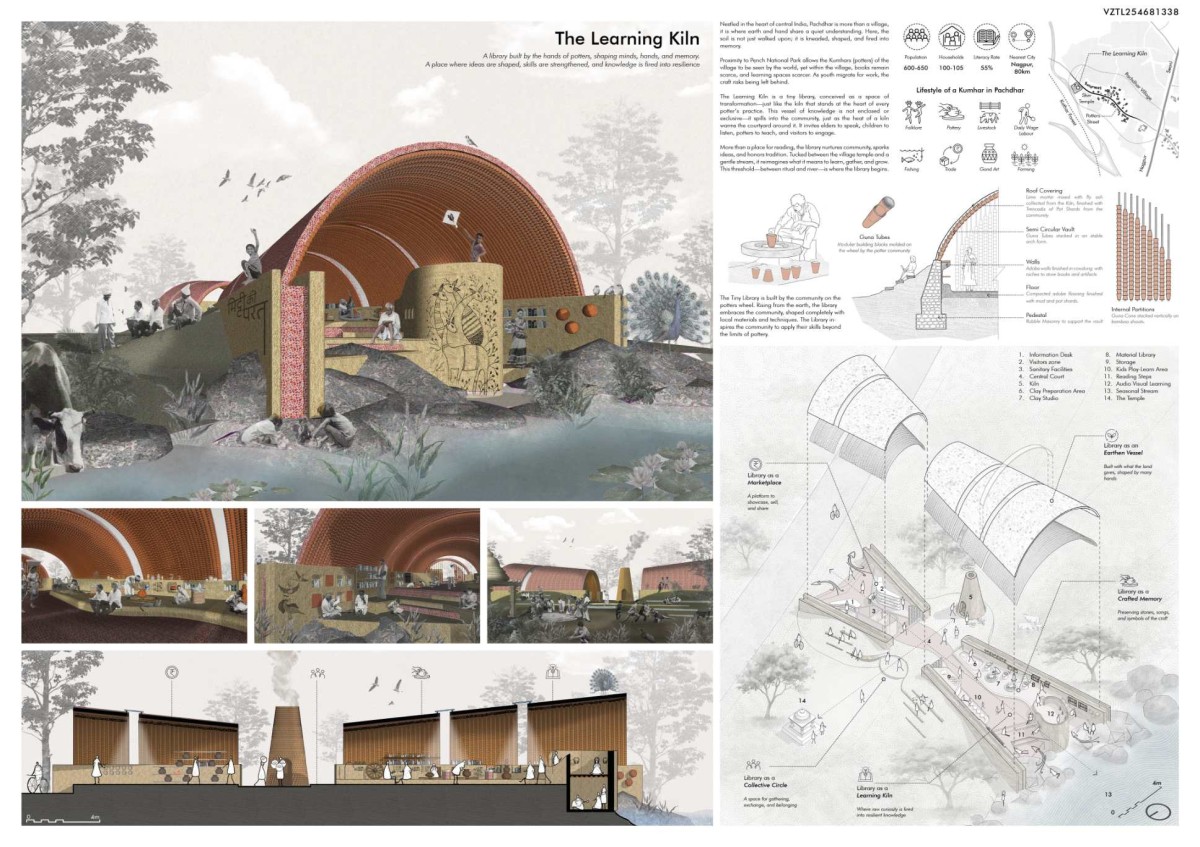
Honourable Mention 9: The Learning Kiln by Aditya Sharma, Siddhant Bhatasana & Abhidev Thankappan (India)
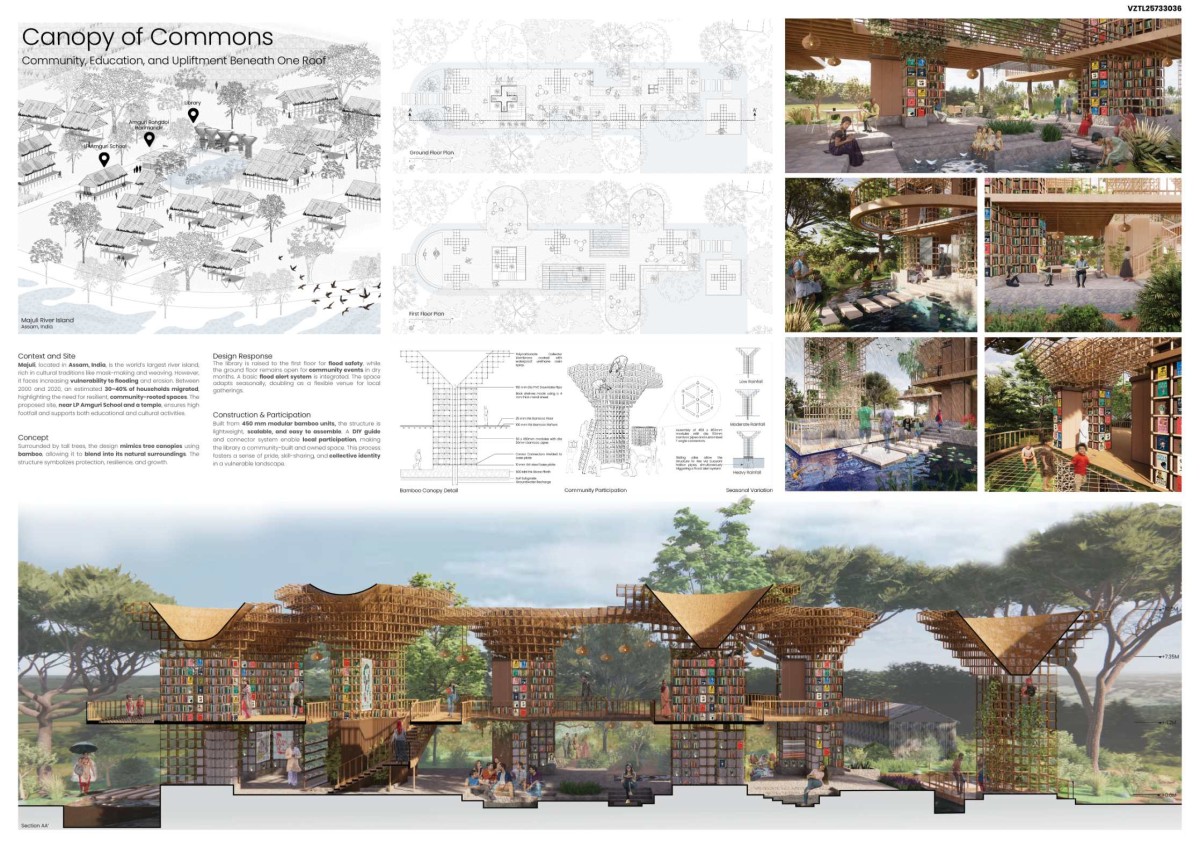
Honourable Mention 10: Canopy of Commons by Ananya P Nayak & Tasneem Vali (India)