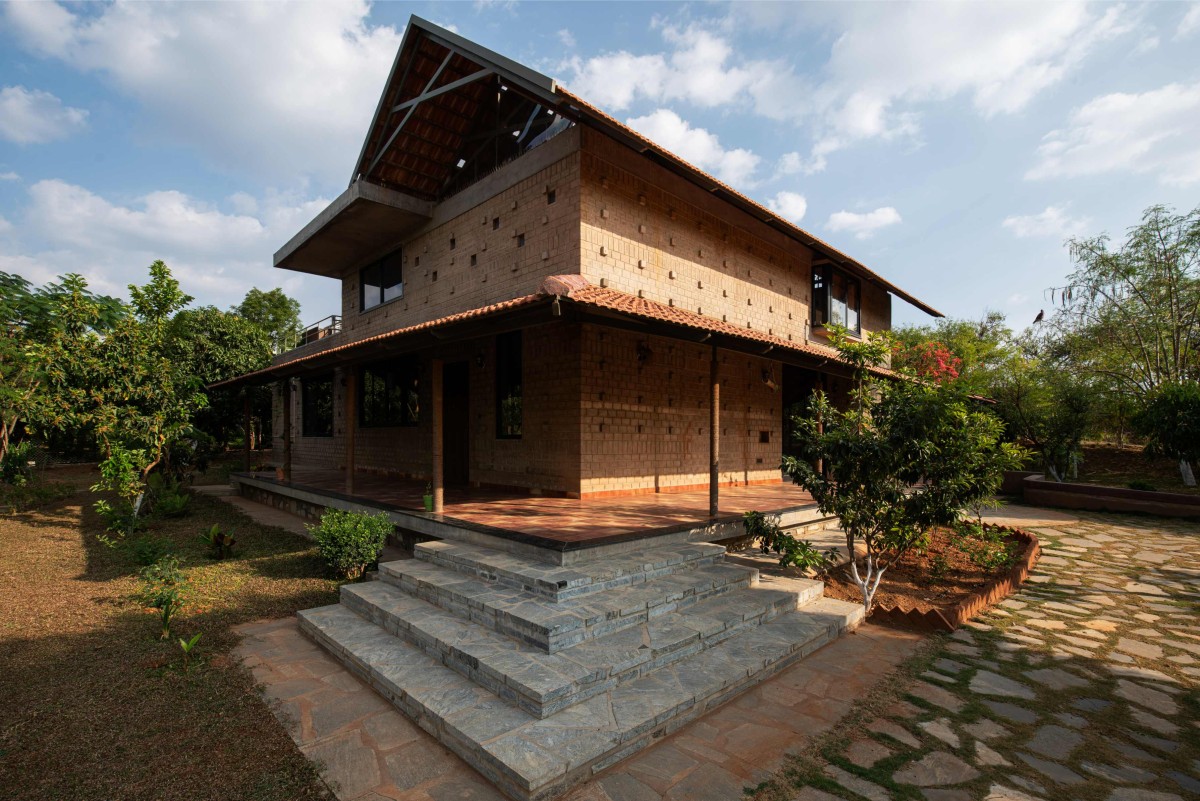
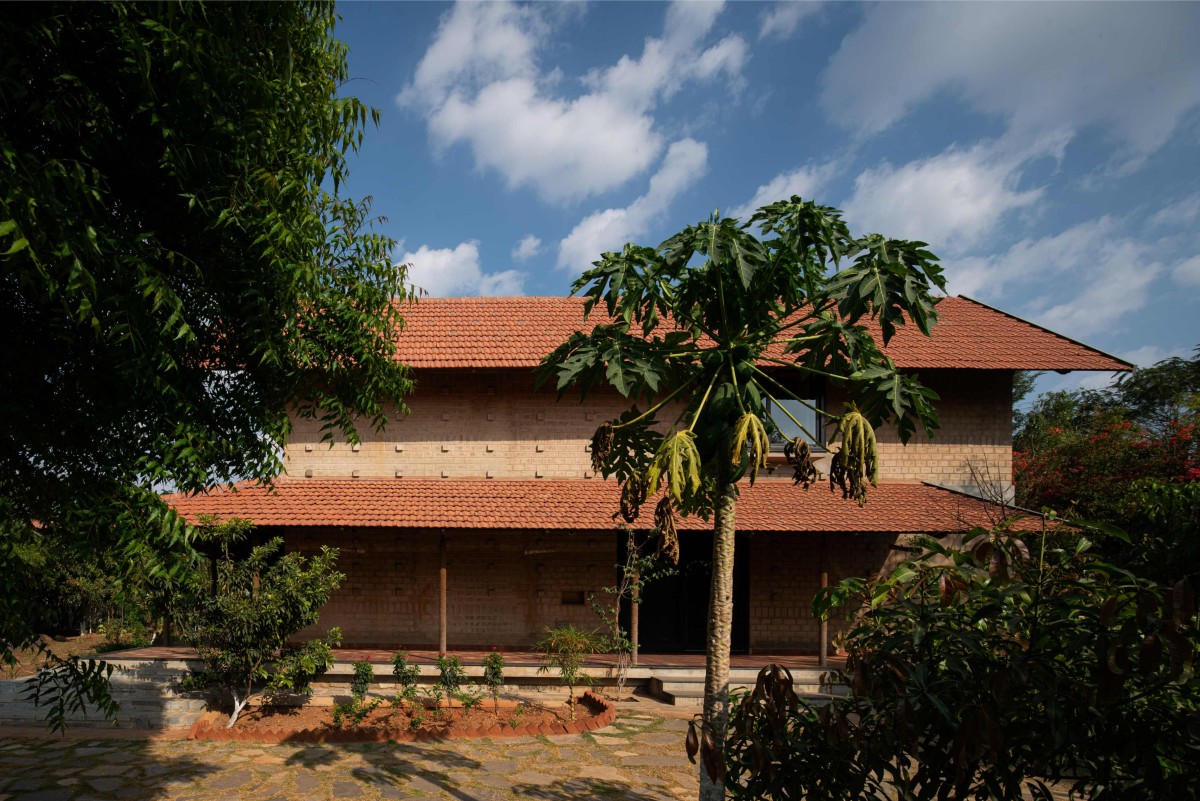
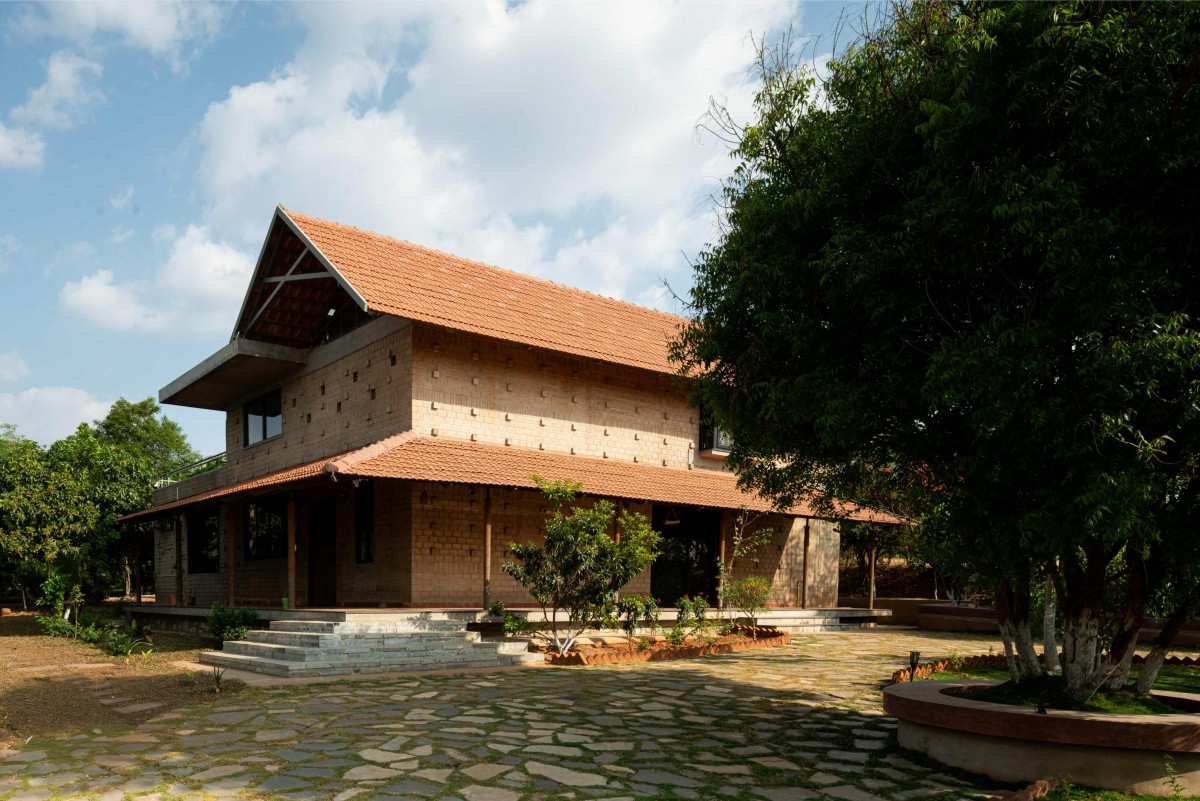
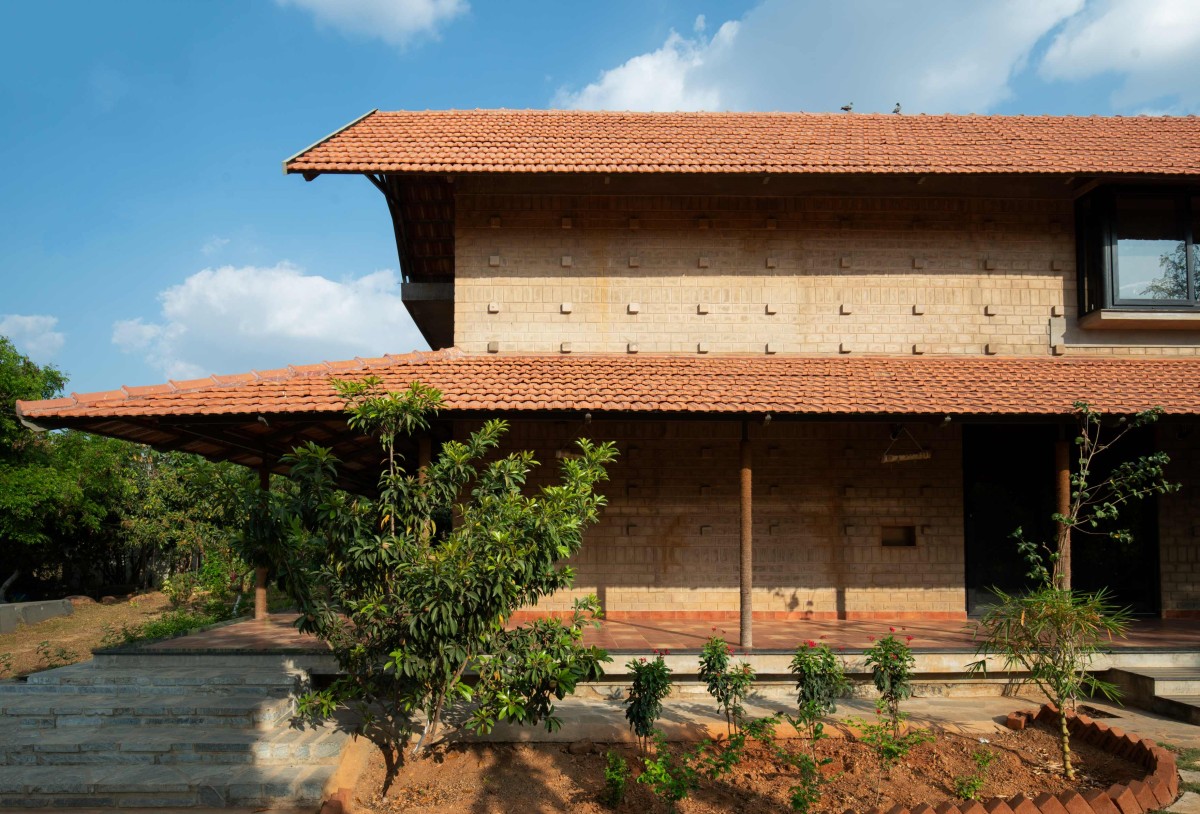
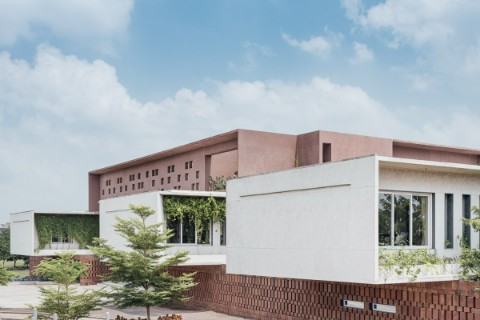
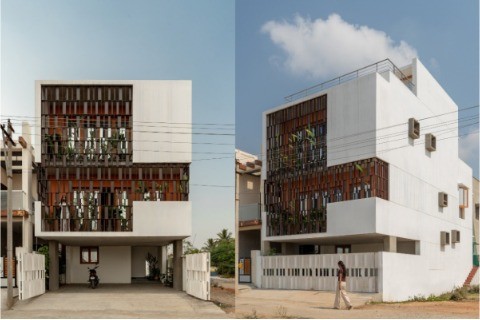
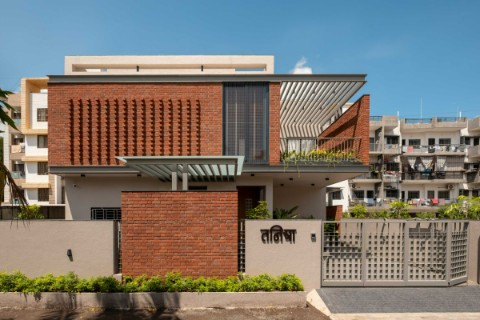
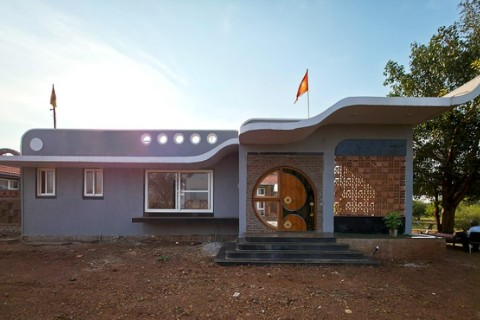
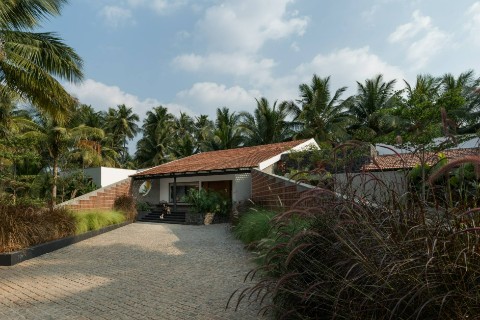
Exterior view of Kripanilay Farmhouse by HabitArt Architecture Studio
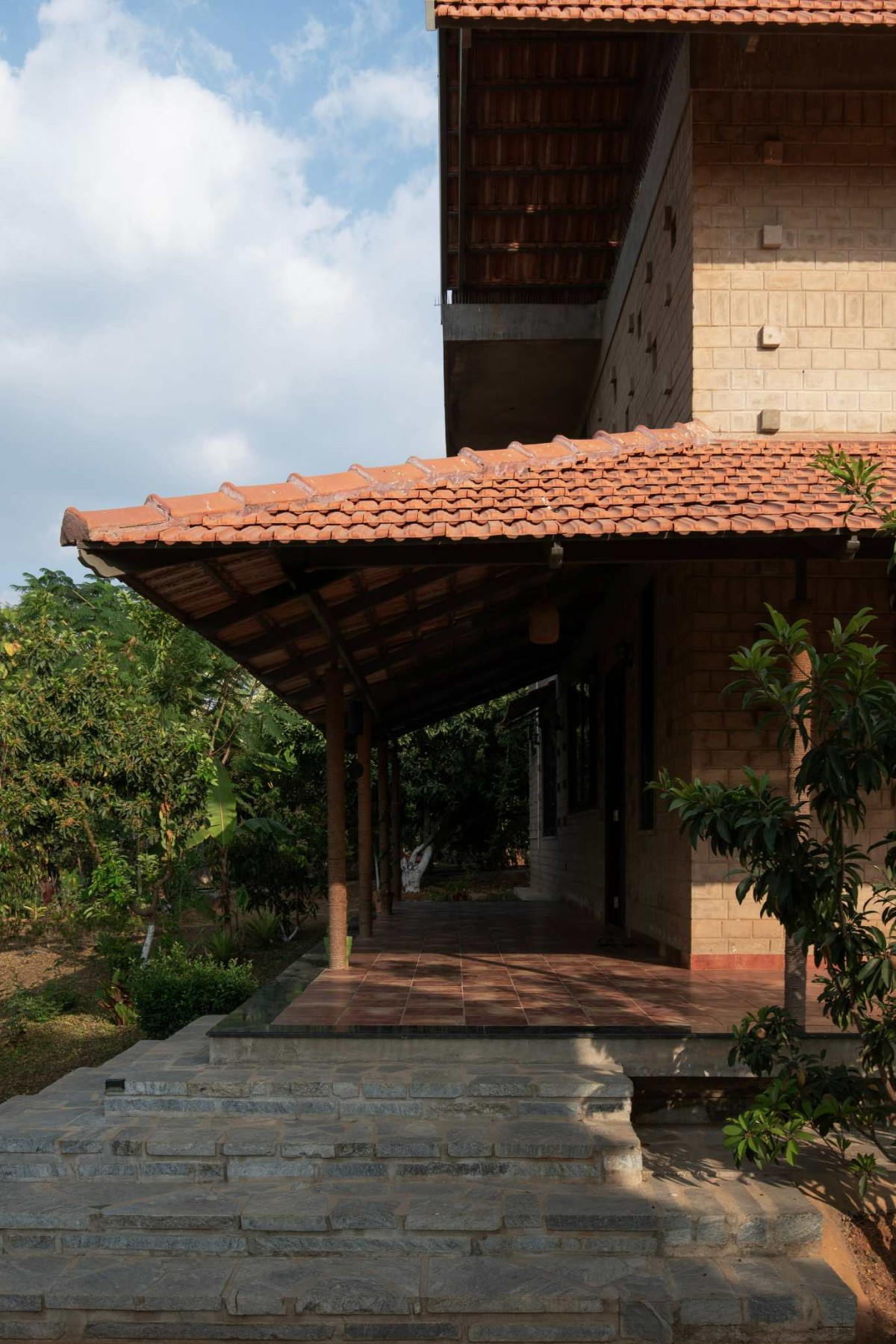
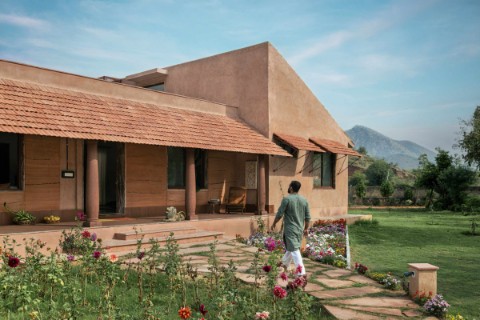
Exterior view of Kripanilay Farmhouse by HabitArt Architecture Studio
Exterior view of Kripanilay Farmhouse by HabitArt Architecture Studio
Exterior view of Kripanilay Farmhouse by HabitArt Architecture Studio
Verandah of Kripanilay Farmhouse by HabitArt Architecture Studio
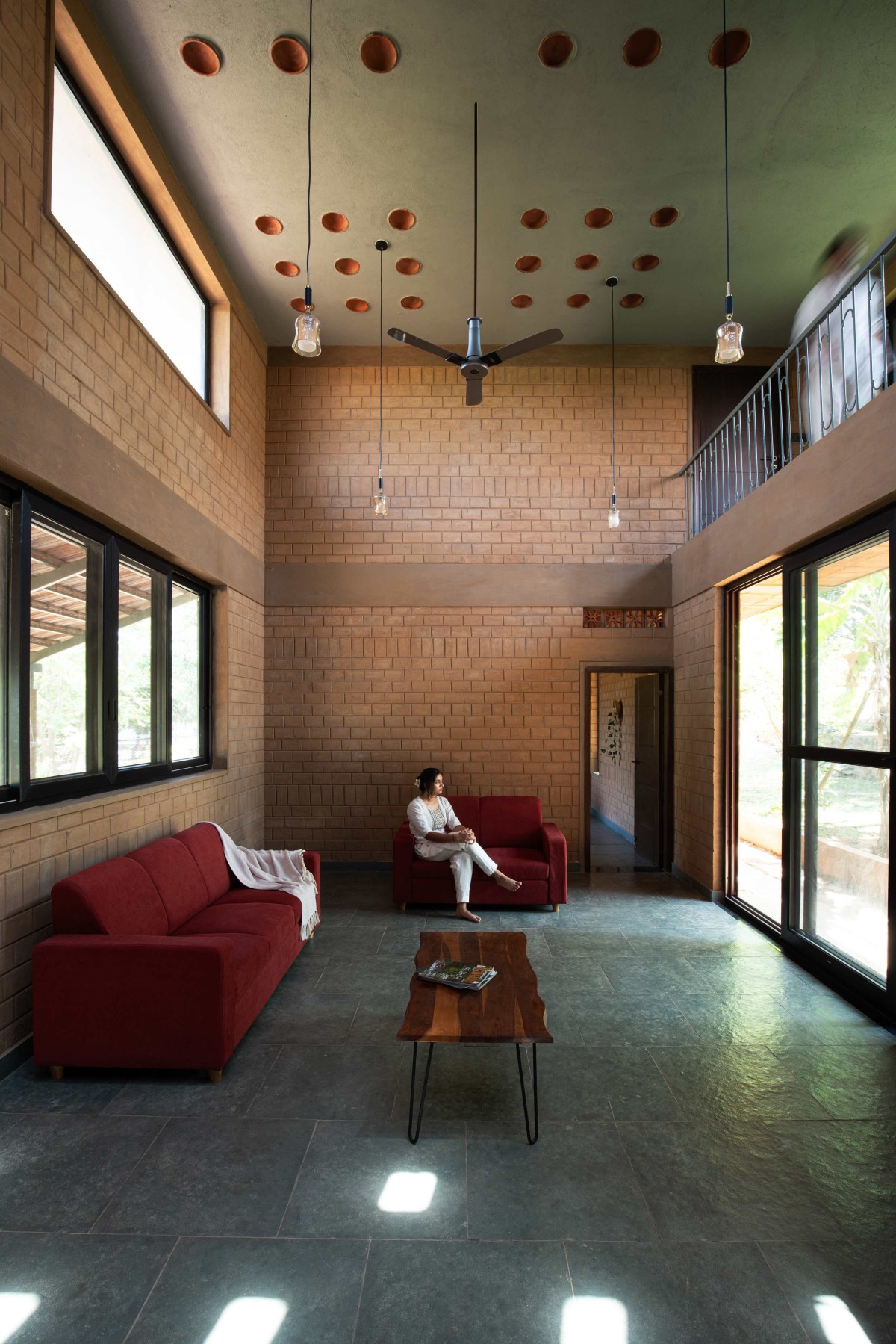
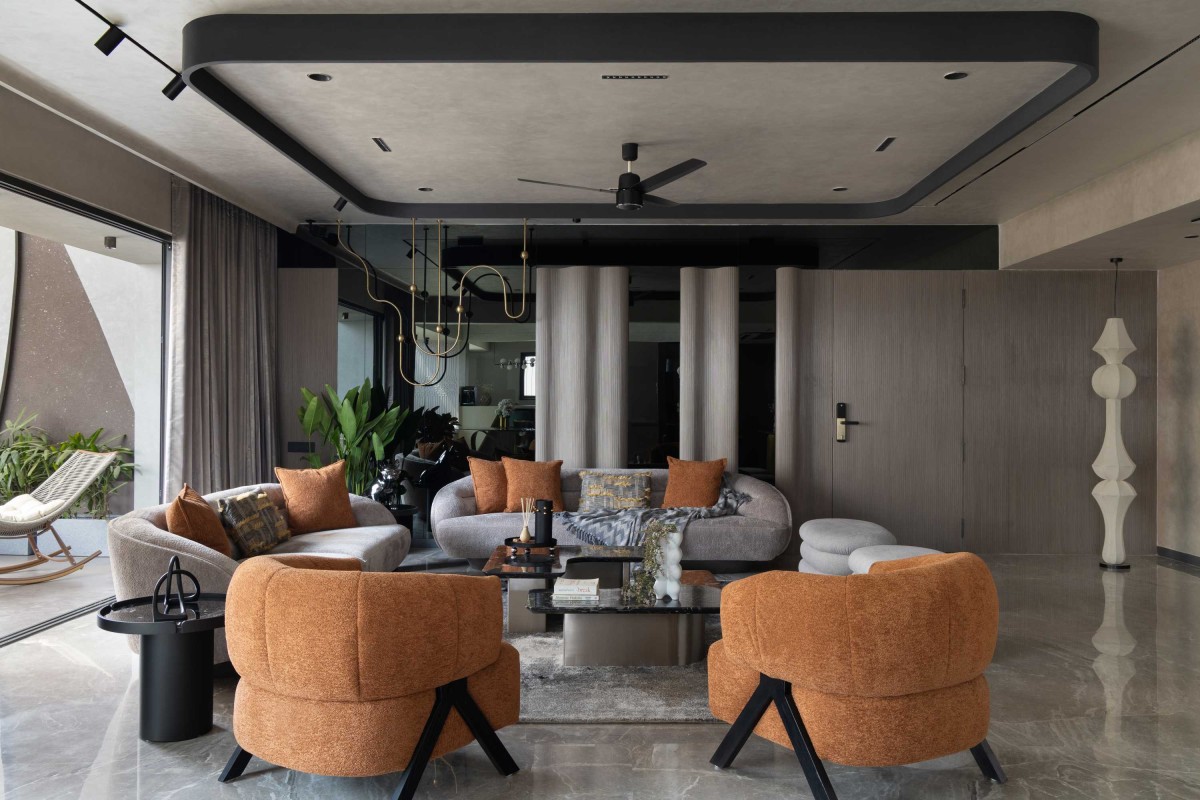
Living room of Kripanilay Farmhouse by HabitArt Architecture Studio
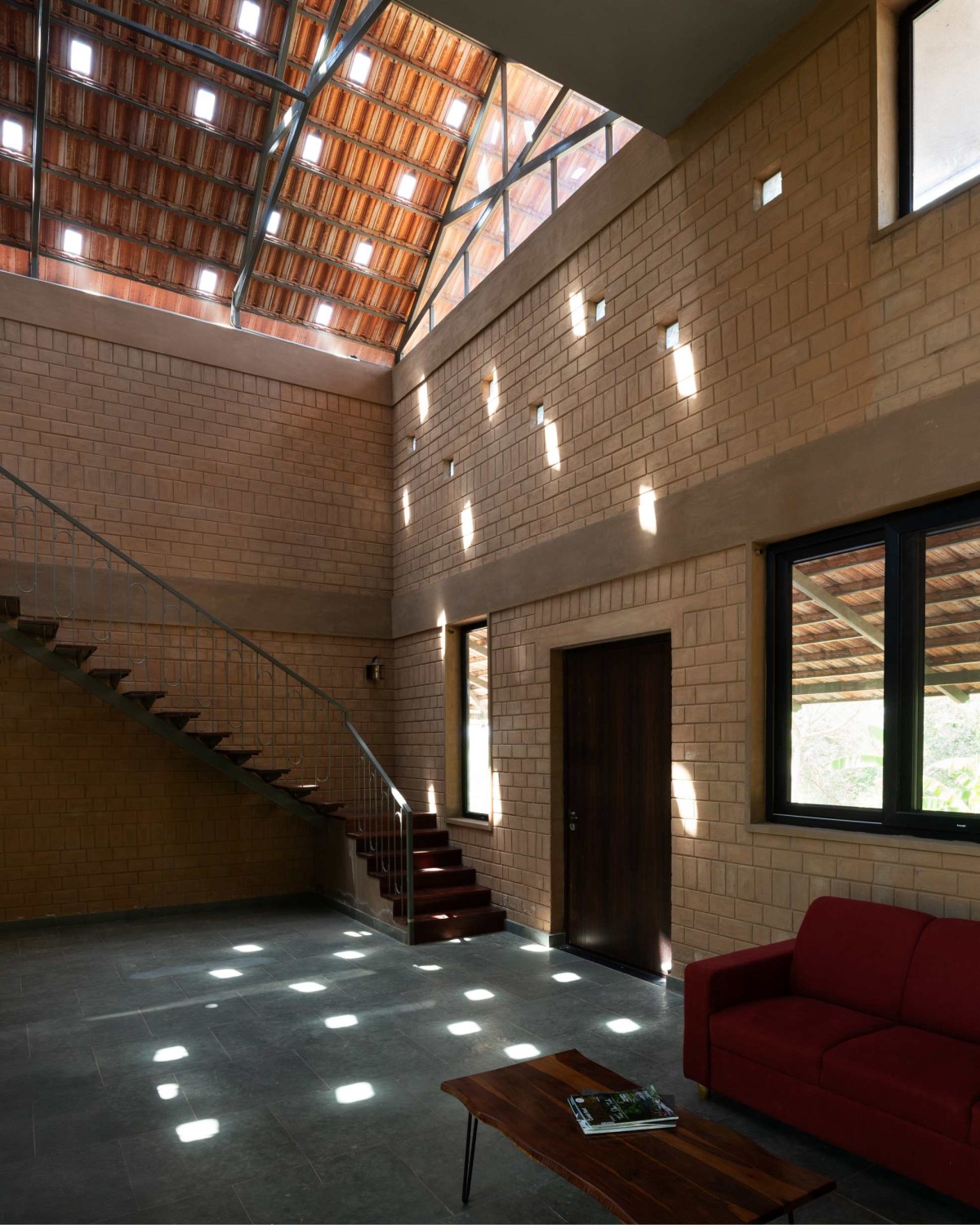
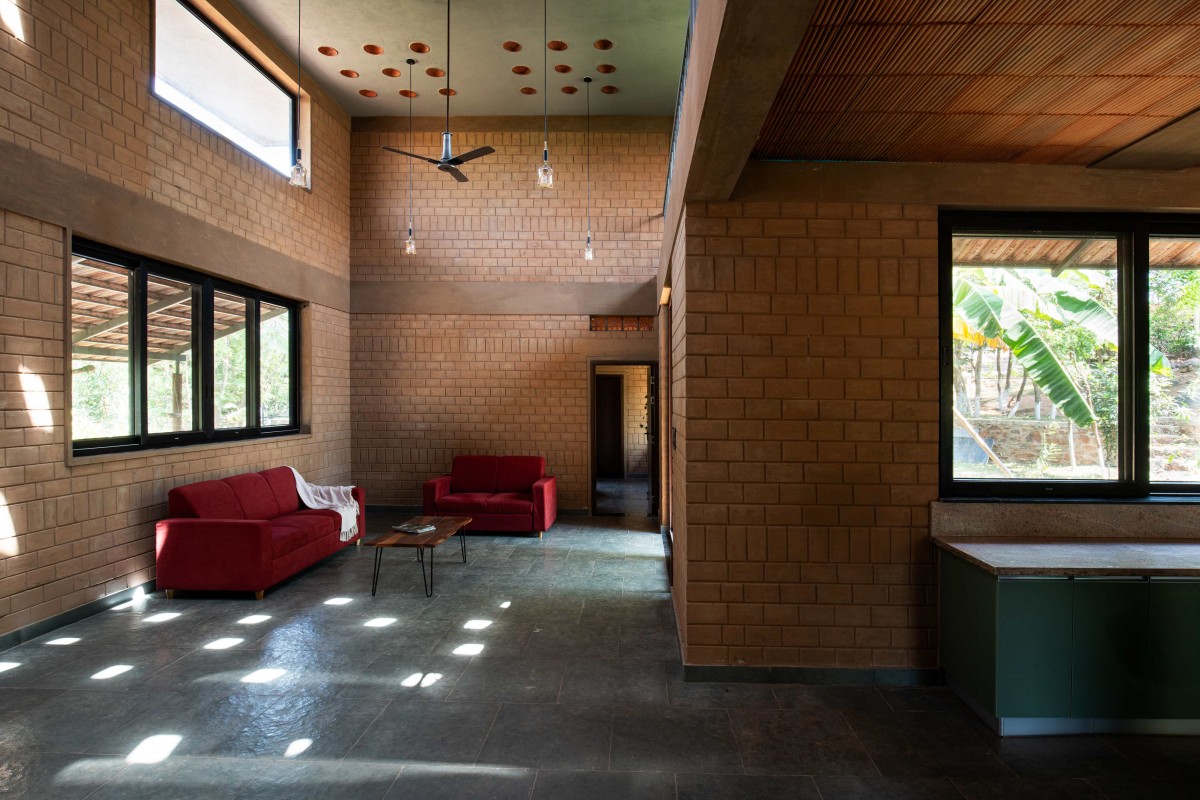
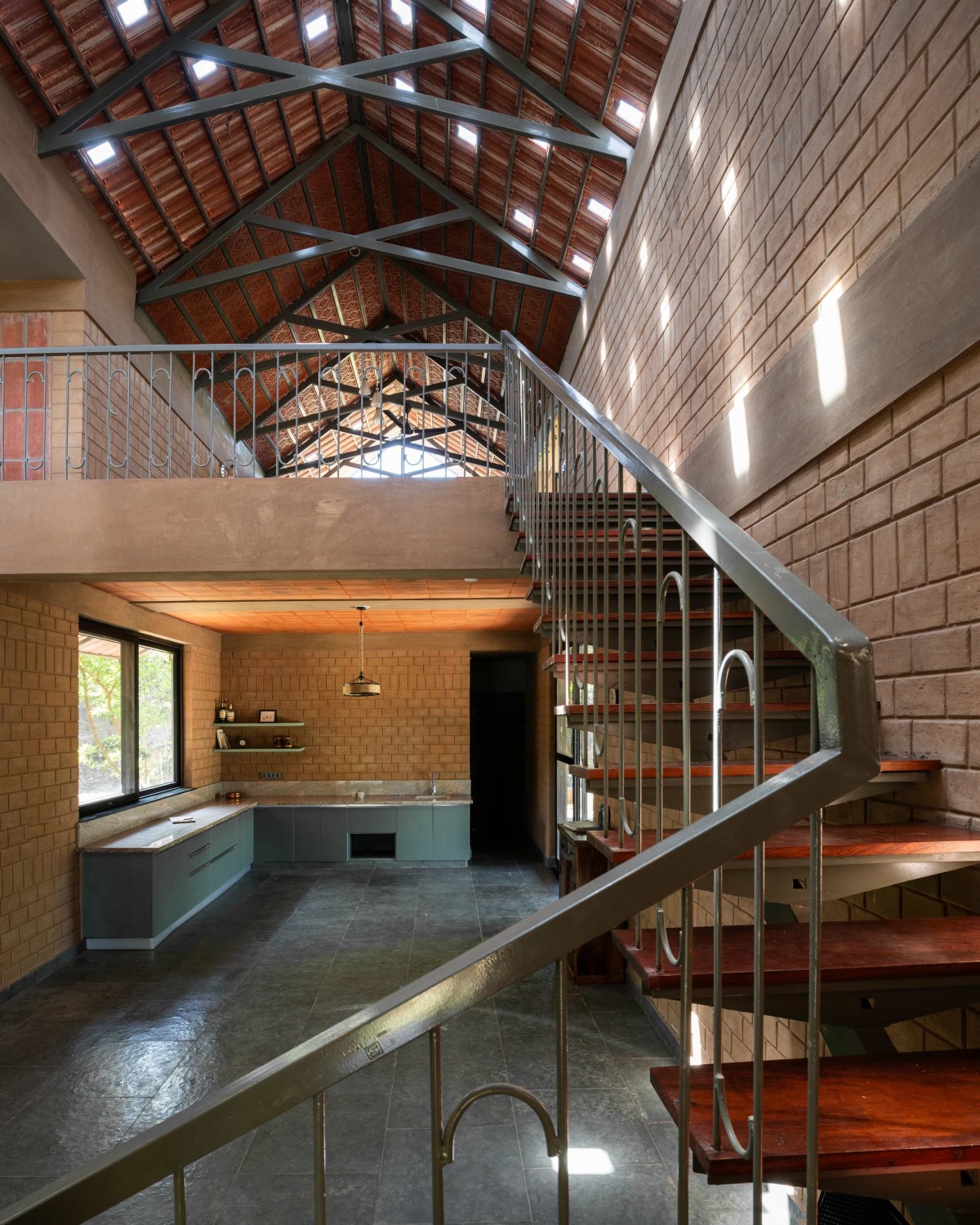
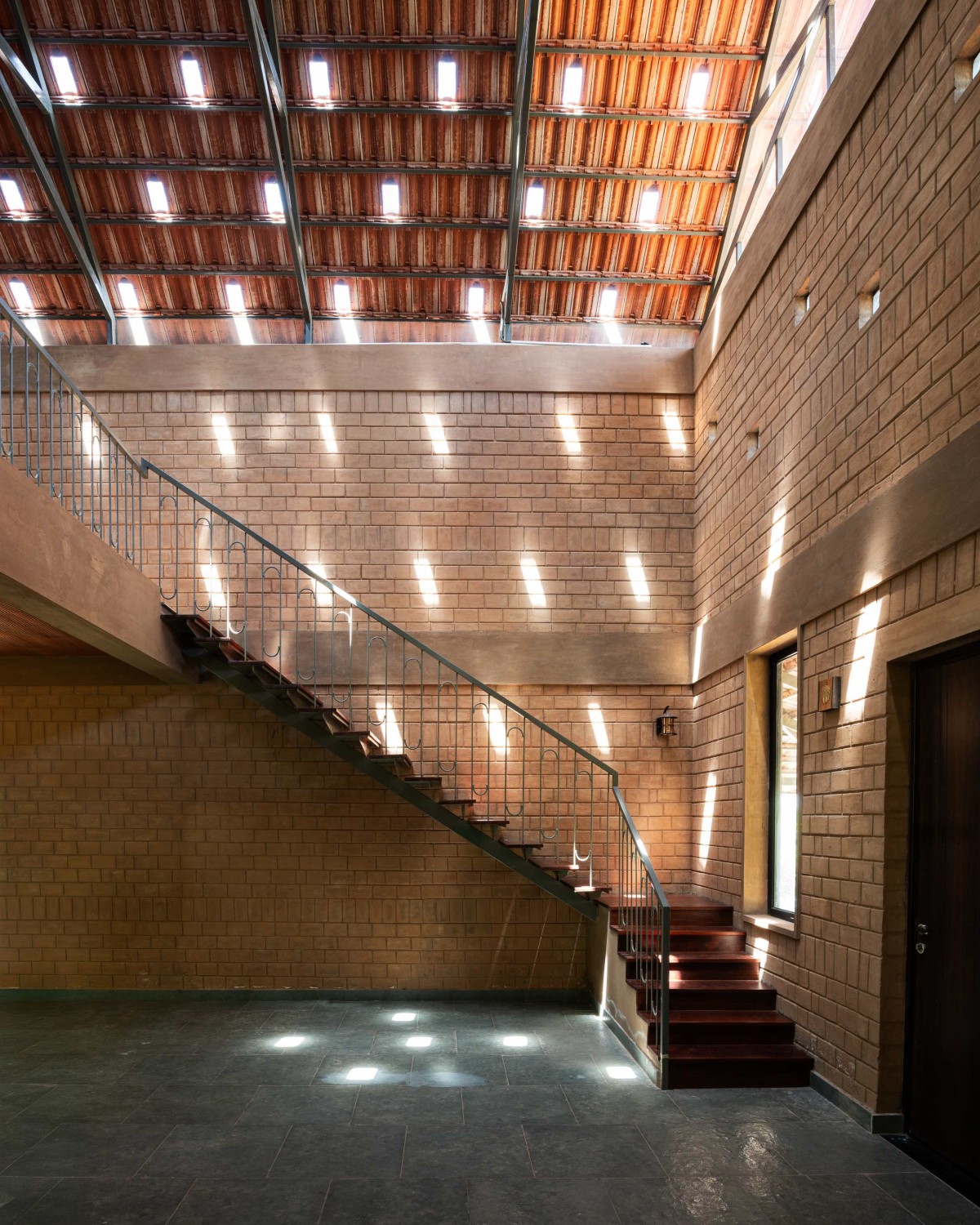
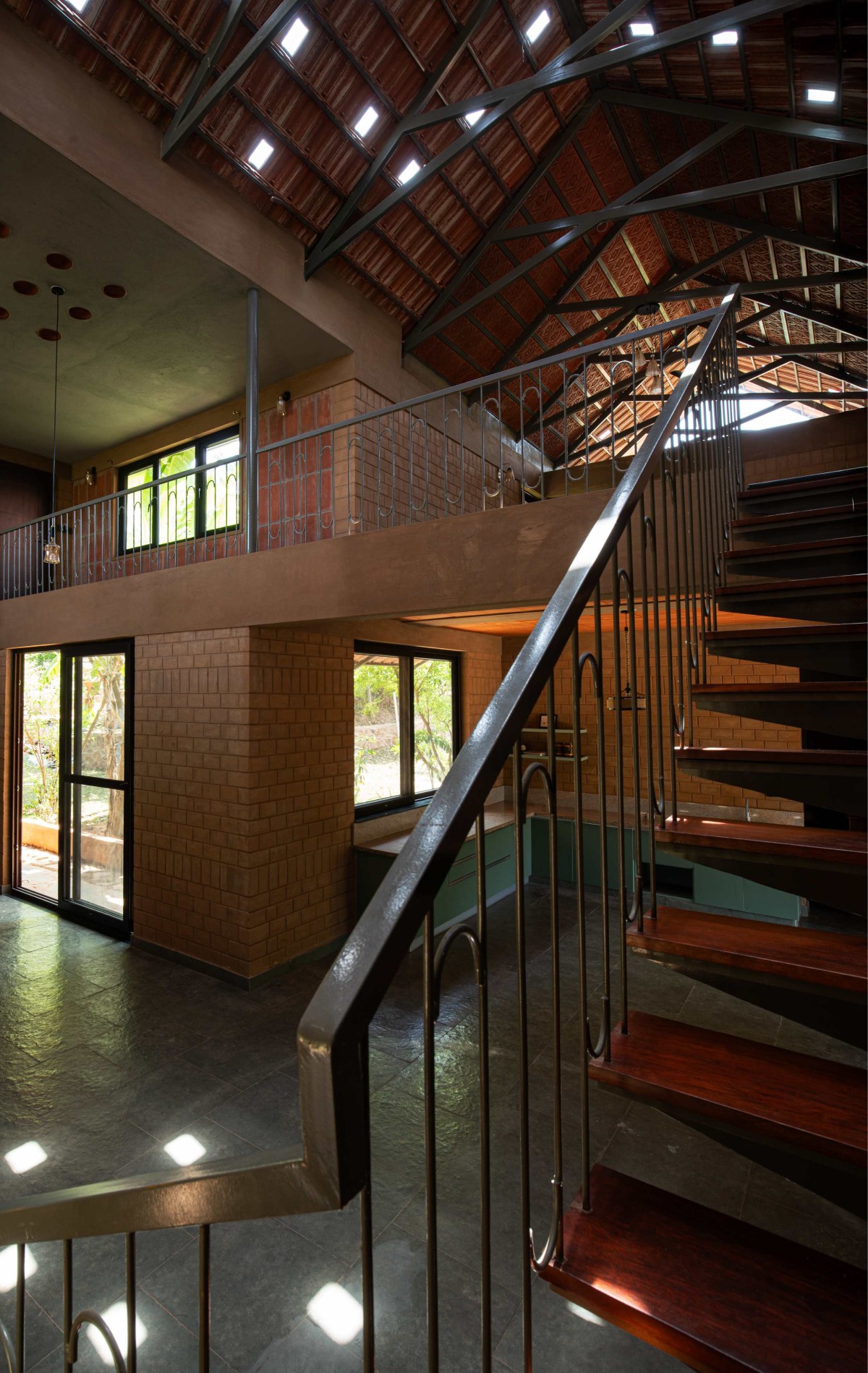
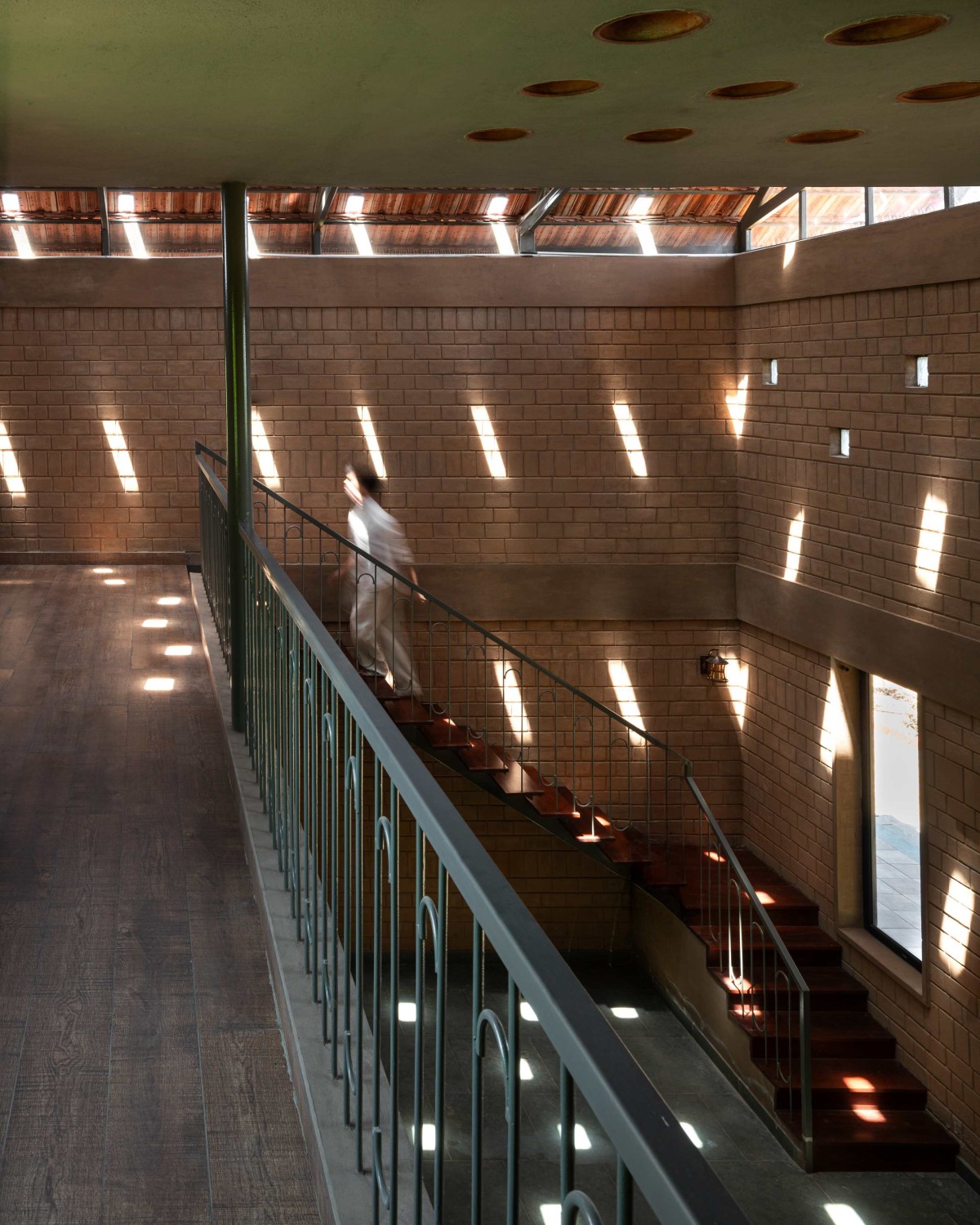
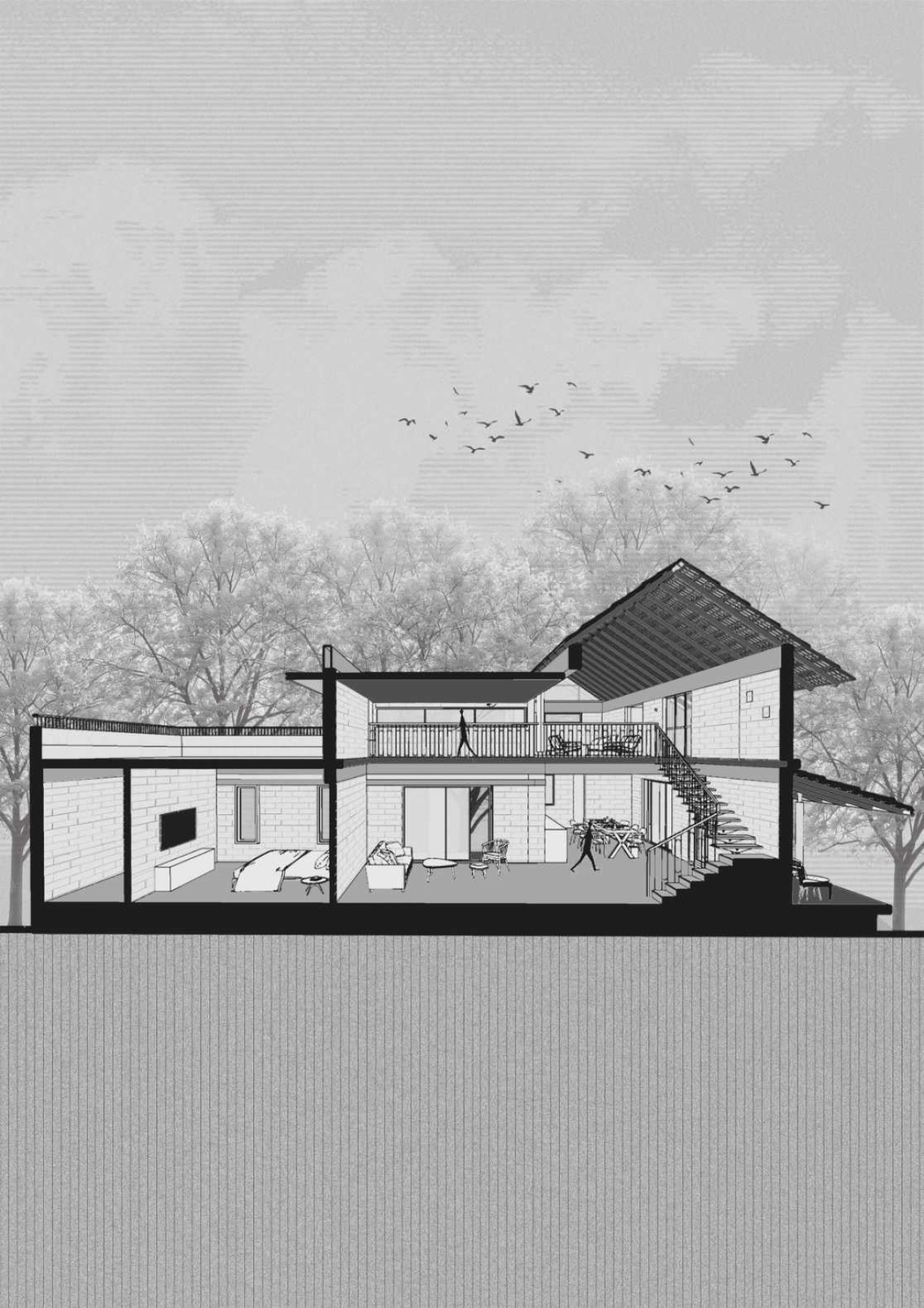
Internally, the house shifts from compression to release. A relatively contained footprint opens into double-height volumes that act as both spatial and environmental cores. These vertical voids are calibrated to induce a stack effect, where warm air rises and escapes through high-level ventilators integrated within the roof profile. This upward movement draws in cooler air from shaded lower openings, establishing a continuous cycle of cross ventilation. The architecture, in this sense, is less static enclosure and more a breathable system—responsive to diurnal shifts without mechanical dependence. Light is introduced with equal precision. Instead of large, indiscriminate apertures, the envelope is punctured selectively—through recessed openings, slit windows, and calibrated voids within the masonry. These incisions admit controlled shafts of light that register across the textured surfaces, producing a shifting gradient rather than uniform illumination. Above the staircase, this interplay becomes more pronounced—light filters in and traces the movement of the sun path through the day, casting a series of evolving patterns onto the textured Kota floor below. The shadows lengthen, contract, and shift in orientation, almost as a quiet, musical composition of light and time, marking the passage of the day within the volume. The upper levels, articulated within the trussed roof, receive diffused daylight through skylight insertions, ensuring that the larger spatial volumes remain evenly lit yet subdued.
Living room of Kripanilay Farmhouse by HabitArt Architecture Studio
Kitchen to Living view of Kripanilay Farmhouse by HabitArt Architecture Studio
Kitchen of Kripanilay Farmhouse by HabitArt Architecture Studio
Staircase of Kripanilay Farmhouse by HabitArt Architecture Studio
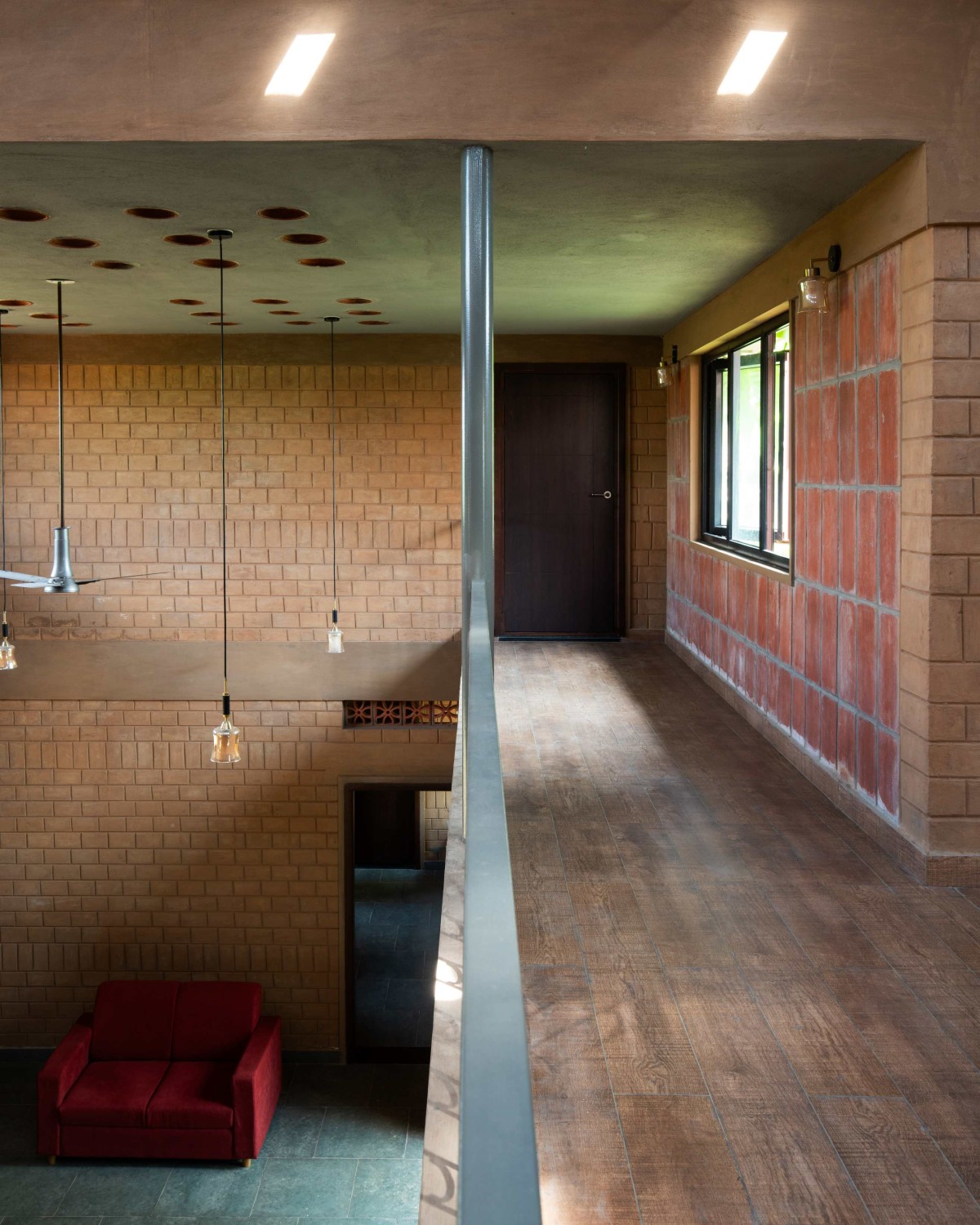
Movement through the house is orchestrated as a sequence of layered perceptions. The staircase, composed of a light steel framework with timber treads, rises along the edge of the double-height space—its visual permeability allowing the volume to remain uninterrupted. As one ascends, the experience is less about reaching a destination and more about inhabiting the section—engaging with height, light, and cross-views. The upper walkway extends this experience, bridging across volumes while maintaining a constant visual dialogue with the spaces below and the landscape beyond.
Staircase of Kripanilay Farmhouse by HabitArt Architecture Studio
First floor view of Kripanilay Farmhouse by HabitArt Architecture Studio
Passge towards terrace of Kripanilay Farmhouse by HabitArt Architecture Studio
Despite its modest footprint, the house achieves a sense of spatial expansiveness through continuity rather than scale. Living spaces flow into one another, anchored by the central volume, while the verandahs dissolve the boundary between inside and outside. The plinth extends outward into the site, merging with stone-paved pathways and shaded greens, allowing occupation to spill beyond the built edge.
Kṛpānilaya ultimately resists excess. Its strength lies in calibration—of light, air, material, and proportion. The deep roofs shade, the walls insulate, the voids ventilate, and the openings frame without overwhelming. Each element performs with clarity, contributing to an architecture that is both grounded and responsive.
In inhabitation, the house reveals its true character—not as a composed image, but as a lived environment. It cools without intervention, lights itself without glare, and opens to its surroundings without exposure. It is in this quiet performance that Kṛpānilaya finds its essence: not as an assertion on the landscape, but as a condition within it—measured, porous, and enduring.
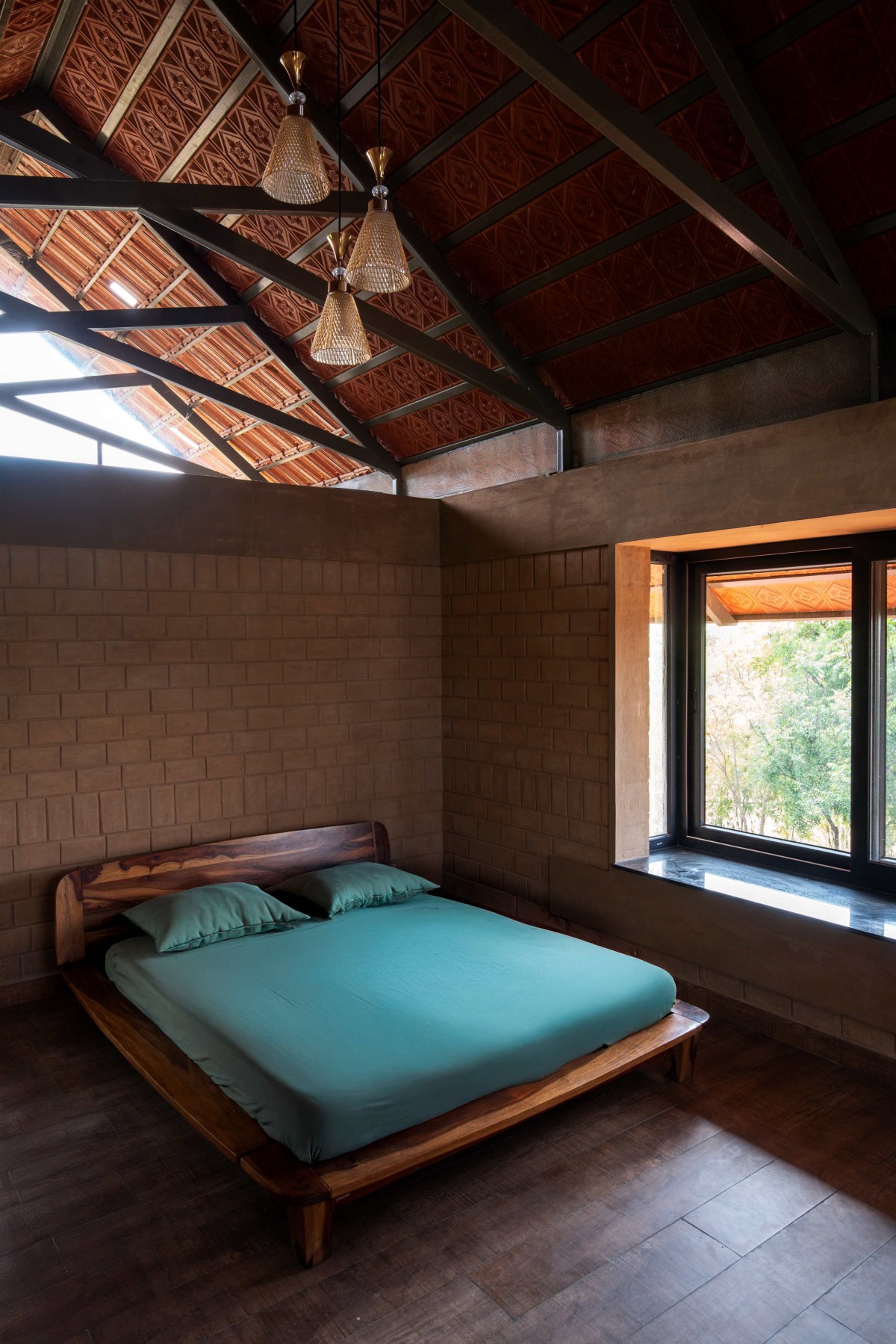
Bedroom 1 of Kripanilay Farmhouse by HabitArt Architecture Studio
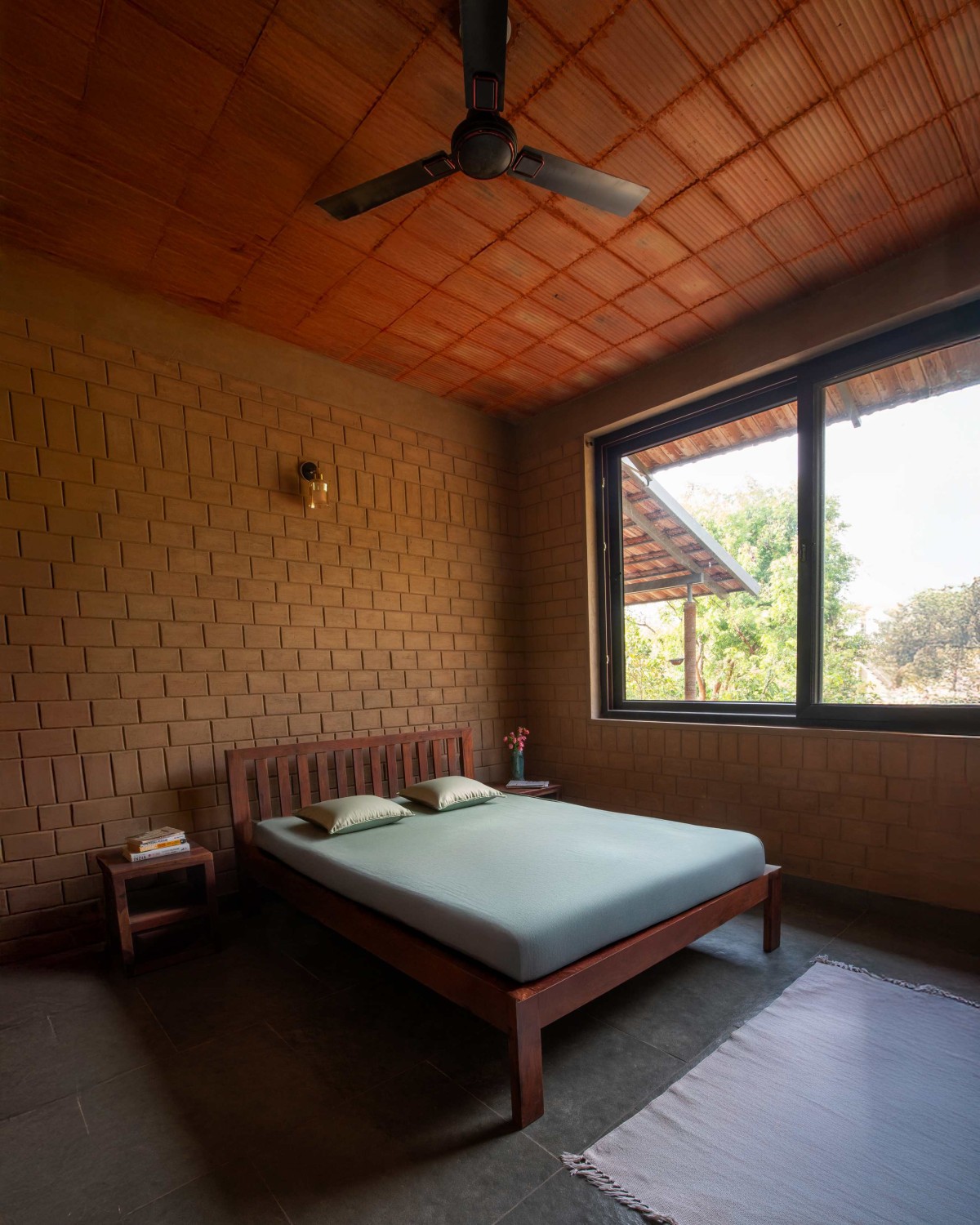
Bedroom 2 of Kripanilay Farmhouse by HabitArt Architecture Studio
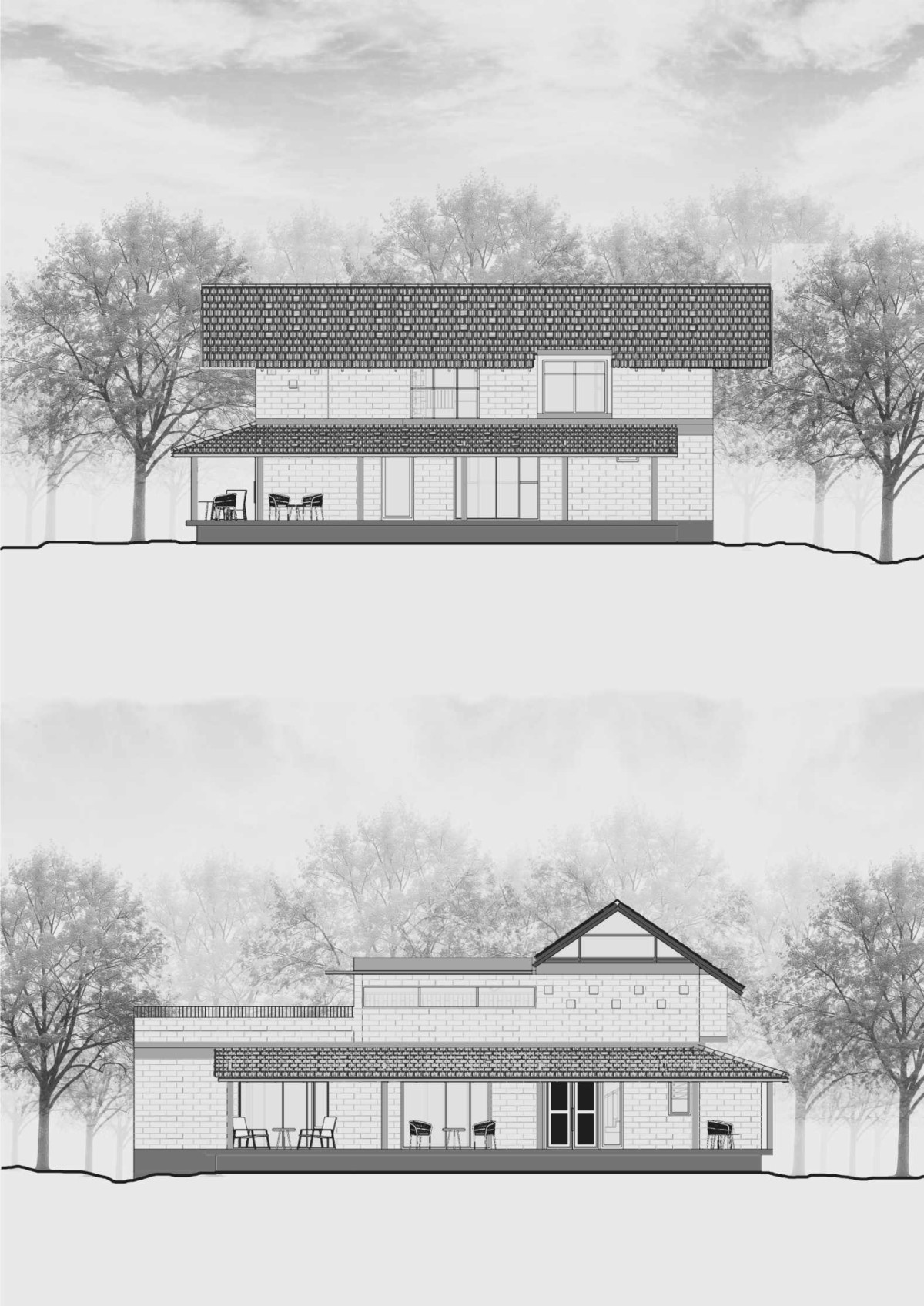
Elevations of Kripanilay Farmhouse by HabitArt Architecture Studio
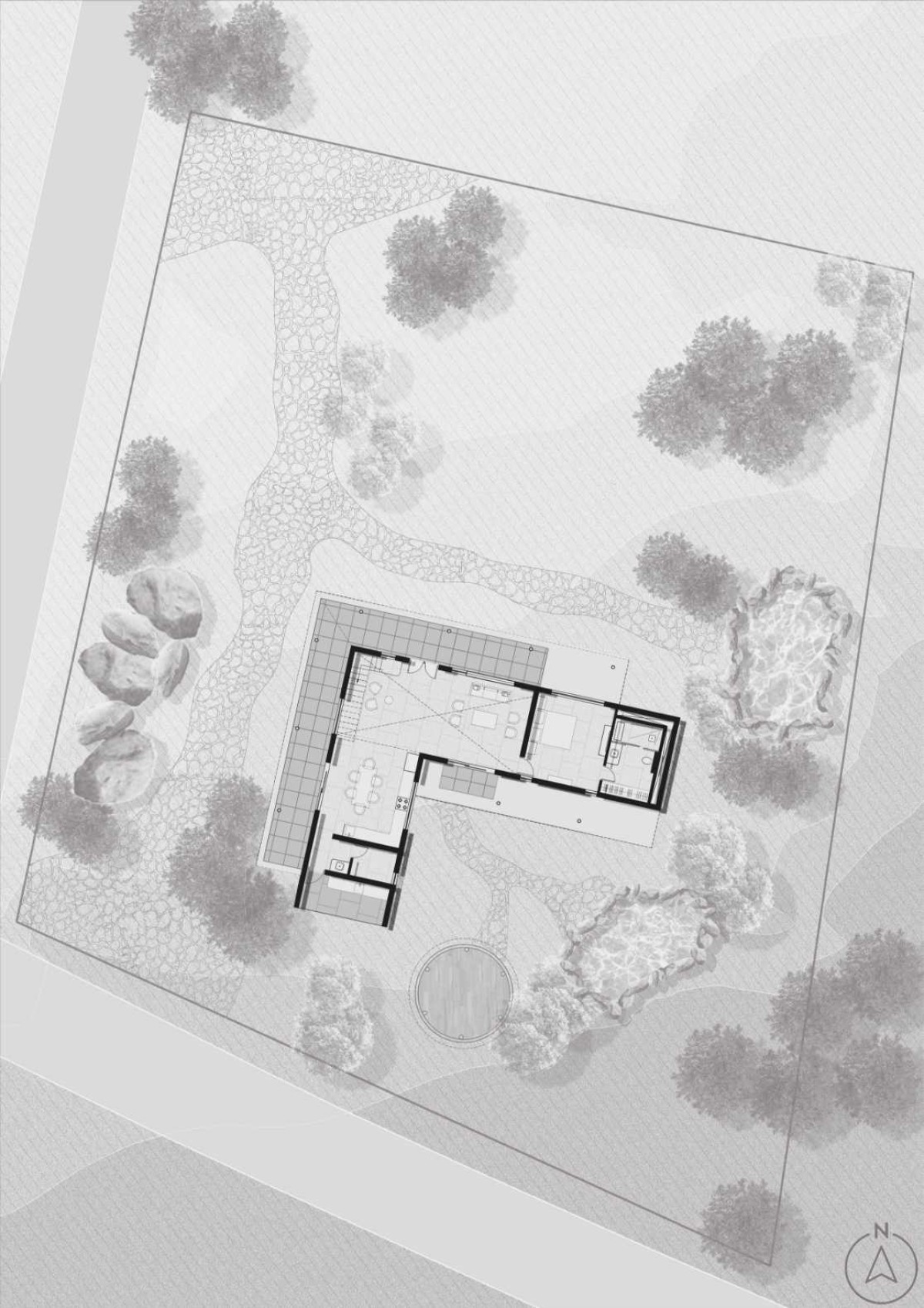
Masterplan of Kripanilay Farmhouse by HabitArt Architecture Studio
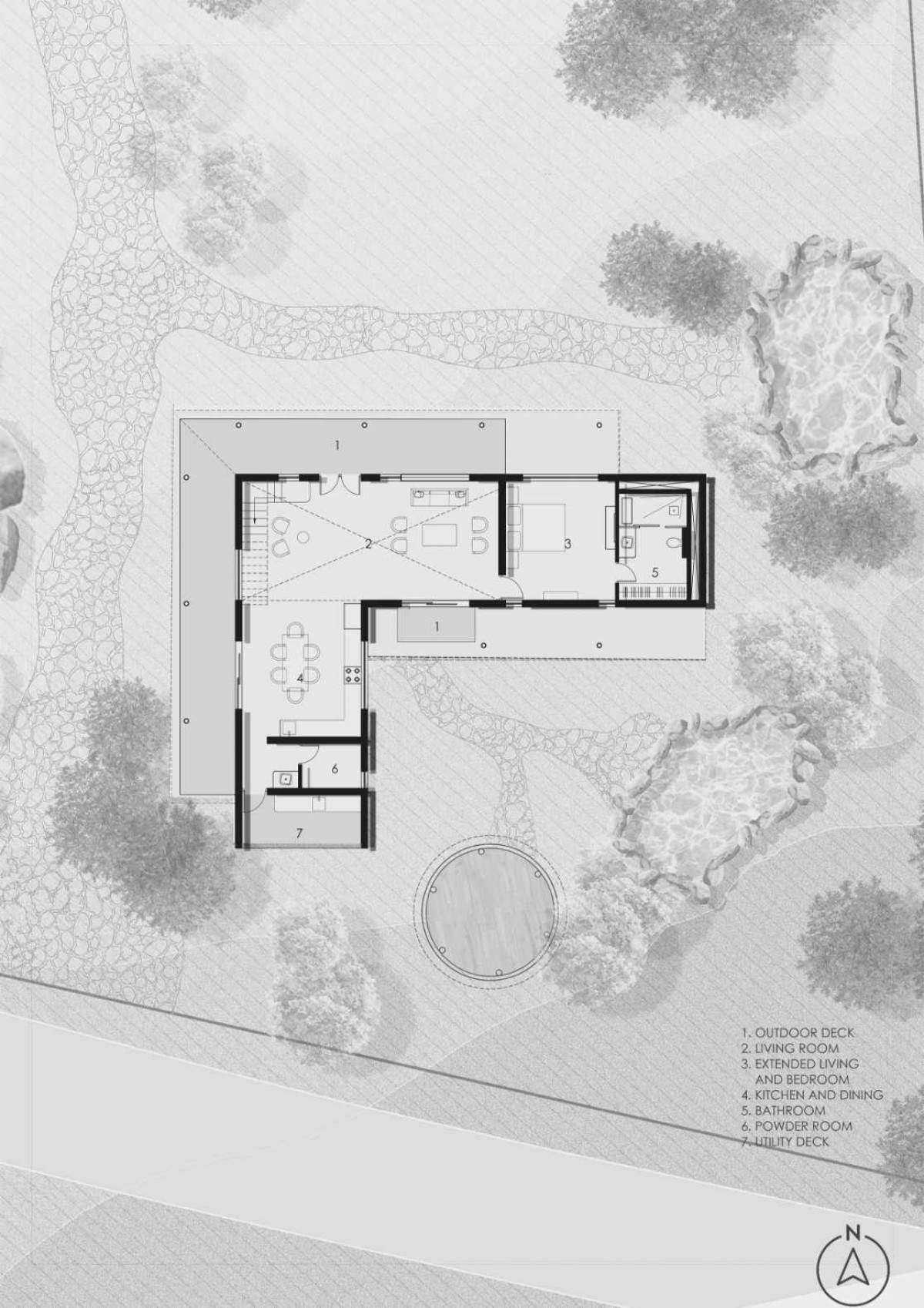
Ground floor plan of Kripanilay Farmhouse by HabitArt Architecture Studio
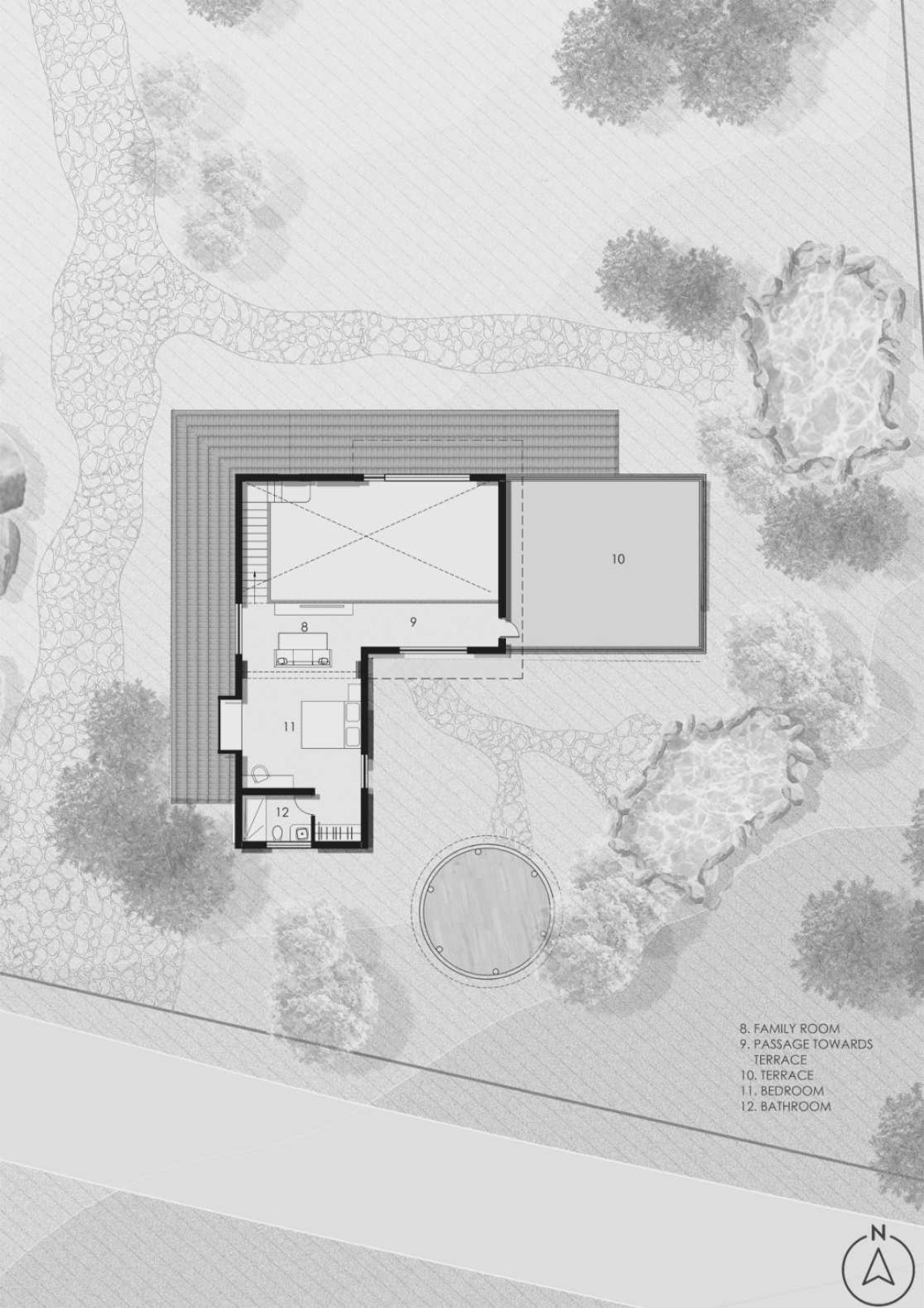
First floor plan of Kripanilay Farmhouse by HabitArt Architecture Studio
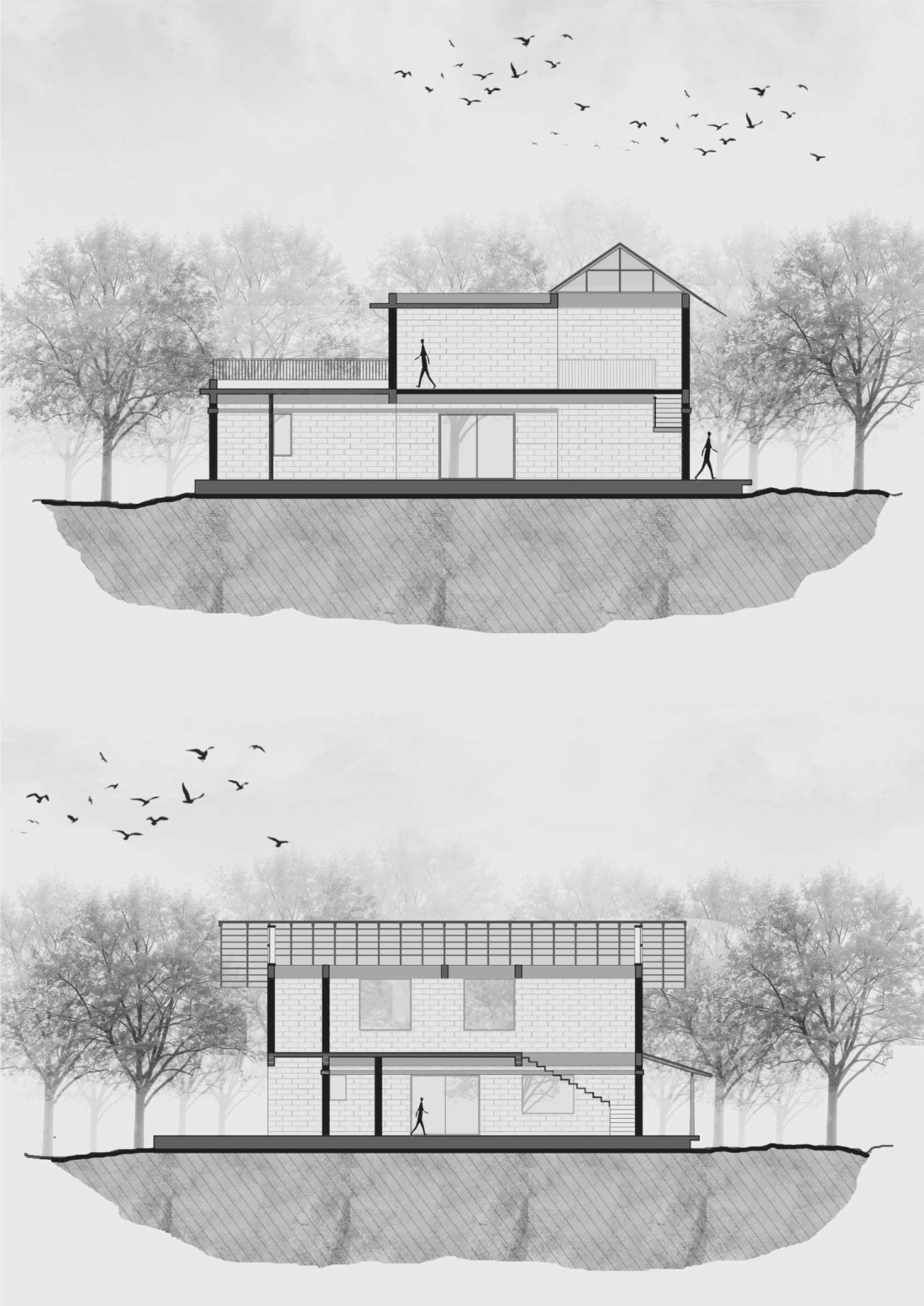
Sections of Kripanilay Farmhouse by HabitArt Architecture Studio
Sectional model of Kripanilay Farmhouse by HabitArt Architecture Studio