Architecture

07-06-2026

Text provided by Architect

When we first walked onto the site of what would become Tyndall House, it wasn’t the building that caught our attention—it was the trees. The property was home to a mature, dense canopy that had been growing for over thirty years. For our clients, these trees were the soul of the plot, and our first priority was to make sure they remained untouched. The existing structure, however, presented a real challenge. Originally built as two identical two-bedroom apartments stacked one on top of the other, the units were entirely separate, connected only by an external staircase. Beyond the disconnected layout, the house was showing its age. We found localized structural failures in the plinth, and because the building used a load-bearing system, we knew we couldn't just knock down walls at will. The house was also quite "inward-looking," with small windows that ignored the incredible landscape outside. Our brief was to turn these two independent units into a single, cohesive family home by improving the daylight, creating a better flow between rooms, and strengthening the connection to the garden—all while navigating structural vulnerabilities and avoiding any demolition that might risk the root systems of the surrounding trees.

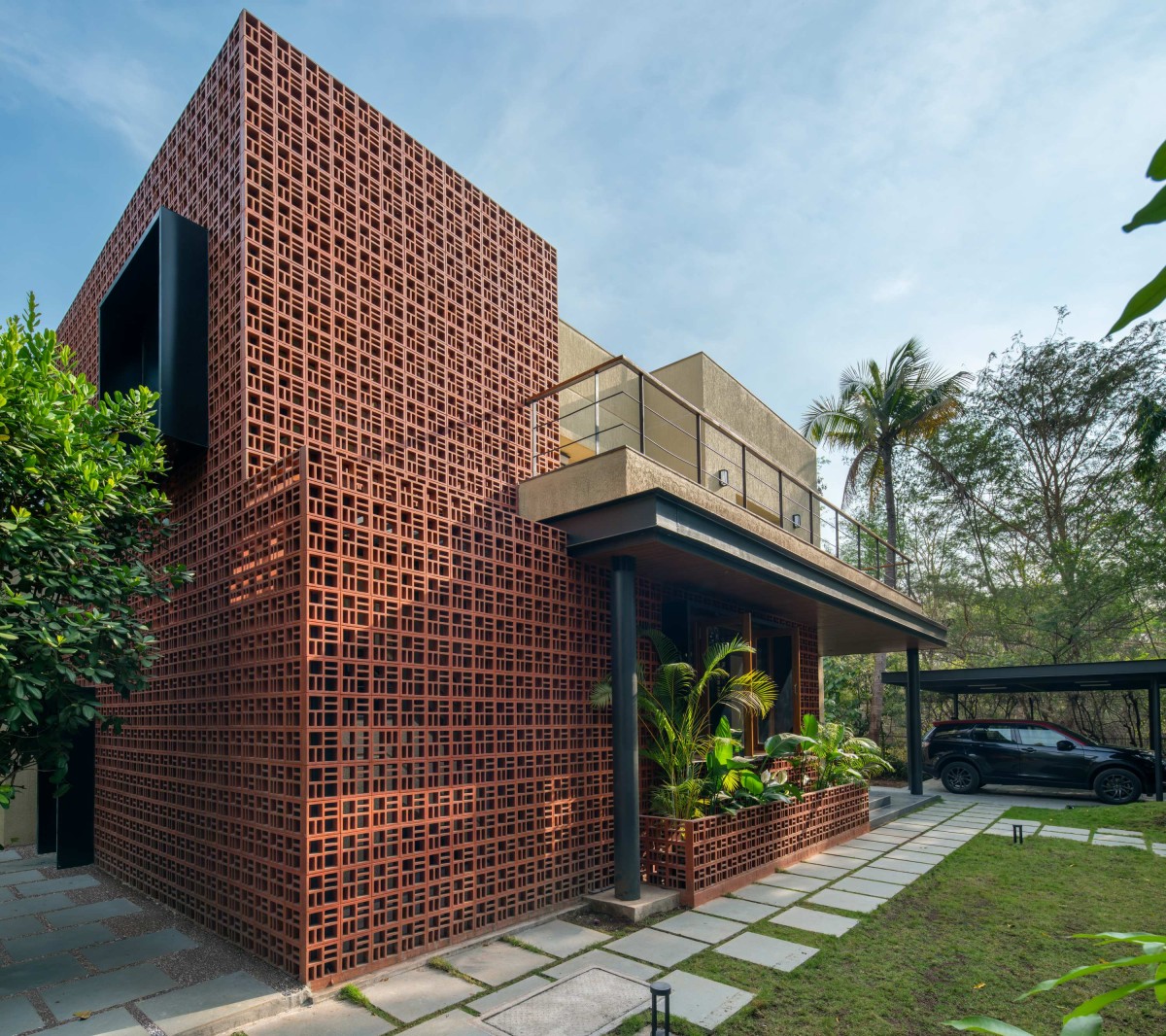
Instead of a standard renovation, we viewed this project as an architectural retrofit where the goal was continuity. The central move was to "stitch" the two separate levels into one fluid sequence. The external staircase was the obvious place to start; it used to be a point where you had to exit and re-enter to move between floors. We decided to keep the original structure of the stairs to avoid destabilizing the ground, but we reimagined it as an internal promenade wrapped in a new skin made of clay jaali blocks. This patterned veil provides privacy from the road, softens the afternoon heat, and allows for constant airflow. During the day, it creates a moving pattern of shadows across the interior; at night, when the lights are on inside, the house glows through the perforations. This soft, atmospheric diffusion of light reminded us of the Tyndall effect, which eventually gave the house its name.

Pune,Maharashtra,India

Architects : Red Brick Studio
Area : 3842.72 sq. ft.
Year of Completion : 2025
Website : https://www.instagram.com/redbrickstudio_pune/

Exterior view of Tyndall House by Red Brick Studio
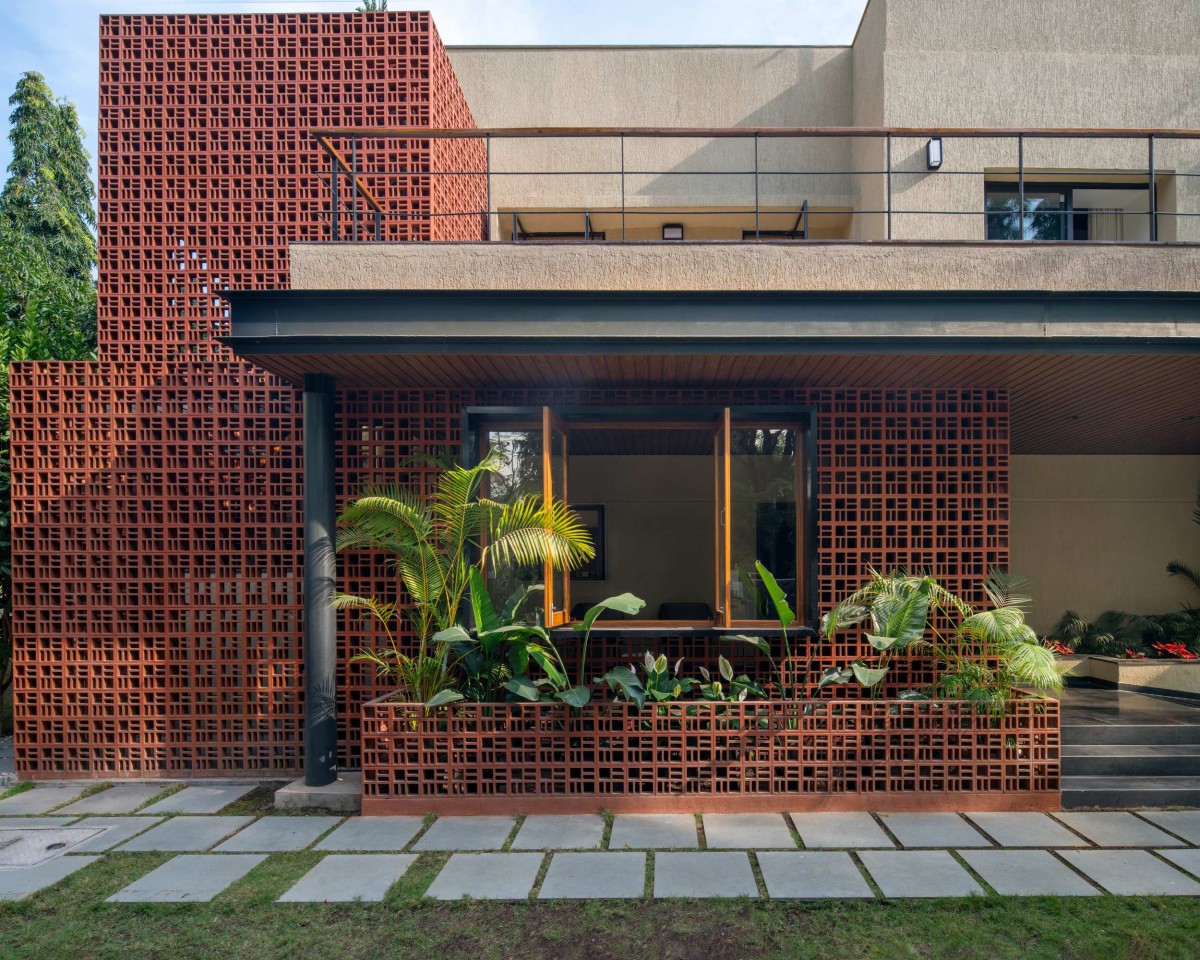

Exterior view of Tyndall House by Red Brick Studio
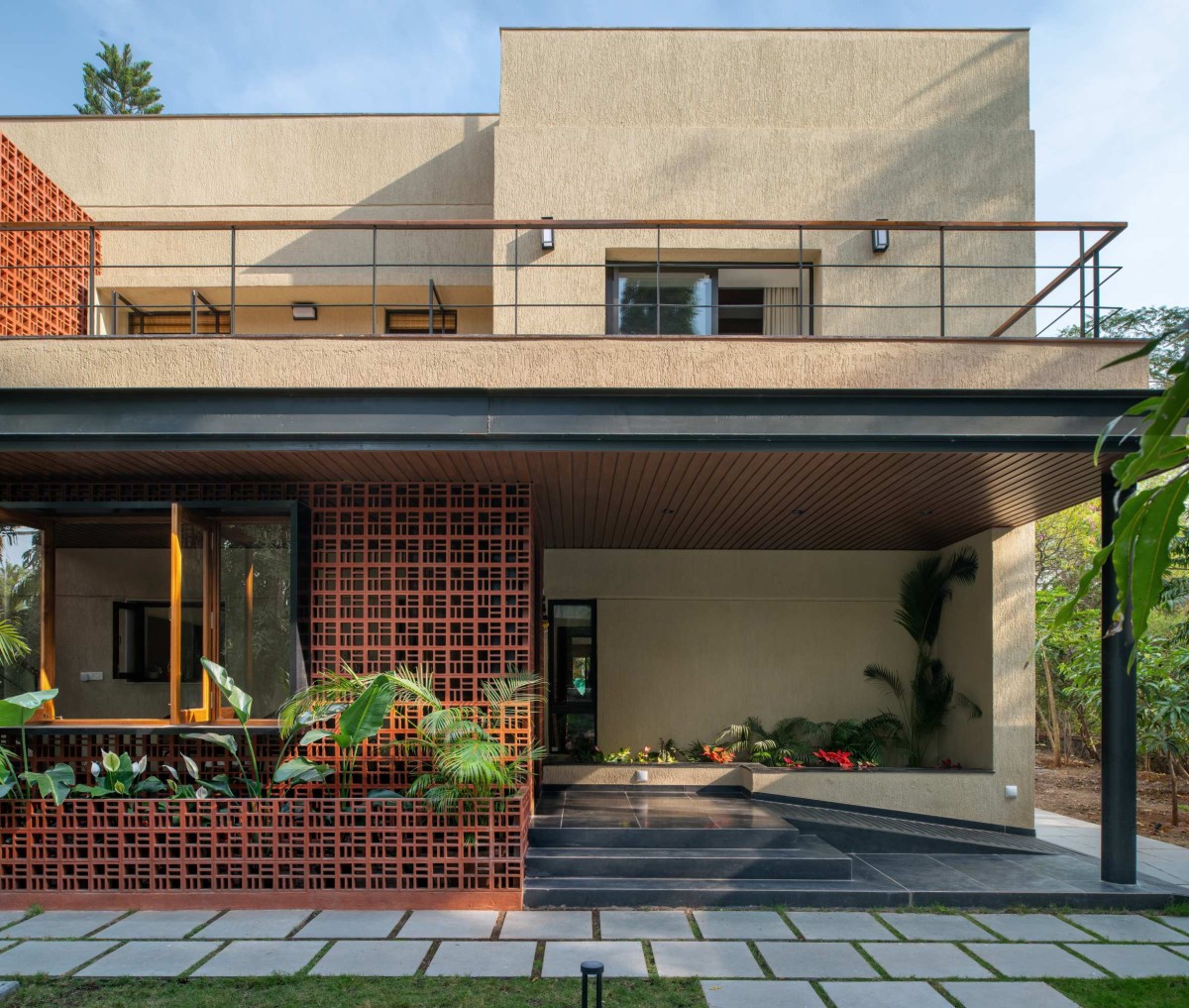

Exterior view of Tyndall House by Red Brick Studio
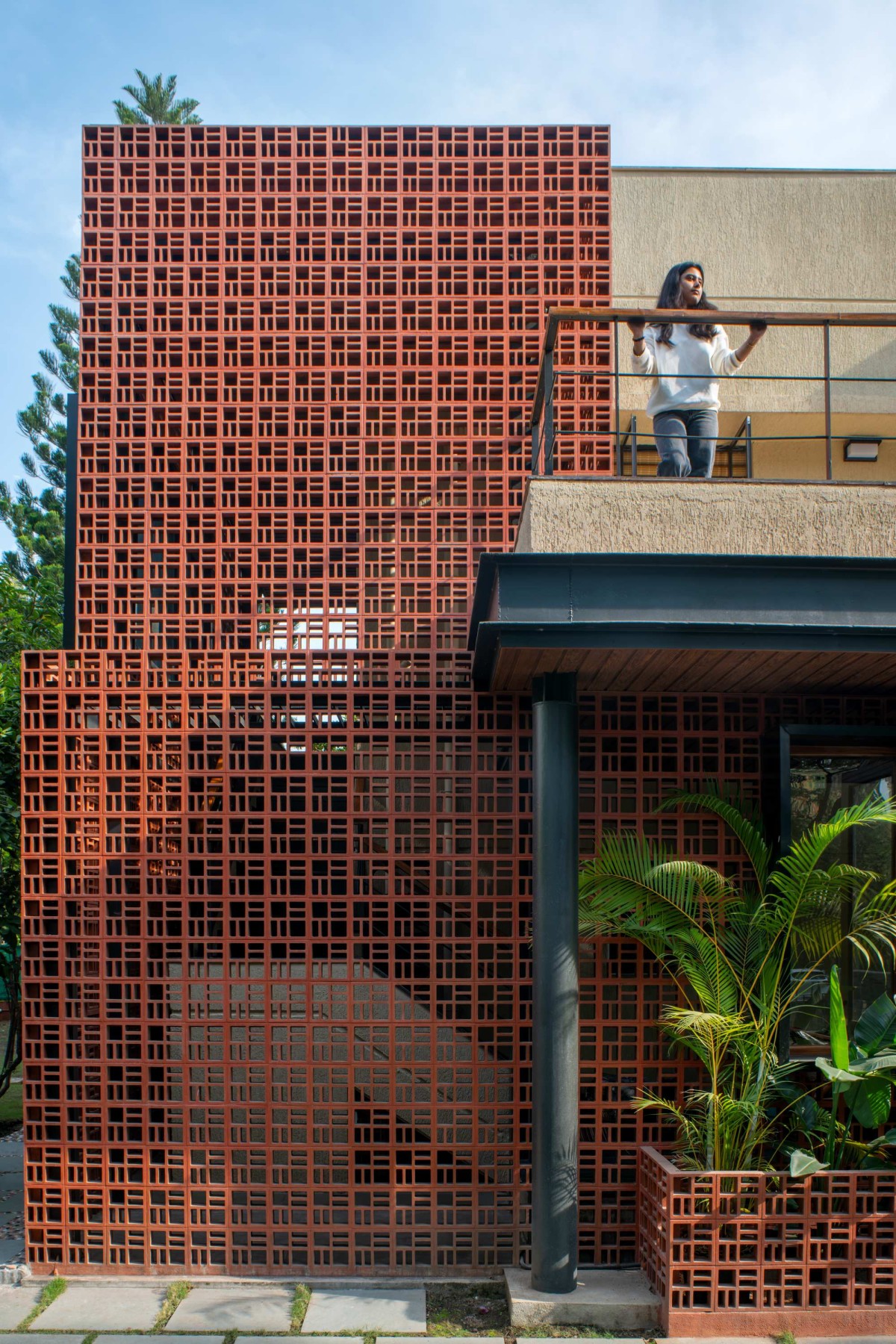
The process was technically rigorous, beginning with a structural audit and close coordination with engineers to stabilize the plinth and reinforce vulnerable zones. Because we were working with a load-bearing framework, our changes had to be strategic. We reworked the floor plan to link rooms more logically, expanding the footprint slightly to the north and west. These extensions act as a buffer from the street while opening the living spaces to softer northern light and long views of the trees. By enclosing the staircase within the jaali volume, we transformed a basic connector into a light-filled foyer that links the entrance to the first-floor deck in one continuous journey.


Facade of Tyndall House by Red Brick Studio
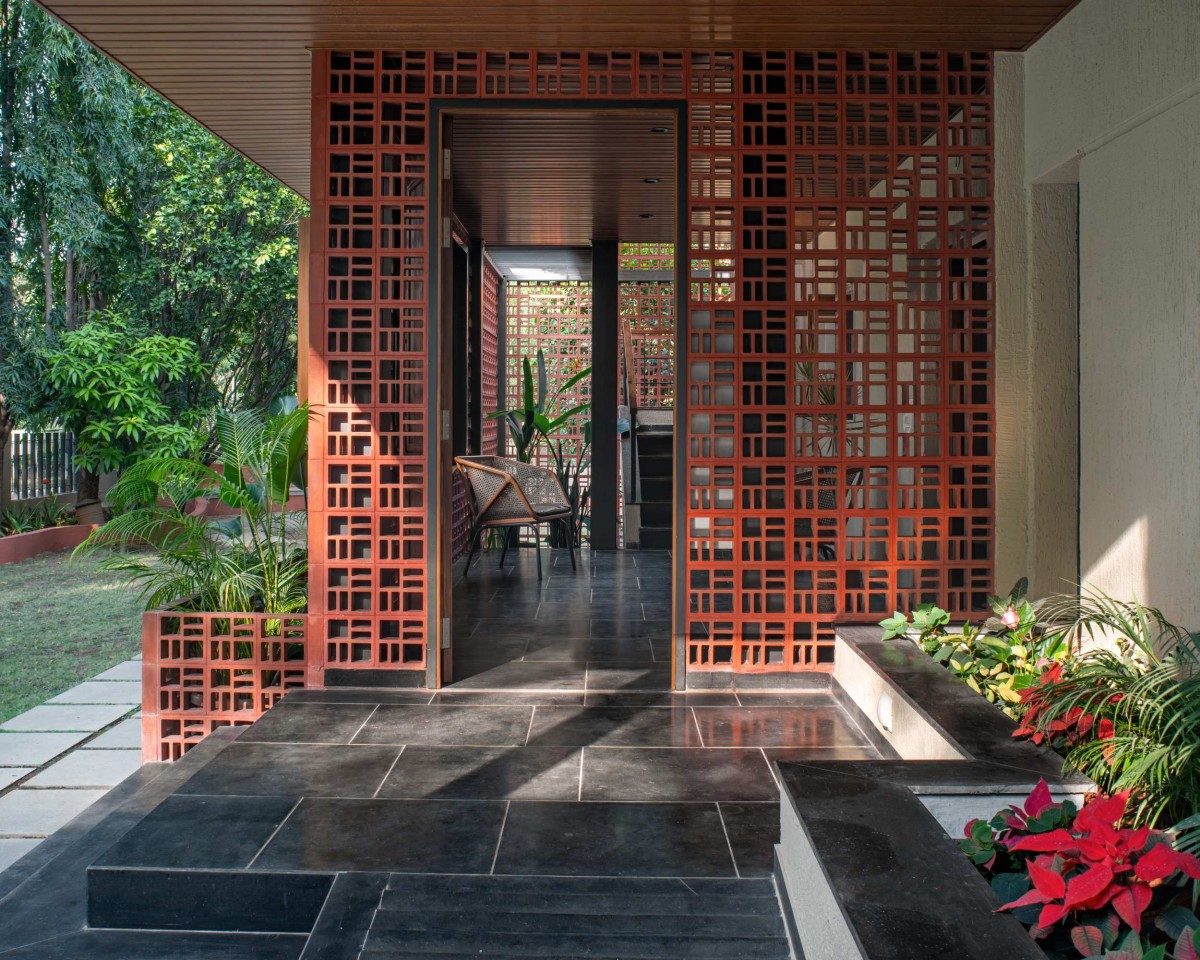

Verandah of Tyndall House by Red Brick Studio
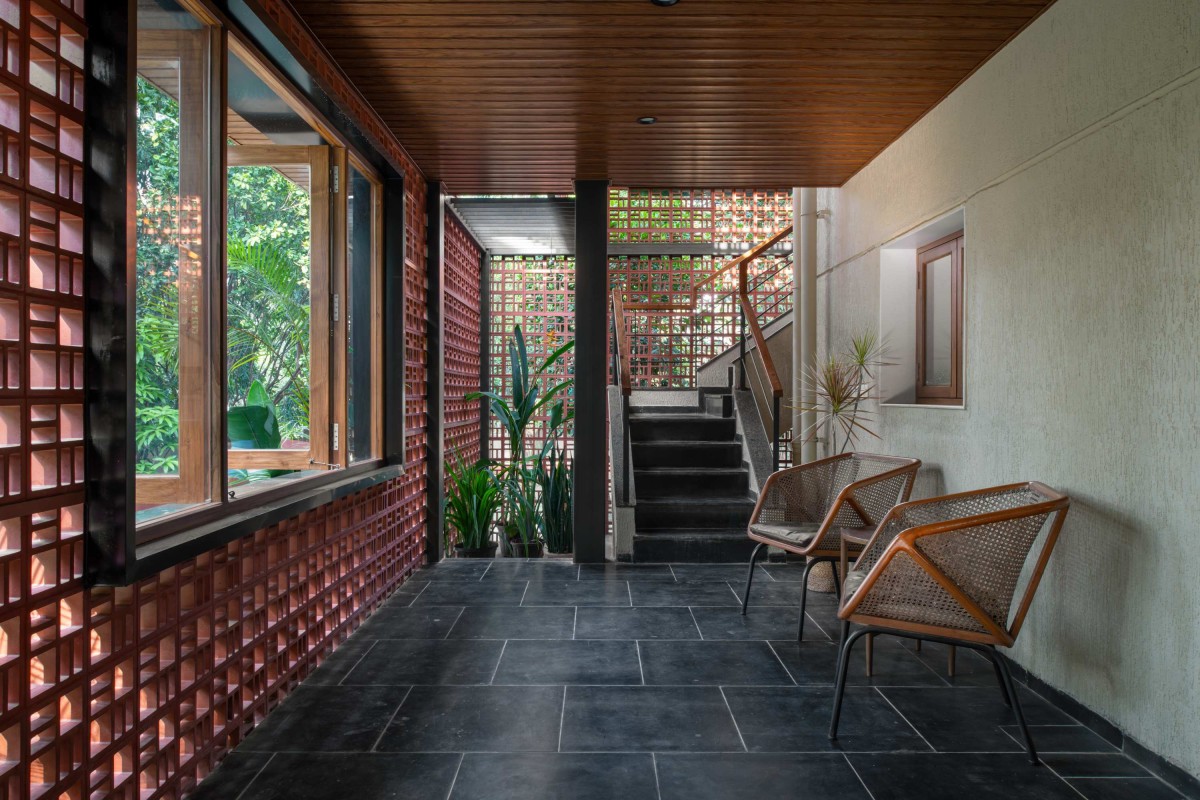

Sitout of Tyndall House by Red Brick Studio
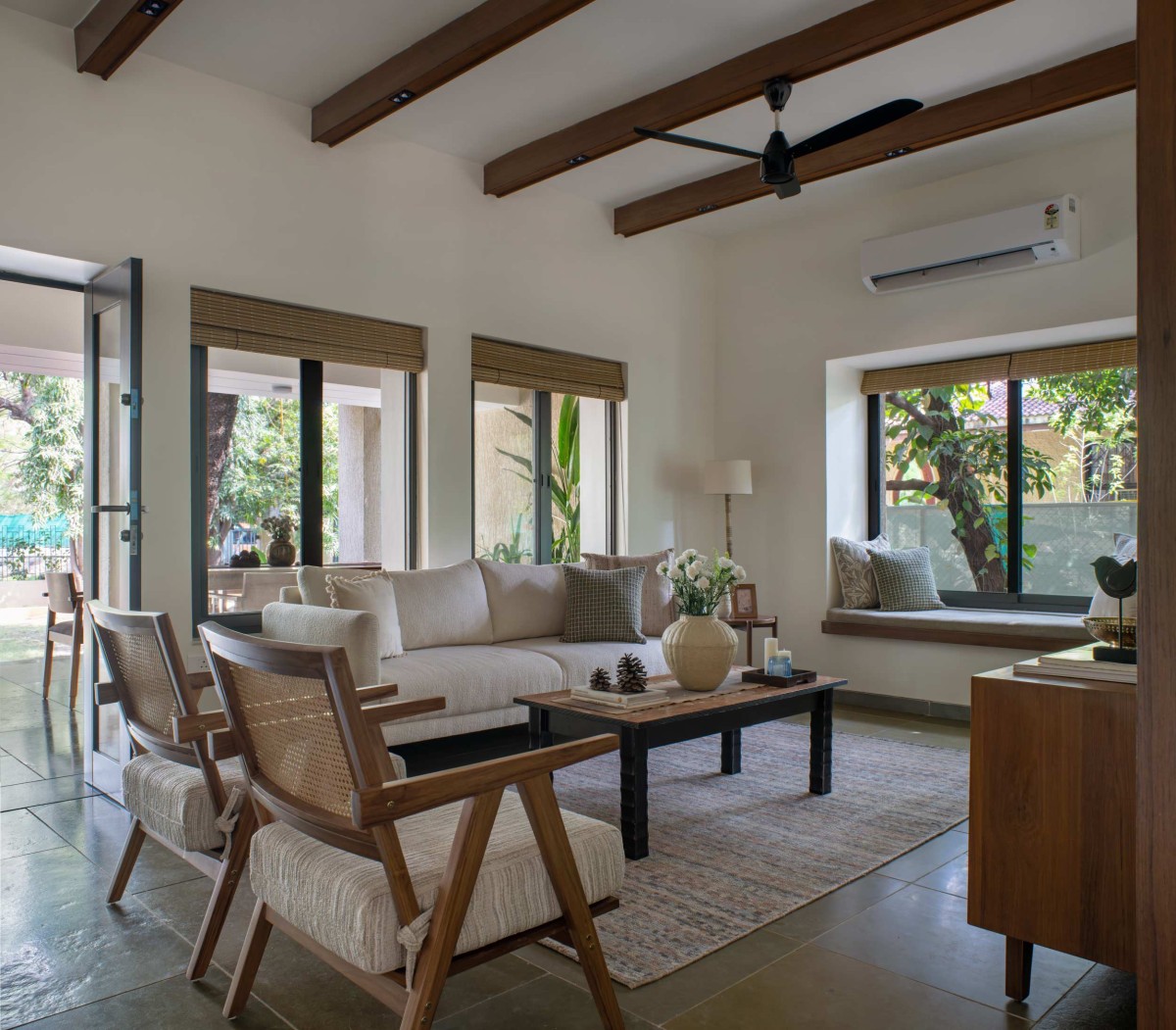
In terms of materiality, we wanted the home to feel tactile and grounded, ensuring the intervention felt like a natural evolution of the site rather than a stark departure. We chose a palette that bridges the gap between the original structure and the new additions with a sense of quiet restraint. We opted for yellow Kota stone for the flooring to provide an earthy, natural feel underfoot. The stone brings a subtle, sun-drenched warmth to the rooms, making the spaces feel more lived-in and approachable. To complement this, we introduced wooden rafters across the ceilings to add texture and a sense of rhythm. By keeping the rest of the palette light and airy—using soft whites and neutral tones—we allowed the textures of the stone and wood to speak for themselves, ensuring the focus remains on the dappled light filtering through the jaali and the deep greens of the surrounding trees.


Living room of Tyndall House by Red Brick Studio
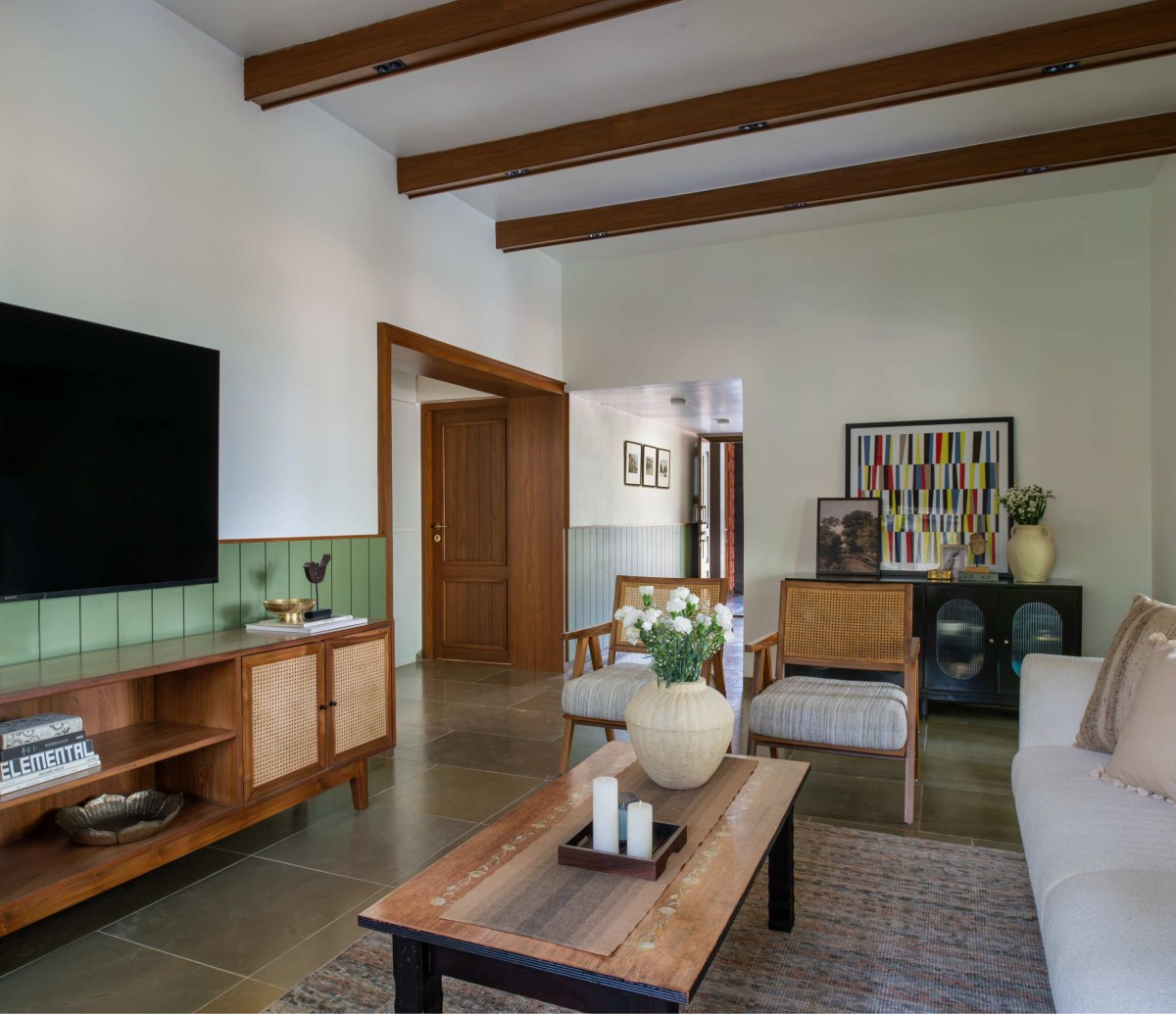

Living room of Tyndall House by Red Brick Studio
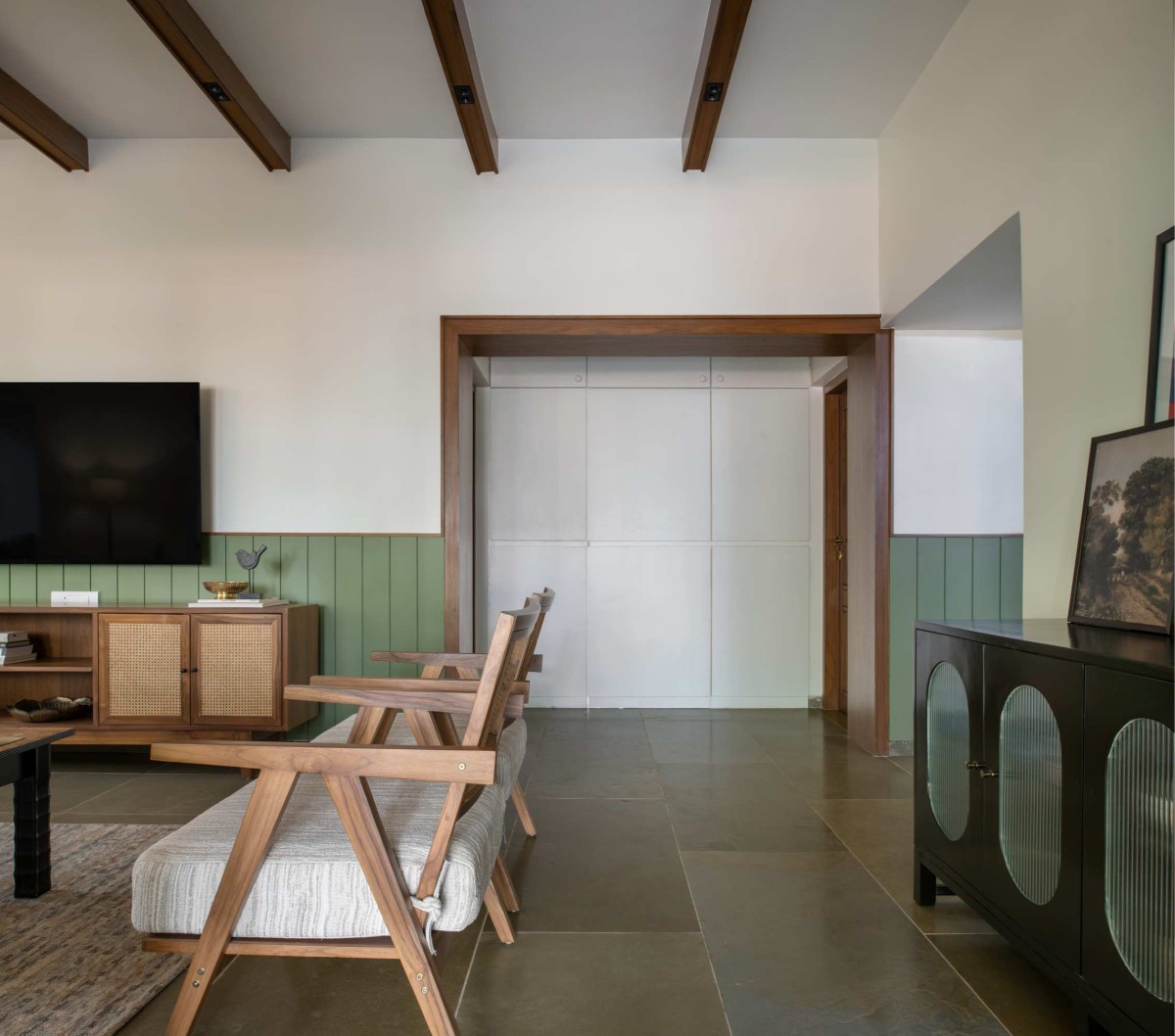

Living room of Tyndall House by Red Brick Studio
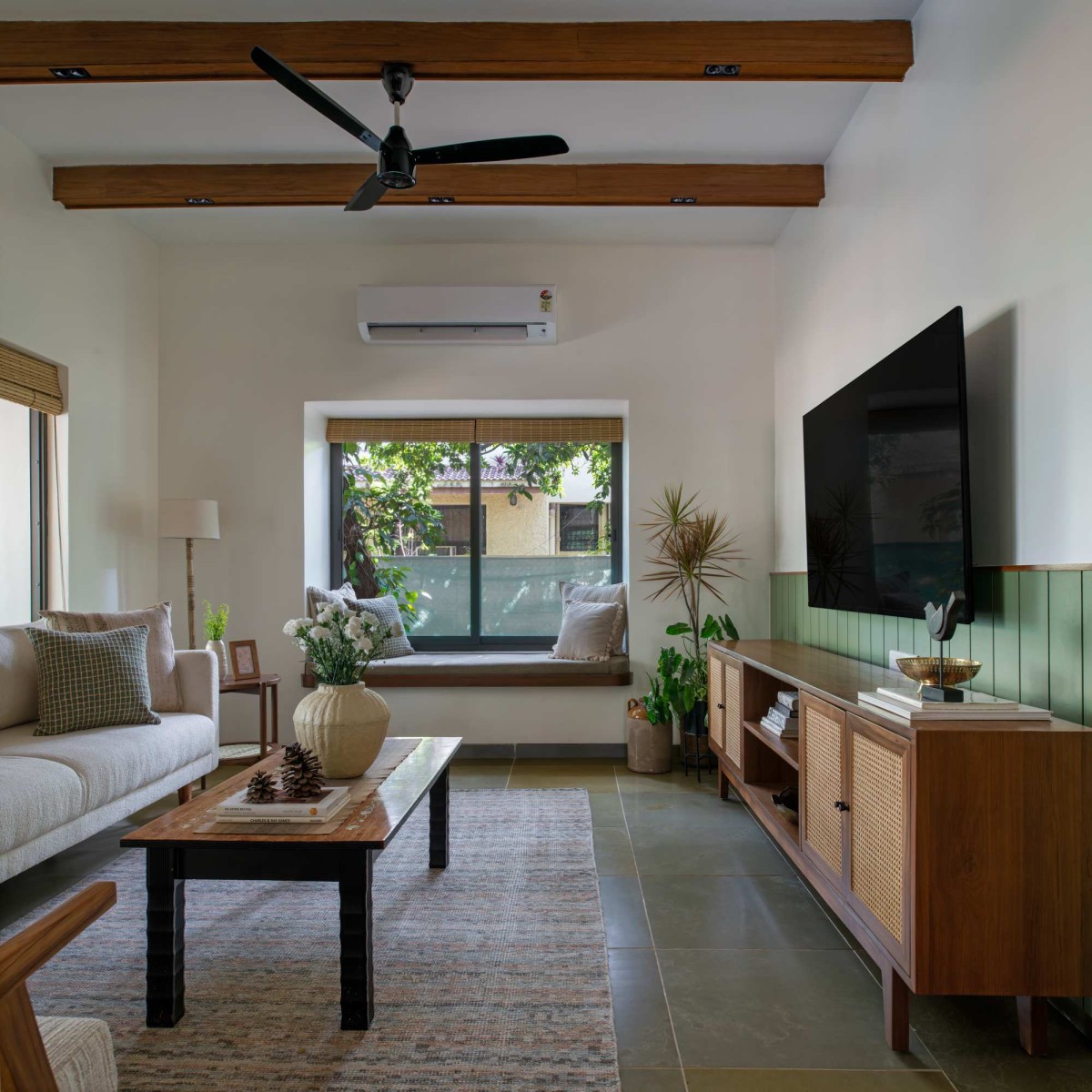
The furniture follows this same philosophy of restraint and clarity. We selected pieces with clean lines and a mix of natural fabrics, avoiding anything too heavy or ornate that might clutter the visual flow. Tactile surfaces like woven cane and warm timber are used throughout to echo the textures of the architecture, making the interior feel as much a part of the landscape as the garden itself. In the end, Tyndall House is about preservation rather than replacement. By focusing on a surgical retrofit rather than a total rebuild, we were able to give the family the contemporary, connected home they needed while respecting the structural and natural history of the site. The result is a space that feels seamless and calm—a house that finally lives in harmony with the trees around it.


Living room of Tyndall House by Red Brick Studio
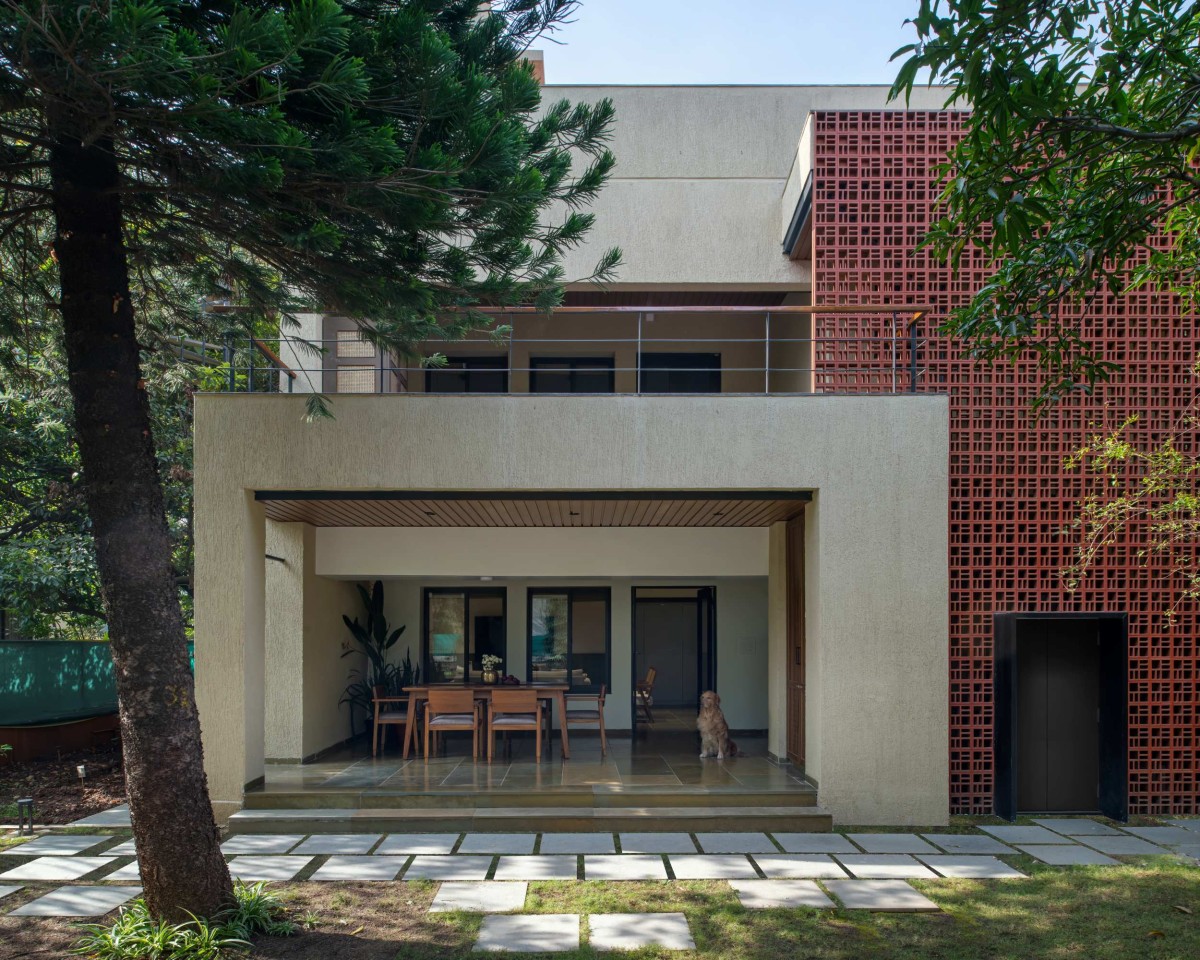

Dining of Tyndall House by Red Brick Studio
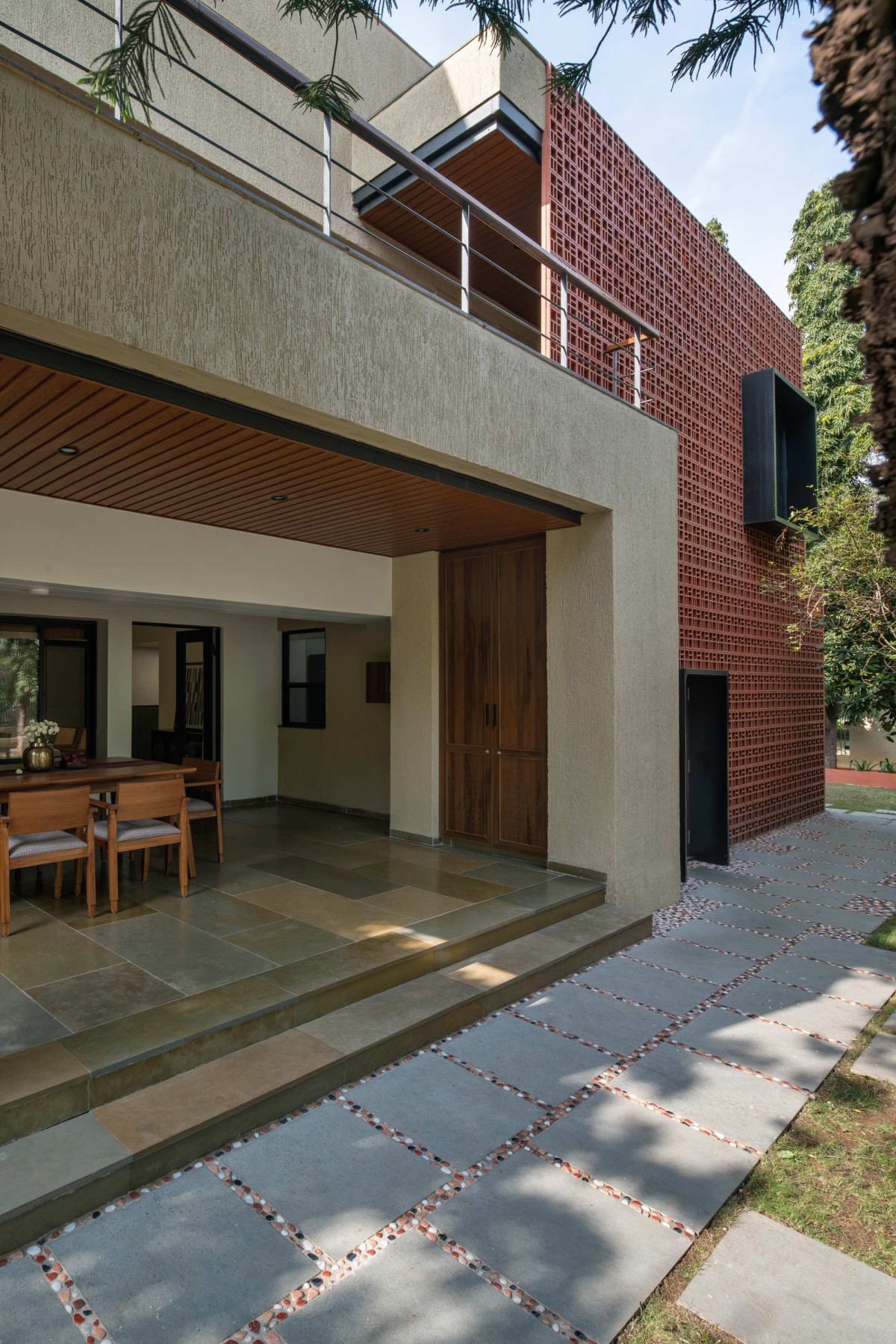

Dining of Tyndall House by Red Brick Studio
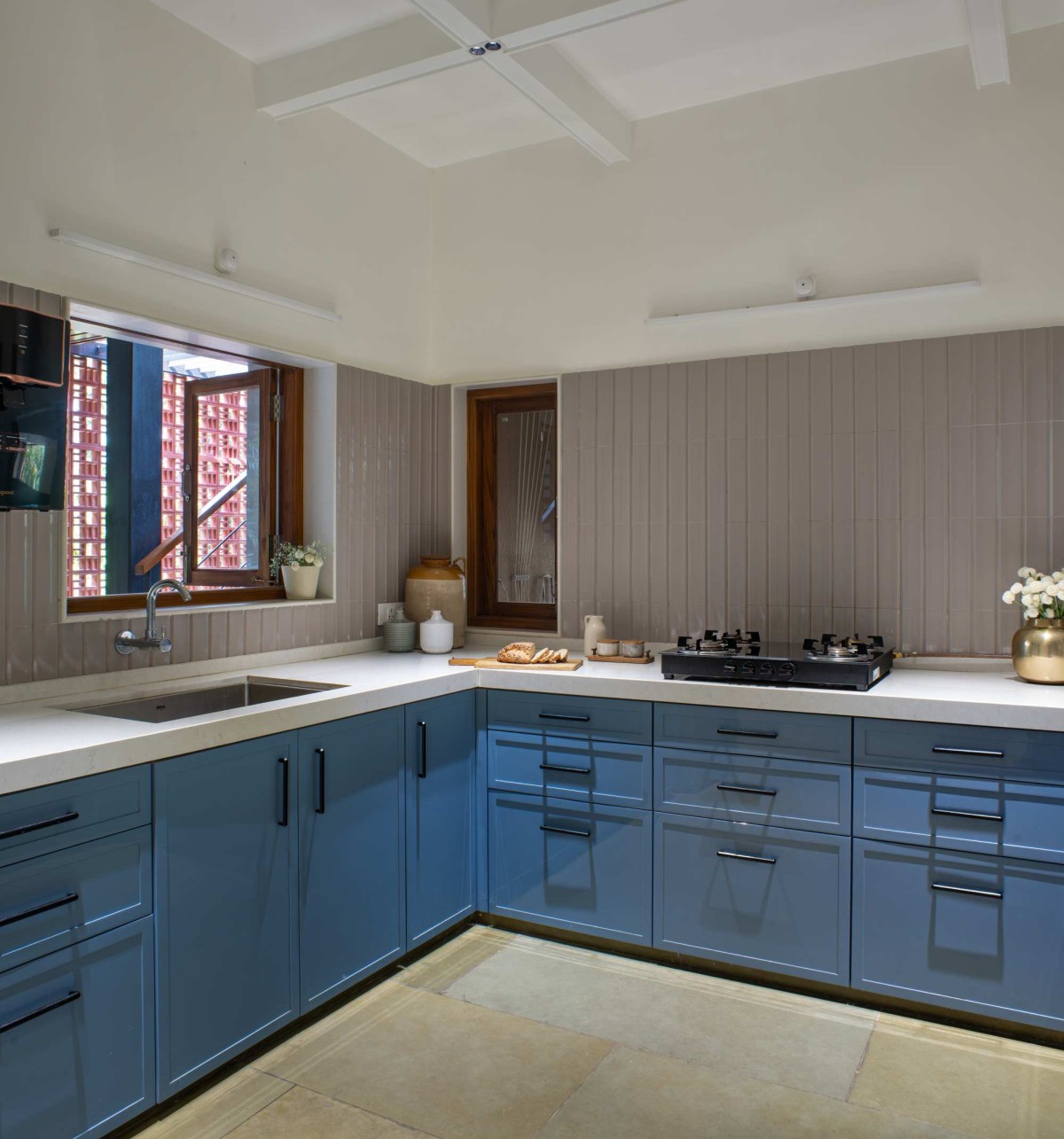

Kitchen of Tyndall House by Red Brick Studio
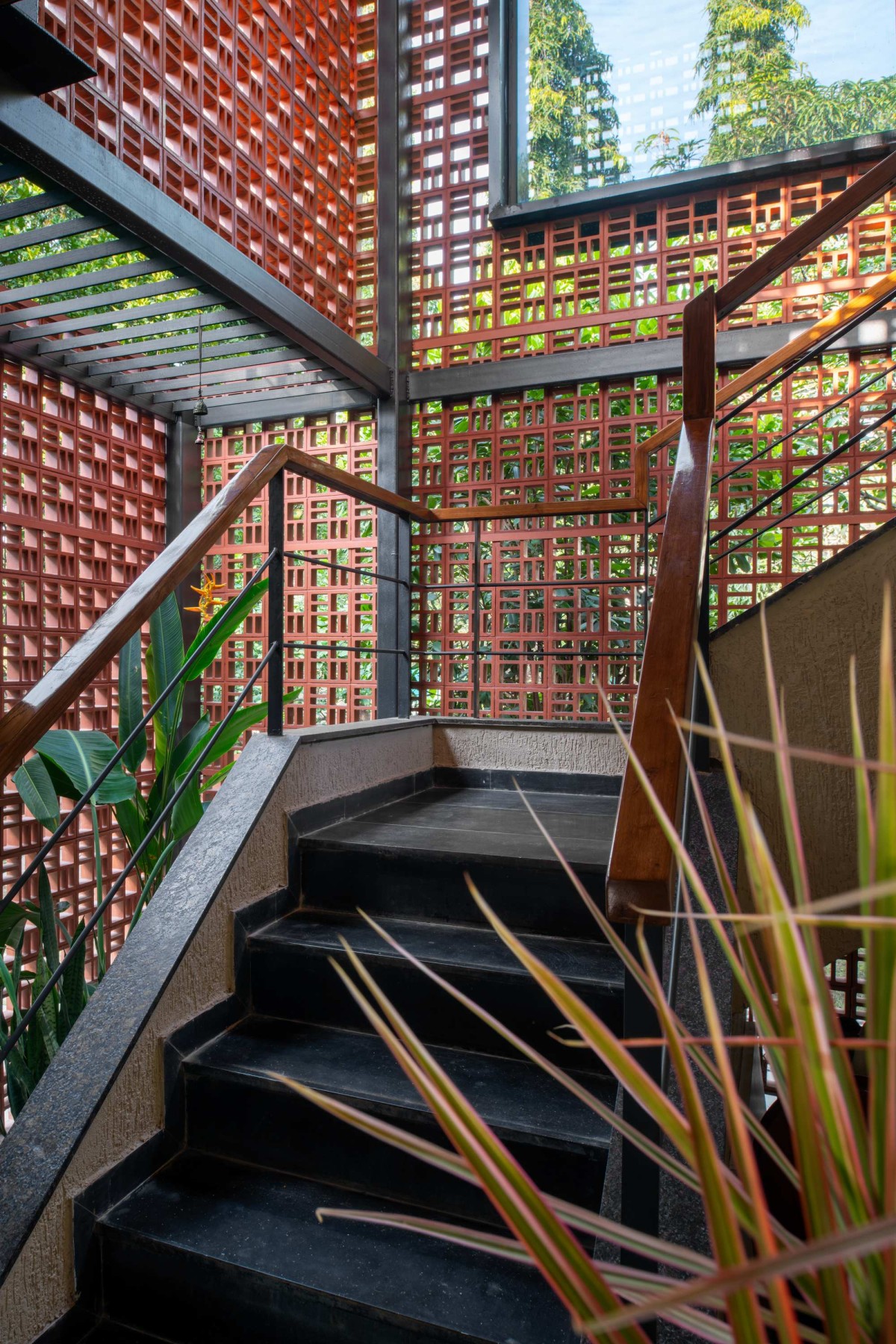

Staircase of Tyndall House by Red Brick Studio
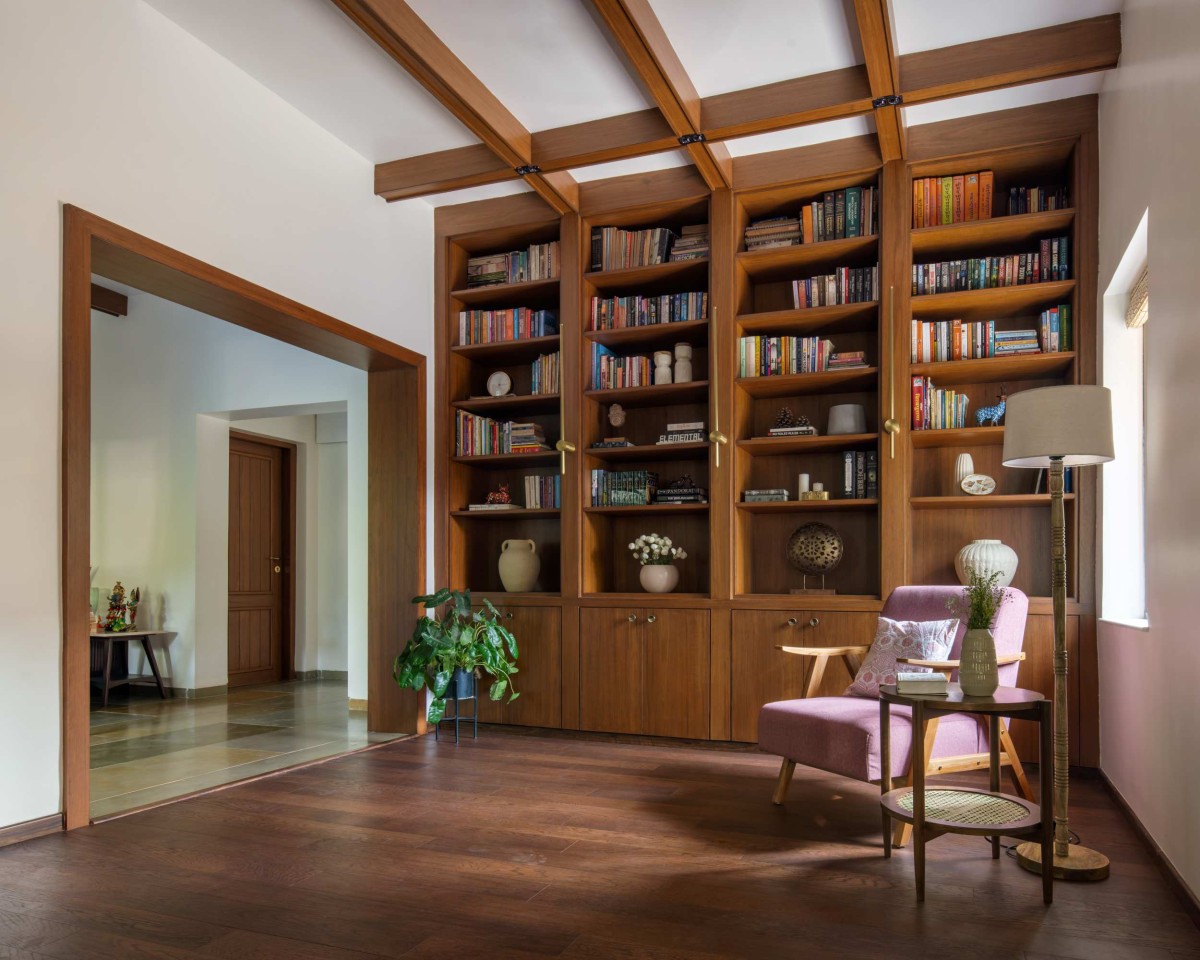

Library room of Tyndall House by Red Brick Studio
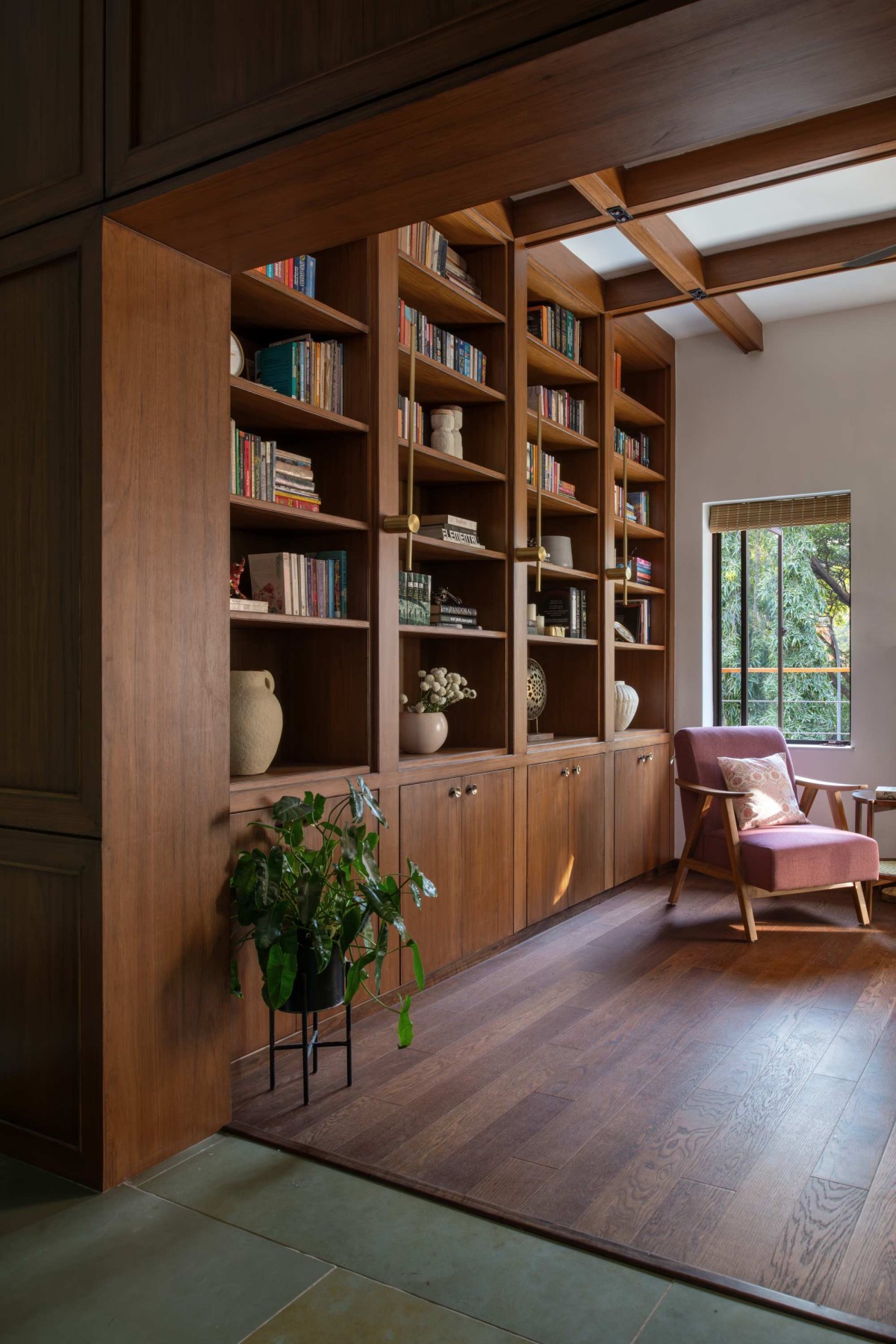

Library room of Tyndall House by Red Brick Studio
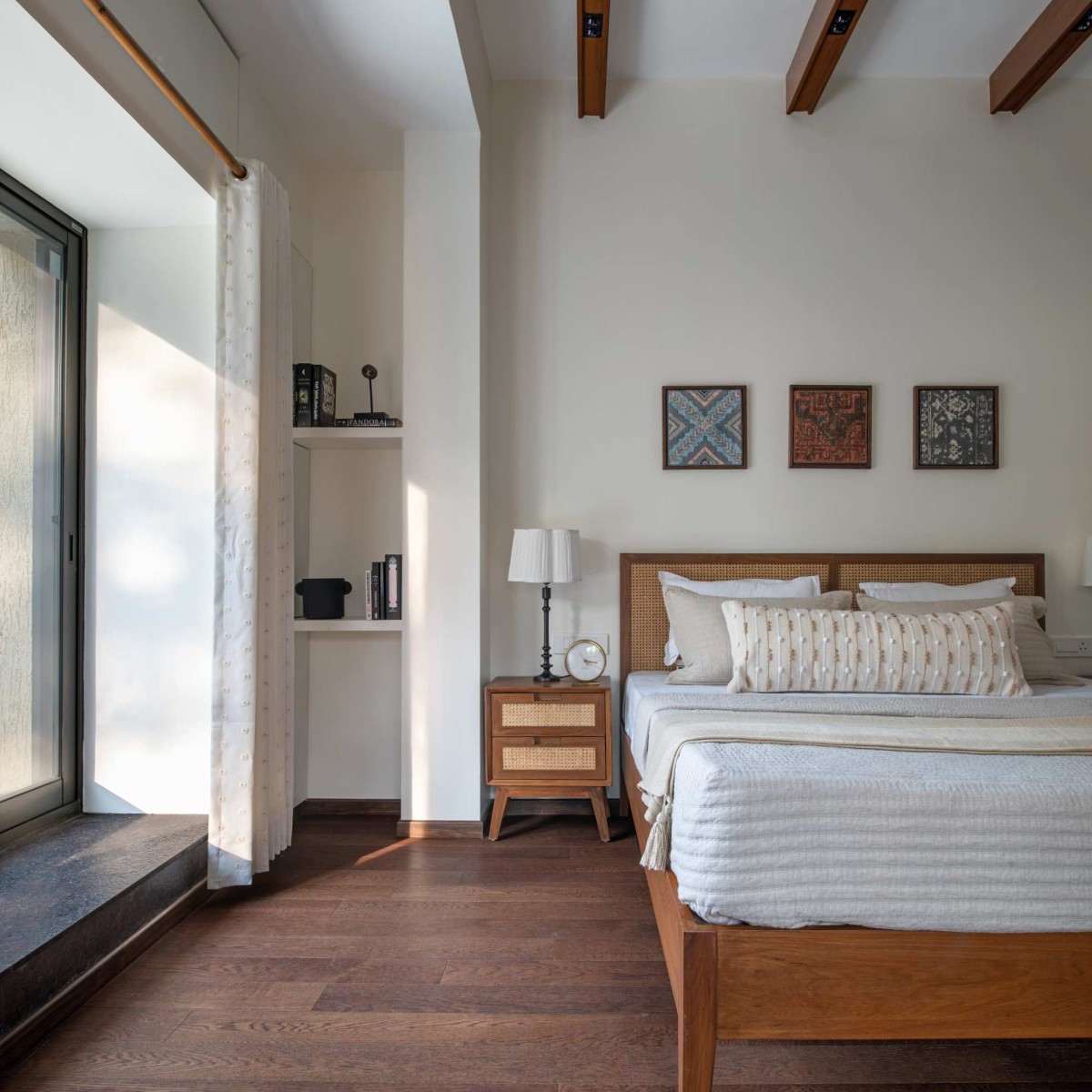

Bedroom 1 of Tyndall House by Red Brick Studio
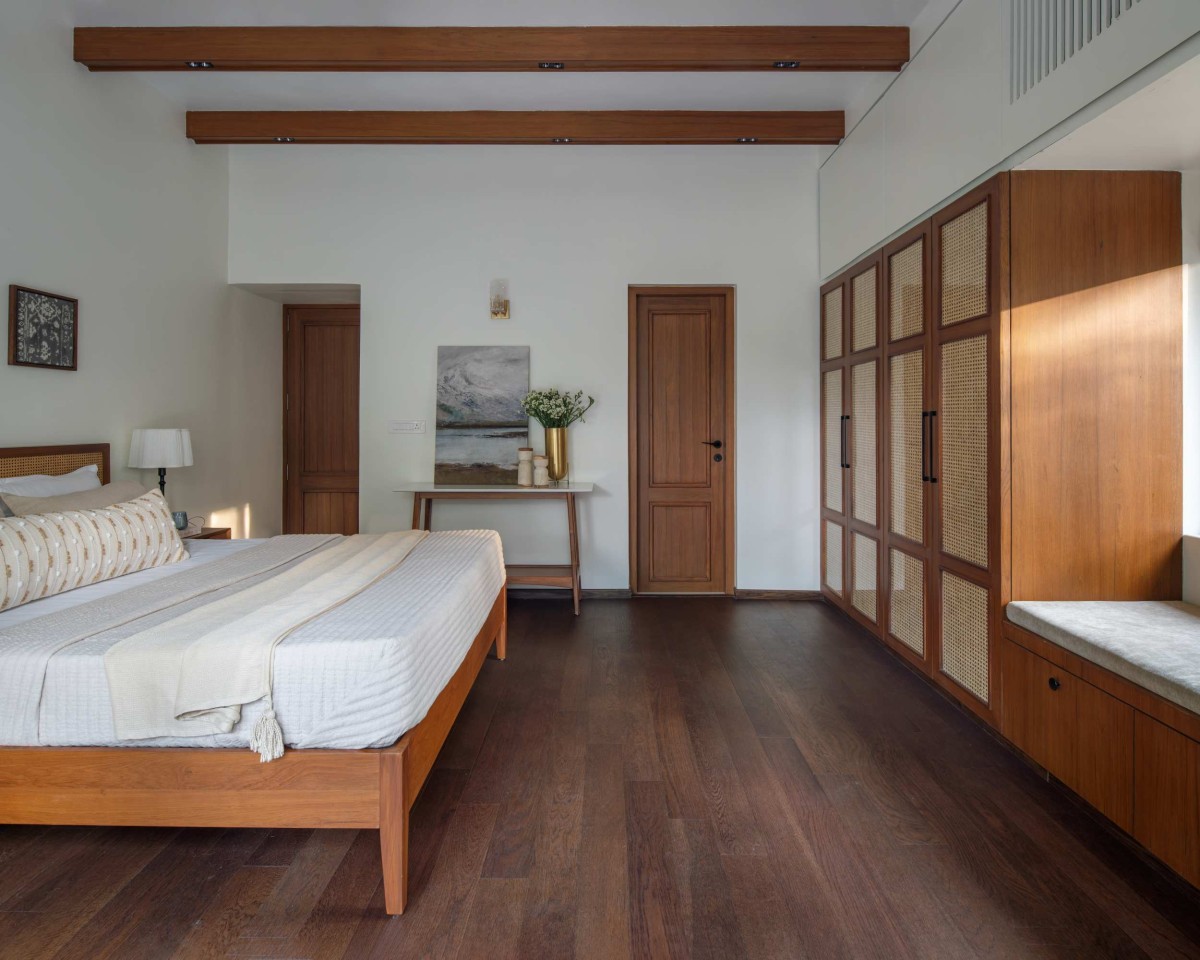

Bedroom 1 of Tyndall House by Red Brick Studio
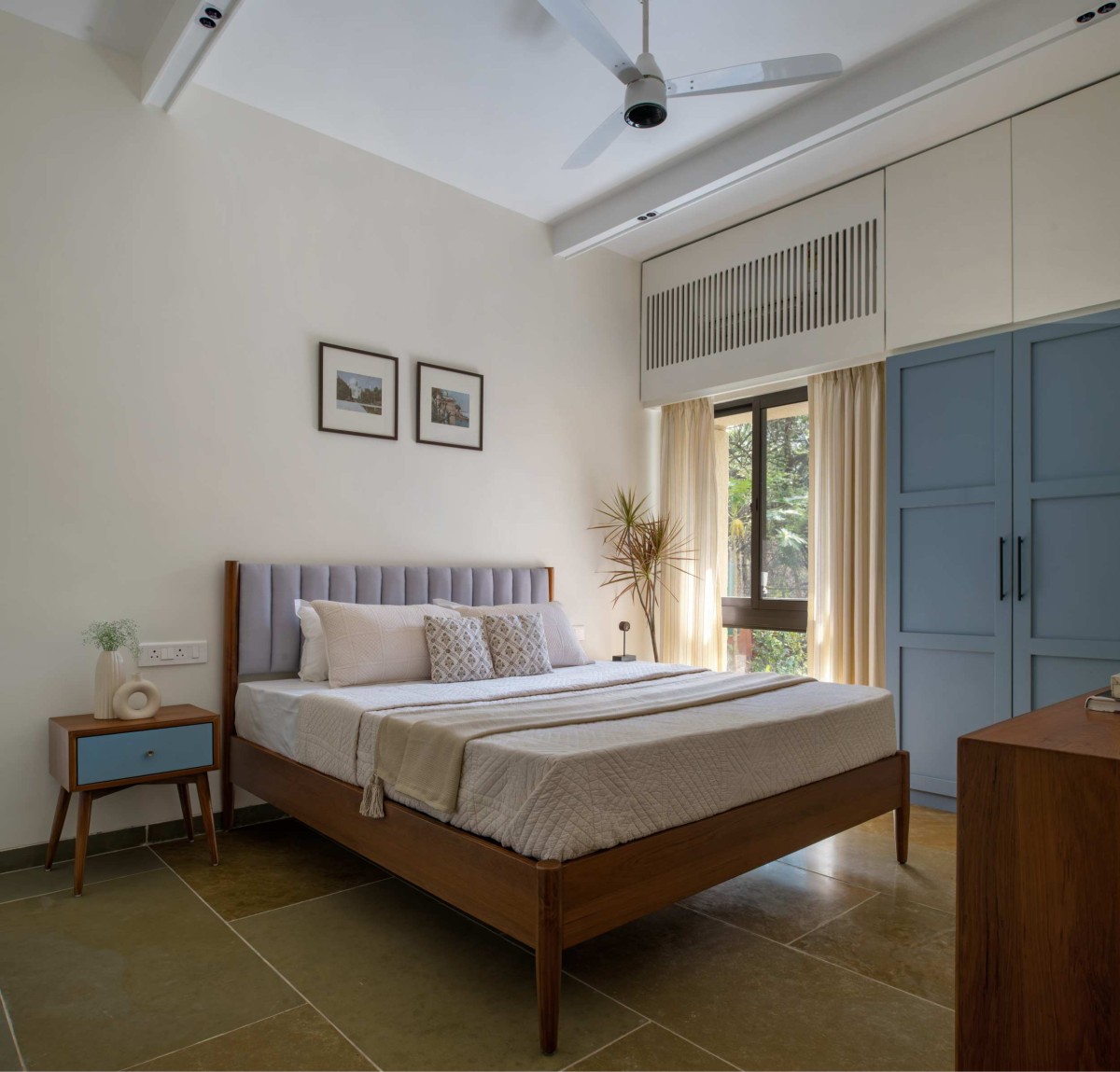

Bedroom 2 of Tyndall House by Red Brick Studio
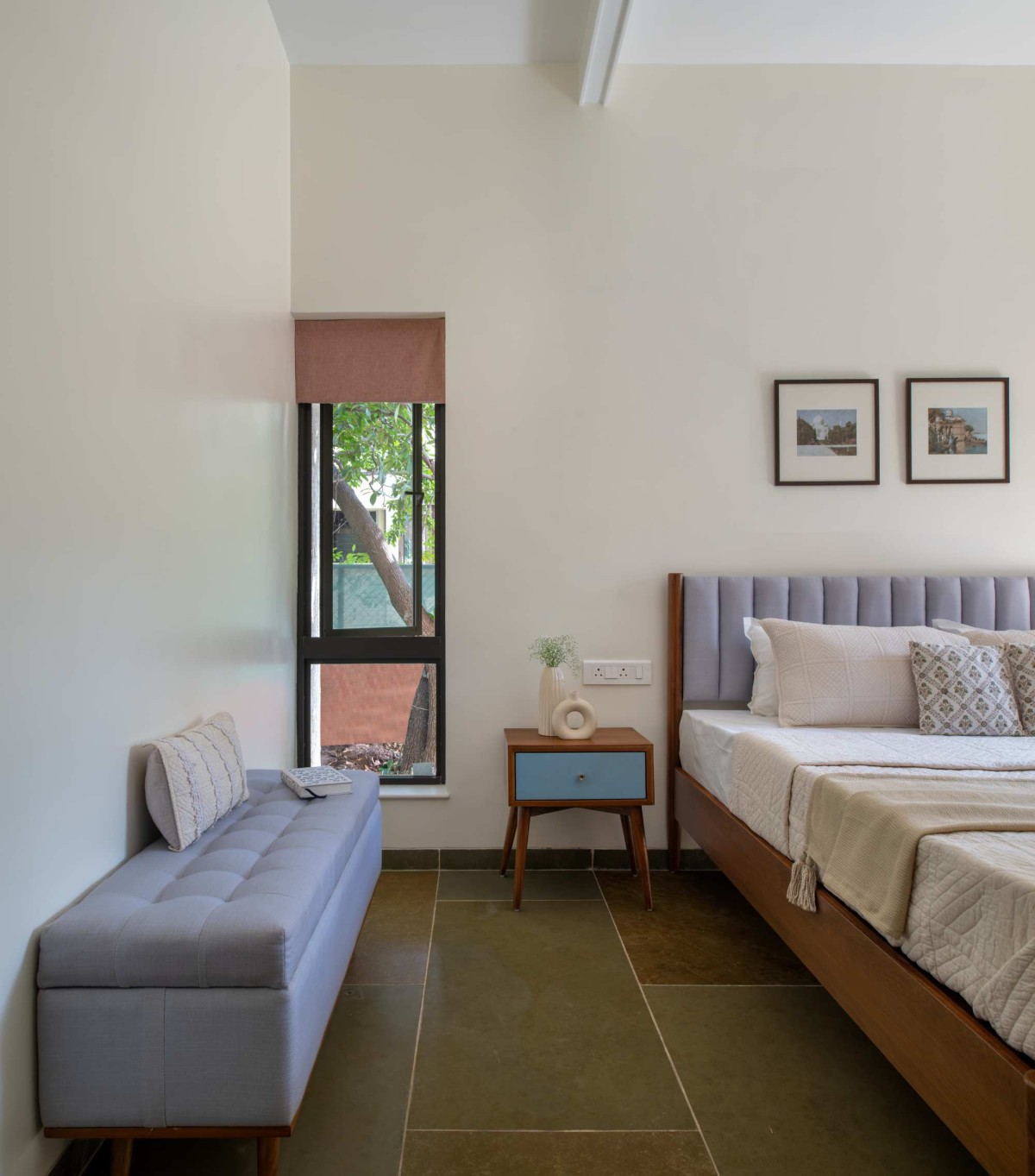

Bedroom 2 of Tyndall House by Red Brick Studio
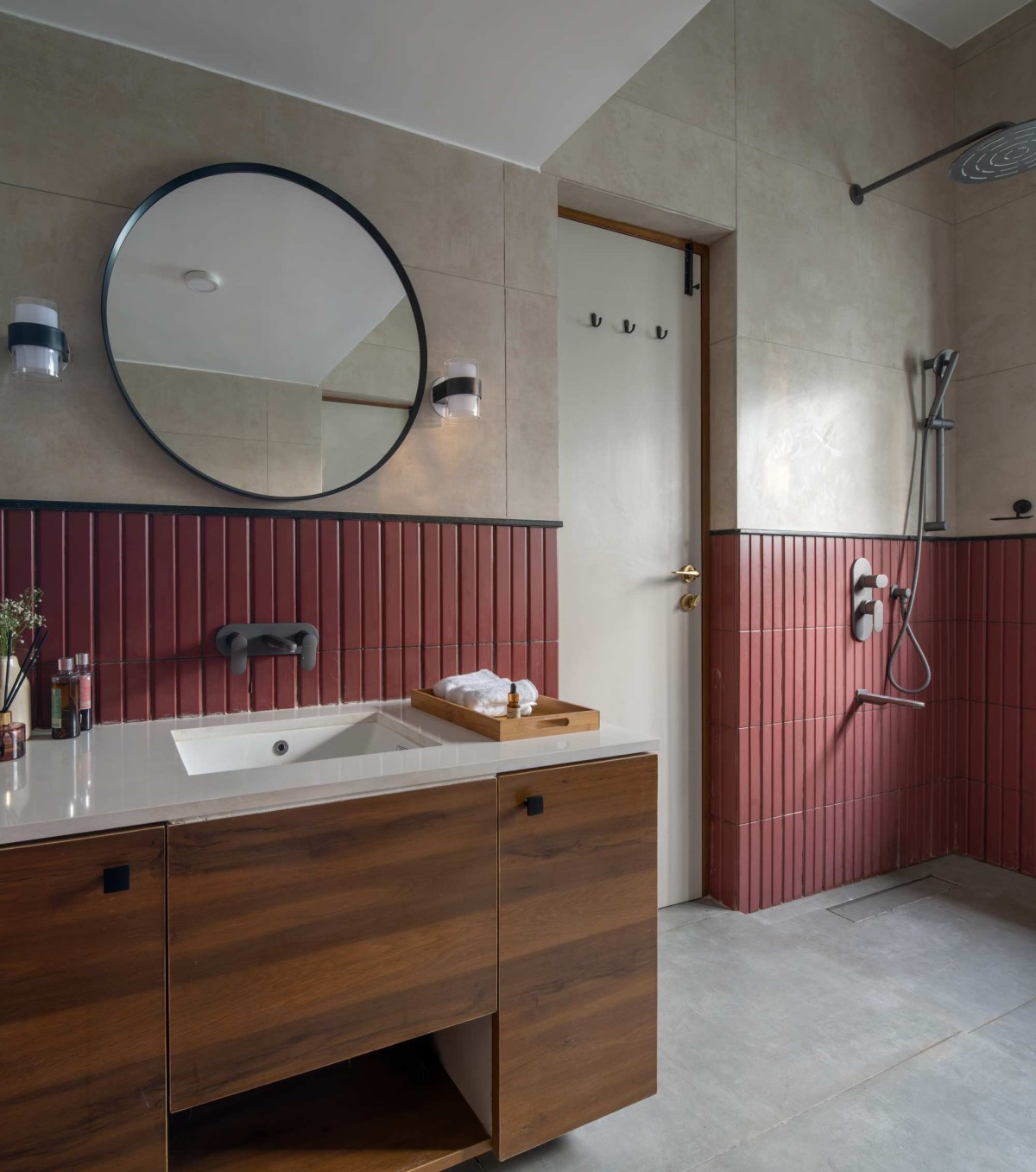

Bathroom of Tyndall House by Red Brick Studio
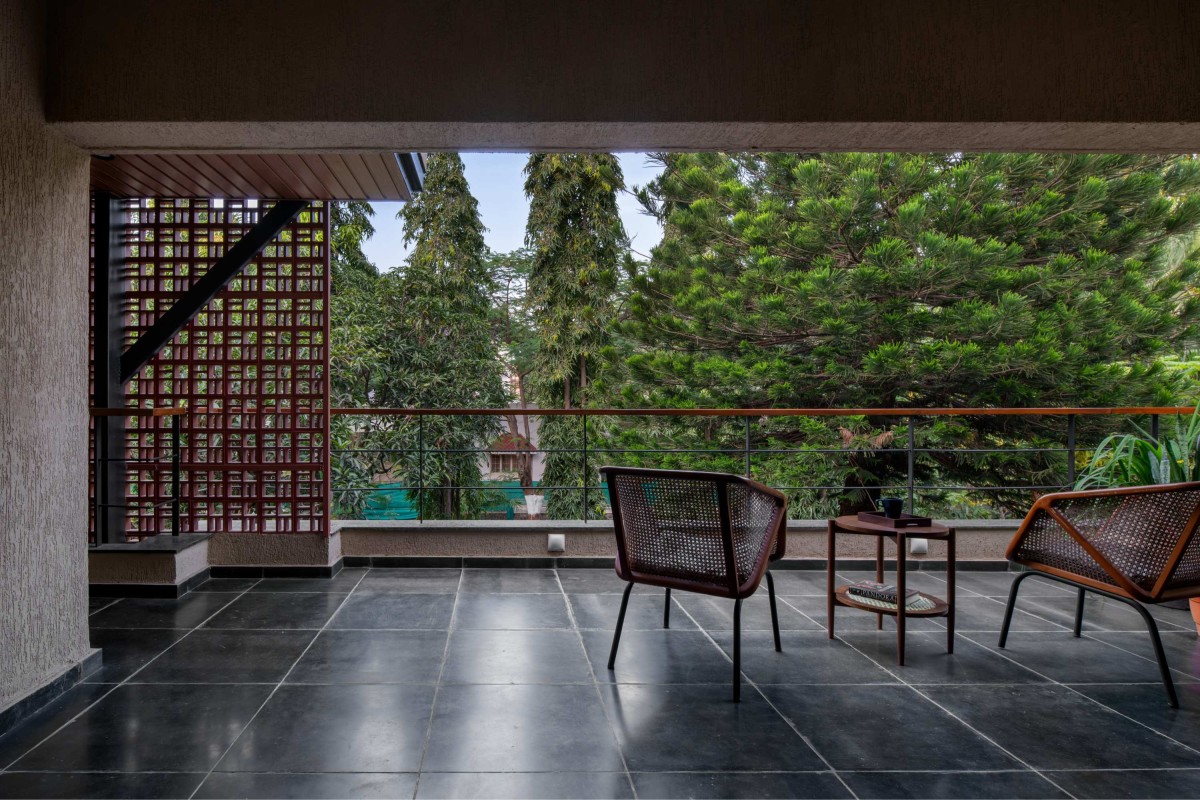

Terrace Deck of Tyndall House by Red Brick Studio
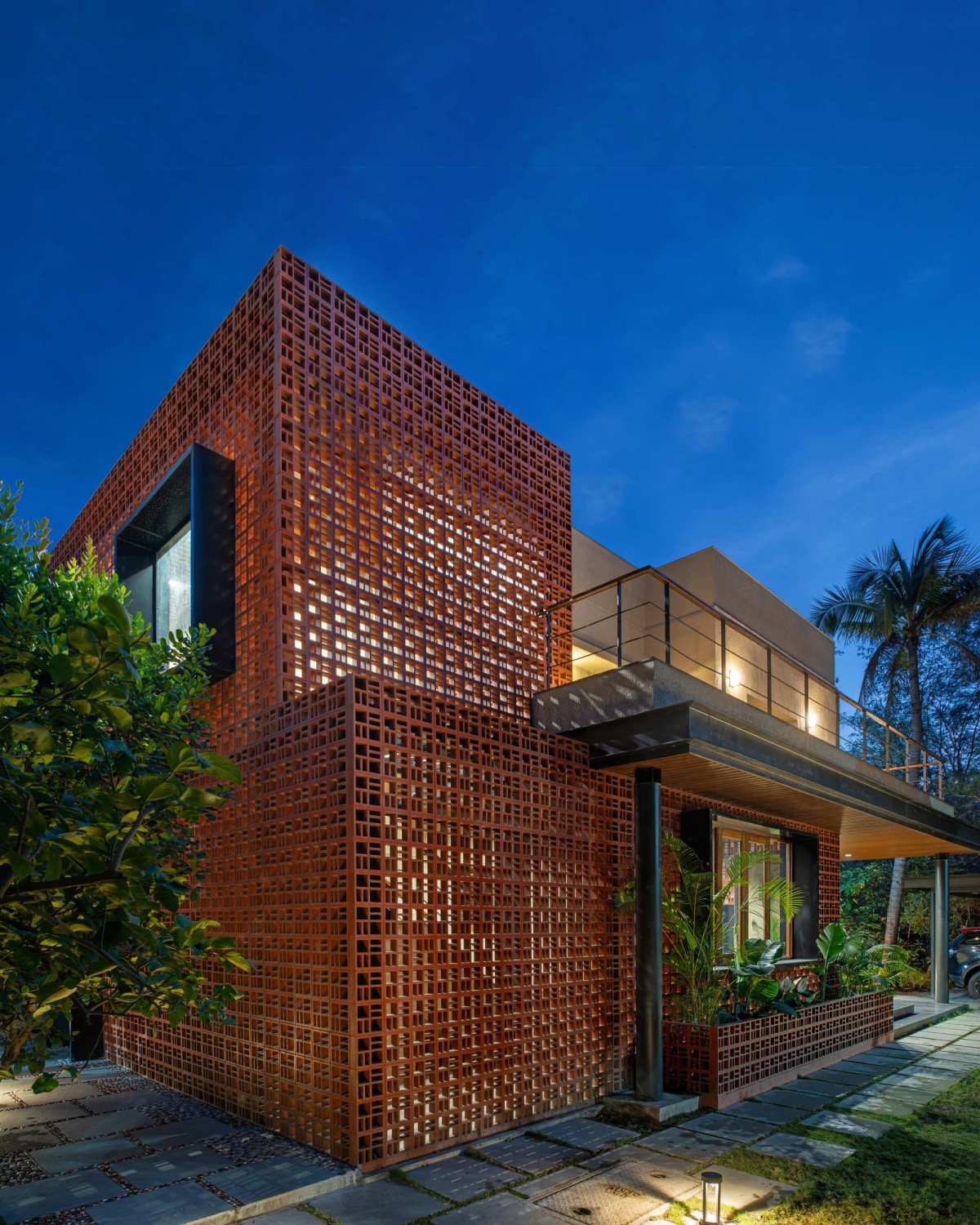

Night Exterior view of Tyndall House by Red Brick Studio
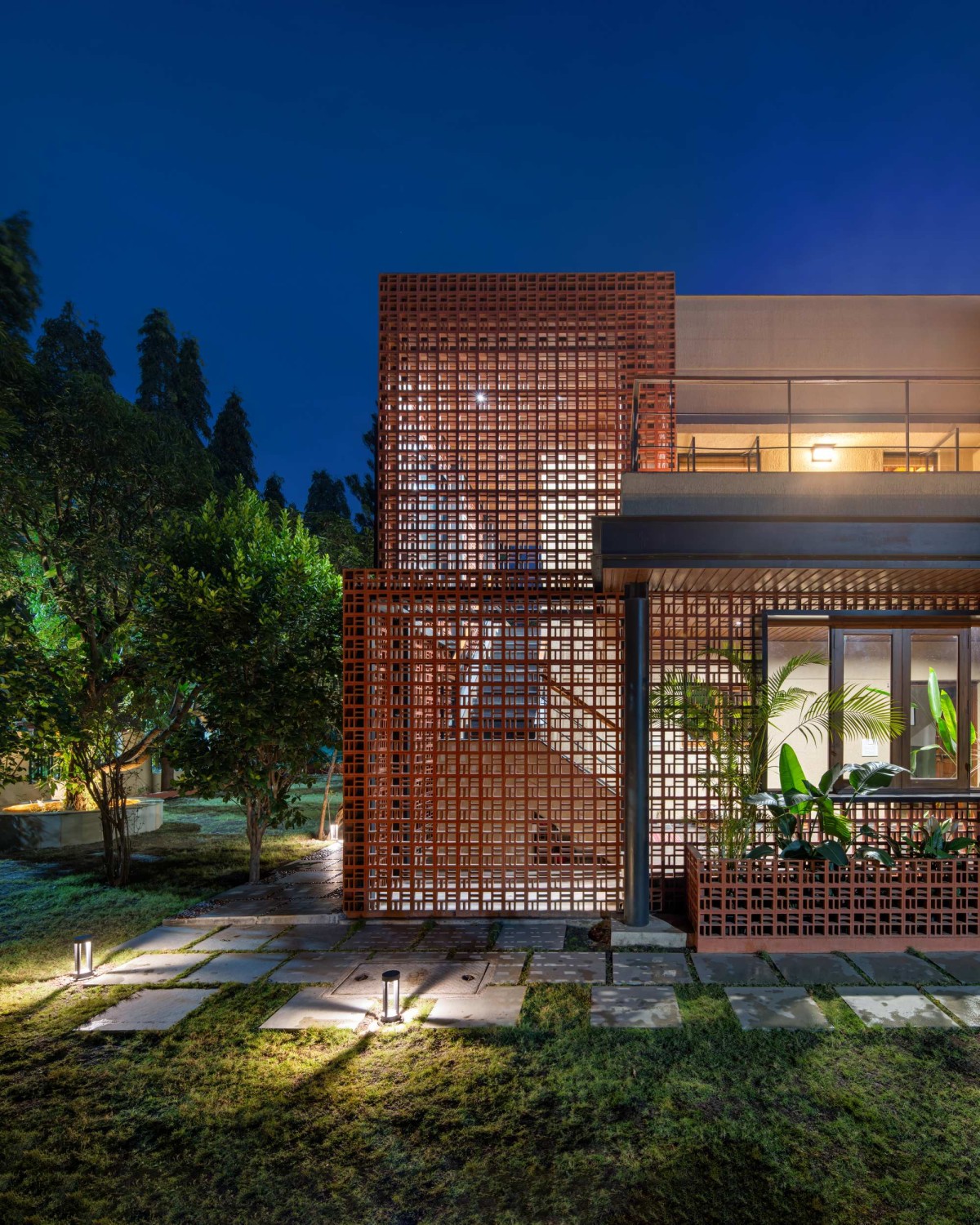

Night Exterior view of Tyndall House by Red Brick Studio
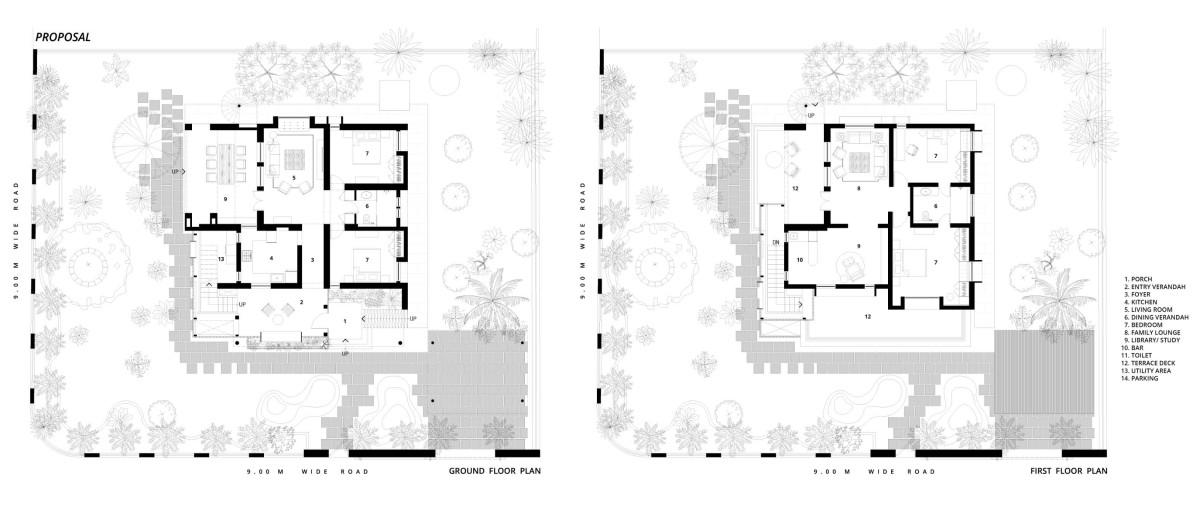

Layout of Tyndall House by Red Brick Studio


Most Visited Articles


Subscribe

Get our latest article and updates delivered straight to your inbox.